Important Address from your MAASE Executive Director, Abby Cypher

Thursday night, CASE held the “CASE Collective” where they shared an extensive federal update. It was jam packed with information that you, as a leader, should be aware of and able to speak about. The complete powerpoint can be found on the CASE website and is linked below. I have gotten a ton of questions on the budget recently, so I want to summarize what I heard on that:


The current budget is set to expire next Friday, March 14. Three things can happen next:


  1. The Government shuts down- which no one really wants to happen.
  2. They could get all 12 appropriations bills done, which cover every agency in the federal government, by next Friday (which is unlikely to happen).
  3. They can do either another short term continuing resolution or a full year continuing resolution. 

a. House Republicans are hoping next week to pass a bill that would continue funding the current fiscal year ‘24 level (last year) until the end of this fiscal year on September 30th. 

b. House Democrats prefer a shorter funding extension, even though continuing the current fiscal year funding levels may be the best case scenario for education. Mainly because the House Republican majority is looking to cut deeply into education and other funding. 


The Senate will have to pass the same bill before midnight on March 14th, either a long term or short term continuation, and if there is no agreement then the government will shut down as mentioned in option #1.


The House and Senate have passed different versions of what is known as a budget resolution. Keep in mind this administration is looking to make deep cuts. The budget resolution states what Congressional spending priorities are. The only thing in the budget resolution that actually has the force of law is a number which says next fiscal year, this is the top line amount that we will spend to keep the federal government operating. In order to do reconciliation, which is used as a fast track way to deal with taxes and mandatory spending, Congress first has to pass a budget resolution. 


As with any bill, the House and Senate have to agree. Right now, the House and Senate have passed very different versions. The House has $1.5 trillion in mandatory spending cuts over 10 years. $330 billion of that is from Education and Workforce Committee programs, mostly from higher education (financial aid) and school nutrition. While the Senate only cuts $342 billion total with only $1 billion for the HELP (education) Committee. Note: It is much harder for them to touch Title 1 or IDEA funding because that is discretionary spending, not mandatory spending. 


As mentioned before, they have to pass the same budget resolution in the House and the Senate with the same set of reconciliation instructions. The instructions tell the various committees how much they have to cut to hit the target in the budget resolution. Currently there is no agreement on this, we are just watching and waiting. 


One of the main things we have to pay attention to as it relates to reconciliation is Medicaid, which is currently set to be cut or changed (putting in per capita caps). As you likely know, Medicaid supports $7.5 billion in school-based services. Because these services are mandated in IEPs, one question that might be asked is how do we replace these funds if we no longer have Medicaid dollars? Would we further have to raid the general fund to pay for those services? 68% of districts use Medicaid money to provide salaries for health professionals resulting in loss of staff. Funds are also used for medical equipment, assistive technology, etc. Be sure to use the CASE action center below to write or call your members of Congress. They need to hear your personal stories. We also share an upcoming national webinar below, featuring MAASE member Shawna Dippman, that is worth checking out. 


Between these federal updates and what you will read in the Karoub update regarding the Michigan legislature, this can feel like a very overwhelming time in education. I am so proud of the work the MAASE is doing. The advocacy committee just finished our MISELS event, where members shared their personal stories and built relationships. Members who were unable to attend reached out to their Legislators and walked them through our platform and priorities document or invited them to their school to see their great work. We have hundreds of members taking action through our “Action Alert” center. These things DO make a difference. 


As MAASE President, Lauren Eardley, says “Embrace the Power of We”. Or as Shelly Moore said at the MCEC keynote, “Be on the right side of history”. Let’s use our collaborative and collective courage to make a difference. 

CASE Collective Slides

So what can you do? 


#1 Join CASE. Become part of the collective voice for special education. 


CASE has posted several “Action Alerts” on the CASE Action Center, and are getting record responses to these calls for advocacy. Thanks to each of you for making your voices heard! They are also very busy keeping up with the Administration’s and Congress’s actions:

  • Linda McMahon has been confirmed as the new Secretary of Education. She has committed to achieving the Administration’s goal to dismantle the Department of Education, considering shifting some programs to other agencies and possibly eliminating others.


  • Nominees for assistant secretary positions in most Department offices have been named. However, no one has been nominated for the position of Assistant Secretary of the Office of Special Education and Rehabilitative Services or Director of the Office of Special Education Programs. This is troubling, with the ongoing discussion to move administration of the IDEA to the U.S. Department of Health and Human Services. CASE is keeping a close eye on this situation.


  • CASE established the IDEA Implementation Coalition last year to bring together general and special education professional organizations whose members, like CASE, are implementing the IDEA in local school districts around the country. The Coalition is actively monitoring and addressing any potential changes to the IDEA and working to ensure there is a strong Department of Education and a strong special education presence.


#2 KEEP EMAILING AND CALLING!


Join CASE advocacy efforts to safeguard public education! Visit the CASE Action Center to easily contact (email or phone) your representatives. This center is open to ALL! Please feel free to share the CASE Call to Action with colleagues, family, friends while MAASE’s site is being moved to a new location. 


  • "TAKE ACTION NOW TO SAVE MEDICAID!"
  • "PROTECT SECTION 504 OF THE REHABILITATION ACT"
  • "OPPOSE PRIVATIZATION OF EDUCATION THROUGH ANY VOUCHER MECHANISMS"
  • "KEEP THE IDEA IN THE U.S. DEPARTMENT OF EDUCATION"


CASE ACTION CENTER

#3 Educate Yourself!


Join this brand new MAASE webinar: Advocacy 101- Learning the Landscape at the Federal Level


This session will give you an overview of the federal political landscape as it relates to education. When news and updates are coming at us quickly, it helps to have a solid foundation of terminology and structure to fit that new information into. Dan Behm, Executive Director of the Education Advocates of West Michigan, will walk us through the hierarchy of legal authority, Executive Orders and the federal budget. This is a free member benefit for MAASE members. 

Click here to register today!

Potential Medicaid Cuts


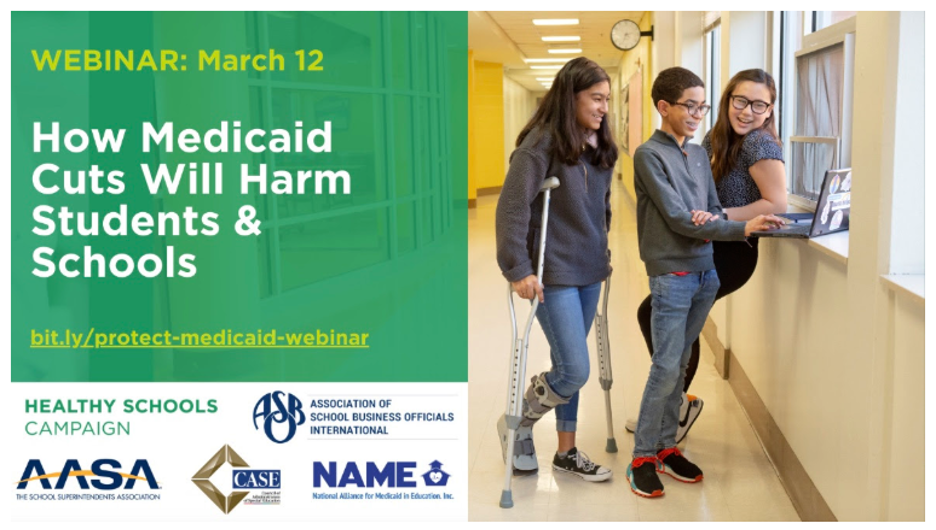
Join this webinar on the hot topic of the month: Potential Medicaid Cuts. This webinar is open to anyone!


Click here to join the webinar on March 12th!

Save the date! MAASE and the Mid-West: A Collaborative Federal Update

April 4th at 12:30 PM.


CASE lobbyist, Myrna Mandlawitz, will be joining MAASE and other state CASE units in the mid-west to give a comprehensive federal update free for our members. Stay tuned for more information coming soon.

#4 Share Your Story:


Michigan Legislative Disability Caucus

The MAASE Leadership Team has been asked to participate on the Michigan Legislative Disability Caucus (MLDC). Rep MacDonell, MLDC chair, wants to pass along two opportunities:


  1. In light of the proposed federal cuts to Medicaid, the Michigan Developmental Disabilities Council (MDDC) is asking individuals with disabilities who use Medicaid-funded services and supports, and their family members, to share their Medicaid stories. Click this link to complete their survey.
  2. The MDDC is also conducting a survey on people’s experiences with community mental health services, also known as behavioral health services and supports. Fill out this survey if you or a loved one receives these services and you’d like to share your thoughts.

Join the CASE Collective: Voices from the Field


Your stories are incredibly important as we advocate on behalf of special education in our public schools and the students and families we serve.


In our efforts to advocate on your behalf, CASE is gathering stories to share with members of Congress regarding the impact current Executive Orders, proposed cuts to the U.S. Department of Education, and recent guidance from the USDOE. Please take a few minutes to complete this survey to assist in CASE's advocacy efforts. Your contact information is only for follow-up with CASE personnel and will not be shared with anyone outside of the CASE office. 

Click here to share!

3.7.25 MAASE Legislative Summary


House Republicans Pass an 'Emergency' FY 2025-2026 Budget Plan


On March 6, House Republicans passed a partial spending plan for Fiscal Year 2025- 2026, comprised of HB 4161 for general appropriations and HB 4162 for the School Aid Fund. The plan would take effect October 1, if a Legislature-passed and Governor-approved budget isn’t finalized by the required September 30 deadline. The 59-49 party-line vote on both bills garnered one Democratic yes.


Click below to learn more.

Click here for an extensive Michigan specific update