Header

Legislative Update                February 9, 2026

News from Nashville


Gov. Lee delivers final State of the State to General Assembly


$57.8 billion budget proposal seeks to improve education, strengthen economy, maintain fiscal stability.


State of the State Address


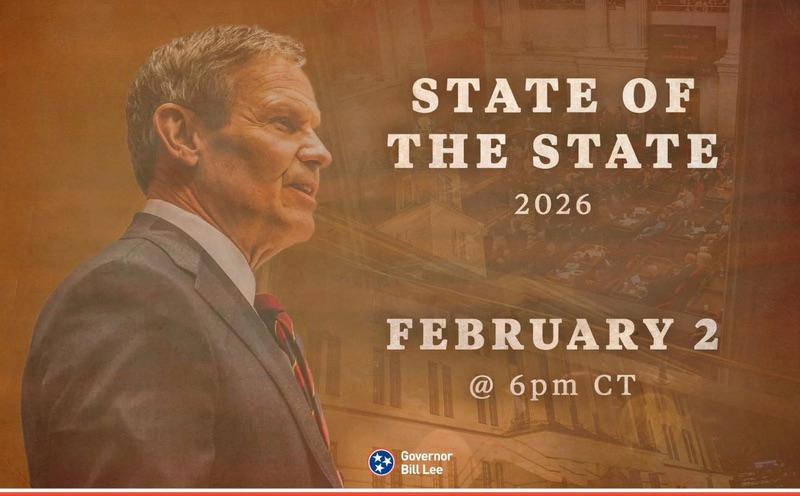
Last week Governor Bill Lee delivered his eighth and final State of the State address on Monday evening, outlining his proposed budget and legislative priorities for the 2026-27 fiscal year to a joint session of the General Assembly. 


The governor’s $57.8 billion budget proposal reflects Tennessee’s long-standing commitment to responsible fiscal stewardship and makes targeted investments to strengthen the economy, improve education, support families, enhance public safety, and prepare the state for long-term growth. The General Assembly will review the proposal in the coming months as part of the budget process.


Key priorities in the governor’s proposal include:


Economic Opportunity and Fiscal Stability


●       $20 million investment in the Rainy Day Fund, bringing total reserves to more than $2.2 billion – the largest in state history

●       $8 million to expand Tennessee Youth Employment Program

●       $25 million to the Tennessee Entertainment Commission for continued support for Tennessee’s music and film industries


Infrastructure, Housing and Rural Investment


●       $425 million for new and existing transportation projects across rural and urban Tennessee

●       $165 million to renovate and replace Tennessee’s rest areas and welcome centers

●       $56.2 million to support aviation infrastructure

●    $30 million to the Starter Home Revolving Loan Fund to support construction of new, affordable starter homes

● $25 million to the Rural Development Fund to business development and infrastructure


Education


Public Education

●  $339 million for public education, including additional TISA funding, summer learning camps, and raising starting teacher pay to $50,000

●       $20 million for K-12 facilities maintenance

●       $40 million for facilities improvement at public charter schools

●       $3 million to expand school-based behavioral health liaison program


Expanding School Choice

●   $155 million to expand school choice to more Tennessee families by doubling Education Freedom Scholarships available, to serve a total of 40,000 students


Higher Education

●     $350 million to build a new College of Medicine Interdisciplinary Building at the University of Tennessee Health Science Center in Memphis

●       $71.7 million for capital maintenance at higher education institutions

●       $10 million for the Governor’s Investment in Vocational Education (GIVE) program to support nuclear workforce education, as recommended by the Nuclear Energy Advisory Council

●  $3 million for Next-Gen Academics at Tennessee Tech for nuclear and cyber technologies

●       $39.4 million to fully fund the outcomes-based funding formula

●     $3.5 million for Corrections Education Investment Initiative to prepare incarcerated individuals for reentry success


Strong and Healthy Families


●       $205 million utilizing Shared Savings to strengthen healthcare initiatives, including funding Rural Health Transformation Resiliency Grants

●   $230 million to TennCare to cover increasing costs associated with medical inflation, including higher prescription drug prices and Medicare payments, and increased utilization and services

●   $34.5 million to Department of Children’s Services (DCS) to assist with reducing caseload ratios

●      $10.7 million to enhance staff safety at DCS facilities that accommodate delinquent youth

●       $15 million for capital project and maintenance grants to YMCAs across Tennessee

●      $24.2 million to continue a Department of Health Dental Pilot Program to address unmet dental service needs and increase the number of dentists in Tennessee

●     $1 million non-recurring grant to non-profit partner Live Like Lou Foundation for ALS research

●   $500k recurring grant to non-profit partner The Next Door to assist women in recovery from substance use

●      $500k recurring grant to non-profit partner The Jason Foundation, which provides educational and awareness programs related to youth suicide

●  $250k recurring grant to non-profit partner Families Free, which provides treatment, education, and intervention services to families


Safe Neighborhoods


●    $100 million to bolster the Governor’s Response and Recovery Fund which provides support to individuals, businesses, and communities after natural disasters

●   $80 million for public safety grants to enhance crime prevention and increase public safety in Memphis

●   $83 million to Tennessee Department of the Military for construction of a new Army Aviation Support Facility in Rutherford County

●  $37.5 million for salary increases and creation of an additional 50 State Troopers and related support staff positions to improve public safety across the state

● $20 million for capital improvements at the West Tennessee and East Tennessee Regional Juvenile Justice Centers

●   $1.7 million recurring grants to non-profit partners that combat human trafficking and support survivors

●   $1 million recurring grant to non-profit partner Men of Valor for faith-based reentry support for incarcerated individuals

●    $250k recurring grant to Lipscomb University’s LIFE Program, which provides higher education opportunities for incarcerated individuals

●  $500k recurring grant to non-profit partner Tennessee Prison Outreach Ministry, which provides faith-based reentry support for individuals and their families


Conservation


●       $81.6 million to create three new Tennessee State Parks

●     $1.6 million for the Subsurface Sewage Disposal Program, reducing waiting times for permitting services and oversight

●       $1.1 million to support further enhancement of Tennessee’s electric grid


Nuclear Energy and Innovation


●  $50 million to continue Tennessee’s efforts to lead the nation in adoption of artificial intelligence technology and make government work more efficiently for Tennesseans

● $25 million further investment in the Nuclear Energy Fund to attract advanced nuclear technology companies, ensuring Tennessee continues leading the nation as the epicenter of America’s nuclear renaissance

●    $20 million to complete the relocation of the North Data Center

● $20 million to accelerate Tennessee’s quantum computing industry by attracting substantial federal and private-sector investment and to translate our scientific strengths into durable, high-wage job creation across advanced manufacturing, life sciences and logistics industries

●    $2 million to aid in the expansion of agricultural technologies in rural communities


RFK visits Tennessee Capitol -


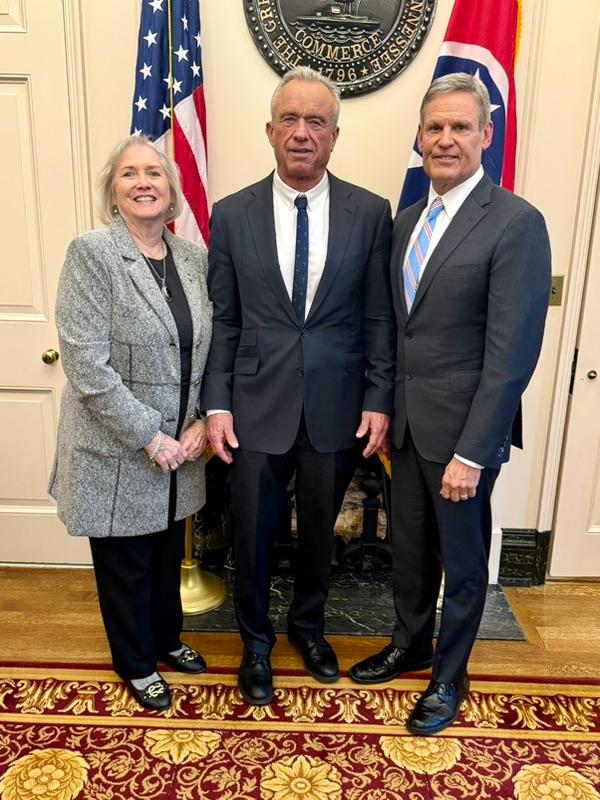
On Wednesday, Secretary of the U.S. Health and Human Services, Robert F. Kennedy Jr. visited the Tennessee State Capitol, meeting with state leaders and holding a press conference as part of his “Take Back Your Health Tour”. Secretary Kennedy highlighted several initiatives being advanced by the U.S. Department of Health and Human Services and President Trump, including the Rural Health Transformation Program, new Dietary Guidelines for Americans, and lowering costs of healthcare, while improving outcomes for families nationwide.


Wearing Red for Women's Heart Health -


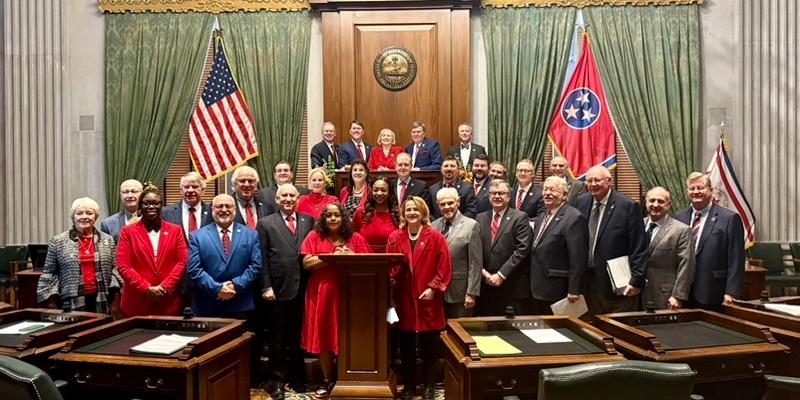
On Thursday, members of the General Assembly wore red in recognition of National Wear Red Day, to raise awareness about women's heart disease, the leading cause of death for women. Each year, one in three women lose their lives to heart disease, claiming more lives than all forms of cancer combined and emphasizing the importance of prevention and early detection.

Legislative Progress


Legislation expands Safe Baby Courts to 5 year olds


To reduce childhood abuse and endangerment, the Senate Judiciary Committee unanimously passed Senate Bill 1605 this week. The legislation extends eligibility for Safe Baby Courts to children up to five years old. Currently, only children three years old and younger are eligible. 


These courts are about protecting children from abuse and neglect, supporting families in crisis, and giving our young Tennesseans the stability they deserve during their most formative years. By extending eligibility to children up to age five, we are ensuring that more vulnerable kids can access proven services that help keep families together whenever possible and set children on a healthier path for the future.


Safe Baby Courts are specialized programs that bring together judges, social services, and family support resources to intervene early in cases of abuse or neglect, helping protect young children while guiding families toward stability and reunification whenever possible.


The Safe Baby Court program was established in 2017 when the General Assembly created the “Tennessee Zero to Three Court Initiative” that established 5 courts state wide. Since then, the program has expanded to 22 court programs across the Volunteer State, with additional courts expected to be added.


The bill now heads to the Senate Floor for further consideration.


Legislation advances to reduce barriers to establishing child care centers


Last week, the Senate Judiciary Committee passed Senate Bill 1683 to remove barriers that prevent new child care centers from opening. Sponsored by Senator Ferrell Hai, the bill creates liability protections for employers, churches, nonprofits and other organizations that host licensed childcare providers in their facilities. Known as the Tennessee Child Care Hosting Safe Harbor Act, the legislation clarifies that liability would rest with the licensed child care provider – not the host site – making it easier for organizations to open their doors and support child care services in their communities.  


The bill now heads to the Senate Floor for final consideration.


Crime data highlights need for state-level action on illegal immigration

Report details 21,000+ criminal charges involving illegals in 2025


Senate Republican leaders pointed to new data released recently in the 2025 Immigration Enforcement Report which underscores the need for strong state-level action on illegal immigration.


The report, prepared by the Tennessee District Attorneys General Conference, documented 21,648 criminal charges involving individuals confirmed to be unlawfully present in the United States or whose citizenship status could not be verified. The data was compiled from 11,344 reports submitted by local law enforcement agencies in 94 of 95 Tennessee counties between Jan. 1 - Dec. 31, 2025.


In all, 2,183 crimes were classified as the most serious of violent offenses, including 41 homicides, 145 sexual offenses and 40 cases of aggravated kidnapping. The most common violent crimes were domestic and aggravated assaults with 1,418 total reports. The most non-violent offenses reported were driving-related, with 12,193 violations listed including 2,920 cases of driving under the influence (DUI).


House and Senate Republican leaders on Jan. 15 unveiled nine key pieces of legislation as part of their Immigration 2026 package. The initiative aims to reduce illegal immigration in Tennessee by closing loopholes in current law, criminalizing unlawful presence as a state offense and requiring E-Verify for public employment. It also enhances road safety and professional licensing, ensures lawful status for public benefits and school enrollment, and strengthens accountability and cooperation with federal immigration authorities.


Law enforcement agencies reported individuals from 119 unique countries of origin and documented 169 different offenses. Approximately 186,000 illegal immigrants are believed to reside in Tennessee, according to a 2023 data analysis published by the Migration Policy Institute.

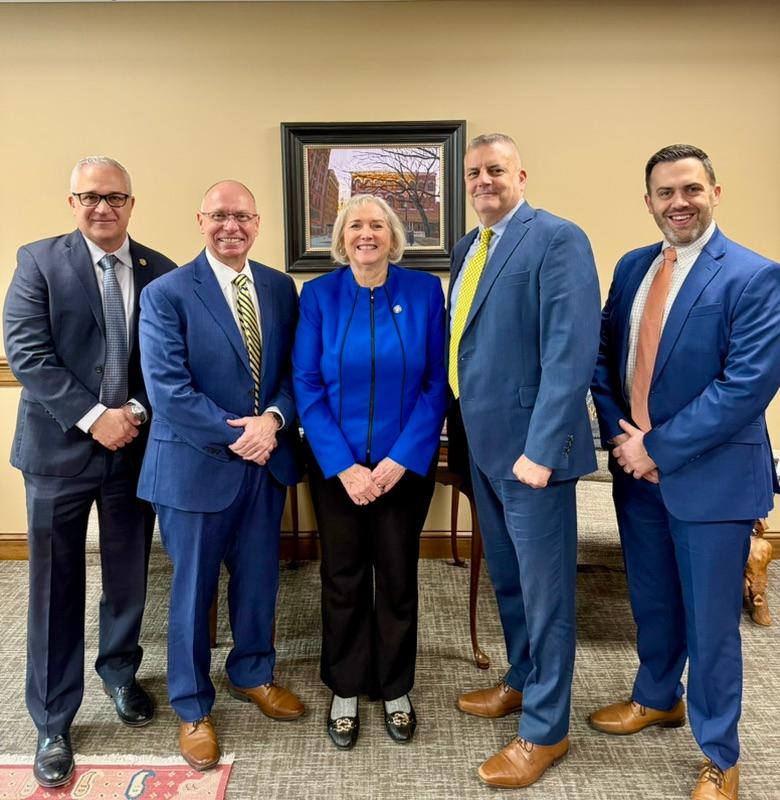
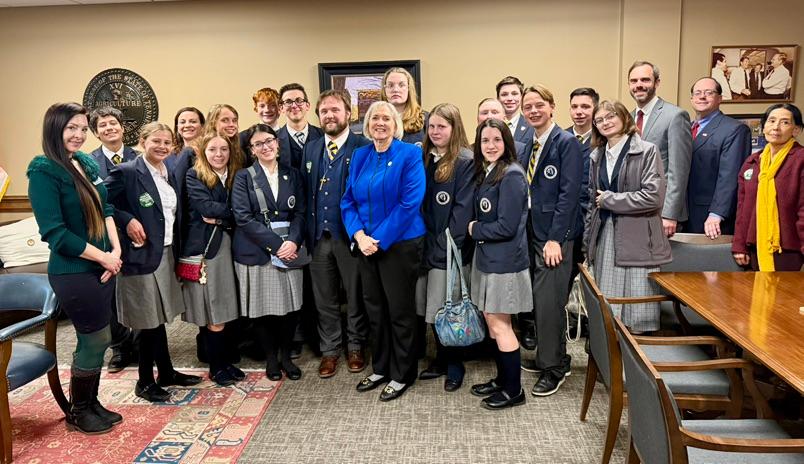
Leadership from the Knoxville Police Department stopped by to discuss public safety in our community

At A Glance


Honoring service members at Pearl Harbor - To honor service members for their bravery and sacrifice at Pearl Harbor, the State and Local Government Committee passed Senate Bill 1488. The legislation requires flags over the state capitol building to be flown at half staff from sunrise to sunset on December 7 annually in observance of Pearl Harbor. The measure advances to the Senate Floor for a final vote.


Protecting Tennesseans’ medical information - To protect the personal information of Tennesseans within the Comptroller of the Treasury, the State and Local Government Committee passed Senate Bill 1594. The measure adds provider reimbursement information submitted to the Comptroller of the Treasury to the list of proprietary information that is not subject to disclosure under Tennessee’s public records laws. This means that internal documents containing this sensitive, confidential information could not be released through public records requests.


Increasing state-oversight in property value assessments - To ensure consistency across Tennessee’s property assessment code, the State and Local Government Committee passed Senate Bill 1680. The proposal expands the duties of the Division of Property Assessments to supervise and direct all property reappraisals and revaluation programs. It aims to increase state oversight in how property values are reassessed across Tennessee. The proposal now moves to the full Senate for consideration.


Clarifying franchise rules for private utility purchases - The Senate passed Senate Bill 717. The bill clarifies how franchise agreements are handled when a privately owned utility is purchased by a new owner. Under the proposal, the Tennessee Public Utility Commission would ensure that all terms of the existing franchise transfer to the new owner.


Education assessments for inmates - To provide transparency and track the success of higher education programs offered to inmates, the State and Local Government Committee passed Senate Bill 1569. The legislation requires the Department of Corrections to conduct an education assessment of each inmate serving a felony offense to determine the inmate's highest grade or educational level attained and their interest in continuing education. The assessment would be given at the time of intake and annually thereafter with a digital copy of the results sent to the inmate for their records.


Tennessee remains a leader in evidence‑based programming through the Tennessee Higher Education Initiative (THEI). According to their latest impact report, “less than 15% of THEI students have been re-incarcerated…compared to the national rate of 66%.” The bill now goes before the full Senate Chamber for a vote.       


Expanding access for personal delivery devices -Last week, the Senate Transportation Committee passed Senate Bill 1625. I sponsored this legislation which allows personal delivery devices to operate on bicycle paths, road shoulders, parking lots, and curbs of roadways. Currently they are limited to 10 miles per hour and only on sidewalks or pedestrian areas.  To operate in the new areas, the speed limit must be 20 miles per hour or less. The legislation does not mandate any deployment of the personal delivery devices, leaving decisions on implementation or restriction up to local officials, as long as they are in compliance with state law. The legislation heads to the Senate Floor for final vote.


Protecting Tennesseans from AI therapist impersonations - To protect Tennesseans from false advertising of AI mental health systems, the Health and Welfare Committee passed Senate Bill 1580. The measure prohibits claims that an AI system is or can act as a qualified mental health professional such as licensed therapists, counselors or psychologists. Each violation of the measure results in a $5,000 fine. The bill now advances to the Senate Floor for final consideration.


Increasing higher education opportunities for high schoolers – In an effort to expand access to dual enrollment opportunities for high school sophomores, the Senate Education Committee passed Senate Bill 587. Under current law, dual enrollment grants are limited to juniors, seniors and students enrolled in a Tennessee College of Applied Technology. This legislation expands eligibility to include high school sophomores, allowing students to begin earning college credit earlier.  The bill now heads to the Finance Committee for further fiscal review. 

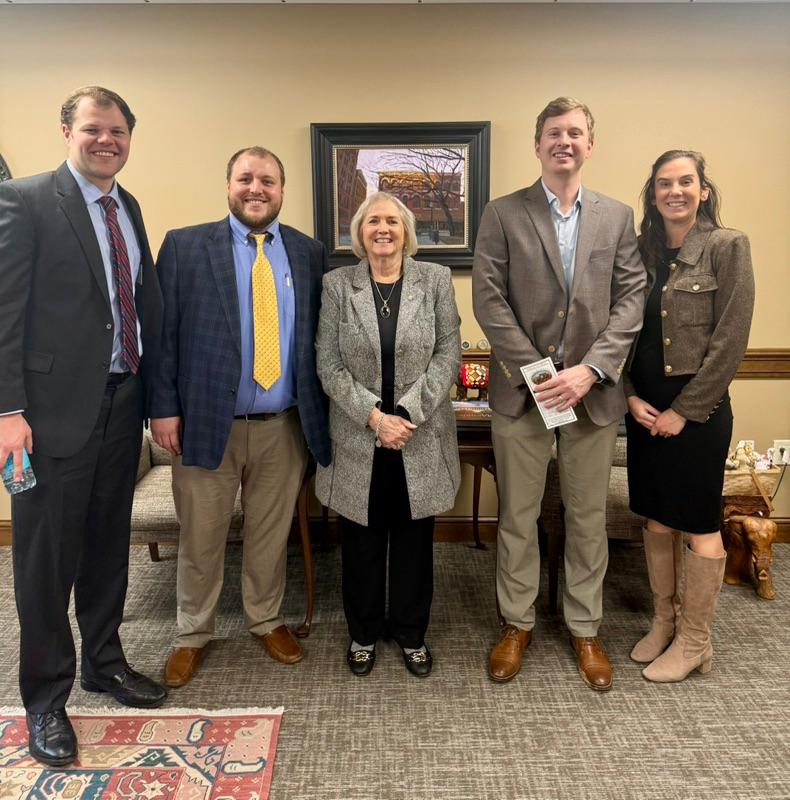
Representatives from Eagle Distributing and Cherokee Distributing stopped by on Tennessee Beverage Day on the Hill.

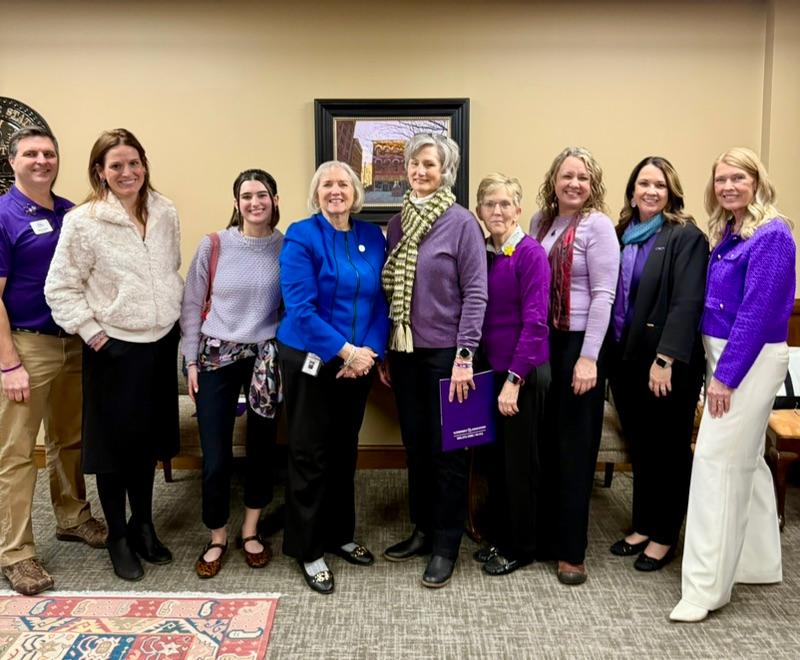
Volunteers with the Alzheimer's Association stopped by for a visit and discussed legislation of importance to them.

Tracy Boatner, with the East Tennessee Eocnomic Council, stopped to discuss the nuclear energy growth in East Tennessee.

Volunteers with Americans for Prosperity stopped by for a visit.

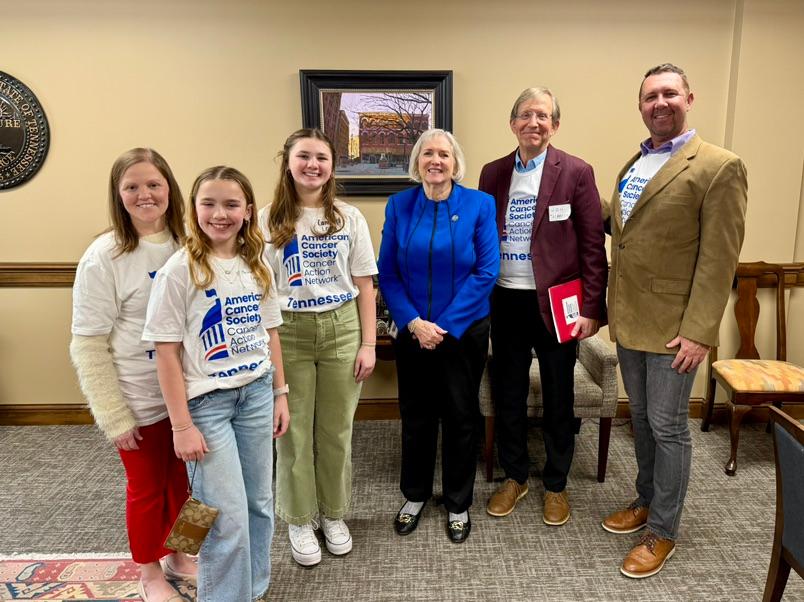
I enjoyed the visit with the advocates of the American Cancer Society's Cancer Action Network.

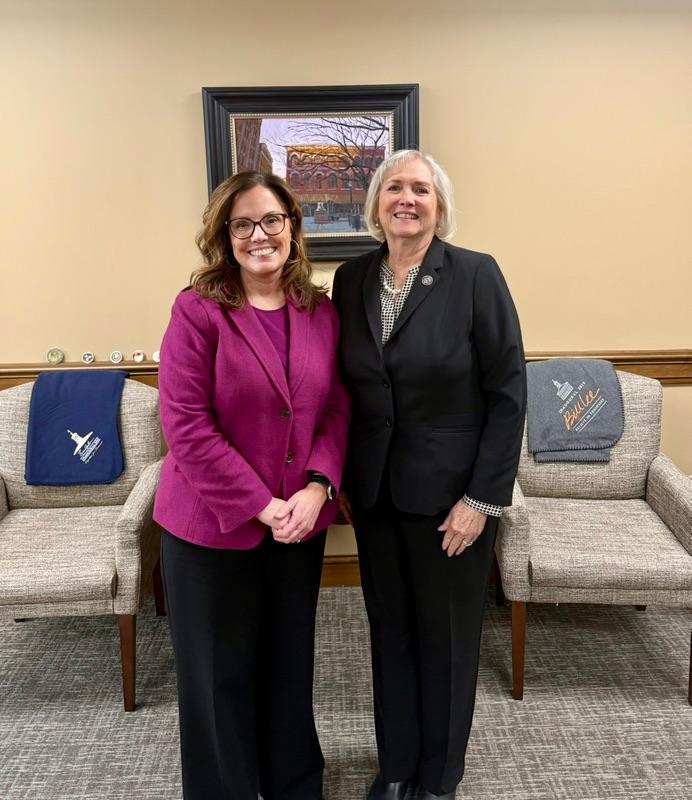
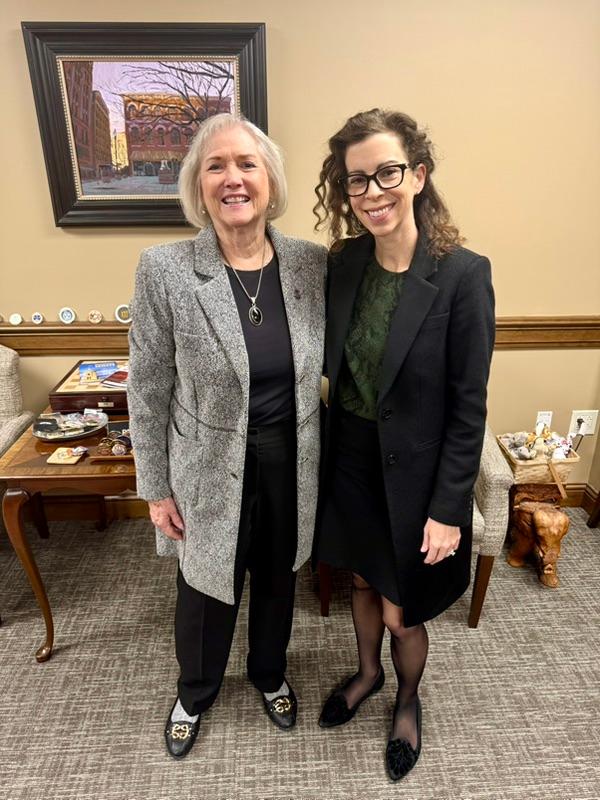
Brandi Lowell with UT Medical Center, stopped by while she was in Nashville.

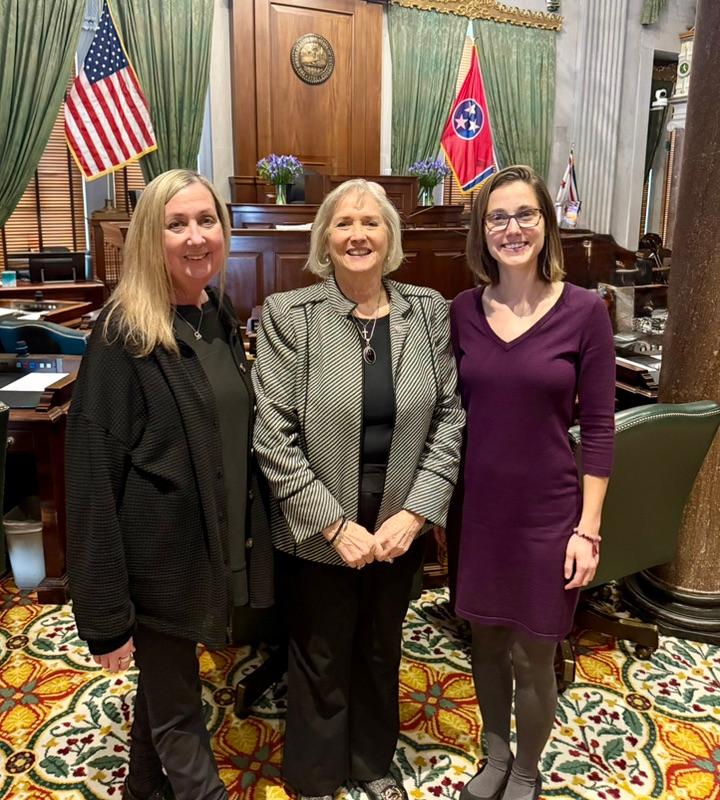
If our office can ever be of service to you or your family, please don't hesitate to contact us. On the right is Carly Nelson, my Legislative Assistant. On the left is Debbie Gazzaway, our Research Analyst for the Transportation and Safety Committee. We can help with issues with a state department, information on legislation, setting up a tour of the Capitol or scheduling an appointment or speaking engagement.


For information on State Senators including phone numbers and email addresses, click Tennessee State Senators.


For House members, click Tennessee House Members

For all other information on the General Assembly including legislation, schedules and videos, click Tennessee General Assembly


As always thank you for continued support!


Sincerely,


Becky Massey

District 6 Senator

615-741-1648

sen.becky.massey@capitol.tn.gov

See what's happening socially
Facebook  Twitter