2022 Legislative Wrap-up

The end of the formal legislative session in Massachusetts brought some critical advances for public health, but also left a significant amount of important business unfinished. Let’s take a look at what passed, what’s close to the finish line, and what didn’t make it.

Legislative Victories

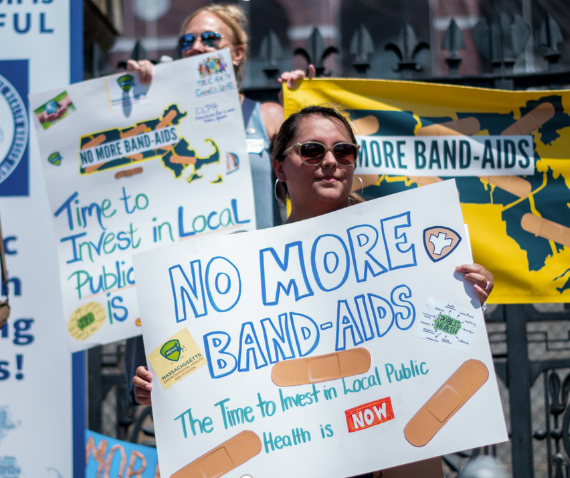
The American Rescue Plan Act (ARPA) Spending Bill was passed by the legislature and signed by Gov. Baker in late 2021. It authorizes more than $2 billion in spending from the $5.286 billion of federal ARPA Coronavirus State Fiscal Recovery Funds provided to Massachusetts. In a monumental step forward, the bill includes $200 million to transform the Commonwealth’s local public health system. To be truly effective, however, this investment must be paired with essential policy change through passage of the Statewide Accelerated Public Health for Every Community Act (SAPHE 2.0). See below for more about the status of this critical legislation.


The Work & Family Mobility Act creates safer roads by allowing all qualified residents of Massachusetts to apply for a standard driver’s license, regardless of their immigration status. Passage of similar laws in 17 states has led to significant declines in uninsured drivers and hit-and-run accidents. Unfortunately, a last-minute ballot initiative is attempting to overturn this victory. As a result, a referendum on the new law will appear on the November ballot as Question 4. Please Vote YES on 4 to keep the Work & Family Mobility Act in place! Learn more.


The Transportation Bond Bill contains several bond authorizations that will help make public transportation cleaner and more accessible, including $6.95 million for MBTA and Regional Transportation Authority (RTA) fare-free bus pilot programs, more than $200 million for electrification of the commuter rail, and $64 million for RTA capital improvements.


An Act Driving Clean Energy and Offshore Wind will accelerate the transition to clean energy by promoting offshore wind, modernizing the electric grid, and expanding electric car infrastructure. It also contains important environmental justice measures and requires the electrification of public fleets, among other provisions. MPHA worked closely with our legislative champions to include a requirement that the MA Department of Transportation provide technical and funding assistance to help electrify RTA buses.


An Act Protecting Reproductive and Gender-Affirming Care, passed in the wake of the Supreme Court decision overturning Roe v. Wade, affirms the right to reproductive and gender-affirming health care in the Commonwealth. It also provides legal protection for Massachusetts residents who directly provide or help others obtain these services, requires insurance companies to cover abortion and abortion-related care, and makes it easier to access emergency contraception.

Budget Wins

The FY23 state budget included funding for a number of key public health and health equity priorities, including:


  • $15M to support local and regional boards of health; 
  • $96.5M to support Regional Transit Authorities’ operations and flexible fare pilot programs; 
  • $150M for the Rental Assistance for Families in Transition (RAFT) program, including an annual benefit cap of $10,000 (up from $7,000) and a requirement of a Notice to Quit or court summons,
  • $154M for the MA Rental Voucher Programs (MRVP), including language to set the tenant rent share at 30% of a household’s monthly adjusted income;
  • Language creating a Common Application for MassHealth, the Supplemental Nutrition Assistance Program (SNAP) and other safety net programs; and
  • Language maintaining funding for upstream strategies to address chronic disease through the Mass in Motion program.  

Close to the Finish Line

These bills didn’t quite make it all the way through the process, but they are very close. We are still working hard with the expectation that they will happen this year.


In a tremendous show of widespread support, the Statewide Accelerated Public Health for Every Community Act (SAPHE 2.0) passed unanimously in both the House and Senate! Unfortunately, after the end of formal session, Governor Baker returned SAPHE 2.0 to the legislature with proposed changes that would significantly weaken the bill by making minimum public health standards a local option. This would entrench the patchwork of municipal policies that makes our local public health system both ineffective and inequitable. The bill is now back in front of the legislature, which is holding informal sessions. MPHA and our partners are urging the legislature to reject the governor’s proposed amendment and send the bill back to his desk. Stay tuned for opportunities to take action in the coming weeks.


The Economic Development Bill, which included additional ARPA spending, surplus spending, and bond authorizations, remains in a conference committee. The fate of the bill is still unclear, but we expect to see pieces of the bill pass before the year is out.


The Prison Moratorium Bill, which was passed by both the House and Senate, would have imposed a five-year moratorium on the construction of new prisons and jails in the Commonwealth. By removing this fiscal burden, the bill would allow for additional state investment in alternative rehabilitation methods for incarcerated individuals. Unfortunately, the bill was vetoed by Governor Baker. MPHA supports Families for Justice as Healing and our partners in calling for the legislature to come back into a formal session to override his veto. Take action here.

Bills That Didn't Make It

Although these bills didn’t pass, in each case we made real progress, in terms of educating legislators and building support. Working with our partners and legislative champions, we will bring many of them back next year.


The RTA Advancement Bill would have stabilized funding for the Commonwealth’s 15 Regional Transit Authorities (RTAs) and paved the way for better, cleaner, and more affordable public transportation.


A variety of Housing Justice Bills would have provided stronger protections for tenants and low-income homeowners, as well as more tools for stabilizing rent and increasing access to safe, stable, and permanently affordable homes.


Thank you to everyone who took action to make this year's victories possible and to set the stage for more progress moving forward. Together, we are building an unstoppable movement for health equity in Massachusetts!

Donate Now
Massachusetts Public Health Association
(857) 263-7072 | @mapublichealth | mapublichealth.org