February 2025: focus on feds | |
|
Constituents have been writing and calling the office asking questions and describing their concerns and reactions to announcements from the federal government and news media reports. This e-newsletter is to provide information about what we know and what we’re doing to protect Oregonians and the programs they rely on – from personal information to student loans, childcare, and Medicaid.
We are including a snapshot of actions in these first few weeks of the new administration, and how they could affect Oregon. I am sharing this with you recognizing that information is changing daily, some judicial orders are followed and others are ignored, and access to federal websites and programs changes rapidly.
I am alarmed about federal actions that shut off money already approved by Congress, remove information about natural resources, health, and civil rights, and reduce or shut down critical activities such as audits, research, investigation, and oversight. I am gravely concerned about turning over decisions, policy-making, and control of public systems (including access to computers and databases) to private parties and newly appointed and/or temporary employees, replacing public service workers who have completed security clearances, made oaths of allegiance to the Constitution, and comply with privacy laws and professional ethics. For example, CBS News reported on Musk's access to the Treasury payment system. The article includes this quote: "There's no community of Americans that this system does not touch, and so I think the concern is that access to this system including personally identifiable information has been ceded to the president's billionaire friend for reasons that are passing understanding," Donald K. Sherman, executive director and chief counsel of the watchdog group Citizens for Responsibility and Ethics in Washington, told CBS MoneyWatch. Also see the CNN article “Musk associates sought to use critical Treasury payment system to shut down USAID spending, emails show.”
The next e-news will return to a more typical update on legislative work and community connections.
| |
|
photo: I started writing this on Thursday, a rare snow day at home in Eugene.
If you missed my latest e-news, here's the link to January 2025.
| |
Federal actions: what we know and what we're doing about it | |
Over the past few weeks, several significant policy changes have been announced that affect healthcare, financial systems, and the availability of public data. These decisions could have far-reaching impacts for Oregon and the rest of the nation and around the globe. | |
image: Broken link (webpage removed) | |
Shutting down websites, removing web pages
Access to clear, accurate, and science-based information is essential. Recent federal actions have altered our ability to track public health trends and understand environmental challenges. Removal of federal information impacts Oregon's state agencies and programs as well. Agencies such as Oregon Health Authority, Department of Human Services, and Department of Transportation have been compiling "broken link reports" to assess the extent of the disruption.
These shifts in public information highlight a broader trend: limiting the availability of science-based data that public and private organizations need to do their work, from wildfire prevention to disease control.
The U.S. Department of Agriculture (USDA) has begun removing references to climate change from its public websites. These pages previously included research on wildfire management, drought preparedness, and sustainable agriculture – topics that are important to Oregon and used by farmers, land managers, and policymakers to make informed decisions about preparing for and responding to climate-related challenges. See article: Agriculture Department employees have been ordered to delete landing pages discussing climate change
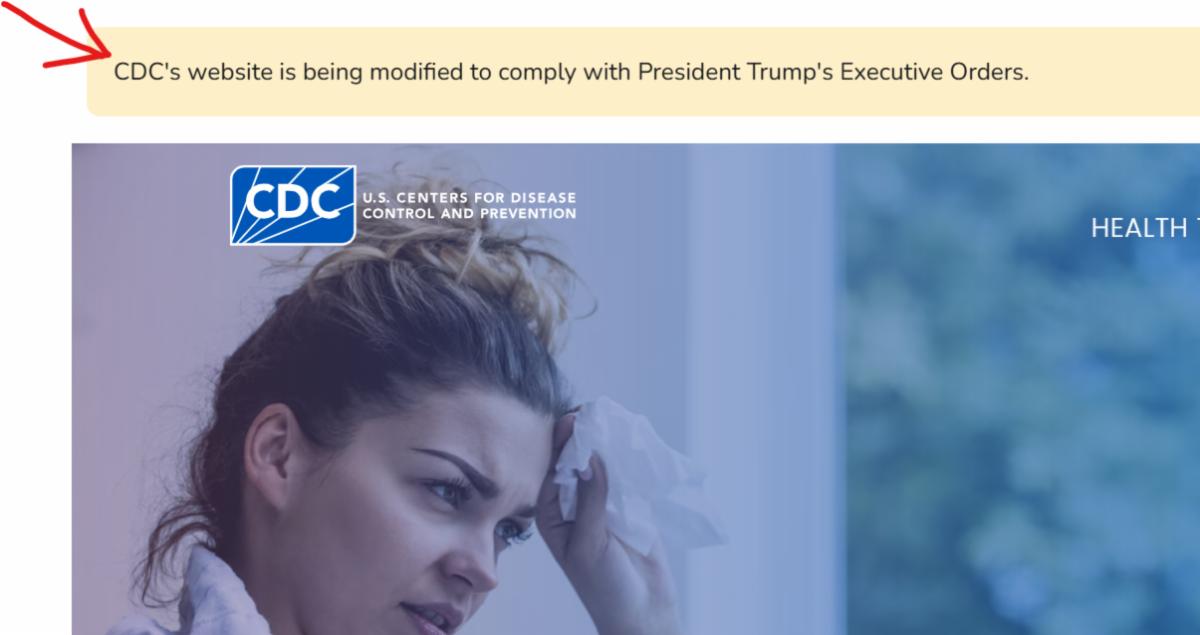
The Centers for Disease Control and Prevention (CDC) was recently ordered to take down several public health data pages, limiting access to disease research and critical health information. A federal judge has since ruled that these resources must be restored, ensuring that researchers, healthcare providers, and the public continue to have the data they need. The pages have been restored, with the addition of a banner stating that the Center is modifying the site to be in compliance with President Trump’s orders.
Below: screenshot from CDC website
| |
|
U.S. Census Bureau. NPR (National Public Radio) published a report highlighting data that had gone missing from the U.S. Census Bureau, at least for several days. NPR said, "The disruptions to data access have drawn public outcries from organizations that rely on government statistics." The American Statistical Association, Population Association of America, Council of Professional Associations on Federal Statistics, and about 230 more released a letter calling on Congress to "demand the complete restoration of any federal data that have been removed" and work with the Trump administration to "prevent any future purge or removal of data from federal agency websites and portals."
"Removing access to taxpayer funded public data from the public domain is unethical and contrary to the principle that these data are for the public and public good," the Association of Public Data Users said in a separate statement. "It also sets a dangerous precedent that any administration could withhold public data for any reason." It can also be considered as a kind of censorship, says Karthick Ramakrishnan, the founder and executive director of AAPI Data, a research and policy organization focused on producing data that better reflects Asian American, Native Hawaiian and Pacific Islander communities.
Read the full article here.
| |
Pausing payments and contracts | |
|
The administration issued a memo instructing federal agencies to temporarily pause the disbursement of certain federal grants and loans to review spending and ensure alignment with the administration's priorities. This pause has affected various programs, including those related to early childhood education and health research. A federal judge has subsequently ordered the administration to lift the freeze and resume funding. Despite this order, a senior official at the Federal Emergency Management Agency (FEMA) directed staff to continue withholding funds, leading to legal challenges and concerns about compliance with judicial decisions.
What this means in Oregon
Many state agencies use electronic systems to submit federal reimbursement requests for various programs. Some of those payment portals were shut down, although the length of time each portal was closed varies. These federal reimbursement funds pay for “goods and services” at state agencies and other local government and nonprofit organizations who operate federal programs, or programs with approved federal funding, in our communities.
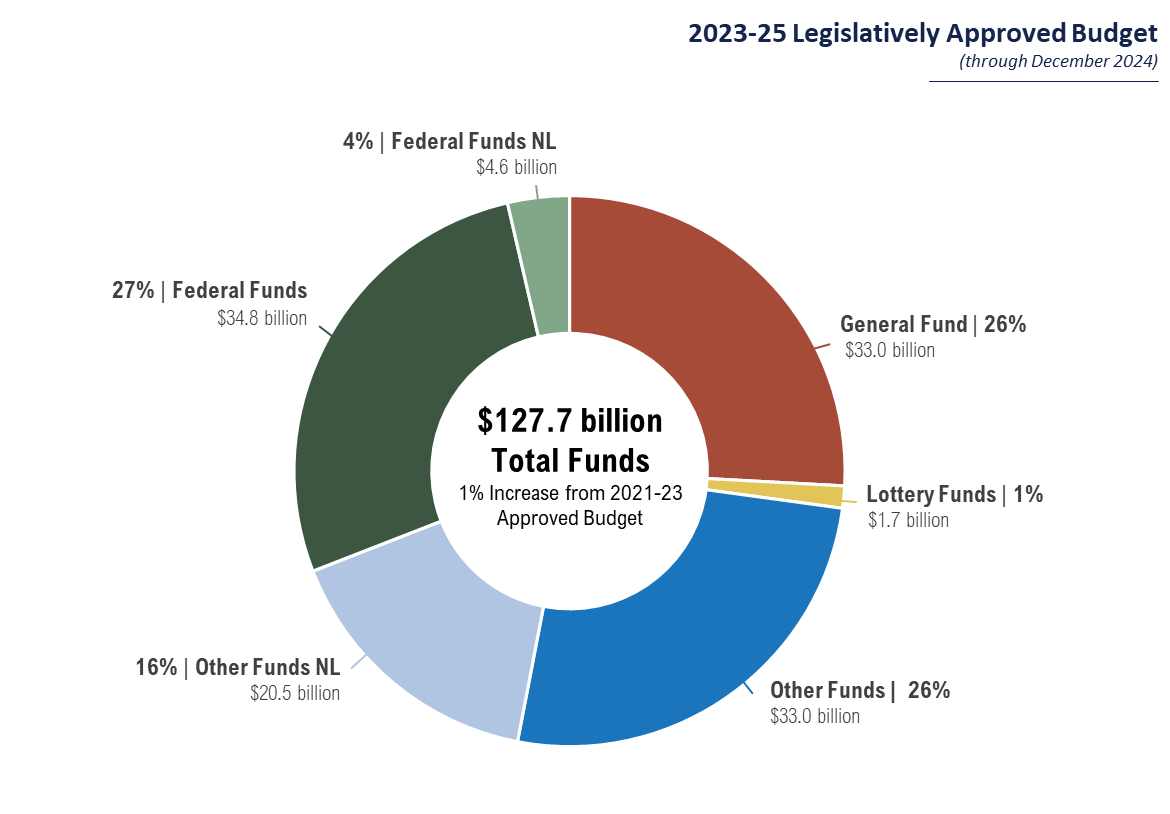
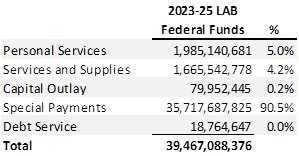
Oregon's adopted budget includes nearly $35 billion in federal funds, comprising nearly a third of the state budget. Less than 10% of that goes to support activities of state agencies. Over 90% of the federal money coming in to Oregon goes directly to local programs or individuals in the form of "special payments" (see chart below). These include loans, grants, and payments to individuals, cities, counties, nonprofits, and other organizations.
| |
Shrinking agencies, shifting control | |
|
Here are articles explaining some of the actions in the last couple of weeks.
Treasury and official payment system. Department of Government Efficiency (DOGE), led by Elon Musk, is an office housed within the Executive Branch. Despite its name, it is not an official government agency established by Congress. As a New York Times article explains, "the group will be an official unit within the executive office of the president. The so-called “United States DOGE Service” will take over the United States Digital Service, which was created in 2014 by former President Barack Obama to improve government services through the use of technology." DOGE gained access to the U.S. Treasury federal payment system which processes Social Security, Medicare, and other government payments. Any changes to how these payments are processed could have significant consequences, particularly for retirees and those on fixed incomes.
Workforce. A new federal policy aimed at offering voluntary buyouts to government employees, temporarily blocked by a federal judge, was allowed to proceed. The policy known as “deferred resignation” encourages federal workers to leave their positions in exchange for a promise of severance pay. Oregon is home to thousands of federal employees working in environmental agencies, healthcare, housing, and more. Changes to federal payments and job security could have ripple effects across Oregon’s economy and public services, for example, decisions to rent or purchase a home, enroll in college, or start a business. See the Congressional Research Service report Current Federal Civilian Employment by State and Congressional District.
Some of the initial workforce cuts listed below are accomplished through quick dismissal of employees still in a probationary period. Source: USA Today.
- More than 100 employees of Consumer Financial Protection Bureau were fired before a court order stopped the dismissal of more workers.
- At Department of Education, dozens of employees have been put administrative leave and more than 60 were fired in departments including student financial aid and special education and rehabilitation services.
- About 10% of the Centers for Disease Control and Prevention workforce was fired on Friday.
- National Institutes of Health: Reuters reported an anonymous source describing a "huge" number of nurses fired from the NIH Clinical Center.
- Cybersecurity and Infrastructure Security Agency, the Federal Emergency Management Agency, and U.S. Citizenship and Immigration Services: several hundred employees.
- Department of Energy: 1,200 to 2,000 workers in the department were terminated including including some at the National Nuclear Security Administration which manages the U.S. nuclear weapons fleet and secures radiological materials around the world.
- Interior: At least 2,300 terminated including 800 Bureau of Land Management employees and about 1,000 National Park Service workers.
- Veterans Affairs: more than 1,000 of about 43,000 probationary employees were terminated.
- Internal Revenue Service: prepare for mass firings, which would interfere with auditing tax returns of corporations and wealthy individuals and processing tax returns.
- The layoffs at U.S. Forest Service (about 3,400, or 10% of the USFS workforce) do not include firefighters, law enforcement officers, bridge inspectors or meteorologists.
Foreign aid. The U.S. Agency for International Development (USAID), which provides disaster relief, food assistance, and public health programs worldwide, is facing dramatic reductions. Some offices are already preparing for closure, and humanitarian organizations warn that these cuts will weaken America’s ability to respond to global crises. Foreign aid saves lives, strengthens markets for US goods, and prevents epidemics, for example stopping certain diseases which can spread globally due to the ease of international travel.
See the 2017 article in TIME, Bill Gates: Cutting Foreign Aid Makes America Less Safe, and an OPB article about USAID.
| |
|
Tariffs and trade
According to new data compiled for the Oregon State Treasury by Oregon State University (OSU) researchers, nearly half of Oregon households can't afford an emergency expense of more than $500. Yet, the cost of the proposed Trump administration tariffs on Canada, Mexico and China would increase costs to the typical American consumer by amounts ranging from $800 to $1,200 per year, according to independent economists. See statement from Oregon State Treasurer Elizabeth Steiner.
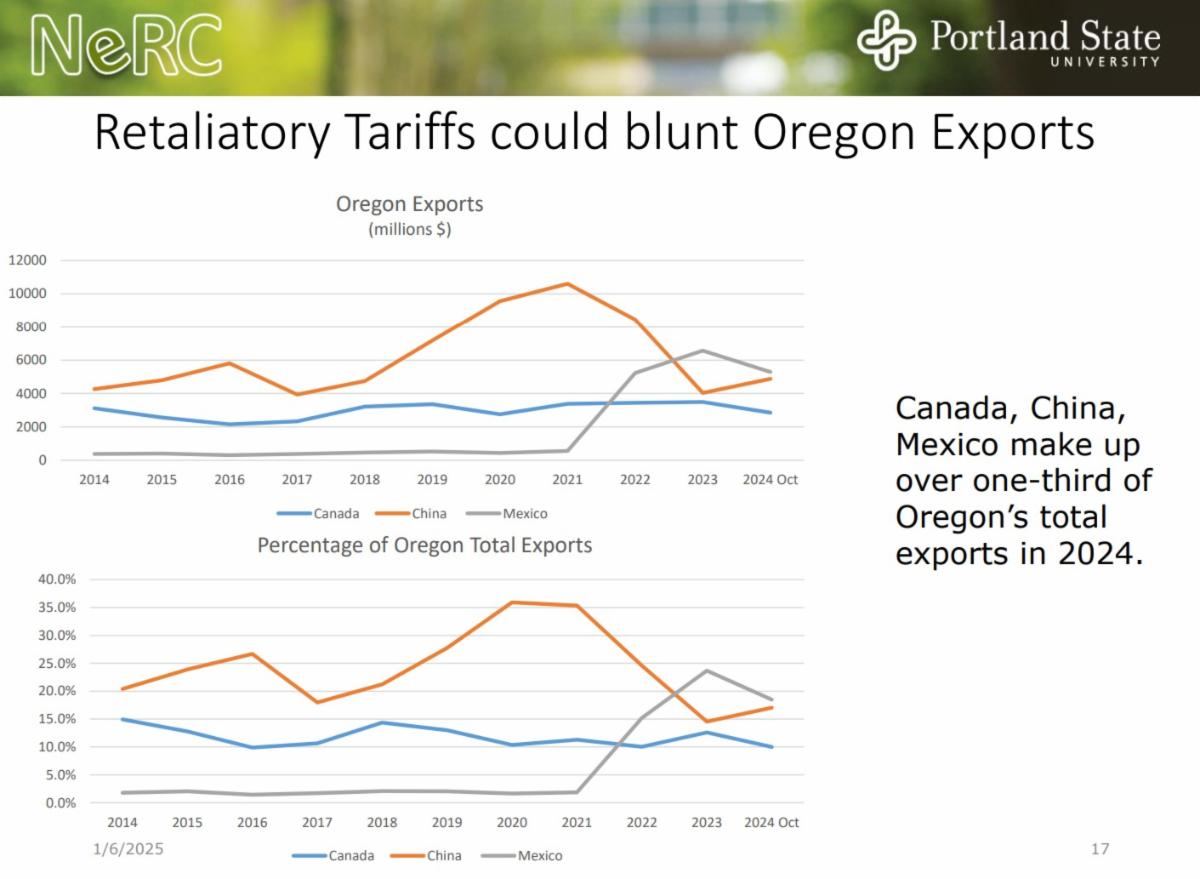
A report from a Portland State University economist describes Oregon's export economy (14.5% of state Gross Domestic Product, compared to 10.3 % U.S. average, 2022) and warns that the proposed tariffs "would take the average tariff rate on all imports to highs not seem since the Great Depression," and "raise taxes for all income groups, with biggest hike on the poorest Americans." The report is posted here.
| |
|
The Governor's Office and Executive and Legislative branches are quickly reviewing programs and grants to determine our exposure to possible reductions or cancellations. Impacts would affect jobs in state and local government agencies and community organizations.
Governor Tina Kotek
Watch Governor Kotek's January 28 press briefing on the federal funding pause.
| |
The Attorney General
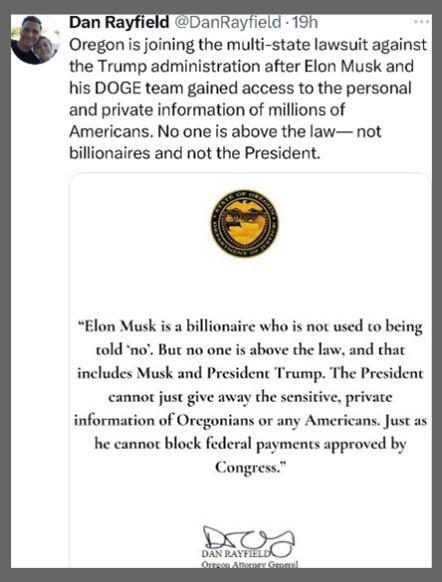
Oregon has joined a multi-state coalition in a lawsuit against the Trump administration, challenging the unauthorized access of U.S. Department of Treasury payment systems granted to Elon Musk’s Department of Government Efficiency (DOGE) staffers. Attorney General Dan Rayfield and the coalition argue that access to sensitive payment systems with private information including bank account details and Social Security numbers is unlawful. The lawsuit seeks to prevent DOGE (Elon Musk's new Department of Government Efficiency) access to critical systems, which brings potential risks to the privacy and security of Americans who rely on these programs for essential services like healthcare and childcare.
Oregon has joined additional lawsuits on topics including NIH funding, birthright citizenship, and more. See OregonLive article: How many times have Oregon leaders sued Trump so far? Here’s the run-down
The State Treasurer
See official statement from State Treasurer Elizabeth Steiner which includes the following:
"Oregonians depend on federal funds to ensure public safety, keep early learning programs and schools open, deliver health care, support farms and small businesses, maintain roads, care for seniors and other vulnerable people, fight wildfires and more. These funds support thousands of jobs in Oregon. I am working with other state and congressional leaders to keep programs running and minimize any harms people across the state may experience. I call on the administration to immediately release these congressionally appropriated funds to Oregon and other states."
| |
The chaos and uncertainty of federal actions already announced and possible in the coming weeks have added lots of conversations and work each day on top of our usual responsibilities. Nevertheless the legislature is operating “full tilt” with the typical schedule of public hearings on hundreds of bills. I’ll report more in the next e-news. Meanwhile here are a few pictures from last week. | |
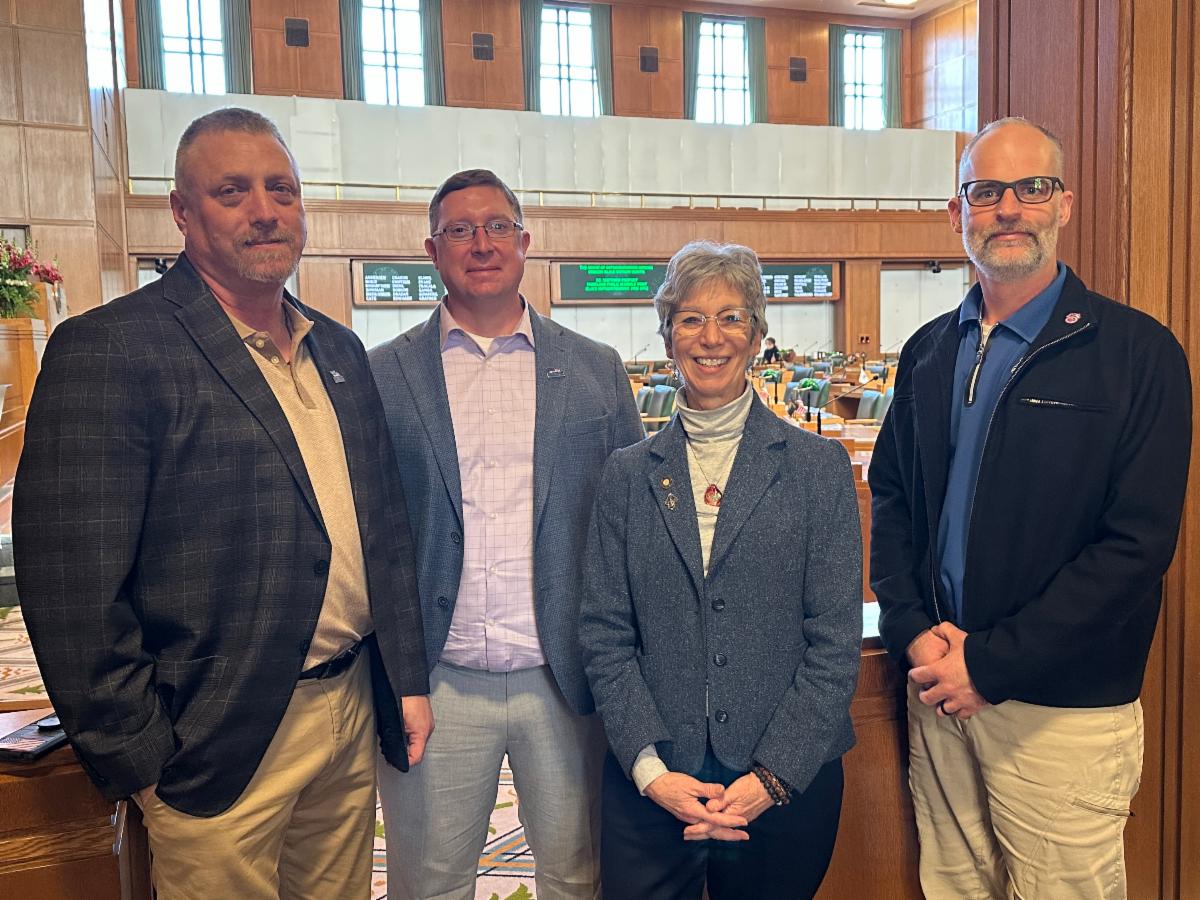
Railroaders from the Brotherhood of Locomotive Engineers and Trainmen and SMART Transportation Division visited the office to talk about the proposed operations change at the Eugene Railyard and a bill requiring at least two people on trains to improve safety. | |
Julie Weismann, Hope and Safety Alliance, spoke to the House Judiciary Committee. | |
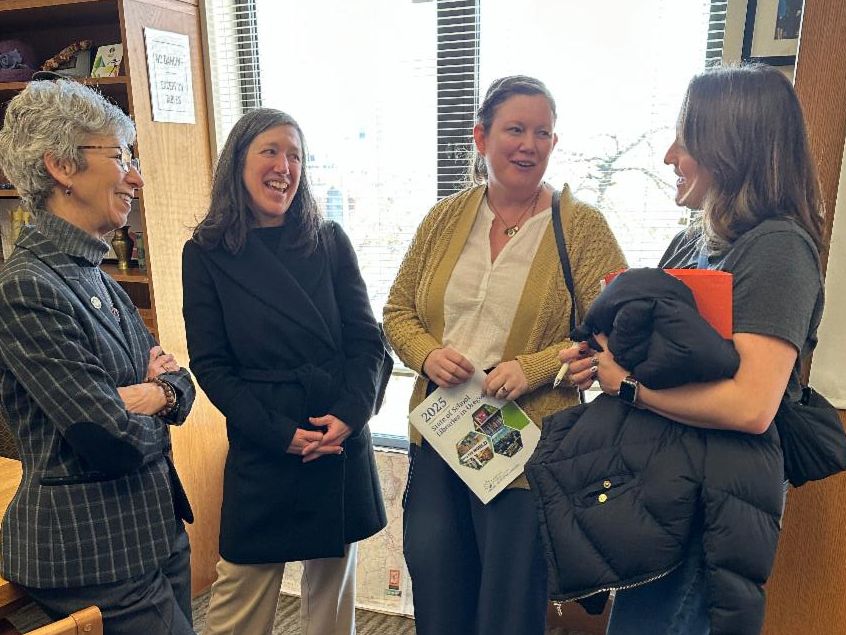
School librarians visited my office and we talked about libraries as school and community info hubs teaching cyber literacy and keyboarding, online behavior, ethical and practical AI (Artificial Intelligence) applications, and more. | | | | |