FEED THE FUTURE INNOVATION LAB FOR
LEGUME SYSTEMS RESEARCH

October 2024

The Feed the Future Innovation Lab for Legume Systems Research fosters dynamic, profitable, and environmentally sustainable approaches that contribute to resilience, productivity, and better nutrition and economic opportunities. The lab is managed by Michigan State University.

From the Management Office

Regional stakeholder convenings identify gaps in legume systems in Africa through a locally led lens

Legumes play a crucial role in the socio-economic development of many global regions. These crops provide affordable protein, nitrogen fixation for soil, and are adaptable to a changing climate. The Feed the Future Innovation Lab for Legume Systems Research works to build the systems of common bean and cowpea across three key African regions: West Africa, East Africa, and Southern Africa.


To identify gaps in these systems, the Legume Systems Innovation Lab held a virtual regional stakeholder convening (RSC) in each of the three African focal regions. Over 500 stakeholders from across the value chains participated in the interactive workshop. The gaps identified by the regional stakeholders provided the Legume Systems Innovation Lab with valuable insight on where to focus research funding support.


This “bottom up” strategy focusing on locally led inclusion is designed to identify the needs of a specific system rather than using a “top down” approach where research priorities are set without examining gaps. With this local context the Legume Systems Innovation Lab structured the request for proposals (RFP) to fill gaps which will strengthen the overall system in each region.


One key to the successful RSCs was the establishment of regional coordinators who understood the local landscape. This role in Africa was filled by the International Centre for Evaluation and Development (ICED). ICED is an independent, African-owned and African-led think tank that applies monitoring and evaluation (M&E) in the development sector. ICED uses the outputs of evaluation to contribute to and enhance development outcomes and impacts, concentrating on Africa, where the need for its expertise is greatest.


Through ICED, the Legume Systems Innovation Lab was able to reach localized experts and harness their knowledge of the regional cowpea and common bean systems.


A main component of the RSCs were regionally focused presentations on cowpea and common bean seed systems and varietal development; value chains and system integration; gender equality and social inclusion; and resilience and climate change led by the Legume Systems Innovation Lab Technical Leadership Team (TLT). These presentations helped to set the stage for dynamic interaction amongst participants as they collectively discussed the system gaps and how to best address them. The TLT will remain as a support system to researchers providing focused expertise in their specific areas.


The RSCs also highlighted how multi-stakeholder platforms (MSPs) integrate members of the entire value chain for maximized benefits to all members leading to cross collaboration and unified efforts. The Legume Systems Innovation Lab will implement the MSP strategy within the newly funded projects. This approach led to the program receiving 107 concept notes in the RFP process based on the gaps identified within each region.


Note: The Legume Systems Innovation Lab also works in Central America. This article focuses the RSC process in the three African regions, however, the same RSC process occurred in Central America.

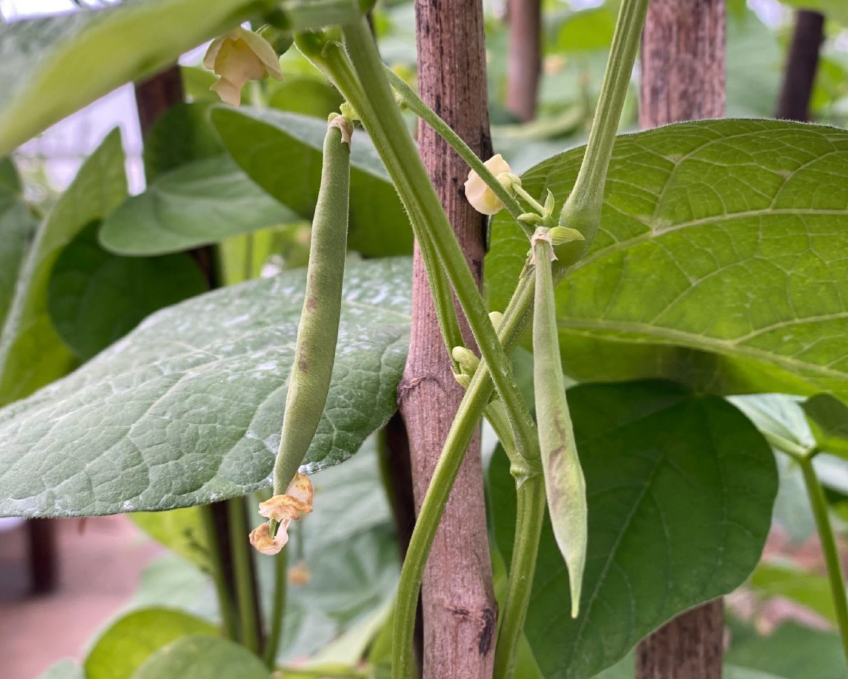
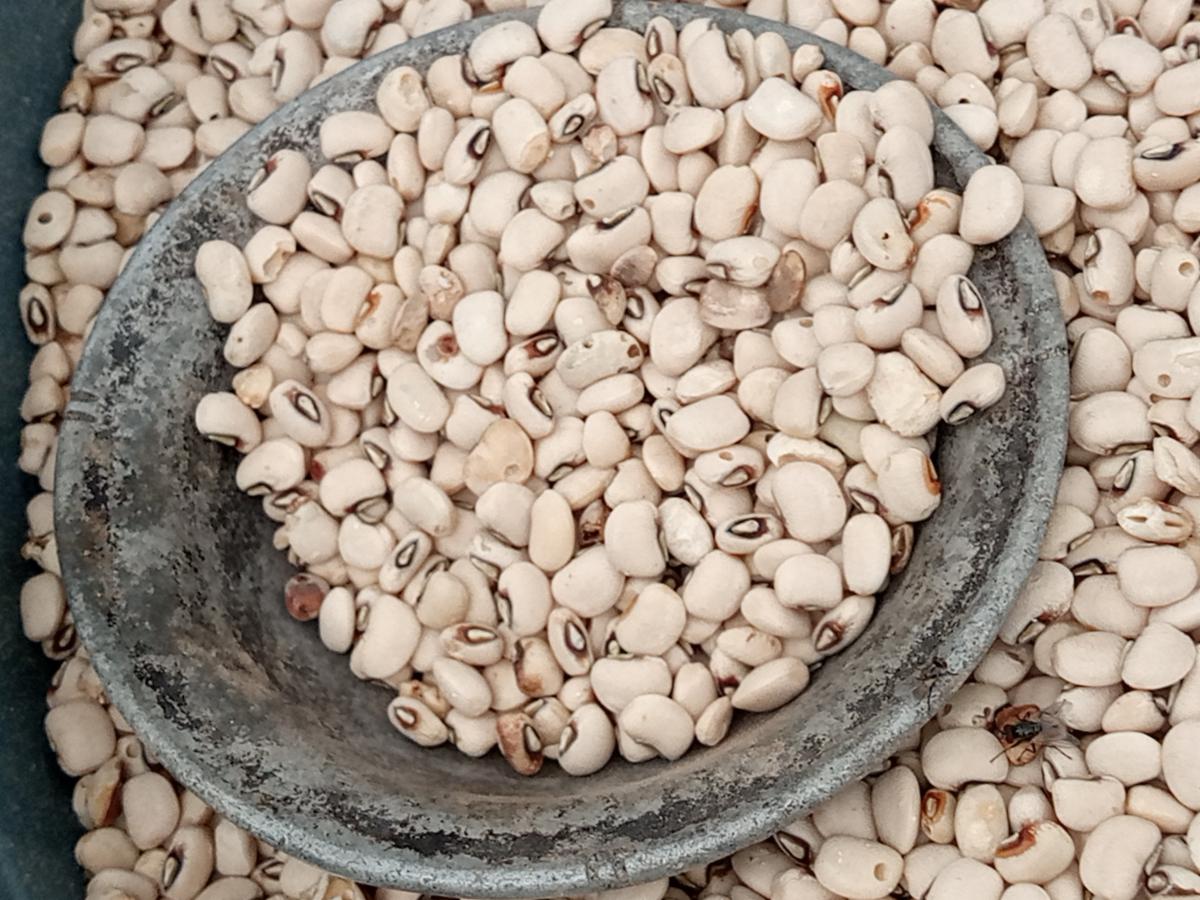
Common bean (L) and cowpea (R)) are the focal crops of the Feed the Future Innovation Lab for Legume Systems Research based at Michigan State University.

In the Field

Project works to scale up new cowpea

varieties in Ghana

The Feed the Future Innovation Lab for Legume Systems Research is working to bring new cowpea varieties to smallholder farmers in Ghana through the project titled, Scale-Up of Legume Systems Innovation Lab-Developed New Cowpea Variety Releases in Ghana. The project is a collaboration between the University of California - Riverside and the Council for Scientific and Industrial Research - Savanna Agricultural Research Institute (CSIR-SARI) Ghana.


During the first phase of the Legume Systems Innovation Lab five new cowpea varieties were developed through this research collaboration. Two of the five new varieties have now been released by Ghana's National Seed Council (NSC). These released varieties, Kanton Bongdaa and Awudu Benga will be promoted and scaled-up in this one-year project.


Kanton-Bongdaa has large seed size, creamy/white seed with black eye, early maturity (66-70 days), and short cooking time. Pods positioned above the canopy makes it easy to harvest manually and mechanically. Additional attributes include high resistance to Aphis craccivora, moderate tolerance to Striga gesnerioides, tolerance to drought, resistance to Macrophomina, and rich grain nutrient content (iron – 51.736 mg/kg, total sugar – 8.836%, calcium – 670 and zinc – 32.071mg/kg). 


Awudu-Benga has large seed size, cream/white seed color with brown eye, and is early maturing (65-70 days). Pods positioned mostly above the canopy makes it easy to both harvest manually and mechanically. Additional attributes include high resistance to Aphis craccivora, moderate tolerance to Striga gesnerioides, tolerance to drought, resistance to Macrophomina, and rich grain nutrient content (iron – 43.688 mg/kg, total sugar – 7.393%, calcium – 740 mg/kg and zinc – 22.594mg/kg).


The project has produced breeder and foundation seed and held multiple on farm demonstration plots to highlight the two new varieties across Ghana. Farmer field days are currently being conducted at the demonstration plots to provide even greater exposure of the new varieties to drive farmer uptake.

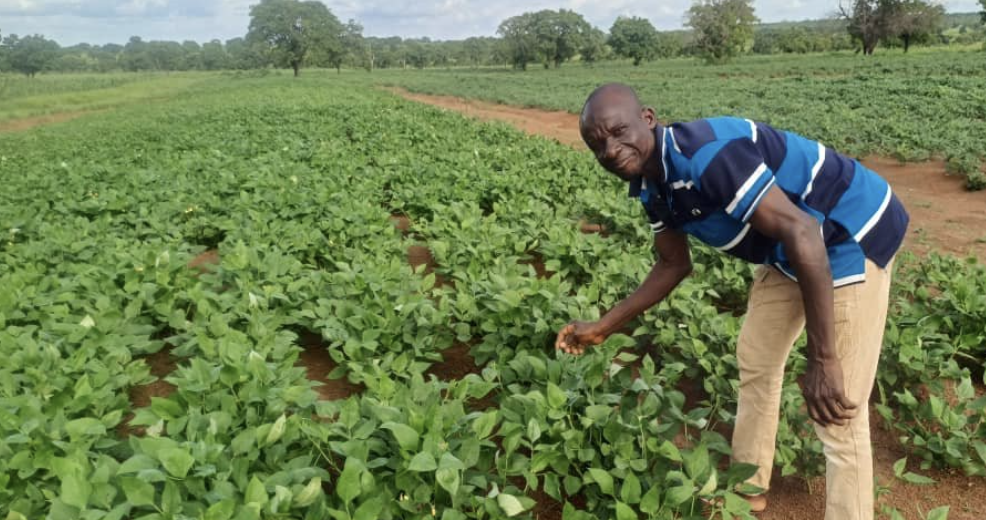
Farmer demonstration plot of two newly released cowpea varieties in Ghana.

Featured Legume of the Month

Bean Flours

Have you ever cooked or baked with bean flours?


They are a great alternative to other grain based flours, are gluten free, and a good source of protein and nutrients. Bean flours can be used to make baked goods, pancakes and waffles, thicken sauces and coat chicken for a crunchy finish.


Check out the recipe for cranberry chocolate almond biscotti below which calls for bean flour instead of a more traditional flour. Check your grocer's specialty baking aisle for ground bean flour and start cooking!

Cooking with Bean Flour...

CRANBERRY CHOCOLATE ALMOND BISCOTTI

Looking for a sweet treat to go with your coffee or tea?


We think you might like this recipe for Cranberry Chocolate Almond Biscotti. Not only will it satisfy your fruity, nutty, chocolatey sweet craving, it will also bring a new twist to your baking as this recipe from Pulses.org features bean flour as a main ingredient!


Mix the bean flour with sugar, eggs, orange zest, vanilla extract, cocoa powder, dried cranberries and slivered almonds. The mixture is formed into loaves baked and cooled before baking a second time. The second baking gives the biscotti that trademark crunching and firm texture which is so good for dipping into coffee or tea.


Never baked with bean flour? Well, time to give it a try! Look for bean flour in your grocer's baking aisle and do a quick internet search to find many ways to incorporate this nutrient rich flour into your baking and cooking.

Get the Recipe
For More Information on the
Feed the Future Innovation Lab for Legume Systems Research
Visit our website
Facebook  X  Youtube  
This newsletter is made possible by the generous support of the American people through the United States Agency for International Development (USAID) under the Feed the Future initiative. The contents are the responsibility of Michigan State University and do not necessarily reflect the views of USAID or the United States Government.