Wednesday Weblog for January 15, 2025 | |
“The biggest thing we get out of it is seeing the kids smile. And hopefully, we will also see that the lessons we’re teaching – not only the fundamentals of hockey but also the life values – are sinking in.” – Bobby Orr | |
|
I usually don't do much research when preparing a Wednesday Weblog. Sometimes, I just get up at 4:00 AM and start writing, since most of the content is resting between my ears somewhere.
This was different for some reason, as you'll see. I had to research winters, ice skates, my old neighborhood growing up, New England traditions that kids have, and more.
I am honestly not sure of my inspiration for the Weblog. One day I started thinking about the years I spent playing pond hockey, and it hit me that I learned some things that I applied to the rest of my life.
| |
Lessons From Playing Pond Hockey | |
|
While doing the research, I checked the average temperature in Massachusetts in December of 1964 and compared them to December of 2024.
For the past five years the average number of days in Massachusetts where the temperature was below freezing has been 70 days, with only 64 days in 2024.
Contrast that with the average number of days when I was kid: Massachusetts averaged more than 90 days below freezing. More skating time.
| |
|
(I also checked the same dates in Toronto and the comparison is about 112 days for that city back then to about 88 days recently.)
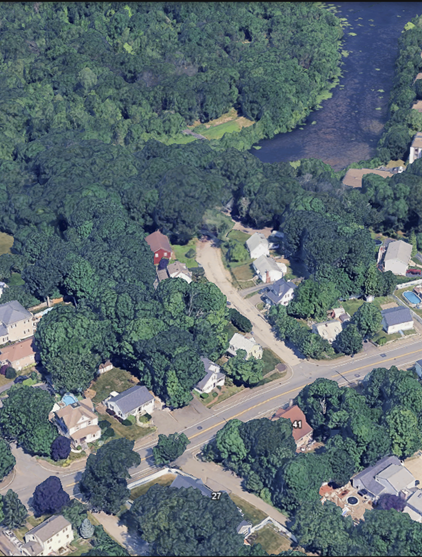
I spent my formative childhood years living about 200 yards from Eaton’s Pond (pictured below) on the Braintree-Quincy line, near one of the famous Quincy quarries.
Apparently, based on the data above, the pond froze over for several months during the year. I remember mid-December through mid-February as the most common times we played Pond Hockey.
| |
|
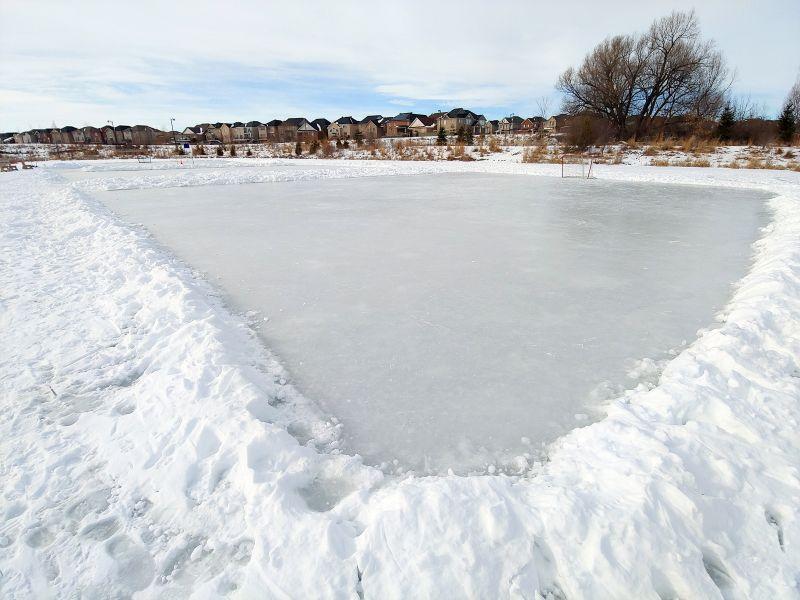
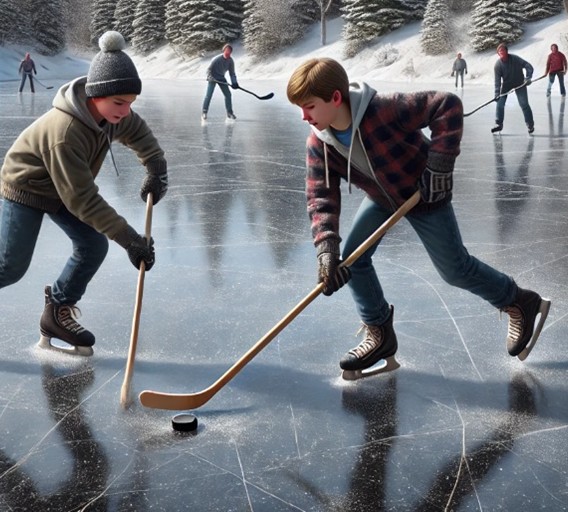
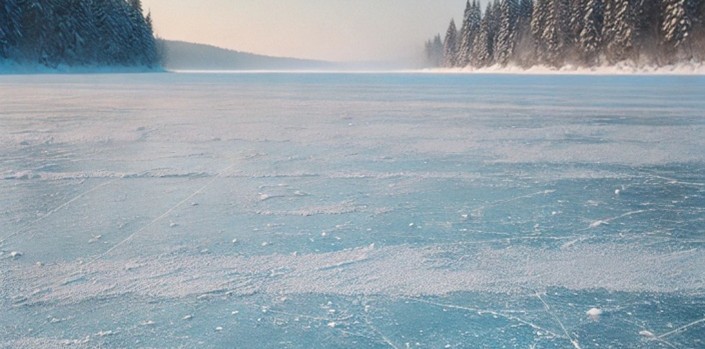
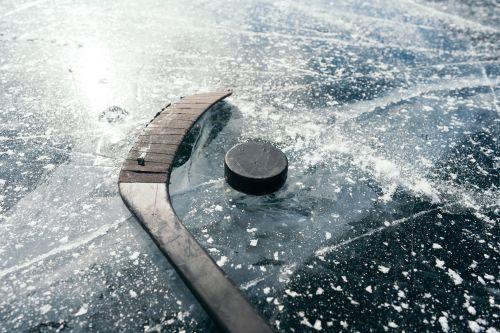
If you are not familiar with pond hockey, it is a game usually played without boundaries on a frozen pond or lake, although I’ve never heard it referred to as ‘Lake Hockey’ but there must be a Canadian somewhere who calls it that.
In those days, almost all skaters everywhere learned to skate on a pond. There were some rinks, but renting a rink to play hockey generally cost several hundred dollars, so little kids learning to skate were either on the ponds or not learning.
Shortly after Bobby Orr joined the Bruins, things changed a bit: rinks started popping up everywhere, including in my home town of Braintree. I learned things on the pond, that I used in the rink, as well as in life. Here are several examples.
| |
|
Lesson #1: Accuracy is Good for Everyone
Picture a smooth ten-acre lake with a game of pond hockey among 8-10 kids. Just glassy ice, no snow, no boundaries, only shoes or a stick laying on the ice as the goals. Now picture these kids passing the puck to each other with limited skill.
When passing the puck in pond hockey, because there are no boards to stop an errant pass missing your teammate could result in him or her skating for 50-100 yards to get the puck. It might even cross into another pond hockey game and wreak even more havoc. A bad or inaccurate pass causes a lot more work for a teammate.
In life and work, a bad pass, or inaccuracy, does the same thing. Whether you are turning over a financial report or a direct report, a bad transfer impacts both you and the person you are interacting with: you look bad because the report isn’t accurate, and they have to clean up your mess, or chase your bad pass across the ice.
If you have a history of bad passes, when a new game is started, you are likely to be one of the last ones picked. Or if there are plenty of players, you may not be picked at all.
| |
|
Lesson #2: Strengths Matter
Picture those 8-10 kids choosing sides. We called it ‘bucking up’ and ChatGPT told me it is “a New England regionalism.
In parts of New England, particularly in informal contexts like schoolyard games or neighborhood sports, "bucking up" can refer to the process of dividing or selecting teams. It often involves a quick and informal method of assigning players to different sides.”
Anyway, when the top two players were bucking up to choose, the best skaters or the fastest skaters (or the best passers) were usually chosen first. As kids were skating around waiting for the sides to be chosen, the choosers could tell who had what strengths, even if they hadn't played hockey with them before.
If you had none of those strengths, you were assigned to be the goalie and would stand in front of that goal defined only by a stick on the ice or a pair of shoes placed 6-8 feet apart.
In life and work, strengths have the same impact on whether you are chosen for a particular task or assignment, including a promotion. If you are the best or the fastest or the best passer, it is more likely that you will be chosen before someone who can’t stand up on skates. If you are the best, or fastest at what you do, you will likely be selected sooner.
| |
|
Lesson #3 Unseen Elements Impact Things
It wasn’t until I got to high school and started playing in skating rinks with artificial ice that I learned that pond water was dirty.
Oh, I knew enough not to drink it, but I didn’t realize that pond ice has impurities that nick skate blades and skating on a pond or lake requires you to sharpen your skates more often, compared to skating on arena ice.
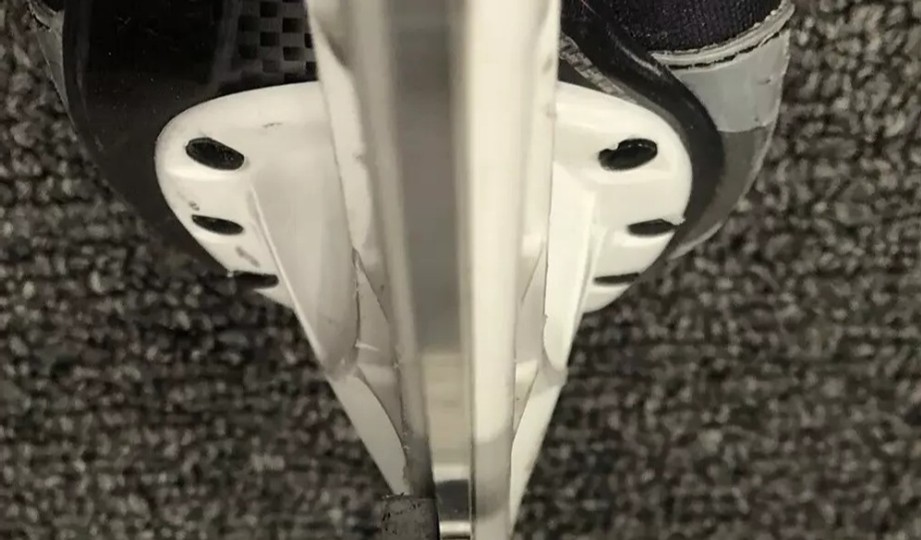
Hockey skates have what is called a ‘radius’ that is a concave groove that is cut into the skate blade during the sharpening process. This groove creates two edges that come into contact with the ice.
That unseen radius, only visible if you put the blade up close to your face and examine it, determines how well you glide, how quickly you can stop and whether or not you slip. Pond water, with its impurities creates nicks along the edges of the radius and over time, makes a skater slower with less ability to stop and turn. That's what dull skates are.
Hockey players who skate in both arenas and ponds, unsurprisingly, generally have two sets of skates. Pond hockey skates and arena skates. Well, let me rephrase that: if you are not an ice hockey player you ARE probably surprised by that.
There are a lot of unseen elements that impact life and work, factors that we are not aware of that an impact our speed, our agility and how much we slip. One of my oldest cliches is ‘If it doesn’t make sense to you, you are missing some key information.’
If you had key information, most things in life or work would make sense. Today, ‘research’ is a magic word because through research things are uncovered, whether it be medical research or statistical research, it adds to a knowledge base like learning about the radius of a hockey skate blade.
| |
|
Lesson #4: Things Can Change
There are two things that happened every winter, maybe multiple times.
- First, it warmed up a bit and rained, and then got cold again. Fresh ice everywhere! We’d race down the pond to play as soon as we woke up.
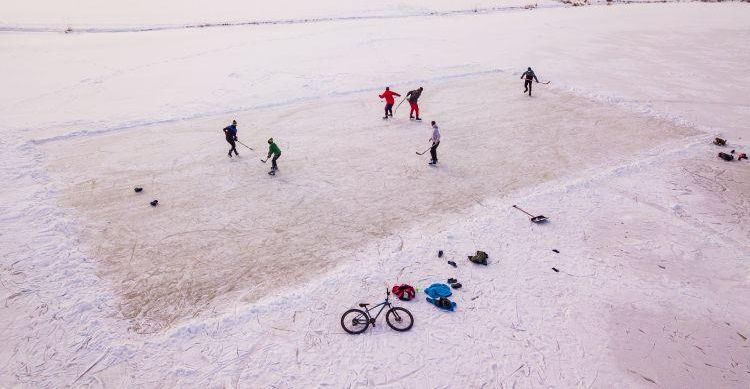
- The second thing that happened was it snowed. We’d race down to the pond with our shovels and create a rink with edges created by the snow.
The more kids, the bigger the ‘rink.’ The shovels were also a necessity when all the games were played on the same surface: we’d scrape the ice to clear off the snow created by the stopping and starting. We functioned as human Zamboni's.
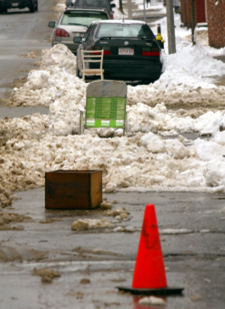
Sometimes, if you were well known as the snow shoveler for a particular 'rink' on the pond, you could 'claim' it if another group of kids were using it. Kind of like the "lawn chair to save a parking space you cleared" regulation in South Boston.
In life and in work rain (and snow) comes. As a kid, we accepted the fact that we couldn’t skate on a bad weather day, but when the rain or snow stopped and conditions changed, we were excited because we knew we’d have a better day skating. We prepared for it and then made the most of it.
There are a lot of metaphors about rainy days, and as a pond hockey player, I actually looked forward to them (on occasion) because we’d have fresh ice. No one had their own Zamboni, so rain was the next best way to get fresh ice.
I can’t count the number of times in my career that it was ‘raining’ at work or in my personal life, but something inside me encouraged me to be persistent because a sunny day was sure to come. One of my other cliches historically has been ‘everything is temporary’ and obstacles, bad ice, and rain abide by that rule.
| |
|
Lesson #5: Technology Impacts Things
If you can believe it, hockey sticks were flat, rather than curved at the blade. They started being curved in the 1960’s when a player for the Chicago Blackhawks, Stan Mikita, curved his stick.
Why does a curved stick fall into the ‘technology’ lesson? A curved stick can lift the puck above the ice surface much easier than a flat stick. Those kids with flat sticks shooting at the goalie on the pond had almost no chance of hitting him or her in the body or the face. Once the curved stick took over, it was much harder to get someone to volunteer to be a goalie. Teeth were at risk, as well as other body parts.
In life or in work, getting volunteers can be challenging, particularly when technology changes something, and people are afraid or unfamiliar with the impact (Artificial Intelligence?) Yesterday's volunteer when the sticks were flat, is nowhere to be found with curved blades the norm. Innovations change the rules and the circumstances.
| |
|
Lesson 6: Avoid Big Circles
If you have ever skated, you know circles are important, they are how you change direction or turn around. Pond hockey skaters can be ranked by how big their circles are.
Skaters can take a wide circumference to change direction take advantage of the boundary-less lake surface. Unfortunately, when those wide circle skaters moved to an indoor hockey rink, they were pretty useless. In order to play in a rink, you need to be able to turn quickly and skate in tight circles because the boards are in the way of big circles.
In life and work, sometimes people take the long way around. It could be in conversation, it could be in productivity, it could be something as simple as the timely returning of emails. If you can pivot quickly and don’t take the wide way around, you are probably more effective as an employee, a spouse or a parent.
| |
|
Lesson #7: Ice Hockey is a Meritocracy
You could either skate or you couldn’t. You could either pass or you couldn’t. You were either good at pond hockey or you weren’t.
Even when I was a varsity high school hockey player for Braintree High, if both my Dad and I were available when the captains were bucking up for a pond hockey game, 100% of the time he was picked before me.
His age didn’t matter, my curved stick didn’t matter, my $100 skates didn’t matter. He was simply better and he was picked first.
While meritocracies aren’t all perfect, they all teach us lessons, but only if we are paying attention.
(In this photo, our house is at the bottom left and Eaton's Pond is at the top right.)
| |
Postscript
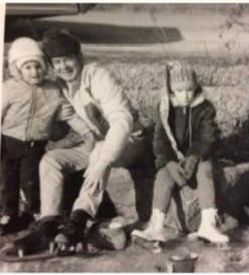
Edward Ambrose Doherty, my dad, played on the US Army All-Star Hockey Team during his time stationed in Germany in the 1950’s.
Seventeen years later I played on the Bay State League All Star Hockey team, thanks in part to the lessons I learned playing pond hockey, and those genes from my dad.
And those lessons I learned have lasted a lifetime, even if I can’t skate anymore.
| |
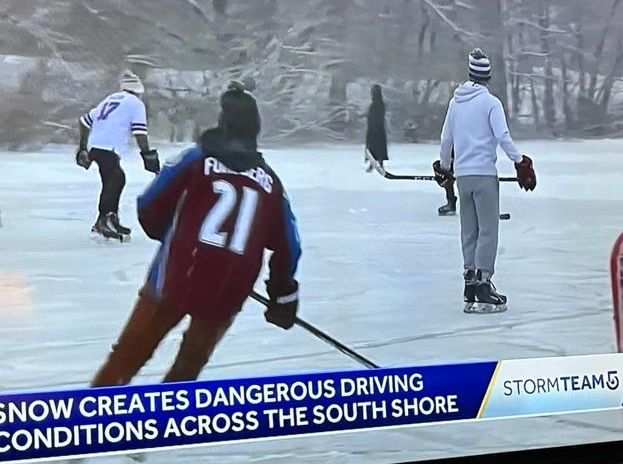
Surprise Photo at the End: | |
|
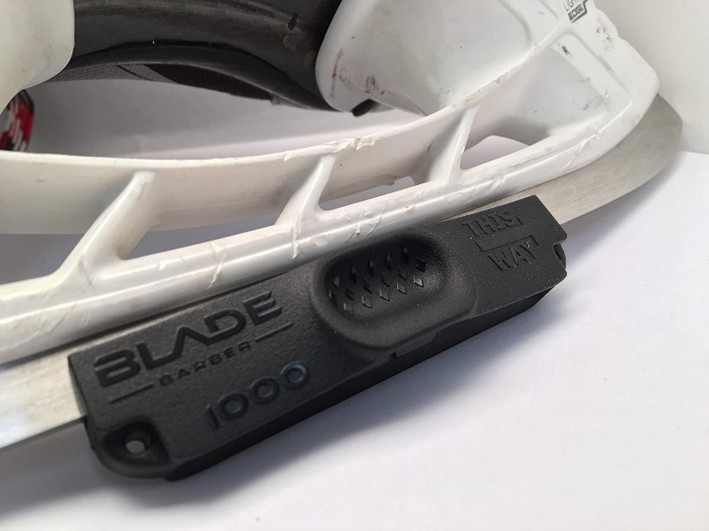
Skate Sharpening has changed over the years. When I played, you had to drop your dull skates off for a couple of days and then pick them up sharpened at a sporting goods store or a rink.
Organized travel teams, high school, college and pro teams generally had a faster way to get their skates sharp.
Today, for $47, you can get a sharpener and do it yourself. I wish I'd invented it.
| |
Joe's Positive Post of the Week | |
Join the Smart Subscribers | |
If you are reading this on a social media platform, click below and you'll automatically receive a 'different' story every week on Wednesday. | |
|
The Roll Call of states and countries where readers reside: Arizona, California, Colorado, Connecticut, Delaware, Florida, Georgia, Hawaii, Illinois, Indiana, Iowa, Kansas, Kentucky, Louisiana, Maine, Massachusetts, Michigan, Mississippi, Missouri, Montana, New Hampshire, New Jersey, New Mexico, New York, North Carolina, North Dakota, Ohio, Pennsylvania, Puerto Rico, Rhode Island, South Carolina, South Dakota, Tennessee, Texas, Vermont, Virginia, Washington and Washington DC, Wisconsin plus Canada, Conch Republic, Australia and the United Kingdom.
| |
Refer a friend to Sign Up for the Wednesday Weblog | |
|
Ed Doherty
774-479-8831
www.ambroselanden.com
ed-doherty@outlook.com
Forgive any typos please.
| |
| | | |