Access Point Newsletter

June 2026

You are receiving this email because you subscribed to NCADEMI updates. Did someone forward this to you? Sign up for NCADEMI's newsletter!

News

The Deadline Moved. The Work Continues.


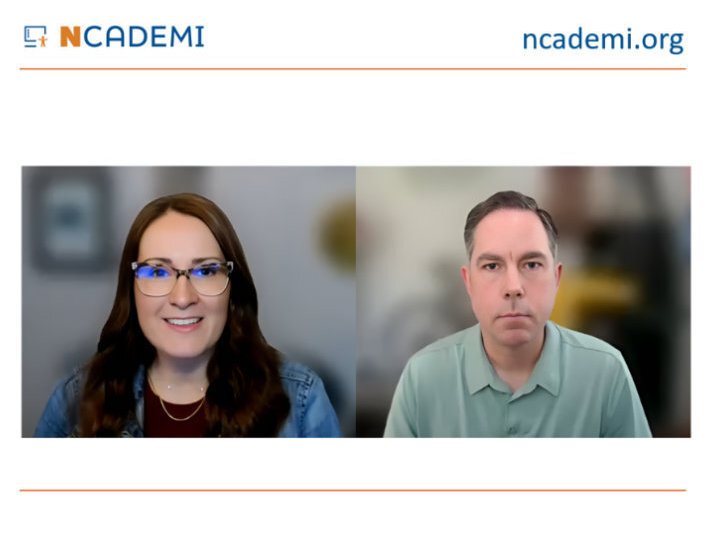
Jena and Rob in the video

While the compliance deadlines set forth in the April 2024 ADA Title II final rule have been extended, it’s essential that state and local educational agencies continue to implement and make progress on digital accessibility plans. NCADEMI’s Jena Fahlbush and Rob Carr met up on video to encourage agencies to stay focused on ensuring students, staff, and parents with disabilities have access to digital educational materials. 

Behind Every Rocket Launch Is a Classroom

A rocket launches from a pad

What does it take to make big dreams possible for all learners? In our latest blog post, Mia Laudato, MSEd, Senior Technical Assistance Specialist and Co-Project Director for the Center on Inclusive Technology & Education Systems (CITES), explores how inclusive systems built with accessibility at their core help remove barriers and expand opportunities. The piece connects the dots between innovation, education, and the everyday work needed to ensure students with disabilities can fully participate and succeed. It’s a powerful reminder that accessibility isn’t an add‑on. It’s foundational. 

Seeking to Improve How AEM is Provided via the IEP? 

In partnership with AEM Corp, NCADEMI is continuing a multi-year project to improve how states and districts provide accessible educational materials (AEM) as part of the IEP. During the 2025-2026 school year, we worked with the Nebraska Department of Education and Lincoln Public Schools to implement a data collection process and are ready to expand to another state and partner districts. Participants will receive one year of free targeted training to improve practices, followed by ongoing technical assistance. Contact our partners at AEM Corp to learn more.  

Email the team at datapilot@aemcorp.com 


NCADEMI Student Accessibility Stories Video Project  

We’re looking for one more district to feature in our upcoming video series! Is your district improving how digital materials and tools work with assistive technology (AT)? We’re looking for real stories that show what’s working for students with disabilities. NCADEMI is inviting school districts to participate in a new video series, Student Accessibility Stories. These short videos will highlight how students use accessible digital materials and AT to learn, engage, and make progress in the general education curriculum. Participating districts will receive a professionally produced video they can use locally, while contributing to a national effort to highlight effective practices. Contact the NCADEMI team to learn more.  

Email the team at ncademi@usu.edu  


The Good Life EDU Podcast 

In this recent conversation, NCADEMI’s own Jena Fahlbush and Cynthia Curry share the story behind NCADEMI, along with practical insights on digital accessibility and the resources available to support educators and leaders. The discussion highlights both the progress being made and the challenges that still remain, making it a great resource for anyone working to create more accessible learning environments. Listen to The Good Life EDU episode 


Resources

Digital Accessibility Starts with the Tools We Use 

 Choosing digital tools is also choosing who can fully participate. A recent NCADEMI webinar looked at how procurement decisions shape accessibility in real classrooms and systems. The discussion centered on common pitfalls educators and administrators run into when assessing accessibility claims from vendors, and how asking better questions up front can make a real difference for students and families. Access the webinar resources and recording


Understanding the VPAT® and ACRs 

This resource explains what the Voluntary Product Accessibility Template (VPAT) and Accessibility Conformance Reports (ACRs) are intended to communicate, and how they are typically used in education settings. It offers plain‑language context to help teams better understand accessibility documentation provided by vendors. Learn more about the VPAT and ACRs


Using ACRs to Inform EdTech Decisions  

Designed for education teams involved in selecting digital curriculum and tools, this resource focuses on using ACRs as part of a broader decision‑making process. It highlights how accessibility documentation can support more informed discussions during procurement and adoption. Make more informed EdTech decisions. 


ADA Title II Ruling: What it Means 

This episode of Change Makers: A Podcast from APH dives into the implications of updated ADA Title II timelines and what they mean for schools and districts. NCADEMI Project Director Cynthia Curry joins a panel of experts to discuss how accessibility requirements are evolving, and how educators can stay focused on delivering equitable access to digital materials. The conversation reinforces the importance of staying proactive, informed, and committed to accessibility, regardless of shifting deadlines. Listen to the Change Makers episode

Targeted Support for You

Audience & Schedule

Offering

Description

All PreK-12 Audiences,

Fourth Wednesday Monthly, 3:00–4:00 pm ET

Access Point LIVE!

Supporting all educators seeking assistance with improving digital accessibility.

July’s topic: Workarounds to Deal with Inaccessible PDFs

State and Local Educational Agency Teams,

Second Thursday Monthly, 2:00–3:30 pm ET 

Virtual Professional Learning Group

Focusing on the steps states and schools can take to ensure students with disabilities have access to learning materials they can use (prerequisites apply).

Part C Lead Agencies and Early Intervention,

Fourth Tuesday Monthly, 3:00–4:30 pm ET

Early AEM ECHO Community

Exploring how to better prepare infants and toddlers with disabilities and their families for accessible learning materials in early childhood education.

Parent Centers,

Third Tuesday Monthly, 2:00–2:30 pm ET

AEM Tips

Highlighting resources and strategies for families of children who need accessible materials.

Educator Prep Programs,

Third Wednesday Monthly, 2:00–3:15 pm ET

Preparing Educators for Digital Accessibility Community of Practice

Helping preparation programs strengthen how they prepare future educators to provide and use accessible materials in PreK–12 settings.

OSEP-funded Centers,

Every Tuesday, 2:00–2:30 pm ET

Office Hours for OSEP-funded Centers

Providing OSEP-funded Centers with timely opportunities to discuss accessibility questions and receive guidance.

From the Field

Join the Weiss Center for an interactive webinar, "Making IDEA Data Reporting Accessible Using Excel: Practical Tips & Best Practices," on Thursday, July 16, from 3:00 to 4:00 p.m. ET. The webinar will cover tools, strategies, and techniques to make IDEA data reports accessible, using IDEA Section 618 reports as examples. It will demonstrate Excel accessibility best practices and share tips to improve report clarity, usability, and impact. 


The Described & Captioned Media Program (DCMP) Listening is Learning campaign wants educators to know about the learning benefits of listening to described educational video. Audio description is critical for students who are blind or low vision. For sighted children, audio description offers a promising new way to promote literacy and learning. DCMP members can select from thousands of educational videos with audio description. There are no costs associated with any DCMP services. 


The National Center on Educational Outcomes (NCEO) published a fact sheet on braille. As part of NCEO’s Accommodations Toolkit, the fact sheet summarizes information and research findings on braille as an assessment accessibility feature or accommodation. The toolkit also contains a summary of states’ accessibility policies for braille. 

LinkedIn