|
PRESS RELEASE
Shuman Public Relations
contact@shuman-pr.com | (212) 315-1300
| | LEVI HAMMER PRESENTS GERSHWIN IN VIENNA, A SOLO PIANO ALBUM EXPLORING THE INFLUENCE OF VIENNESE MODERNISTS ON GERSHWIN’S MUSIC, TO BE RELEASED BY DECURIO, APRIL 17 | | Conductor and pianist Hammer performs works by Gershwin, Schoenberg, Berg, and Webern, revealing the kinship between the American superstar and the masters of the Second Viennese School | | |
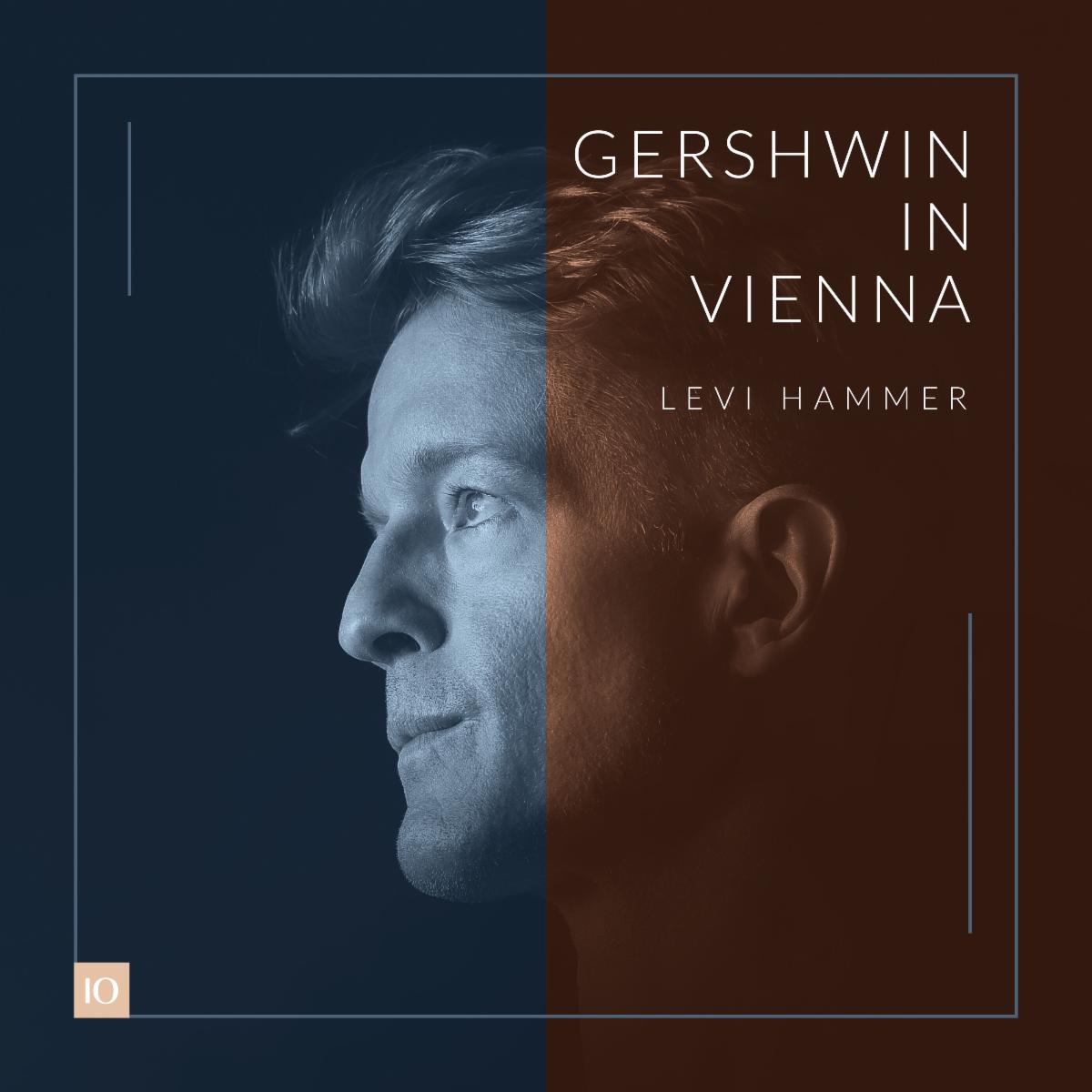
NEW YORK, NY (February 6, 2026) – American conductor, multi-disciplinary musician, and curator Levi Hammer, praised for having “balanced a romantic articulation of structure with a modernist’s adherence to rhythm and color” (Boston Musical Intelligencer), will release his debut solo piano album, Gershwin in Vienna, on Friday, April 17 on the decurio label. Reflecting Hammer’s personal musical journey, shaped by his American roots and ten years living in Europe, the album pairs George Gershwin’s piano works alongside masterpieces by Arnold Schoenberg, Alban Berg, and Anton Webern. This dialogue illuminates the influence of the Second Viennese School on Gershwin’s artistic evolution while tracing Hammer’s own musical development.
The recording includes Gershwin’s “Jazzbo Brown Blues,” Three Preludes, and eighteen of the composer’s own piano transcriptions from the Great American Songbook, alongside Schoenberg’s Three Piano Pieces, Op. 11, and Six Little Piano Pieces, Op. 19; Berg’s Piano Sonata, Op. 1; Webern’s Variations for Piano, Op. 27; and Schoenberg’s Tribute to George Gershwin (1937). The first single, Gershwin’s “Do Do Do,” is available now on all streaming platforms, with additional singles to follow. Recorded at the renowned Teldex Studio Berlin, Hammer's album explores a unique continuum through the music of Gershwin and the Second Viennese School, connecting these otherwise contrasting musical worlds with a single piano.
Raised in the American Midwest and immersed in folk songs and the Great American Songbook from early childhood, Gershwin’s music became a creative compass for Hammer alongside his classical pianistic foundation. During his college years, his discovery of the Second Viennese School, sparked by an obsession with Schoenberg’s Pierrot Lunaire, opened a new modernist world for him. These two passions converged when Hammer learned that Gershwin and Schoenberg had formed a friendship in 1930s California. Often treated as a historical curiosity, this connection instead became a gateway for Hammer to explore the deeper artistic affinities between the two composers.
Hammer writes: “For two composers with vastly different backgrounds, Schoenberg and Gershwin mirrored each other in uncanny ways. Both were largely self-taught, both Jewish, both painters, and both relentlessly devoted to refining their craft. They were even tennis partners—often playing together on Gershwin’s own court, as seen in a surviving film. Schoenberg’s grief at his younger friend’s death is audible in his thick Viennese accent in the radio speech included at the conclusion of this album.”
Trailer for Gershwin in Vienna below:
| | |
A pivotal moment in Gershwin's life occurred in Vienna in 1928 during his European tour. There, Alban Berg organized a private performance of his “Lyric Suite” for Gershwin. When Berg in turn asked to hear Gershwin’s music, Gershwin—hesitant at first—sat at the piano only after Berg reassured him: “Mr. Gershwin, music is music.” Hammer believes Gershwin likely played the Preludes and Songbook transcriptions, which he had in his fingers at the time. He later left Vienna with a signed photograph from Berg, inscribed with a few bars from the “Lyric Suite.”
“I’m certain the ‘Lyric Suite’ directly influenced An American in Paris,” Hammer notes. “As Gershwin’s sweeping melody approaches its climax, the orchestra abruptly falls silent, leaving only a string quartet for two bars. That chromatic passage feels like smoke from Berg’s cigar—drifting from Vienna to Paris via an American genius.”
Although Webern and Gershwin never met, the album also features Webern’s Piano Variations, Op. 27, because the two were aware of each other’s presence in the music scene at the time. Though Webern is often mislabeled as a “pointillist,” Hammer aims to highlight Webern's capacity for romantic intensity, linking his work to the same musical fabric as Gershwin, Schoenberg, and Berg.
As a collection, Gershwin in Vienna presents these composers as artists of shared expressive intensity, romantic lineage, and technical rigor, while also serving as a musical self-portrait of Hammer’s own journey. By placing these works side by side, the album reveals their sympathetic affinities, reframes Gershwin as a modernist of substance, and highlights the Viennese composers as deeply expressive voices.
Appearing regularly as both conductor and pianist, Hammer has led orchestras across the U.S. and Europe and has been praised as a “magnificent” and “alluring” performer (Cleveland Classical). A former member of the German opera house system and Barbara Hannigan’s Equilibrium Artists, he has worked closely with conductors including Simon Rattle, Gustavo Dudamel, and Lorin Maazel, building a repertoire of more than 70 operas, and conducting extensively in symphonic, operatic, and contemporary repertoire.
Gershwin in Vienna marks Hammer’s debut solo recording and first recording with decurio. In recent years, Hammer has performed the Gershwin in Vienna program across Europe and the U.S., with upcoming shows at the Embassy of Austria in D.C. on February 9 and the Austrian Culture Forum in NYC on February 18.
| | |
PERFORMANCES
Embassy of Austria
Monday, February 9, 2026
7:00 PM
3524 International Court
Northwest Washington, DC 20008
Austrian Cultural Forum
Wednesday, February 18, 2026
6:30 PM
11 East 52nd Street
New York, NY 10022
| |
ABOUT LEVI HAMMER
Known for his exceptional range and versatility, Levi Hammer is active internationally as a conductor, pianist, chamber musician, and vocal collaborator. In the current season, he performs across Europe, the Americas, and Asia, leading Barrie Kosky’s production of Die Dreigroschenoper at the Berliner Ensemble and conducting the Cincinnati Symphony and the Konzerthausorchester Berlin. Recent debuts include the Athens State Orchestra, Cincinnati Opera, the Gothenburg Symphony, and the Albanian National Symphony.
Hammer’s extensive experience as an assistant conductor includes major productions with the Los Angeles Philharmonic (Das Rheingold, Die Walküre, Tristan und Isolde, Gurrelieder), the Deutsche Oper Berlin (Wagner’s Ring), the Aix-en-Provence Festival (Tristan und Isolde, Wozzeck), Lyric Opera of Chicago (Salome), and the Royal Concertgebouw Orchestra (Erwartung).
A pianist of commanding technique, he has played with orchestras including the Munich Philharmonic, London Symphony Orchestra, and New World Symphony.
After relocating to Europe, Hammer spent three seasons in the German opera house system at the Komische Oper Berlin and Hessisches Staatstheater Wiesbaden, building a repertoire of over seventy operas with particular emphasis on Mozart, Wagner, and twentieth-century works. He has held titled conducting posts with Cincinnati Opera, Central City Opera, the Castleton Festival, and the Akron Symphony Orchestra.
Hammer studied at the University Mozarteum Salzburg, Rice University, Arizona State University, and earned a doctorate from the University of Cincinnati College-Conservatory of Music. His published arrangement of Schoenberg’s Pelleas und Melisande has been performed by the Vienna Philharmonic and other leading ensembles. levihammer.com
| | |
ABOUT DECURIO
All across Europe, the young record label from Berlin brings together exceptional people with the same aspiration: unique classical music.
decurio aims to develop outstanding projects with exciting musical and intercultural concepts. Artists with different backgrounds dedicate themselves to chosen musical focuses, shedding new light on the familiar and bringing the unheard to the listeners by recording unknown works for the very first time.
In close cooperation with the artists, the record label supervises the productions from the first steps to the release concerts and always attaches importance to the highest technical recording standards and musical performances. decur.io
| | |
GERSHWIN IN VIENNA, GERSHWIN AND THE SECOND VIENNESE SCHOOL
decurio
Levi Hammer, Piano
GEORGE GERSHWIN (1898—1937)
JAZZBO BROWN BLUES
ARNOLD SCHOENBERG (1874—1951)
THREE PIANO PIECES, OP. 11
I. Mäßige Viertel
II. Mäßige Achtel
III. Bewegte Achtel
GERSHWIN
GEORGE GERSHWIN’S SONGBOOK (18 PIANO TRANSCRIPTIONS BY GERSHWIN)
Swanee
Nobody But You
I’ll Build A Stairway
To Paradise
Do It Again!
Fascinating Rhythm
Oh, Lady Be Good!
Somebody Loves Me
Sweet And Low Down
That Certain Feeling
ALBAN BERG (1885—1935)
PIANO SONATA, OP. 1
ANTON WEBERN (1883—1945)
VARIATIONS FOR PIANO, OP. 27
I. Sehr mäßig
II. Sehr schnell
III. Ruhig fließend
GERSHWIN
GEORGE GERSHWIN’S SONGBOOK
The Man I Love (Single No. 2, out February 13)
Clap Yo’ Hands
Do Do Do (Single No. 1, out February 6)
My One And Only
’S Wonderful
Strike Up The Band
Liza (Single No. 5, out April 10)
Who Cares?
I Got Rhythm (Single No. 3, out March 13)
SCHOENBERG
SIX LITTLE PIANO PIECES, OP. 19
I. Leicht, zart
II. Langsam (Single No. 4, out April 3)
III. Sehr langsame Viertel
IV. Rasch, aber leicht
V. Etwas rasch
VI. Sehr langsam
GERSHWIN
THREE PRELUDES
I. Allegro ben ritmato e deciso
II. Andante con moto e poco rubato
III. Allegro ben ritmato e deciso
SCHOENBERG
TRIBUTE TO GEORGE GERSHWIN (1937)
TOTAL TIME: 69:16
| | | | |