|
Please share this edition of Wildlife Highlights with other outdoor enthusiasts
and help our subscription list grow!
| |
Sign Your Hunting and Fishing License Electronically | |
|
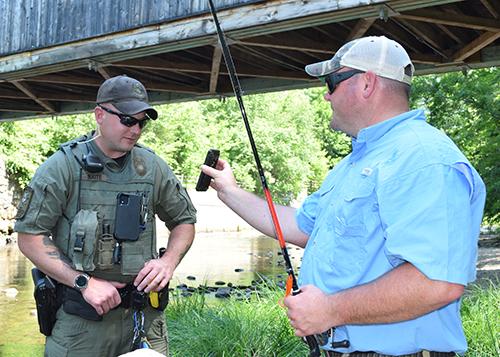
Connecticut’s online licensing system now automatically signs your license electronically at checkout, allowing you to save a digital copy of your signed license on your smartphone. With this new update, you no longer need to carry a signed paper copy of your license, provided that you carry proof of your digital copy to show an EnCon officer in the field (so make sure your smartphone is charged).
If you still prefer to buy your paper license in person, you can continue to do so, just make sure to keep your hardcopy with you as usual. For those who have already purchased their 2021 licenses, once you log in to online licensing, select print, and save a copy to your device.
See you outdoors!
Have you purchased your 2021 licenses . . . ?
| |
Emerging Songbird Illness | |
|
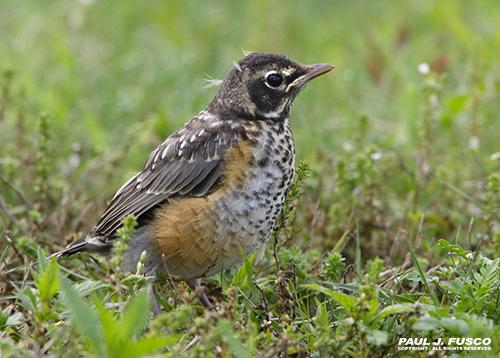
An emerging illness is impacting a variety of songbirds in the eastern United States. Reports of sick and dying birds with vision problems, eye swelling (often with a crusty discharge), and neurological symptoms have been reported in CT, NJ, PA, WV, MD, OH, IN, and KY. This illness is different from the conjunctivitis condition known as “finch eye disease,” but the exact cause is currently unknown and cases have not yet been confirmed in Connecticut. While many songbirds have been impacted, the illness seems to be most common in juvenile common grackles, blue jays, European starlings, and American robins. No human health, domestic livestock, or poultry issues have been reported, and wildlife health experts from many states are working cooperatively to investigate the cause.
Until more information is known, the DEEP Wildlife Division is seeking the public’s help and asking you to follow these FIVE precautionary measures:
1. Cease feeding birds and providing water in bird baths until this wildlife mortality event has concluded. This may be infectious.
2. Clean feeders and bird baths with a 10% bleach solution.
3. Avoid handling dead or injured wild birds. Wear disposable gloves if it is necessary to handle a bird.
4. Keep pets away from sick or dead birds as a standard precaution.
5. To dispose of dead birds, place them in a sealable plastic bag and discard with household trash. This will prevent disease transmission to other birds and wildlife.
If you find a sick bird, contact a licensed wildlife rehabilitator for guidance on what to do.
Connecticut licensed wildlife rehabilitators . . .
| |
Grilling Season and Bear Breeding Season Can be a Recipe for Trouble | |
|
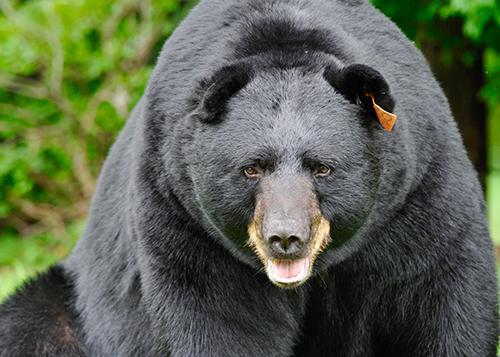
Black bear activity is normally high this time of year, with breeding season underway. Female bears have sent off their yearlings, who are continuing to learn the ways of the world on their own. Adult males are looking for females to mate with, having little else on their minds. So, it is not uncommon to see multiple bears passing through suburban neighborhoods, especially as humans are spending more time outside during the summer. It is important to ensure bears are not finding human-related foods in your neighborhood, which could cause them to habitually return to that area, looking for easy food. During the peak of outdoor grilling season, please clean up greasy grills, secure your garbage, and do not leave out food scraps or have bird feeders up. These same tips will help reduce conflicts with other wildlife like raccoons, skunks, and insects.
It is also smart to close doors and ground floor windows when you are not home, even if you have screens in place. Screens are not a barrier to a curious bear that catches the scent of your kitchen waste bin. Incidents involving bears pushing through screens have been increasing over the last several years. In some instances, once a bear learns it can enter a home through a screen door, the behavior is repeated at other nearby homes, creating a clear public safety risk. Photo courtesy of Mark Sloan.
More on living with black bears . . .
Managing Food, Garabage, and Other Attractants (video) . . .
| |
Wild Turkey Brood Surveys Continue in July | |
|
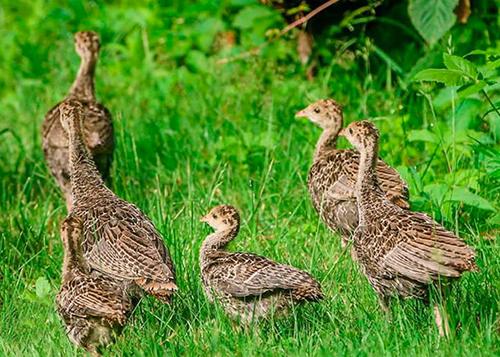
The Wildlife Division’s annual Turkey Brood survey seeks to estimate the average number of turkey poults (young-of-the-year) per hen statewide and to assess annual fluctuations in the turkey population. The success of this project relies on the public recording and sharing their observations all hens and poults seen during normal travel through August 31. New for this year, reporting can easily be done online. Select the link below to find out how to submit your sighting reports. Photo courtesy of Michele Nevue Titus.
Report your turkey brood sightings . . .
| |
2020-2021 Migratory Bird Hunting Guide Available Online | |
|
The 2020-2021 Migratory Bird Hunting Guide is now available on the DEEP website. The Migratory Bird Hunting Guide contains season dates and other important information pertaining to upcoming hunting seasons for waterfowl (including Canada geese), woodcock, snipe, rails, and crows.
Congratulations to Sophie Archer, age 17, of Old Lyme, CT, whose acrylic painting of a drake wood duck in flight was selected as the "Best in Show" for the 2021 Connecticut Junior Duck Stamp Art Competition! Sophie’s artwork will be featured on the 2022 Connecticut Migratory Bird Conservation (Duck) Stamp.
View the 2020-2021 guide . . .
More on the Connecticut Duck Stamp . . .
| |
DEEP and DOT Pollinator Program | |
|
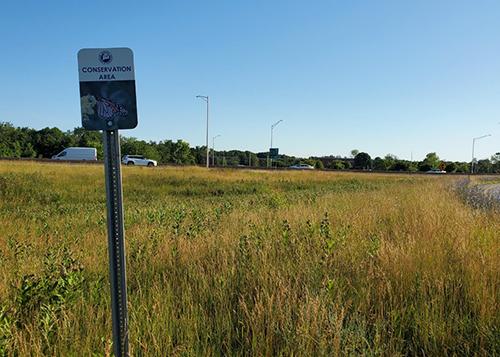
Pollinators are a vital component of our native ecosystems and responsible for pollinating many of our local fruits and vegetables. As you drive along some of our major highways this summer, you may notice areas along the roadways that are flourishing with many native grasses and wildflowers. This is no coincidence but rather an intentional effort by the DEEP Wildlife Division and the Department of Transportation's Pollinator Program. This program was created to establish pollinator corridors in select locations within the highway system. Currently, the Pollinator Program consists of 106 locations, which total approximately 185 acres set aside for critical pollinator habitat!
More on Connecticut pollinators . . .
| |
Share Your Backyard Bee Sightings | |
|
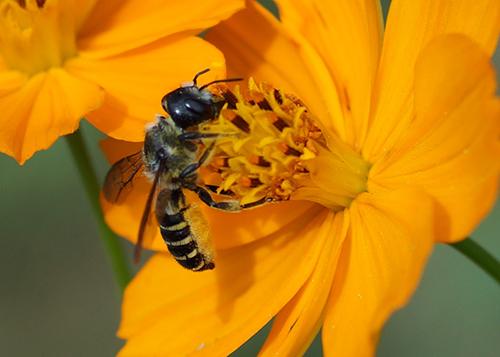
Do you have a flower or vegetable garden this year? If so, the Wildlife Division invites you to join our Backyard Bee Quest project on iNaturalist. While you might have only noticed the honey bees and bumble bees zooming around your backyard, there are likely dozens of other unique species of bees visiting your flowers. By taking pictures of your backyard bees and sharing them in our iNaturalist project, you will be helping catalog Connecticut’s bees while appreciating all the different species you might not have ever noticed before. Bee experts from around the world will help to identify your observations. Joining iNaturalist takes only a few steps and is easy to use from your computer or smartphone. If you have questions about our iNaturalist projects, email us at deep.ctwildlife@ct.gov.
Join us on iNaturalist . . .
| |
DEEP Forestry Portable Sawmill | |
|
Many people are aware that the price of lumber has greatly increased this past year. One benefit is that locally-sourced wood is in big demand! This portable sawmill is in Naugatuck State Forest, cutting white pine logs into boards that will be used to build a barn. Wood harvested sustainably in our state forests has a smaller carbon footprint than wood brought in from outside Connecticut. It also provides jobs for our state’s economy.
More on forest management on state lands . . .
| |
Species of the Month: Common Ribbonsnake | |
|
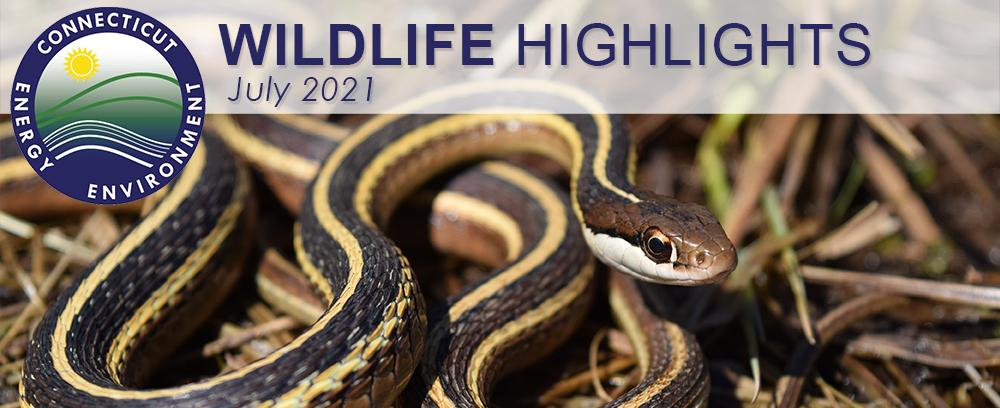
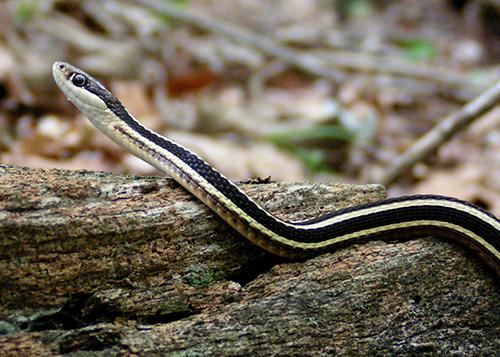
The slender and striped ribbonsnake is most commonly confused with its relative, the common gartersnake. The ribbonsnake is boldly patterned with three yellow stripes on a reddish-brown to black background. A distinct dark band separates each side stripe from the belly. Unlike the common gartersnake that adapts well to a variety of habitats, the ribbonsnake seldom ventures from shallow aquatic habitats, and favors open, grassy, or shrubby areas bordering ponds, streams, and wooded swamps. Comfortable both in and out of water, the ribbonsnake is an adept swimmer that prefers shallow water where it often feeds on a variety of aquatic creatures, mainly amphibians like frogs, toads, salamanders, and tadpoles. The common ribbonsnake is non-venomous and harmless to humans. Loss and degradation of wetland habitats have caused ribbonsnake populations to decline over the years.
More on the common ribbonsnake . . .
| |
|
Stay Connected!
Follow us on Social Media
| |
|
-- Quick Links --
Your Feedback Is Important to Us!
Send your comments or suggestions to deep.ctwildlife@ct.gov
|  | The Connecticut Department of Energy and Environmental Protection is an Affirmative Action/Equal Opportunity Employer that is committed to complying with the requirements of the Americans with Disabilities Act. Please contact Barbara Viadella or Cenit Mirabal, DEEP Office of Diversity and Equity at 860-418-5910 or by email at deep.accommodations@ct.gov if you are requesting a communication aid or service, have limited proficiency in English, need some other type of accommodation, or if you wish to file an ADA or Title VI discrimination complaint. In order to facilitate efforts to provide an accommodation, please request all accommodations as soon as possible following notice of any agency hearing, meeting, program or event. | | | | |