|
PRISON POPULATION BOOMING:
Paying The Price for
Long Term Incarceration
In the past two years, Indiana’s prison population has increased 10%, while taxpayers and society are paying the constantly increasing cost. Today, the Indiana Department of Correction (IDOC) is housing approximately 26,640 people, up about 2,300 from summer 2024.
Here’s why: Longer sentences started in the 1970s and accelerated through the ‘80s and ‘90s. Tough-on-crime advocates in states across the nation moved away from a system in which judges and parole boards had more discretion to shorten or tailor sentences. Lawmakers adopted mandatory minimums, habitual-offender enhancements, “three strikes” laws, and truth-in-sentencing requirements. These policies in general meant that people sentenced to prison had to serve longer sentences—often years or decades longer sentences.
When sentences got longer, prison population numbers began to balloon. It’s pretty simple math: There are more people entering prison than those that leave. A person sentenced to seven years in ’65 might was replaced by someone serving 10 or 20 years for the same crime, and the result is a prison population that continues growing long after the original sentencing laws were passed. Meanwhile, life sentences increased 600% between 1992 and 2024.
In 2005, 46% of people in Indiana state prisons were serving at least 10 years. By 2020, that figure had risen to 63%. While murder convictions were most likely to result in long sentences, drug offenses accounted for the largest share, and 20% of drug offenders were sent to prison for terms of 10 years or more. (Something to tell the kids.)
But are these longer sentences making communities safer? I wonder.
Keeping someone incarcerated for another decade does not necessarily address the causes of crime, reduce future violence, or provide treatment. It does, however, guarantee years of additional costs. Indiana spends more than $52 per incarcerated person per day—roughly $19,202 per person each year. As the prison population grows, so does the bill for taxpayers, and those costs are not going down.
Meanwhile, the consequences extend beyond state budgets. Incarceration separates parents from children, spouses from one another, and families from their support systems. People are often held far from home, making visits difficult. The Bureau of Justice Statistics found that about 53% of incarcerated people are parents of children under 18, and some studies indicate that we are raising up a new generation of prisoners when kids are raised in a family that must normalize a parent’s long-term incarceration.
With treatment, strong relationships, and meaningful employment, lives can dramatically change after prison. Literally hundreds of Indiana charities are ready to mobilize to support reentrants as they return to family, find a good job, and reenter their communities. Surely, it would be better to put some state money into those efforts before we decide to build another prison.
Nancy
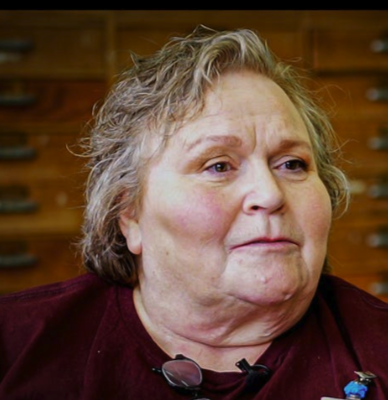
*Pictured:
Cindy White has been incarcerated for 50 years, for a crime she committed at just 18 years old.
|