Tazzarin North to Nunatsiavut

Lighthouse, History and Puffins

2100 Monday August 29


We got up at 0700 today to head out of Bonavsta Harbour. However, a feisty, strong southwest wind was pushing Tazzarin hard onto the dock. We had a boat just ahead of us and another big fishing boat just astern. With the wind pushing us on, there was no way to get Tazzarin off the dock. So, we opted to spend another day here in Bonavista and explore around the area. It turned out to be a wonderful day.


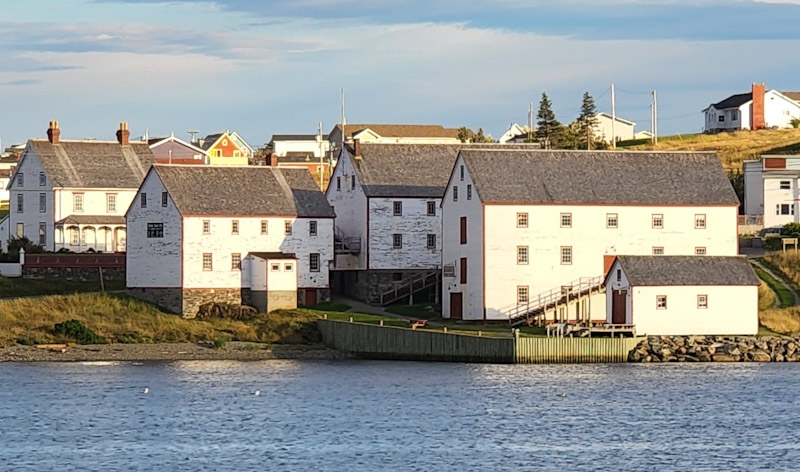
We started by walking around the harbor to the large, white, wooden buildings of the Ryan Premises (see the photo above). The Ryan Premises were the largest commercial establishment in Bonavista starting in the mid-1800s and into the 1900s. The managers house, salt store, fish store and other buildings have exhibits put together by Parks Canada that give a detailed view of the beginnings, rise and downturn of the cod fishery. From John Cabot in 1497 reporting how rich the fishery was, to the hard life and learning of youth in a fishing outport, and on to the recent era of overfishing with newer technology, one gets a sense of what has happened. I thought I would share three quotes that gave me a sense of this industry and change:


The sea there is swarming with fish, which can be taken not only with the net but in baskets let down with a stone.

John Cabot, report on his discovery of Newfoundland in 1497


We had to look to the sea. There was nothing in the school books to show us how to build a booat, make a new or a trap, or about the movements of codfish or seals. We had to learn all that kind of stuff from our fathers and other men. It was aa full-time job to get that kind of education.

Captain Frank Hines


When they put an engine in a fishing boat – that was the end of the fishery.

Bill Hayden, Cape Broyle, 1993 reflecting on the causes of the collapse of the North Atlantic cod fishery.


(My email continues below...)

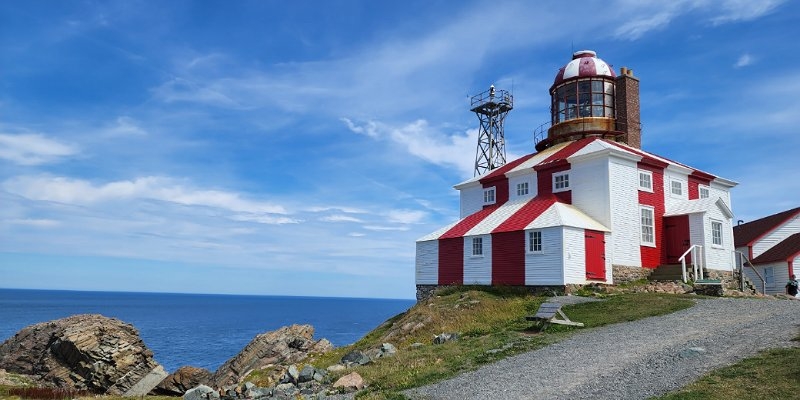
After our visit at the Ryan Premises, we hired a taxi, driven by Christian, a wonderful young man, to take us to a few other sites we thought would be interesting. First we went out to the very tip of the Bonavista Peninsula to the Bonavista Lighthouse. Like the light at Cape Spear, the stone tower of the light was built first; then the keepers cottage was literally built around the lighthouse with the tower at the center. The light and house were built in 1843 and are beautifully maintained. We sailed by this same light last week on our way to Fogo.


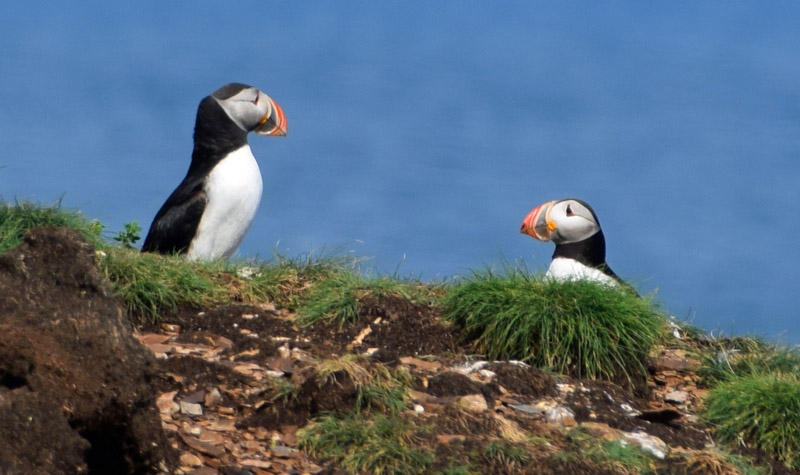
We also visited the amazing rock formations called the Dungeon, where tunnels under the rock reach out to the sea. From there we went to visit the puffin colony just south of the nearby town of Elliston. The puffins were there in huge numbers, in the air, on the rocks and in the water. It was stunning! Truly worth the trip and short hike. Soon the puffins will leave for the season. Until recently, the lives of puffins were a bit of a mystery. Only now do we know that in the winter months they head out into the Atlantic and leave land behind until the following May. Then, the birds return to their underground burrows, lay their eggs and feed their young. Now, the young chicks are almost fully fledged. On the next full moon, the young birds, and adults, guided by the moon will leave the local colony behind and head out to sea for the winter. Then the adults and young will return again to their same colony next spring. I will often think of this when I see the full moon of late August or early September in the future. See a puffin photo from today below.


omorrow morning we will be back on our way.


Bill

 
Live Tracking
Click the mini map to see where Tazzarin is today!

To view more, visit www.tazzarin.com
To subscribe to these emails click here

Tazzarin's Whale & Iceberg logo design by Emily Dove