|
Lincoln County Preparedness Month Newsletter
September 2026
You Can Always Prepare More
Oregon law requires counties to have an emergency-management program and a designated manager, but that does not mean each county maintains a large permanent EOC staff. We sometimes call employees from other departments or dedicated volunteers who go through training and serve in operational shifts "the bench".
County commissioners created the first public information officer position around 2007. During my first years as PIO, I learned that emergency information is rarely background noise. Information responders are tasked with responsibly telling you whether to leave home, what road to take, and when to expect the next critical piece of information. The stakes are often high and the information has to be right.
March 2011, the most powerful earthquake in Japan's history sent waves in all directions. Emergency Manager Curtis Landers and I frantically pulled phones and cables from cabinets to set up operations. What was the rush? It took 9 hours 59 minutes for the waves to strike Yaquina Bay... But, I'll never forget the Portland newscaster proclaim with an edgy tone, "We're trying to reach emergency communications on the coast!"
I felt his urgency. Then and later. After the waves arrived they surged for hours and the biggest of them came much later. The event was essentially concentrated at Brookings Harbor, Coos Bay, and Depoe Bay.
We tend to forget that emergencies do happen. It's not a matter of if, It's a matter of when. Readiness fairs are are great opportunities to keep us all prepared for the inevitable, the unknown.
As a commissioner, my role is different. The responsibility is still familiar: plans, people, equipment and communication systems have to be ready before the public has to depend on them.
| |
Preparedness is what we build before ordinary systems fail. September is a good time to check both out what County government and our partners are doing, and what each of us can do at home.
2026 Lincoln County Readiness Fair
Saturday, September 12 | 11 a.m.-2 p.m.
Newport Recreation Center, 225 SE Avery Street
A word on “all-hazards” planning: that phrase gets used a lot, and we've seen a good part of this list: the 2500 Road Fire east of Depoe Bay, the Echo Mountain Fire, COVID, and the previously mentioned distant tsunami. We even activated our EOC for the eclipse.
Our 2026 Emergency Operations Plan carries separate playbooks for drought, earthquake, flood, severe winter weather. Lincoln County has faced nearly all of them, more than once.
A go-kit built for a house fire looks a little different from one built for a Cascadia earthquake or a wildfire evacuation, but the same base kit gets you through the first hours of any of them.
That’s the whole point of building it once, ahead of time, instead of assuming you’ll have time to gather supplies when the actual thing shows up. It’s not a matter of if. It’s a matter of when. May we all get prepared as possible. Click here for more details.
|
What We’ve Actually Faced Since 2023
This isn’t hypothetical. Here’s the county’s real hazard record over the last four years:
-
2023: Serious drought. Low river flows, above-normal temperatures, below-average precipitation. The Board declared a local emergency and sought a state drought declaration.
-
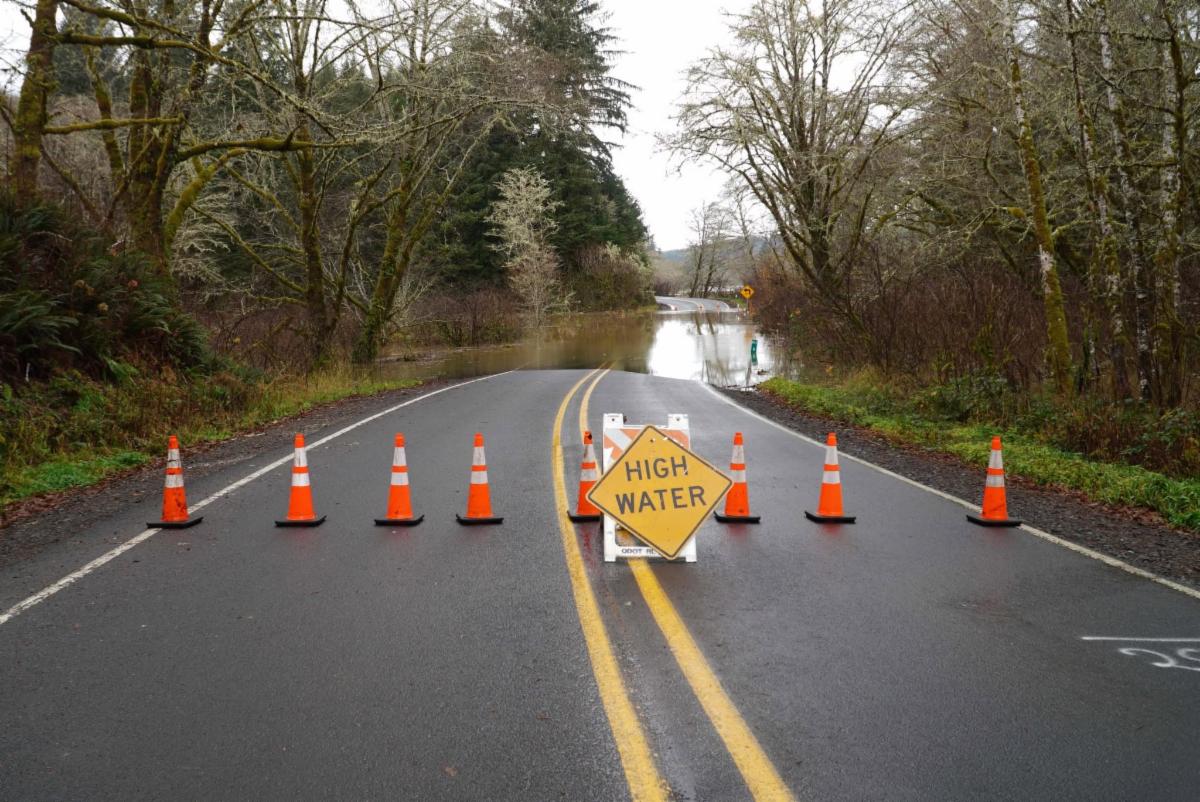
January 2024: Severe winter storm, federal disaster DR-4768. Straight-line winds, landslides, mudslides, and flooding. Emergency operations, shelters, transportation, and communications were all tested. Recovery work continued for months.
-
May 2024: Evacuation Assembly Point exercise. The county placed EAP resources and ran a two-day drill. I spent the overnight portion at the site with responders and partners. We even ran a Board meeting from a tent.
-
2024: Wildfire tabletop exercises. Two exercises with about 90 participants, plus nine wildfire-preparedness presentations held across the county.
-
2025: Second severe drought. The Board adopted Order 07-25-283 declaring a local disaster and requesting a state drought emergency.
-
2026: Emergency framework renewal. The Board approved a renewed Emergency Management MOU, continued EMPG/NIMS compliance work, and adopted an updated Emergency Operations Plan (Order 07-26-209) covering drought, earthquake, wildfire, flood, severe weather, and tsunami.
Why the EAP exercise stuck with me: It tested more than equipment. It tested how people, communications, public meetings, and leadership actually function when normal facilities and connectivity are disrupted. Network problems even knocked out our livestream during the tent meeting. That’s exactly the kind of failure you want to find during a drill, not during the real thing.
|
What Your County Government Has Invested In
Preparedness is budgets and infrastructure most residents never see:
-
Community preparedness grants: The county’s Emergency Preparedness Matching Grant program has put real money into local capacity. $34,110 across 14 projects in 2023, $27,500 in 2024, and $30,729 in 2025. Community caches, emergency food and shelter, fuel storage, portable power, preparedness kits, emergency food/cooking supplies.
-
Emergency communications: Roughly $2.47 million in outside public-safety radio funding has strengthened the system connecting police, fire, EMS, public works, and dispatch. Including a $2 million federal COPS Technology and Equipment award, plus backup power, tower upgrades, and a radio communications plan.
-
2026 Emergency Operations Plan: Covers hazards, legal authorities, elected-official roles, mutual aid, emergency spending, the Emergency Operations Center, training, and hazard-specific annexes for drought, earthquake, fire, flood, severe weather, and tsunami.
|
New This Year: Tsunami Vertical Evacuation Guidance
Oregon’s coast faces some of the most urgent tsunami risk in the nation. During a major Cascadia Subduction Zone earthquake, shaking may last three minutes or longer. A tsunami can begin inundating coastal communities in as little as ten minutes. For some areas, natural high ground is simply too far to reach in that window.
In August 2026, the Oregon Department of Emergency Management released new Tsunami Vertical Evacuation Structure (VES) Guidance. It covers engineered towers, berms, and specially designed buildings that give people refuge above expected flooding when there isn’t time to outrun the wave. Oregon State University’s Hatfield Marine Science Center in Newport already has one built into the building. The guidance covers hazard science, evacuation modeling, funding strategies, and Oregon’s Tsunami Hazard Overlay Zone requirements. Useful reading for anyone involved in local planning, and a good reminder for residents to know their own vertical evacuation options if you live or work in the inundation zone.
|
Build Your Go-Kit: What’s Actually Needed
You may need to be self-sufficient for 72 hours or more before help arrives. Every item below is inexpensive and easy to find — and any one of them could matter.
The essentials:
- Water (1 gal/person/day, 3–14 days) and non-perishable food
- Cash in small bills — ATMs and cards may not work
- NOAA weather radio, flashlight, and extra batteries
- First aid kit, whistle, and fit-tested N95 masks (wildfire smoke)
- Wrench or pliers, can opener, and local maps
Add for evacuations: several days of medications, phone chargers, and copies of important documents. Keep your tank at least half full during fire season, and know more than one route out — coastal roads bottleneck fast during east-wind fire events or tsunami evacuations. Don’t forget pet food, a change of clothes, and any prescriptions or glasses.
Three kits, not one: a full kit at home, a 24-hour version at work, and a stranded-scenario kit in the vehicle (add a blanket and jumper cables for winter). Check all three every six months and rotate anything expired.
|
Fire Hardening: Straight From OSFM
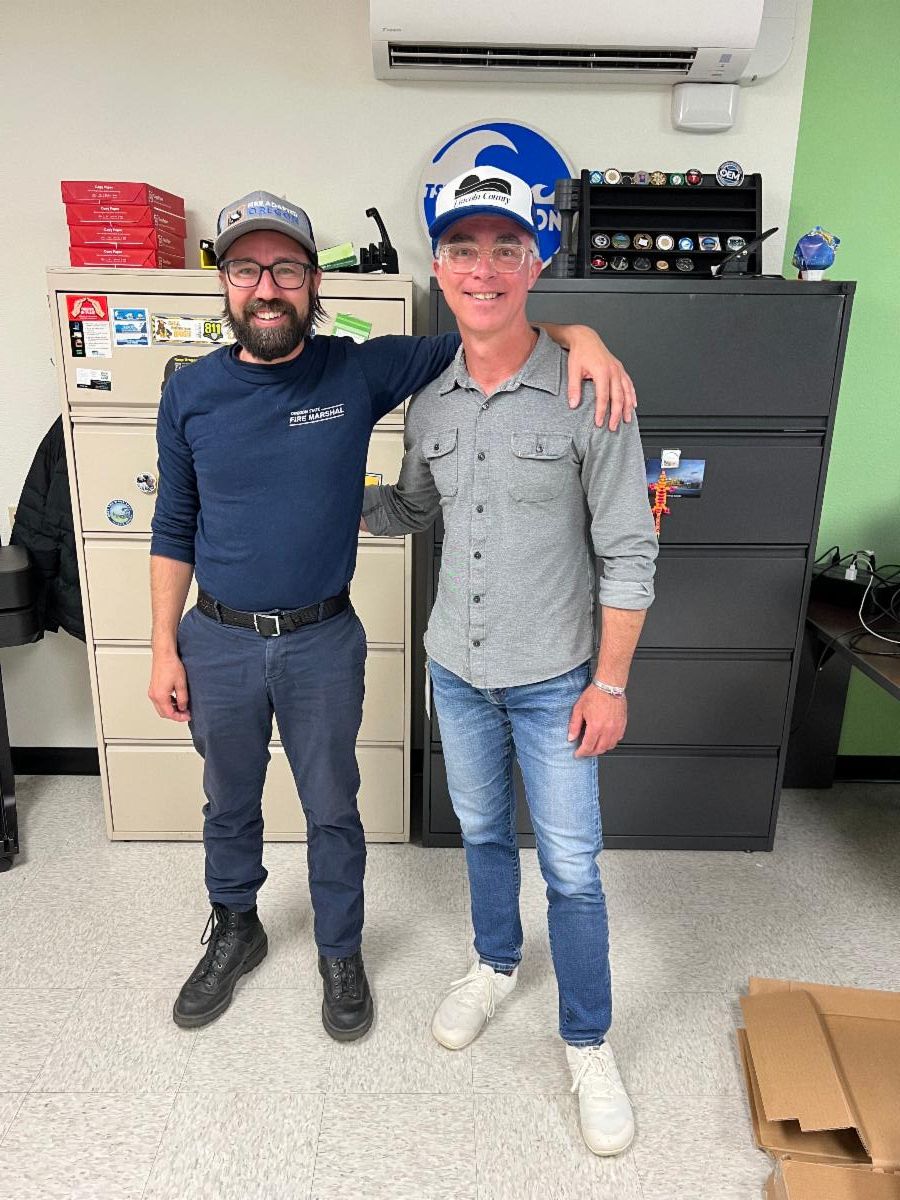
This summer, I sat down with Dustin Rymph, Fire Risk Reduction Specialist with the Oregon State Fire Marshal’s Office, to talk through what actually stops a wildfire from becoming a house fire. Here’s the core of what he shared:
Homes catch fire three ways: embers (firebrands), direct contact with flame, and radiant heat. Most homes that burn in a wildfire are lost to embers landing somewhere vulnerable — not to a wall of flame reaching the property.
Work outward in zones:
-
Zone 1 (0–5 ft): Clean roofs and gutters of leaves and debris. Move firewood and propane tanks away from the house. Remove or limb any trees touching a structure.
-
Zone 2 (5–30 ft): Space trees at least 10 ft apart. Limb or remove overgrown shrubs. Replace invasive plants with fire-resistant ones.
-
Zone 3 (30–100 ft): Continue thinning and spacing trees, remove ladder fuels, and create a fire break between property lines or outbuildings.
The single cheapest fix: screen attic and crawlspace vents with 1/8-inch non-corrosive metal mesh. Quarter-inch mesh, which is common on older homes, is wide enough for embers to get through.
Other priority spots: roof edges, windows, rain gutters, decks, garages, siding, chimneys, skylights, and fences — especially wood fences that attach directly to the house, which can carry fire straight to your siding.
|
While We Talked Prevention, Our Crews Were Out Fighting Fires
The timing of that conversation wasn’t lost on me. This was the same summer Lincoln County’s own fire agencies were repeatedly leaving the county to help fight wildfires burning elsewhere in Oregon — exactly the kind of mutual aid system that only works because our local departments stay ready.
-
July 11, 2026 — Task Force 7: Engines and a water tender from North Lincoln Fire, Newport Fire Department, Seal Rock Fire, and Central Coast Fire, alongside Nestucca Rural Fire District from Tillamook County, deployed to the East Evans Creek Road Fire near Rogue River in Jackson County — already over 1,500 acres. The team left Lincoln County at 6:30 a.m. and reached the staging area in Medford by 1:30 p.m., prepared for a deployment that could run up to two weeks.
-
July 23, 2026 — Task Force 32: North Lincoln Fire, Newport Fire, Depoe Bay Fire, and Central Coast Fire, joined by Netarts-Oceanside Fire from Tillamook County, deployed to the Akawa Butte Fire in Deschutes and Jefferson Counties. Over 26,000 acres with structures threatened. This was the fourth deployment of Lincoln County fire resources requested by OSFM that season alone.
Four statewide deployments in one season, on top of protecting our own communities at home. That's what it looks like when a mutual aid system works the way it's supposed to and it's exactly why the prevention work matters just as much as the response. Every hour our local departments don't spend on a preventable fire here is an hour they have available when the rest of the state needs them.
|
Thank You to Our First Responders
To every firefighter, task force member, dispatcher, and support staff from Lincoln County who left home this summer to help protect communities elsewhere in Oregon and to everyone who stayed behind to protect ours, thank you. This is what it looks like to show up for your neighbors, in this county and beyond it.
If you need to reach your local fire district for non-emergency questions, permits, or burn restrictions, here's the list:
- Central Oregon Coast Fire & Rescue - (541) 563-3121
- Depoe Bay Fire District - (541) 764-2202
- East Lincoln County Fire & Rescue - (541) 270-1468
- Newport Fire Department - (541) 265-9461
- North Lincoln Fire & Rescue - (541) 996-2233
- Seal Rock Fire District - (541) 563-4441
- Siletz Rural Fire Protection District - (541) 444-2043
- Toledo Fire Department - (541) 336-3311
- Yachats Rural Fire Protection District - (541) 547-3266
For more information on fire safety, visit https://preventwildfires.oregon.gov.
|
What You Can Do This Week
- Know your evacuation routes and your nearest tsunami assembly point or vertical evacuation option if you’re in the inundation zone.
-
Sign up for Lincoln Alerts for emergency notifications (and/or the state's ORAlert.gov)
- Build or refresh your go-kit using the list above.
- Talk to your household about pets, medications, and power-dependent equipment before an emergency, not during one.
- If you’re part of a school, business, or community organization, ask whether it has an emergency plan — and whether your organization is eligible for a county preparedness matching grant.
-
If you live near the shore, install the MyShake app for earthquake early warnings and the NVS Tsunami Evacuation app for tsunami-zone maps and evacuation routes.
|
Where This Is Headed
The best emergency response starts before the emergency. Plans, radios, people, supplies, partnerships, and public information all have to be ready before ordinary systems fail. That’s been the throughline of my time in this office, and it’s the standard I hold this work to going into 2027.
| | |
Commissioner Casey Miller
Lincoln County — Position 1
Mobile: 541-270-6796
Address: 225 W Olive St., Room 110, Newport, OR 97365
Website: www.CaseyMillerCommissioner.com
| | |
"The mission of Lincoln County is to provide essential public services–both legally
required and locally desired–in an efficient, effective and respectful manner."
–Lincoln County Mission Statement
| | | | |