March 2026 Issue Features: | | |
Why use HLP GPT?
by LaShauna Britt, M.Ed.
In December of 2025, HLP GPT, an AI partnership, was announced by the Collaboration for Effective Educator Development, Accountability, and Reform (CEEDAR) Center. The purpose of this AI partnership is to help embed high leverage practices (HLPs) into daily teaching.
What problem does this solve?
Educators often know what good instruction should look like but struggle to enact it, especially when teaching diverse learners, including students with disabilities. HLPs require planning, real-time instructional decision-making, and the consistent use of evidence-based strategies. HLP GPT helps bridge the gap between theory and day-to-day classroom practice by translating HLPs into actionable, classroom-ready guidance.
| | |
Facilitating High-Quality Specially Designed Instruction
by Cathy Buyrn, M.Ed.
In real estate the name of the game is location-location-location. In education the name of the game is instruction-instruction-instruction. Instructional leaders at the building and division level know that the most critical role they play is the facilitation of high-quality instruction for all students. High-quality instruction at Tier 1 is the front line for students with disabilities, but they also require specially designed instruction (SDI) that focuses on their unique needs (IDEA, 2004). It is not sufficient to provide grade level content instruction without addressing the strengths and needs in a student’s Individualized Education Program (IEP).
| | During this school year, the TTAC team at William & Mary has been focusing our Link Lines articles on the four domains of the High Leverage Practices (HLPs). Though these evidence-based practices are integral to planning specially designed instruction that meets the unique needs of students with disabilities, they are for all teachers to use in the general education classroom as they benefit all students. This issue of Link Lines focuses on the domain of Instruction in Behavior and Academics, a broad range of practices that highlight ‘what to teach’ and ‘how to teach’ for both functional and academic skill growth and mastery. | | |
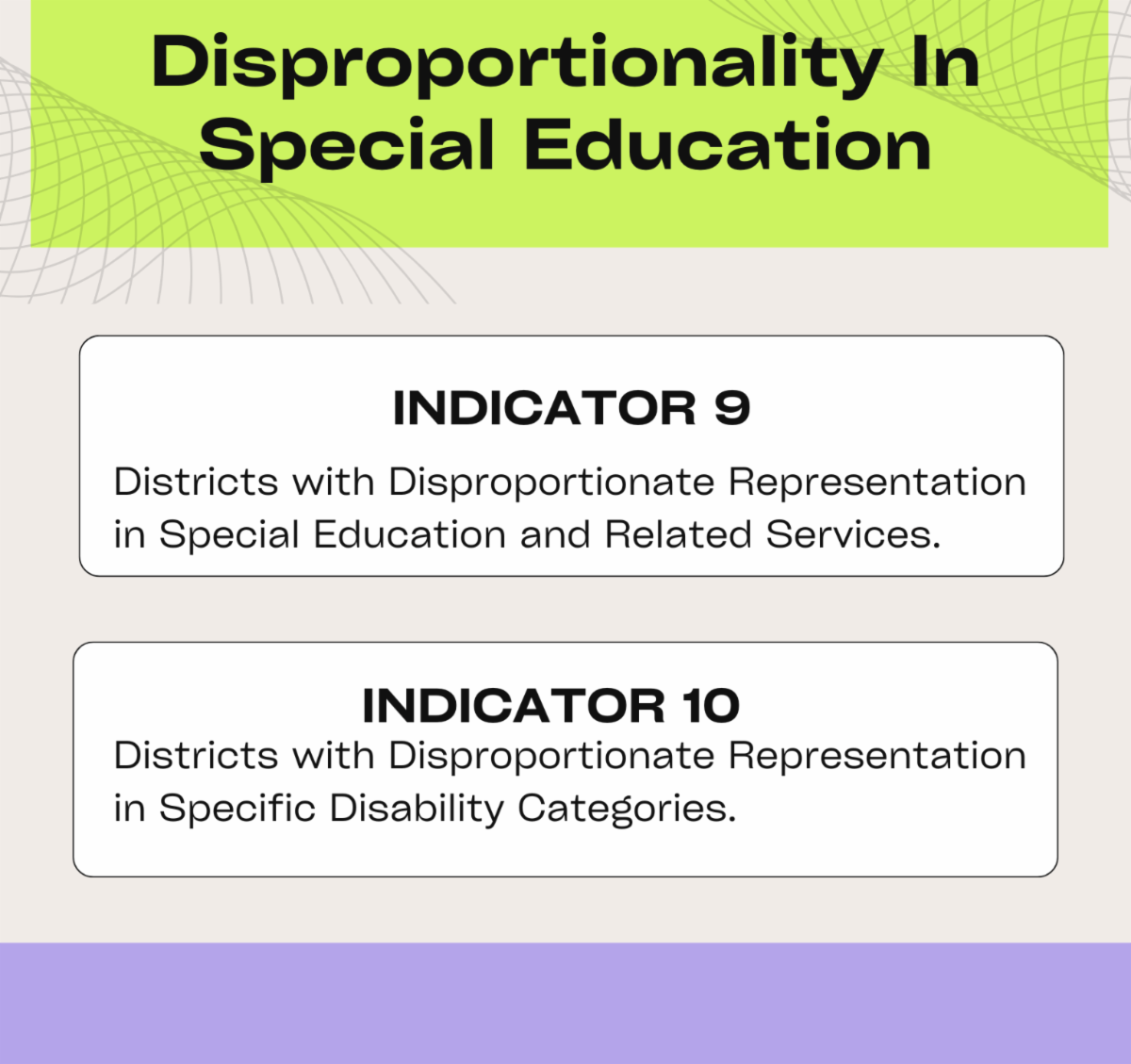
Any conversation about academics and behavior for students with disabilities, however, is not complete without also addressing the increasing amount of data pointing to disproportionality in their identification, placement, and discipline. The U.S. Department of Education’s (ED) Office for Civil Rights (2023) reported that, during the 2020-2021 school year, students with disabilities served under the Individuals with Disabilities Education Act (IDEA) represented 17 percent of K-12 student enrollment. During that same year, however, 24 percent received one or more in-school suspensions, 29 percent received one or more out-of-school suspensions, and 21 percent were expelled. In addition, the data on restraint and seclusion for students with disabilities showed that 32 percent were mechanically restrained, 81 percent were physically restrained, and 75 percent were secluded.
| When looking at the intersectionality of disability and race, the National Center for Learning Disabilities (2020) reported that American Indian and Alaska Native children received special education at almost twice the rate of the general student population, while Black students are about 40 percent more likely to be identified with a disability. According to the ED’s Office of Special Education Programs (2024), during the 2022-2023 school year, Black students with disabilities received disciplinary removals at twice the rate (58 percent) of all students with disabilities (29 percent). Additionally, for children and youth with disabilities aged 3-21 served under IDEA Part B in 2021-2022, Black students represented the highest percentage of students of any single race identified under the categories of intellectual disability and emotional disability (ED, National Center for Educational Statistics, 2024). These data also showed that almost 40 percent of all Hispanic students with a disability were identified with a specific learning disability, the highest percentage reported for any race. | | |
So why does this matter?
The reality is that, in your classroom, you will teach academics and behavioral skills to both students with disabilities and their non-disabled peers. We also know that when students are suspended or removed for disciplinary reasons, they miss instruction and this impacts their academic performance. This article will focus on a Newport News middle school that addressed disproportionality by prioritizing explicit training for teachers on behavior supports using the HLPs with a multi-tiered system of support (MTSS) framework. We hope that as you look at the resources teachers used and hear about the practices they implemented, you walk away with tips and strategies you can immediately implement in your own classroom.
| | |
Dr. Jaraun Ransome, principal at Ella Fitzgerald Middle School (EFMS) in Newport News Public Schools, walked into his building at the beginning of the 2024-2025 school year with a vision and a purpose. He and his team had a strategic plan to support teachers, specifically with HLP 7 – Establish a Consistent, Organized, and Responsive Learning Environment. One goal was to help all teachers address school-wide discipline practices in an explicit, organized, and consistent manner.
Exclusionary discipline occurs when a student is removed from their usual educational setting because of a disciplinary action; for example, removed to a hallway, sent to the office, suspension, or expulsion. EFMS’ focus on HLP 7 resulted in data showing a 53.34 percent reduction in office discipline referrals in one year, with 88.45 percent of students remaining in Tier 1 for discipline. Listen to Dr. Ransome’s discussion on the practice of exclusionary discipline and his advice on how to approach your administrator when you need support in your classroom.
| | |
So how do you establish a consistent, organized, and responsive classroom (HLP 7) and reduce instances of exclusionary discipline? How does this link to explicit instruction (HLP 16)?
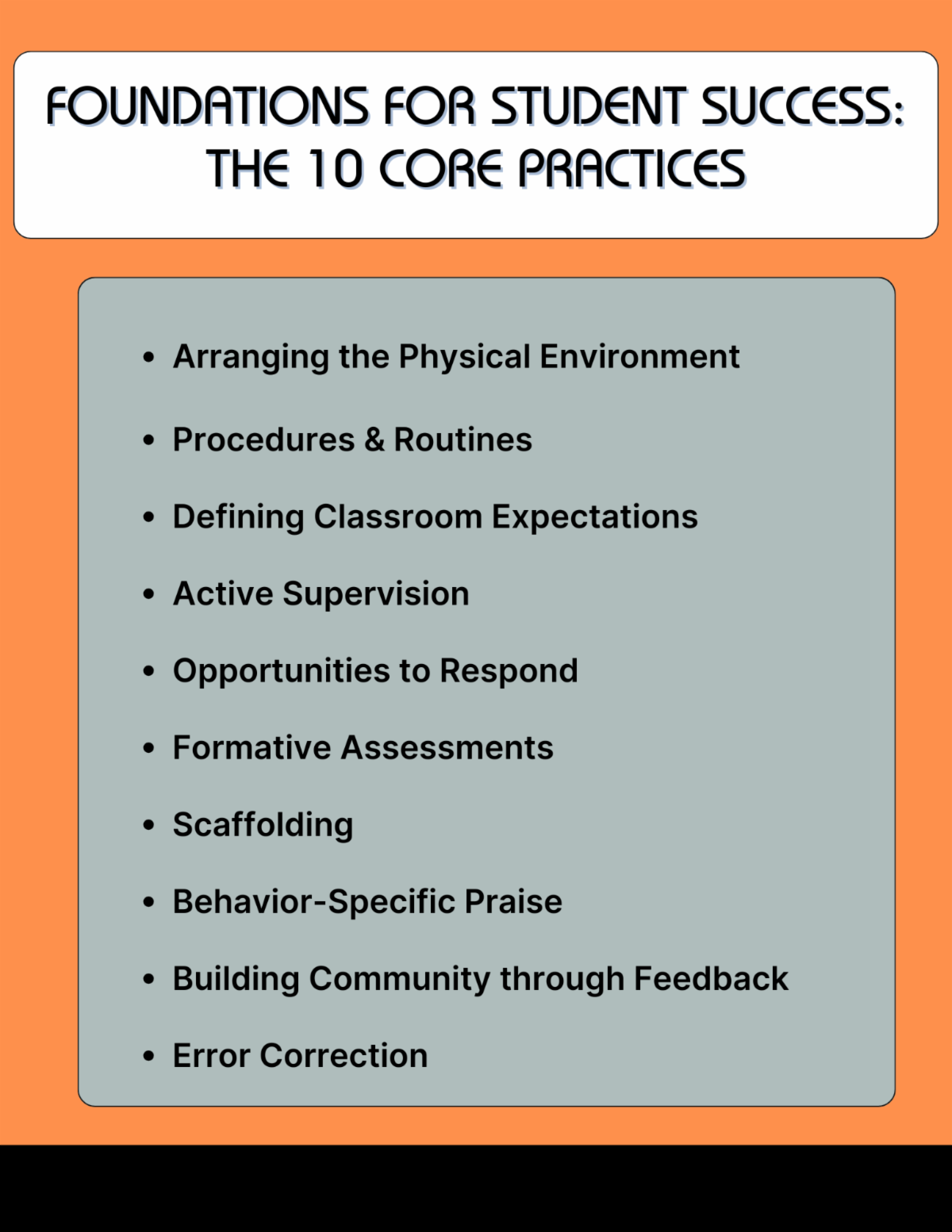
Dr. Ransome and his team started the school year with a focus on 10 core practices. During the interview, he advised all teachers to scaffold these practices in their classrooms by starting with the first three and then layering the next three, until all 10 practices are incorporated into the daily classroom routine. To help you implement these practices in your own classroom, click the embedded hyperlink for tools and resources on HLP 7 and HLP 16.
Dr. Ransome also shared another positive impact that teachers noted once they implemented these tools and practices, establishing a more organized classroom environment with consistent and predictable routines.
| | |
EFMS saw a 22.3 percent decrease in chronic student absenteeism in one year. Based on data collected from their internal climate survey, there was also an increase in teachers’ perception of support and observations of positive student-teacher interactions. Consistent implementation of these core practices around HLP 7 and HLP 16 supported both students’ and teachers' wellbeing.
Listen to Dr. Ransome as he discussed the next steps for EFMS.
| | The resources below can help structure effective collaboration during co-planning and highlight best practices for implementation of co-teaching models that support academic achievement for students with disabilities. | |
Understanding how to support all students’ learning for behavior and academics is vital to ensuring students with disabilities have access to, and make progress in, the general education setting. Recently, the U.S. Department of Education proposed eliminating the requirement for states to submit data on significant disproportionality as part of their Annual State Application for funding (Allbright, 2025), although individual states will still collect these data as required by law. Now more than ever, the onus may fall on you - the individual teacher - to ensure your practices are equitable, fair, and supportive of all students in your classroom. We hope this article and the resources provided have started your own internal conversation about this important domain of the HLPs. If you need additional support, please each out to your TTAC team. | | | RESOURCES: HLP 7 | DESCRIPTION | | VTSS ONE PAGERS | These one-pagers highlight each of the 10 core principles EFMS focused on with quick-tips, checklists, and key considerations. | | W&M TTAC Resources on Life Skills/Classroom and Behavior Management: Top Picks for Classroom Teachers | Clickable links with many resources to include:
- Supporting and Responding to Behavior: Evidence-Based Classroom Strategies for Teachers
- Classroom Management Part 1: Learning the Components of a Comprehensive Behavior Management Plan
- Classroom Management Part 2: Developing Your Own Comprehensive Behavior Management Plan
- Effective Classroom Practice from Missouri PBIS
- Classroom Routines and Procedures
| |
HLP 7 and 16 Elementary Checklist: TTAC Online
HLP 7 and 16 Secondary Checklist: TTAC Online
| The purpose of these checklists is to help teachers identify strengths and areas of growth. These checklists can be used:
- for self-assessment
- to identify professional growth goals to achieve mastery
| | Fundamental Skill Sheets:
| These IRIS Skill Sheets provide:
- Basic information about the skill
- Procedures to implement
- Quick Tips
- Implementation examples
- Videos (some have both elementary and secondary examples)
| | Behavior Assessment: Duration and Latency Recording | This IRIS document provides guidance on how to observe and collect data on duration and latency. Duration documents how long a student engages in a specified behavior. Latency measures the amount of time between an antecedent (e.g., teacher’s directive) and when the student displays a specified behavior. | | Behavior Games: Elementary | IRIS: Sample games to help students understand the consequences of behavior. | | Behavioral Intervention Plans - Elementary: Developing a Plan to Address Student Behavior | This IRIS module (2 hrs) explores the steps for developing a behavioral intervention plan:
- identifying appropriate behaviors to replace the interfering behavior,
- selecting and implementing interventions that address the function of the behavior,
- monitoring students’ responses to the interventions, and
- making adjustments based on the data
| | | | RESOURCE FOR CO-PLANNING:
HLP 1 | DESCRIPTION | | Adapted Lesson Plan Template
| This lesson plan template from Anne Beninghof provides a tool to plan for specially designed instruction. | |
Co-Teaching Do’s and Dont’s
| This resource provides some practical insights into how co-teaching is defined. | |
Co-Planning Meeting Agenda
| A template that provides co-teachers with a formatted tool for planning co-taught lessons. It includes the areas to consider along with a suggested amount of time to spend in each planning area. An example of a completed agenda is also included. | |
Quality Indicators of Co-Teaching
| A survey assessment that can be completed by co-teaching teams to evaluate administrative support, interaction between co-teachers, and the effectiveness of the team. | |
Quality Indicators of Delivering Specially Designed Instruction
| A checklist which assesses the roles of the general educator, special educator, and paraeducator in delivering specially designed instruction. | | | | RESOURCE FOR CO-TEACHING:
HLP 1 | DESCRIPTION | | 2025-2026 Excellence in Co-Teaching Demonstration Sites Contact Information | As part of Virginia’s Excellence in Co-Teaching Initiative, demonstration sites across the Commonwealth provide opportunities for co-teaching teams and school/district administrators to observe high-quality co-taught instruction in inclusive settings. Visitors have the opportunity to observe model-lessons, followed by scheduled time to engage in discussion with the site’s co-teaching team and school administrator regarding implementation practices, instructional planning, and factors that support successful co-teaching partnerships. | | Co-Teaching: Real Co-Teachers of Virginia Discuss High Leverage Practices (HLPs) - Elementary | These resources/videos highlight how the needs of students with disabilities are met in elementary co-taught classrooms as co-teachers co-plan, co-instruct, and co-assess to meet the needs of all their students using nine HLPs. | | Real Co-Teachers of Virginia/Elementary | This video presents information about the most common approaches used by co-teachers at the elementary level to share responsibility for instruction in a co-taught class. | | Real Co-Teachers of Virginia/Middle and High School | This series of videos showcases the products created by real co-teachers at the middle and high school levels participating in the Virginia Department of Education’s Excellence in Co-Teaching Initiative. | | 101 Ways to Get to Know Your Co-Teacher | A list of 101 questions that you can use to get to know your co-teacher better as you work to build a collaborative relationship.
| | Podcast: The Relationship Behind the Roles: Co-Teaching that Clicks | On this podcast, Dr. Julie Causton and Dr. Kristie Pretti-Frontczak discuss what happens when two very different adults with different personalities, different stress responses, and different working styles share the responsibilities for a group of students. | | | | | |