|
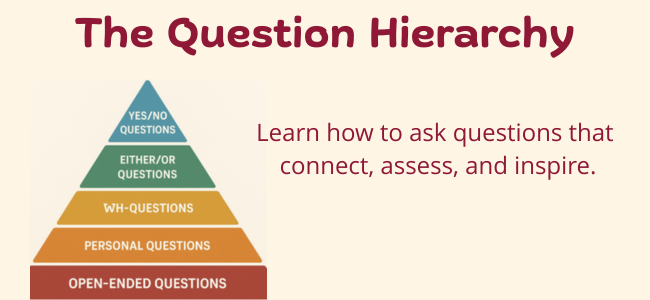
The questions we ask can significantly impact learner engagement and language development. Beginners benefit from yes/no or either/or questions, while intermediate and advanced learners thrive with open-ended and opinion-based prompts. By scaffolding questions on the same topic, tutors can support confidence and encourage deeper conversation. Try adapting your questions this month and share your experiences with fellow tutors at the next Tutor Roundtable! (see below for upcoming dates)
Questioning Techniques for All Levels
1. Display Questions
Asking questions the tutor already knows the answer to (e.g., “What color is this?”).
Purpose: Check understanding and build confidence, especially at lower levels.
2. Referential Questions
Asking questions the tutor does not know the answer to (e.g., “What is your favorite food?”).
Purpose: Encourage authentic communication and real conversation.
3. Wait Time
Providing adequate time for the learner to process the question and formulate a response.
Purpose: Supports language processing and reduces pressure.
4. Follow-up Questions
Probing for more information (e.g., “Why?” “Can you tell me more?” “What do you mean?”).
Purpose: Extend responses and build language complexity.
Why this order works
It mirrors natural interaction:
-
Start with checking understanding (display)
-
Move to real communication (referential)
-
Allow processing time (wait time)
-
Then expand (follow-up)
How can you customize questions to fit your learners goals?
Tutors should shift the topic to match their learner’s real goals, such as getting a better job or improving workplace communication.
For example, you can take the same progression and apply it to a workplace context:
-
Low Beginning: Did you work today?
-
Beginning: What do you do at work?
-
Intermediate: Describe your typical workday.
-
Advanced: How has your job or workplace changed over time?
By keeping the structure of the questions but changing the topic, you help learners build language that is directly relevant to their daily lives and goals. This makes lessons more meaningful and better prepares learners for real-world situations.
More examples of Leveled Question Types - Click here..
Learn more about The Question Hierarchy - Click here.
Quick Tutor Guide-Leveled Questions vs Question Hierarchy-Click here
|