Local Option Homestead Exemption and

its Impact on School District Recapture

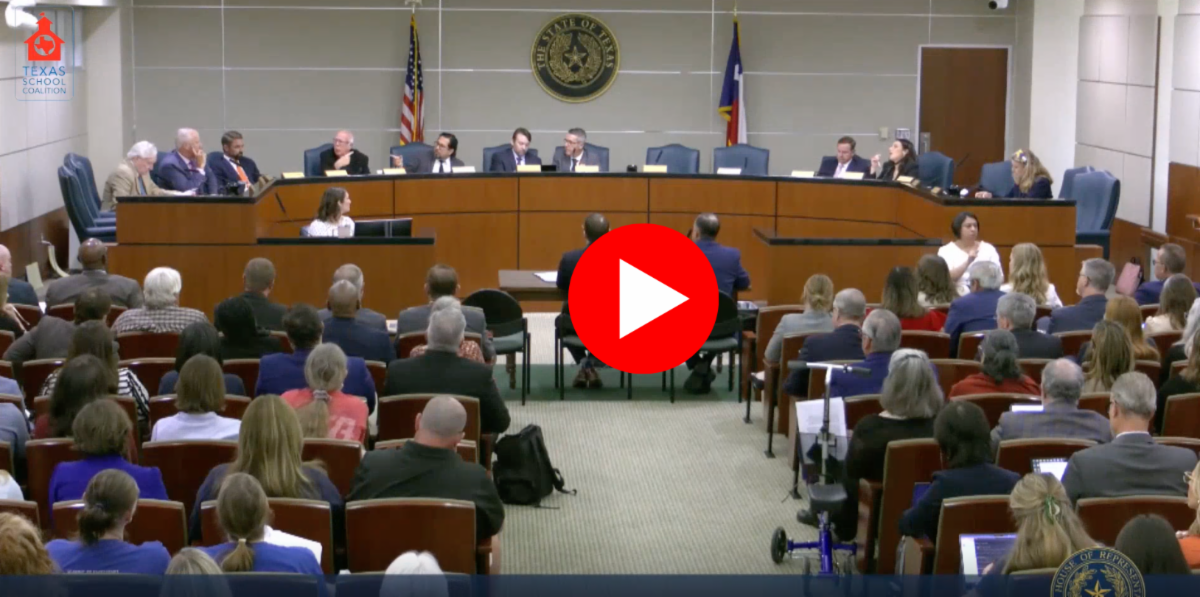
During the House Public Education Interim Hearing on Monday, the topic of Local Option Homestead Exemptions (LOHEs) surfaced in a discussion between Chairman Todd Hunter, Rep. Trent Ashby, and TEA Commissioner Mike Morath regarding whether school districts could reduce recapture obligations through local tax policy changes.


The exchange highlighted growing interest in whether Local Option Homestead Exemptions (LOHEs) could provide property tax relief while also reducing recapture obligations for some property-wealthy districts. Because the issue involves several complex interactions within the Foundation School Program, we take a closer look below at how the policy works and some of the potential advantages and tradeoffs districts should consider before adopting or increasing.

Hearing exchanges on LOHE with TEA Commissioner


Chairman Todd Hunter asked Commissioner Morath: "Can ISDs reduce the amount they pay into recapture if they approve a local homestead exemption?"


The Commissioner responded, "Yes."


Watch video


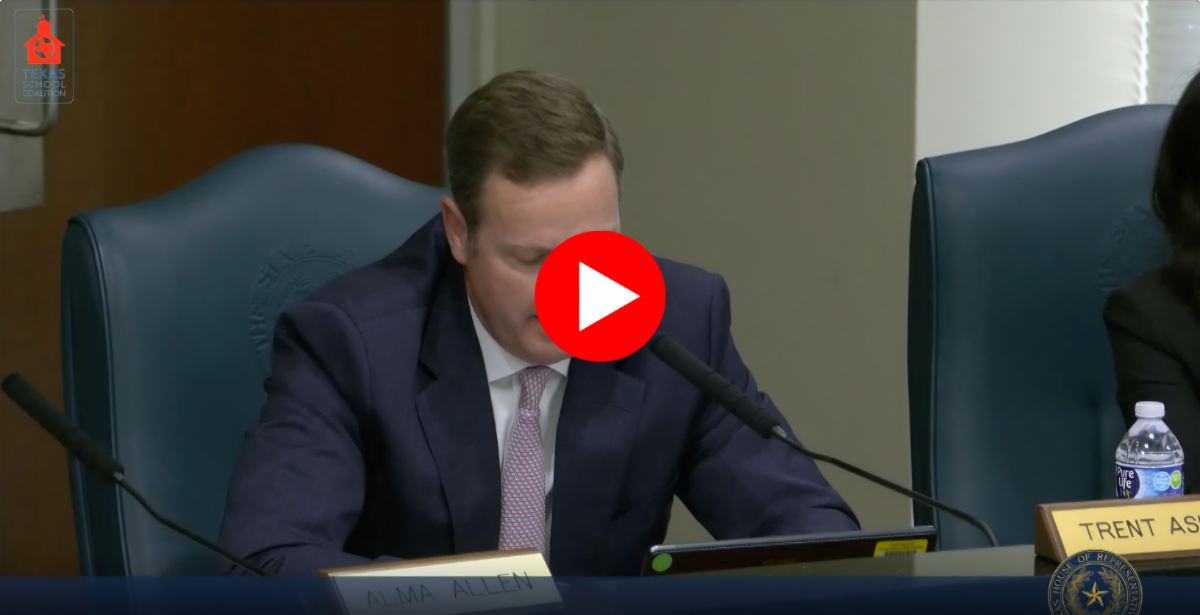
Later in the hearing, Rep. Trent Ashby asked whether the state must effectively backfill funding when recapture payments are reduced through a homestead exemption increase. Commissioner Morath explained that, for many recapture districts, lower recapture obligations can offset much of the local revenue reduction associated with the exemption.


Watch video

More to the Story


However, the financial impact varies significantly by district and depends on multiple factors, including:


  • The district’s exact recapture position
  • Tier One versus Tier Two funding
  • Tax rate levels
  • Homestead concentration
  • Copper pennies
  • Current biennium formulas
  • Projected property value growth
  • State aid interactions
  • Future legislative changes


School districts are not universally “made whole.”


Most districts would still experience some net revenue reductions, but for some districts, those reductions are mitigated by a partial recapture reduction offset.

The Basic Concept


Texas school districts may adopt a Local Option Homestead Exemption (LOHE) of up to 20% (and at least $5,000) of a homestead’s appraised value, reducing the taxable value for homeowners owner-occupied residences for school district tax purposes.


The exemption applies to both Maintenance & Operations (M&O) taxes and Interest & Sinking (I&S) taxes used for debt service.


As the state-mandated homestead exemption has increased in recent years, local optional exemptions have become more financially significant in districts experiencing substantial property value growth.


For homeowners, lower taxable value generally means lower school property taxes. For school districts, however, the fiscal impact varies considerably depending on the district’s recapture position and tax base composition.


How Recapture Affects the Financial Impact


Many property-wealthy districts do not retain all local M&O tax collections because a portion is returned to the state through recapture.


For example, if a district effectively sends M&O revenue back to the state through recapture, then reducing taxable value through a LOHE may reduce local tax collections while simultaneously reducing recapture obligations.


As a result, the district’s net budget impact may be substantially smaller than the reduction in taxable value alone would suggest.


Potential Fiscal Outcomes for School Districts


Fiscal outcomes are highly district-specific and require detailed modeling. The modeling will reveal one of the following two options.

Option 1


The district experiences a net reduction in M&O revenue and reduced I&S collections.

Option 2


The district’s M&O revenue is only partially reduced because lower recapture offsets much of the lost tax collections, while I&S collections decline.


Potential Advantages of a LOHE


The policy favorably impacts homeowners and may reduce long-term taxable value growth.


  • Local Tax Relief
  • Homeowners may experience lower school property taxes, particularly in areas with rapidly appreciating home values.
  • Reduced Recapture Obligations
  • Property-wealthy districts may reduce the amount of M&O revenue remitted to the state through recapture.
  • Keeping More Resources Local
  • Some districts view LOHEs as a way to allow local taxpayers to retain more benefit from rising property values rather than sending increasing amounts through recapture.
  • Community and Political Appeal
  • In communities experiencing property tax pressure, LOHEs may be viewed favorably by taxpayers


Potential Risks and Tradeoffs of a LOHE


However, the policy will also affect debt-service capacity, shift portions of the tax burden among property classes, and increase reliance on future state funding decisions.


  • Overall loss in M&O Revenue
  • Districts can experience a loss of M&O revenue associated with the LOHE even if it’s less than the loss of tax collections due to the partial offset of reduced recapture. 
  • Impact on I&S Debt Collections
  • Recapture applies only to M&O taxes and does not apply to Interest & Sinking (I&S) taxes used to repay voter-approved bonds.
  • As a result, a LOHE reduces taxable value available for debt repayment, but there is no corresponding recapture offset for I&S collections.
  • Districts adopting large exemptions may therefore need to evaluate whether future I&S tax rates could increase to maintain debt repayment capacity.
  • Tax Burden Distribution
  • LOHEs apply only to qualifying homesteads and do not apply to commercial property, industrial property, apartments, rental housing, or business personal property.
  • As residential taxable values decline, non-exempt properties may represent a larger share of the district’s remaining tax base.
  • Some critics argue this shifts a greater relative share of district tax responsibility onto businesses and rental property owners.
  • Long-Term Policy Commitment
  • Current Texas law significantly limits a district’s ability to reduce or repeal an adopted local optional homestead exemption.
  • As a result, districts considering a LOHE may also need to evaluate long-term enrollment trends, future state funding changes, debt obligations, and long-range revenue flexibility.
  • Finance officials caution that a policy decision that appears beneficial under current formulas may operate differently under future legislative changes.


What's Right for Your District?


Because the financial impact varies widely among districts, we recommend that your school district develop detailed local models before adopting or expanding a Local Option Homestead Exemption (LOHE).

Thank you to our sponsors

DLR-Logo_FullColor_RGB_PNG-300x50.png
Centrix-Logo-no-background-3-300x95.png
Linebarger-logo-350-x-100-72-dpi-300x87.png

Texas School Coalition

6505 W. Park Boulevard

Suite 306 PMB 249

Plano, TX 75093

512-732-9072

info@txsc.org

 
Facebook  Twitter  Linkedin  Instagram