Weekly Regional Business Intelligence | | Written by Kieran Delamont, Associate Editor, London Inc. | | |
London businesses weigh in on the latest wave of the tariff storm
London manufacturers are bracing for the fallout of a reignited Canada-U.S. trade war after a week that saw 50 per cent tariffs take effect on roughly $28 billion worth of Canadian goods, followed by Canada’s dollar-for-dollar counter-tariffs on $27.6 billion worth of U.S. goods (plus some new 51st state talk and The Donald’s hissy-fit executive order to rename Lake Ontario as ‘Lake America’ just to round things out). “That's like a nuclear bomb kind of effect that would be bad for everyone,” said Ben Whitney, owner of London's Armo Tool Ltd., speaking to The London Free Press. “This is a 50 per cent tariff in a sector that’s making six or seven per cent in profit margins, so something’s going to give.” The national-level macro read on the U.S. tariffs is that the country’s economy as a whole will be able to absorb it, but for affected sectors the tariffs could be very difficult, if not impossible, to swallow. And the bad news for London is that it certainly has some of those affected sectors. According to the London Economic Development Corp., about 700 London businesses exported some $8 billion worth of goods to the U.S. in 2023. “People hear tariffs and they tend to think of auto plants, but there’s businesses in London that manufacture here, they’ve built a market in the U.S. and suddenly there’s a 50 per cent tariff aimed directly at their product category,” said London Chamber of Commerce CEO Graham Henderson. In a released statement, the chamber said its member businesses are seeking clarity on the whole situation, and it called for a “measured, coordinated and business-focused response,” saying the impact goes well beyond direct exporters. “Canadian businesses have already shown remarkable resilience under enormous pressure. The road ahead may get tougher, but we can navigate it if we stay focused, work together and protect the strength of our economy.” There’s also the new threat of 50 per cent levies on the entire auto sector — something that would be much more damaging for auto manufacturing than anything we’ve seen so far. Dave Johnson, general manager of London’s Ursa Manufacturing, which supplies parts to GM and Toyota, told the Free Press the scale of the threat makes it hard to plan around. “It has the potential to bring the entire automotive industry to a halt,” he said, “so let’s hope this is more bluster and bluff.”
The upshot: You'll been forgiven if you’d forgotten there was a trade war going on between the two nations. Up until last week, it had seemed like a new trade agreement would be an eventuality. However, Carney’s abrupt recalling of Canada’s negotiating team from the trade talks in response to what he characterized as last-minute, untenable additions, seemed to signal that he recognized the Americans may never have had any interest in making a deal at all. It has very quickly changed the national mood, lurching us right back into a state of, as PM Mark Carney called it, “war”. Many will be feeling nervous that Trump has turned his famously limited attention span from the calamity in Iran to Canada, with more 51st state talk and sovereignty jabs. It is likely we will see the business impacts start to take shape over the next few weeks, particularly if you’re looking at the auto sector. Auto parts manufacturers here look set to take it on the chin, and more questions will inevitably be asked of projects in the works, such as PowerCo and Vianode in St. Thomas. On Tuesday, Ottawa unveiled a $7.5-billion package of support for affected workers and businesses, which include a new $3.5-billion Rapid Response fund, changes to EI access and a worker retention and retraining program aimed at helping employers keep staff on through the disruption.
Read more: London Free Press | CBC News London | London Chamber
| | |
London biogas plant gets $70-million expansion
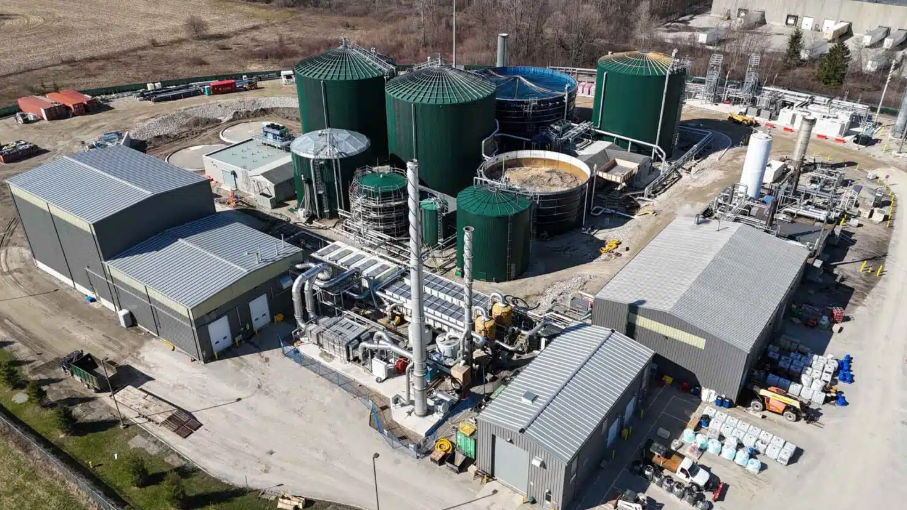
Generate Upcycle is putting $70 million into expanding its London biogas facility, with help from an $18.7-million investment from the federal government’s Clean Fuels Fund. Federal Energy and Natural Resources Minister Tim Hodgson announced the investment Monday at the plant on Green Valley Road (pictured). “This facility, the London digester, is the largest food waste anaerobic digestion facility in Canada,” Hodgson said. The plant, which has been operating since 2012, takes in food waste from processors, distributors and municipal curbside composting and turns it into renewable natural gas and fertilizer, the latter mostly used at farms in the region. “You want to convert that biogas into something that can be pumped into the Enbridge pipeline and then that comes back into our homes,” said London plant manager Girish Mohanan, speaking to CTV News London. The expansion is set to happen in two phases: the first was actually completed in spring 2024, and it tripled the plant’s renewable natural gas production capacity; the second, the subject of this new investment, is expected to finish early next year, and will add enough renewable natural gas to power roughly 4,500 more homes a year, the company said.
The upshot: While it’s true the facility is the largest food waste anaerobic digestion facility in Canada, the Green Valley Road plant is a large fish in the still very small pond of renewable natural gas projects in Ontario. The province does not have any regulatory targets to drive the development of RNG the way it has in Quebec, where regulatory mandates compel utilities to hit 10 per cent of natural gas coming from renewable sources by 2030, part of why that province leads the country in the number of RNG projects. (Enbridge has said it wants to hit 10 per cent by 2030 as well, although that’s more of a voluntary target than an actual regulatory one.) Still, there’s interest in promoting energy security and developing energy resources, so companies like Generate Upcycle are hoping to see more investment in the sector to keep renewable biogas projects going. “Clean energy resources are found all over Canada; they are not concentrated in a few fortunate regions. Every community produces organic waste, and every province is home to dynamic agricultural and food production,” Bill Caesar, president of Generate Upcycle, said at Monday’s announcement. “This broad distribution of clean fuel assets means that technologies like anaerobic digestion … can underpin economic independence and energy security in every corner of Canada.”
Read more: CTV News London | London Free Press
| | |
Porter Airlines lands at YXU
Porter Airlines is coming to London. The airline is launching its first-ever service from London International Airport this fall, adding four direct seasonal flights to Fort Lauderdale, Orlando, Cancun and Montego Bay, the airport and airline announced on Wednesday. The Florida flights begin in November, with Cancun and Jamaica following in December. YXU CEO Scott McFadzean said the deal has been in the works for years. “As long as they've been an airline, people from London have been trying to get them here,” McFadzean said, adding that Porter’s investment in the airport “reflects confidence in our region, confidence in our passengers and confidence in the future of Southwestern Ontario.” Porter CEO Michael Deluce was on hand at Wednesday’s announcement and pointed to the fact that the region has about two million residents within an hour’s drive of the airport. “Over the last five to 10 years, it's been significantly under-served by our competitors, and people from London and the surrounding population want to travel in a more convenient way, not driving two hours to the closest airport,” Deluce told The London Free Press. The airline has also committed to launching year-round domestic flights from London by summer 2027. “We believe that there is a lot more potential out of London,” Deluce said.
The upshot: Porter’s broad strategy as an airline over the years has been to plant a flag in smaller regional airports like YXU and develop them as hubs in areas that are either underserved by larger airlines (London probably falls into this category) or, in places like Montreal Metropolitan Airport or its home base at Billy Bishop, by investing heavily in a secondary airport in the area. “This is huge for the region,” Mayor Josh Morgan said, echoing Deluce’s comments when he said that “we have two million people within an hour drive of London that can access this airport and use it as one of the main hubs.” We’ll be interested to see what kind of domestic flights are launched out of London. Porter is a favoured alternative to Air Canada particularly for anyone flying east, and has built a strong hub presence in Hamilton and Ottawa over the last few years built on domestic flights. Porter is also relatively new to the international flight game (beyond flights to the U.S.), only really starting to offer flights to sunny destinations in 2025. It also now fulfills the promise of the lyrics of the Shaggy song Catch Myself Some Rays (off his largely overlooked 2020 album Christmas in the Islands), in which featured artist CARYS sings they will “go from London, Ontario, down to Montego Bay.” What did Shaggy know, and when did he know it?
Read more: London Free Press | CBC News London
| | |
VersaBanks seeks to establish U.S.-based parent company
VersaBank shareholders are set to vote next month on a restructuring plan that would put the London-based bank under a new American parent company, incorporated in Delaware and operating out of a head office in Minneapolis. The bank itself would stay Canadian but would put a foreign owner (a parent company called Versa Bancorp) on top, a move that will require the federal finance minister to approve. VersaBank’s own term for the manoeuvre is “domesticating the company as a U.S. reporting issuer incorporated in Delaware.” The company said its London-based Canadian operations won’t be affected by the move.
The upshot: Given how much work VersaBank has put into expanding its flagship digital funding solutions into the U.S. market over the past five years or so, the move probably makes sense from a corporate perspective. In its filings with the SEC, VersaBank said the reorganization would mean improved access to U.S. capital markets and investors, improved capital raising flexibility and the potential for inclusion on U.S. index funds. It’s probably an all-around better play for the company’s valuation, and its growth plans have increasingly been predicated on expansion into the American market anyway. Financial companies being lured by the big market to the south is a tale as old as Canada, really, and we’ll still welcome them here on this side of Lake America…
Read more: VersaBank
| | |
Unifor reaches tentative deal with GM
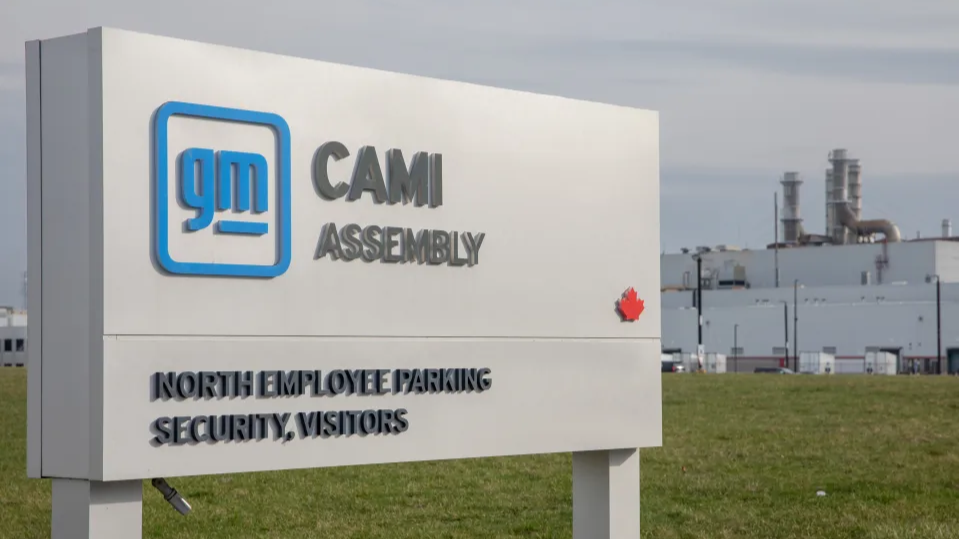
Unifor has reached a tentative deal with General Motors, one that follows the pattern bargaining set by Unifor and Ford earlier this month. The new deal covers more than 4,600 workers at four Ontario plants, including the idled CAMI Assembly plant in Ingersoll, where plant workers are among the roughly 30 per cent of Unifor's GM members on layoffs when negotiations opened earlier this month. “We entered this round of talks in the midst of tariff uncertainty and relentless U.S. trade aggression,” said Unifor GM bargaining chairperson Trevor Longpre. “Thanks to the hard work of every member of our negotiating team, we emerged with a deal that secures the pattern set by our union with Ford.” GM Canada president Jack Uppal told the Financial Post they “recognize the many contributions of our represented team members with important increases in wages, benefits and job security while building on GM’s investments in Canadian manufacturing.” Ratification meetings are scheduled for this weekend. Unifor president Lana Payne said the agreements “deliver strong income and benefit gains, amid some of the most challenging times in our history.”
The upshot: Details were sparse in the public reporting on the deal, with Payne only saying she believed it was a “good deal.” What it means for the mothballed CAMI plant is also unclear — the Ingersoll plant was technically negotiating its own separate contract, and the local union chapter said that details of the agreement won’t be released to members until the ratification vote tomorrow. It’s highly unlikely the contract itself will include any news about a reboot of production at the plant, but might lay out the terms by which that could happen in the future. These agreements were signed on August 22, just before Trump made renewed threats of 50 per cent tariffs on all auto manufacturing in Ontario. It’s hard to say without seeing the details of the agreement, but that development will probably help Unifor secure a ratification vote as workers look to shore up some kind of commitments from GM over the next three years.
Read more: Financial Post | Global News
| | |
Western’s Community Legal Services heads downtown
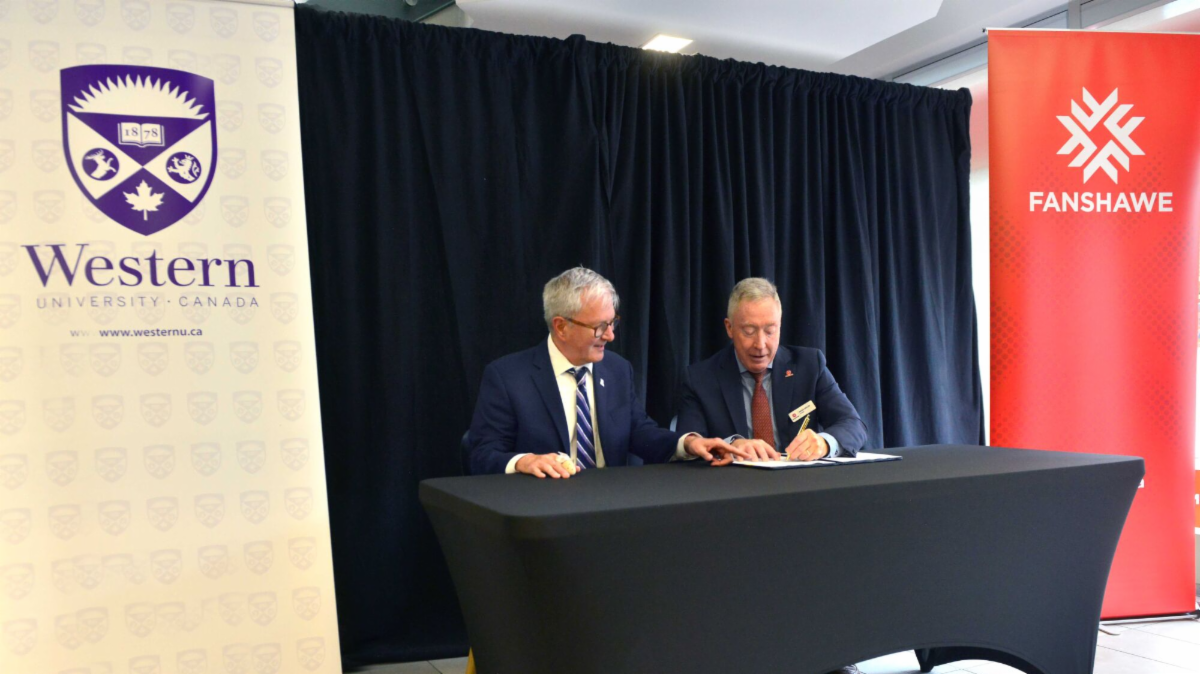
Western University’s free legal clinic is moving downtown, into Fanshawe’s downtown campus on Dundas Street. The relocation puts the school’s Community Legal Services closer to the London courthouse, where its students already typically spend three days a week providing legal services, primarily to low-income and marginalized communities. The clinic, which handled more than 600 cases and consultations last year, will occupy the fifth floor of Fanshawe’s Howard W. Rundle Building by late December, after completing renovations. “This move marks a major milestone in strengthening community-based legal services to ensure people in London and region can access critical support that may otherwise be out of reach,” Western president Alan Shepard said in a news release. Peter Devlin, president of Fanshawe, added, “We’re pleased to have Western’s Community Legal Services clinic join us, strengthening the goals we’ve always had for our downtown campus.”
The upshot: The move makes practical sense for all parties, you would think. Having legal services near the courthouse, where one actually needs legal representation (rather than a bus ride away), is straightforward streamlining that benefits both law students and their clients, while Fanshawe gets a tenant and makes some use out of an expensive downtown campus that has seen its enrolments drop, particularly following cuts to the hospitality programs that operate(d) there — last summer, Fanshawe estimated that it would lose around 500 students from its downtown campus, so it likely had a bit of extra space to lease out (financial terms of any deal between the two schools were not disclosed). “Our downtown is at its best when it is a place where people come to live, learn, work, create and connect,” Mayor Josh Morgan said, calling the move “a powerful example of making better use of existing spaces while bringing students, faculty, learning, services and new energy into the core.”
Read more: Western News | CBC News London
| | |
Dispatch: August 28, 2026
A summary of recent business appointments and announcements, plus event listings for the upcoming week.
View listings here
| | | | |