Weekly Regional Business Intelligence | |
“Probably the reason we all go so haywire at Christmastime with the endless unrestrained and often silly buying of gifts is that we don’t quite know how to put our love into words.” — Harlan Miller | |
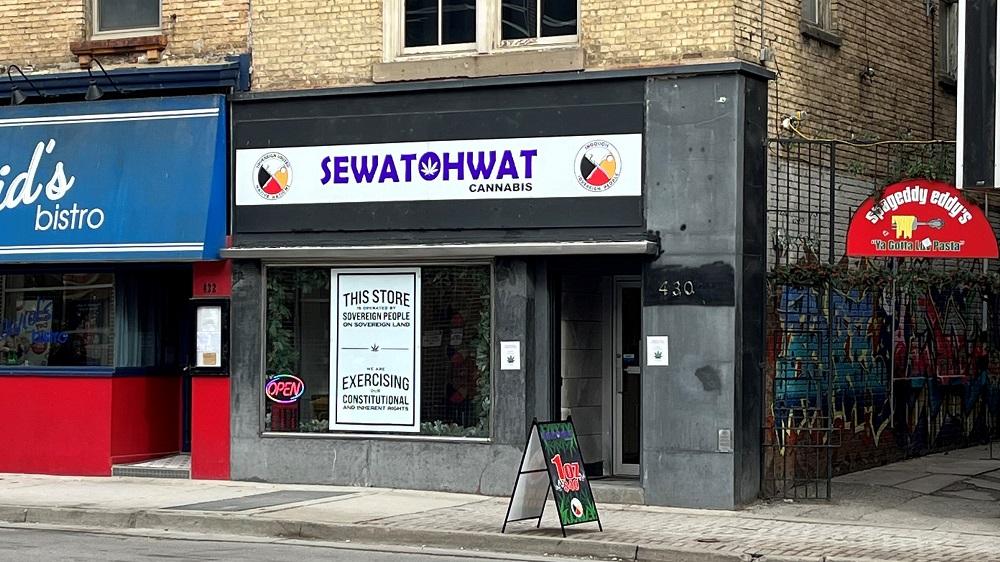 | |
Second Indigenous pot shop opens in city; test of Ontario’s cannabis retail laws looms
Two Indigenous-owned, unlicensed cannabis shops have opened in London in recent weeks, offering cheap, untaxed pot and setting up a potential court showdown pitting the legal cannabis industry against the so-called sovereign cannabis movement. Spirit River, operated by Maurice French of Chippewas of the Thames First Nation, and a second store called Sewatohwat Cannabis at 430 Richmond Street, have recently opened their doors — neither are regulated by Ontario’s legal cannabis laws. So far, neither the city nor police have responded to either store, though the OPP have said they are “looking into this” following a complaint from the operator of a licensed cannabis store.
The upshot: Indigenous cannabis shops have been operating for years on reserve land, with only minor issues, but seeing two open in an urban centre is a new development. Many Indigenous cannabis shops count themselves as part of a parallel “sovereign cannabis” movement and assert that they have a constitutional right to sell traditional medicines, protected under Section 35 of the Constitution Act. The courts have consistently avoided clarifying this, but that day may come: a series of raids on a group of similar shops in Cole Harbour, N.S., have led to a constitutional challenge being brought by Jack Lloyd, a long-time cannabis rights lawyer, that will be heard next year. Recently, Saskatchewan and B.C. have also sought to grant some jurisdiction to First Nations to develop and run their own cannabis regulations, but in Ontario the issue remains undecided.
Read more: CBC London
| | |
 | |
Apartment tower proposed for core temporary parking lot
For years, the lot behind the old Prince Albert Diner (now the Neptune Diner) has been used as a “temporary” parking lot — a use approved in 2004, and then extended in 2014, 2017 and 2021. Now, a new proposal to build a 12-storey, 257-unit apartment tower is working its way to city planners. City politicians, so far, seem to like the proposal: “A 12-storey building seems entirely reasonable around that area,” said Ward 8 Councillor Steve Lehman. “Assuming it fits all the zoning parameters, I think it fits in with what our vision is of downtown, of having more people living in the core.”
The upshot: The development is being brought by IN8 Developments, a developer that has primarily built in the Kitchener-Waterloo region. Not much more, beyond some initial planning documents, has been released about the proposal, which is targeting students and young professionals. The lot itself is owned by Shmuel Farhi’s Farhi Holdings Corp., though it’s not yet clear what if any involvement Farhi will have with the project.
Read more: City Planning Application | London Free Press
| | |
|
From the magazine: Flipping the script
Leveraging the traditional store to boost customer value, Os & Oakes unlocks the hidden value of brick-and-mortar retail.
Read more: London Inc.
| | | |
|
|
PRESENTED BY: THE ACHIEVEMENT CENTRE
Workplace flexibility: One size doesn’t fit all
| Hybrid, remote, virtual, distributed… these words all describe work models that differ from the traditional office schedule that has been the default for decades. When people hear these words, they often think about employees who sometimes or always work from home. But that’s just one (rather narrow) definition of what it means to work flexibly. Business isn’t stagnant, as we all know, and your flexible work strategy should grow and change with the changing needs of your organization. | | |
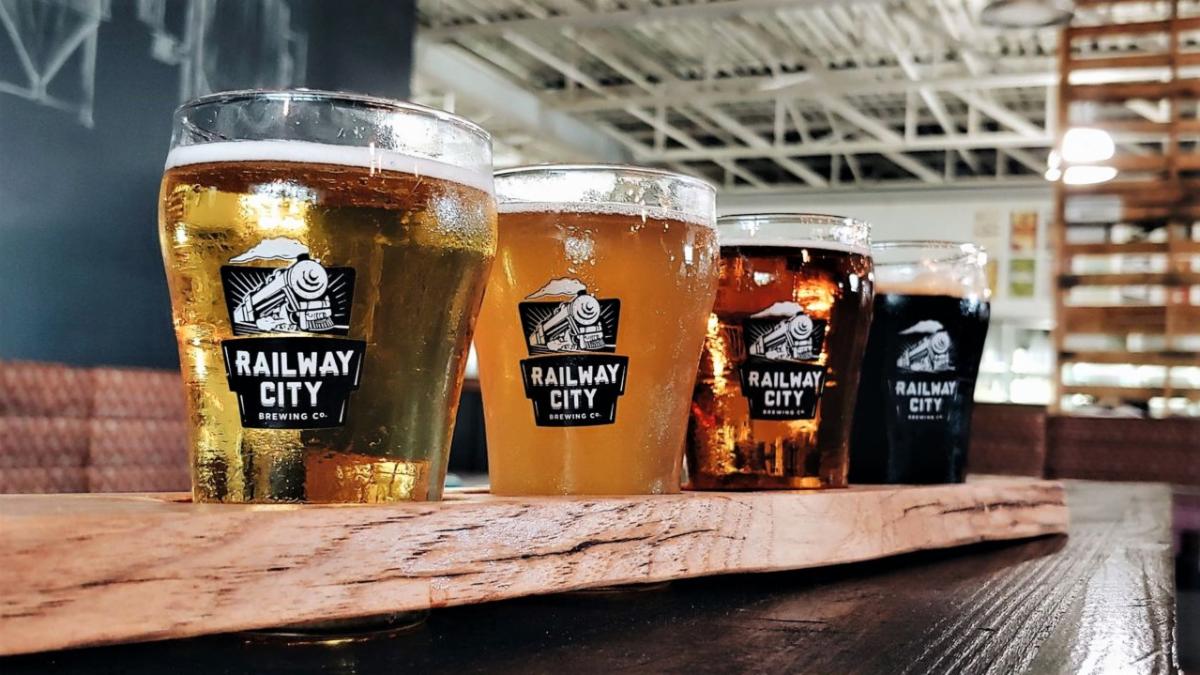 | |
Railway City Brewing purchased by SymBev
Long-time name in the regional craft beer scene Railway City Brewing announced last week that it had been acquired by Toronot-based SymBev ― one of three Ontario beweries acquired as SymBev builds “a new national adult beverage company through acquisition and innovation in the craft beverage space.” The plan is to bring the three brands (the others being Toronto’s Locker Room Lager and Oakville’s Crank Lite Lager) together under one roof in Railway City’s existing brewing facility in St. Thomas, to serve as a regional hub. SymBev says it wants to maintain Railway’s identity in the community, with its CEO Dave Clarke saying, “you can’t make up 15 years’ worth of love and attention that Railway City Brewing has given to the community.”
The upshot: Experts expect more takeovers and strategic alliances like this, especially for smaller craft breweries as effects of an overcrowded market and the pandemic play out. (A few weeks back, for example, London’s Equal Brewing announced it had acquired Collingwood-based Side Launch Brewing Co.) Not surprisingly, the market tightening is putting some beerheads in a frothy mood. London-based beer blogger Ben Johnson called the acquisition “depressing” in a tweet. “Business-minded beer folks are acquiring middling brands and consolidating their facilities, presumably to create a network with which to broadly distribute…something,” he said. “It’s a natural progression in this saggy market, but it really [takes] the romance out of craft beer.”
Read more: Canadian Beer News | London Free Press
| | |
|
From the magazine: Answering the call
Aiming to build connections and community, a lifestyle magazine for firefighters finds a receptive audience.
Read more: London Inc.
| | |
 | |
KGK Science receives Health Canada research license
KGK Science Inc., a subsidiary of Wellbeing Digital Sciences, was awarded an institution-wide cannabis Health Canada research license for its new London research facility. The license, in a nutshell, allows the company to bypass some project-specific regulatory approval processes, shortening the timeline significantly for things like clinical or sensory trials. “We were one of the early companies to get that license, even at our previous location, but we got it in record time at this location as well,” said Najla Guthrie (pictured), CEO at Wellbeing and KGK.
The upshot: It’s not KGK’s first time getting such a license — they had one at their previous research facility in 2020 — but this one now covers their new facility, which opened earlier in the fall at 275 Dundas Street. The company has focused on research into things like cannabis, ketamine therapy and psychedelics, and at one point were even owned by cannabis company Auxly Cannabis, which sold KGK in 2021. “The research license allows KGK to conduct clinical trials investigating cannabis for both non-therapeutic and therapeutic purposes, as well as on-site sensory assessments of cannabis products, without having to obtain project specific cannabis research licenses, ultimately accelerating our research programs and reducing the time to market,” said Guthrie.
Read more: Proactive Investors
|  | |
Dispatch: December 23, 2022
A summary of recent business appointments and announcements, plus event listings for the upcoming week.
View listings here
| | | | | |