July 19th: Annual Loon Census | |
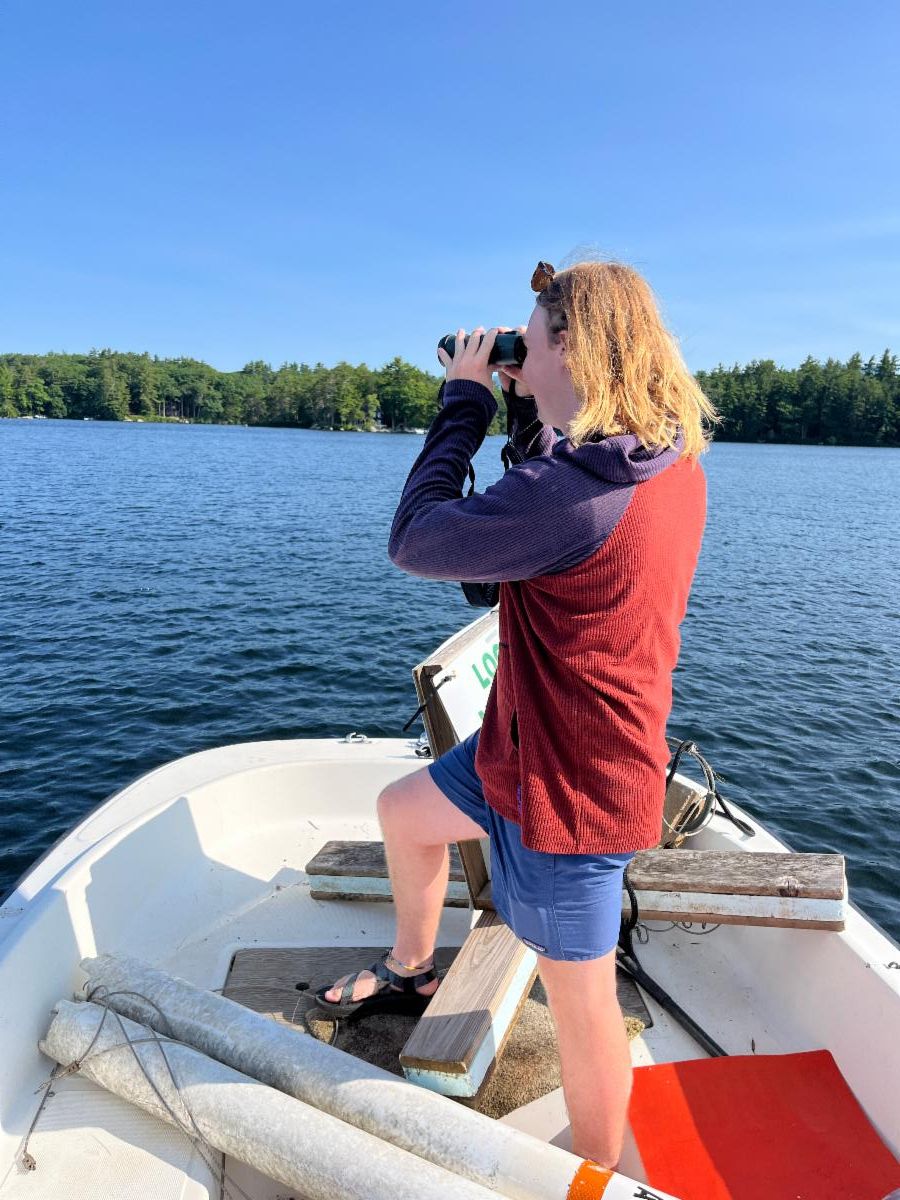
The Annual Loon Census will take place on Saturday, July 19, from 8-9 AM. The goal of this one-hour event is to have as many people as possible simultaneously survey as many lakes as possible in order to create a "snapshot in time" of the state's loon population. There are still lakes lacking census coverage in all regions of the state, so if you are available that morning and have a way to get out on a local lake, please consider participating!
To submit data from the census, you can either print out a physical copy of the census form and mail it to us (see instructions on the bottom of the form for our mailing address) or use our online form. If you have questions or would like us to recommend a lake for you to conduct the census on, please email volunteers@loon.org. Thank you!
| |
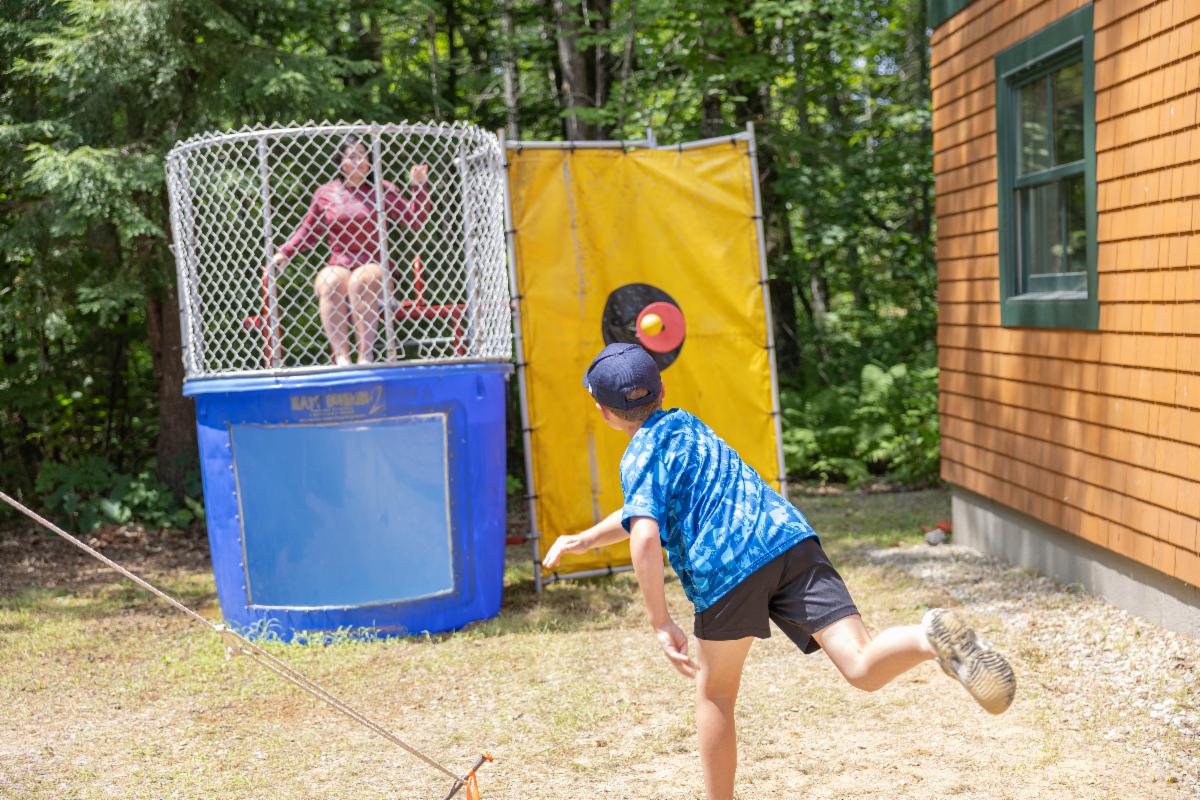
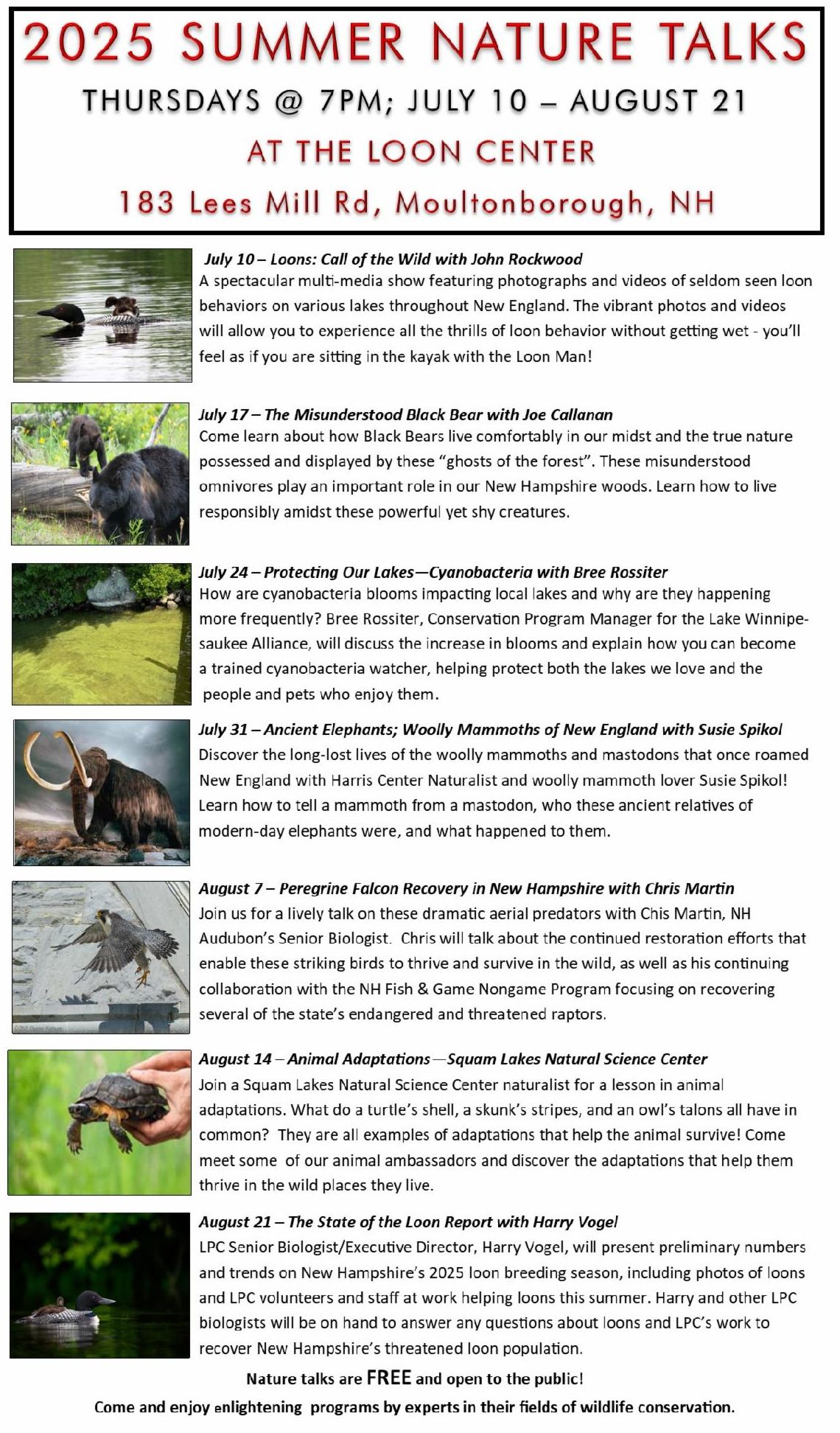
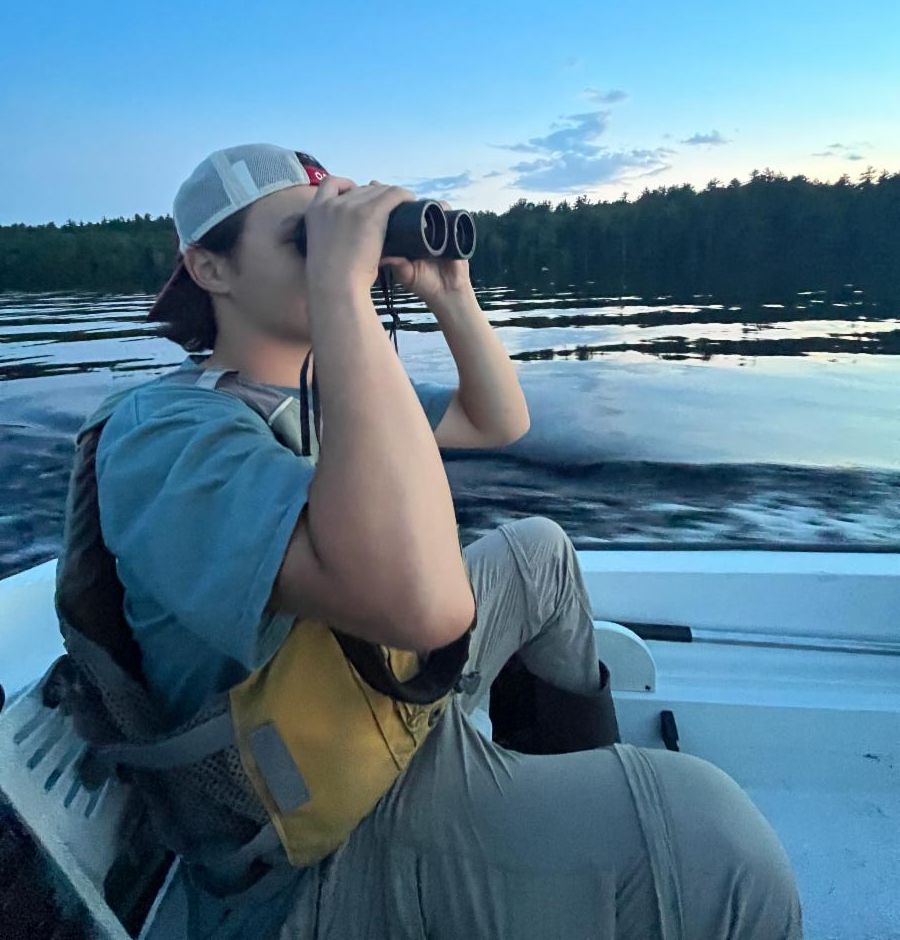
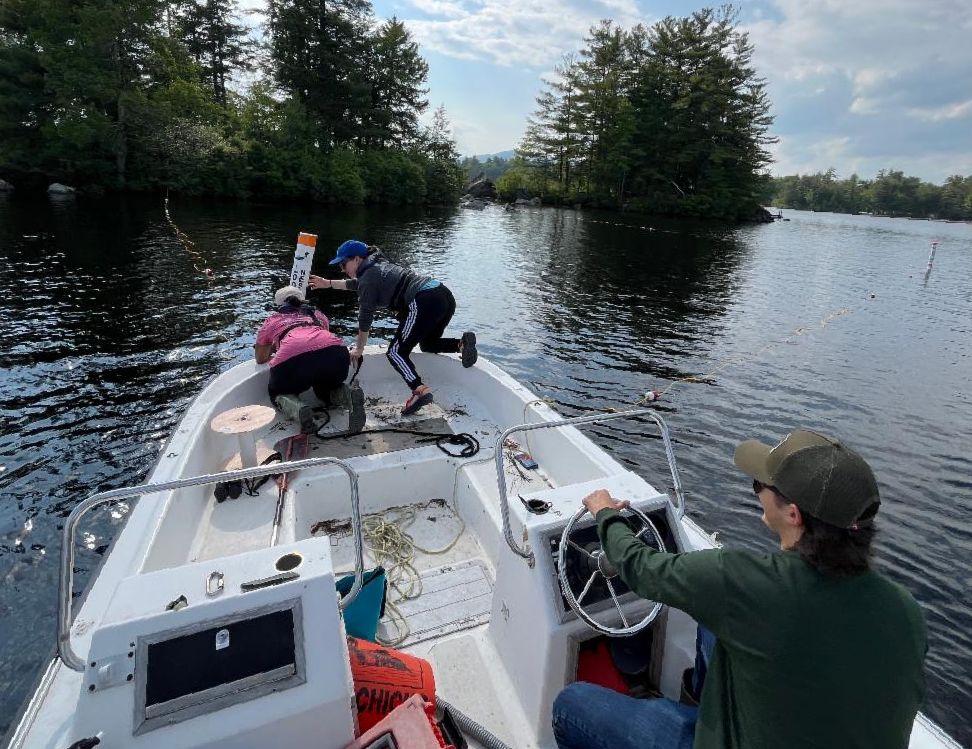
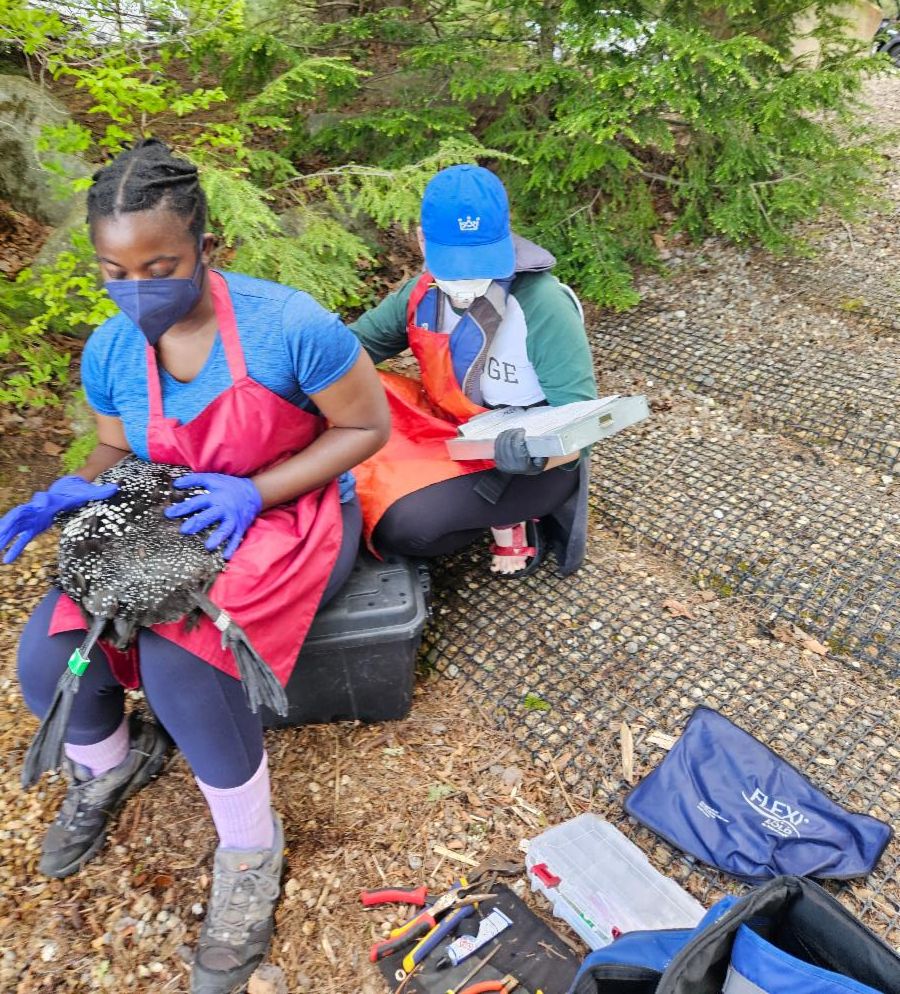
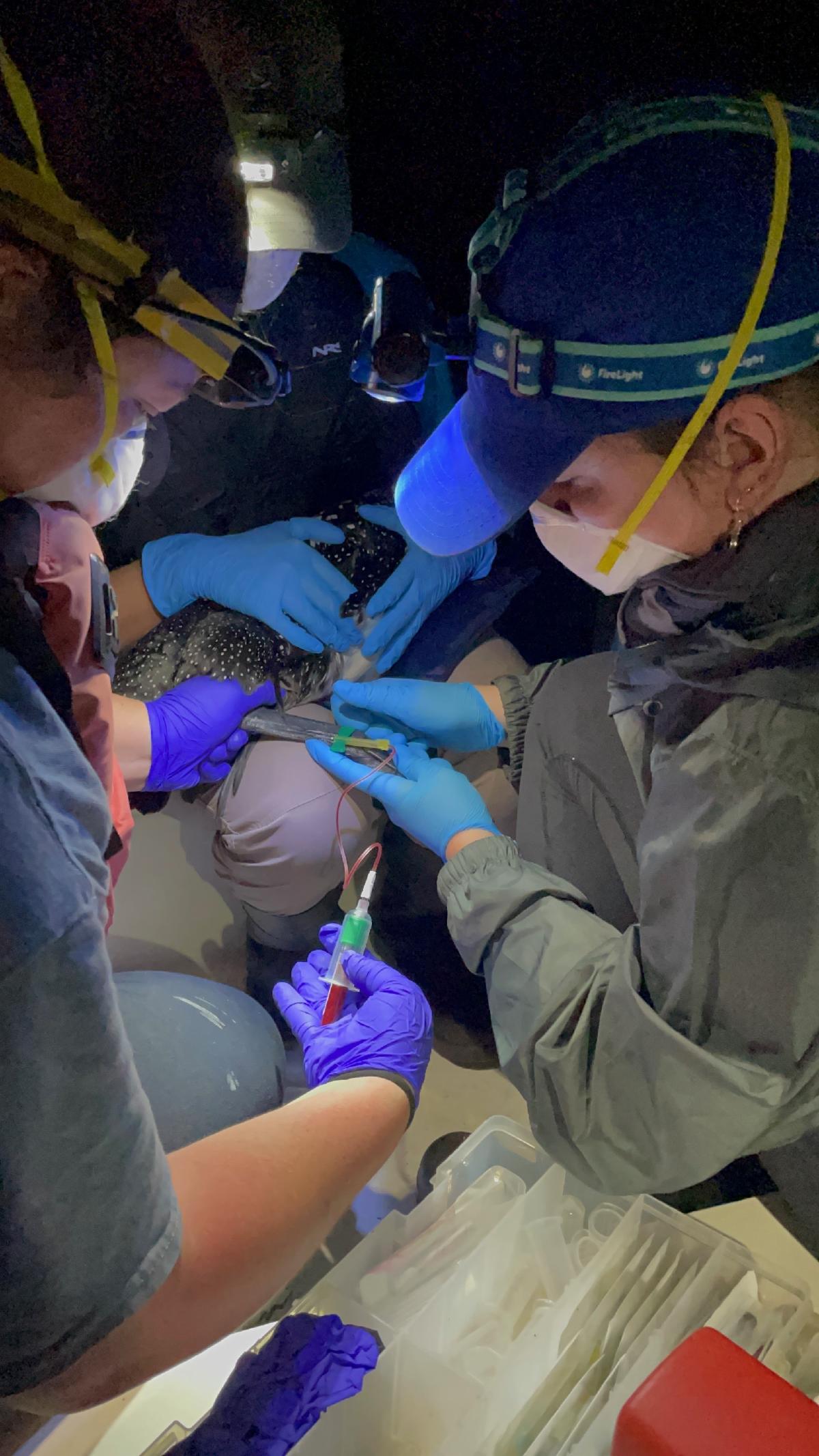
| July 19th: 46th Annual Loon Festival | After the Loon Census, join us at The Loon Center (183 Lees Mill Road in Moultonborough) from 10 AM–2 PM for the Loon Festival! The Loon Festival is free of charge, open to the public, and will include balloon creations, live animals, face painting, and a dunk tank, where a correctly-answered loon trivia question will earn you the opportunity to dunk one of our biologists! We hope you can join us! | | Photo courtesy of Collin Moura. | | July marks the start of our Summer Nature Talk series! These talks are held in person at The Loon Center (183 Lees Mill Road in Moultonborough, NH) Thursday evenings from 7–8 PM. They are free and open to the public. We hope that you can join us! Please note that due to staffing limitations, we are unable to offer these talks virtually. | | June was another busy month for us here at LPC! Our staff spent the month surveying hundreds of lakes across the state for loon presence & nesting, floating signs to protect loons nesting at vulnerable sites, documenting the hatch of chicks (or, in some cases, documenting nest failures), rescuing loons in distress, and giving presentations at locations across the state to teach about loon biology, behavior, and the ways that we can work together to ensure our loons thrive. | | 2025 Outreach Intern, Caden Payne, surveys for loons on Massabesic Lake. | | 2025 Tufts Veterinary Interns, Khangelani Mlanga and Brynn Ziel, float a sign and rope line to protect a vulnerable loon nest on Lake Winnipesaukee. | | 2025 Tufts Veterinary Student Interns, Khangelani Mlanga and Brynn Ziel, perform a health examination on a rescued loon from Newfound Lake. This loon was tangled in fishing line. After untangling, the loon was assessed, banded, and released back onto the lake. | | Over the past couple of weeks, we've started our banding work on lakes throughout the state! Banding loons helps us to track individuals over time, which allows us to learn more about their longevity, lifetime reproductive output, and movements. As we band loons, we take a small blood sample and feather samples. These samples are used to assess health, including screening for malaria parasites, lead levels and mercury levels. | | LPC Outreach Biologist, Caroline Hughes, and Tufts Veterinary Intern, Brynn Ziel, take a blood sample from a loon during a night of banding on Massabesic Lake. | | |
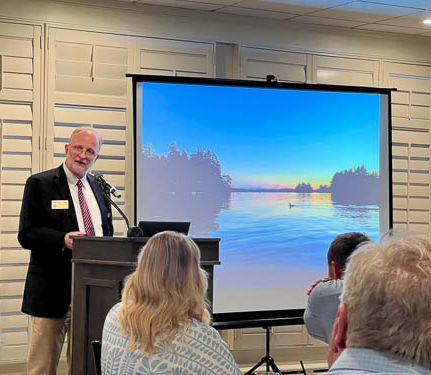
In late June, the Loon Preservation Committee was honored to host a sold-out crowd at Bald Peak Colony Club in Moultonborough, NH to celebrate the first 50 years of LPC’s work for loons in New Hampshire. The evening featured a cocktail hour, dinner, raffles, a Wishing Tree and an entertaining presentation. Board Chairman, Bob Rotberg welcomed celebrants and acknowledged the invaluable contribution of LPC’s volunteers, donors, and staff. LPC Senior Biologist and Executive Director, Harry Vogel recounted the history of LPC’s work for loons, from LPC’s founding in 1975 by Squam Lake resident Rawson Wood, to the present day.
Please join us as we continue to celebrate 50 years of good work for loons at the Loon Festival July 19th, our Annual Meeting on August 21st , and our Holiday Open House on November 29th!
| | LPC Senior Biologist/Executive Director, Harry Vogel, delivers remarks at an event to celebrate LPC's 50th Anniversary. Photo courtesy of Brian Reilly. | | During LPC’s 50th Anniversary Celebration at the end of June, we introduced a Wishing Tree with loon shaped leaves, each representing a “wish” to support the important work of protecting loons in NH. At the event donors chose leaves from the Wishing Tree and generously gifted LPC items such as a Garmin Navigation System for Lake Winnipesaukee boat ($1,500), a laptop computer for educational presentations ($800), and kayak paddles ($90). Look for the Wishing Tree at other LPC events this year, or contact us 603.476.5666 or www.loon.org/donate if you would like to fund a wish! | | |
Items remaining on LPC’s Wishing Tree include:
• Colored bands for banding loons - $400/batch
• Kayaks (2) - $1,000 each
• Annual X-ray Badge Fee (portable x-ray machine) - $700/yr
• LeadCare Test Kit (2) - $350 each
• Deep Cleaning Steamer for invasive aquatic species - $200
• Marine Batteries (2) - $200 each
• Marine bilge pump - $75
• 12 gallon boat fuel tank - $110
• Kayak paddles (2) - $90 each
• Life jackets (3) - $75 each
• Ratchet straps (4 sets) - $25 each
• Flexible cold packs for loon rescue/capture work - $30 each
• Archive storage bins for LPC freezer - $50 for 2
• Waterproof notebooks (10) - $10 each
• Pillows for field staff housing (8) - $20 each
• Egg contaminant analysis - $3,005/egg
PPEs (Personal Protection Equipment):
• Disposable gloves (6-8 boxes) - $50/box
• N95 Masks (15 boxes) - $20/box
| | |
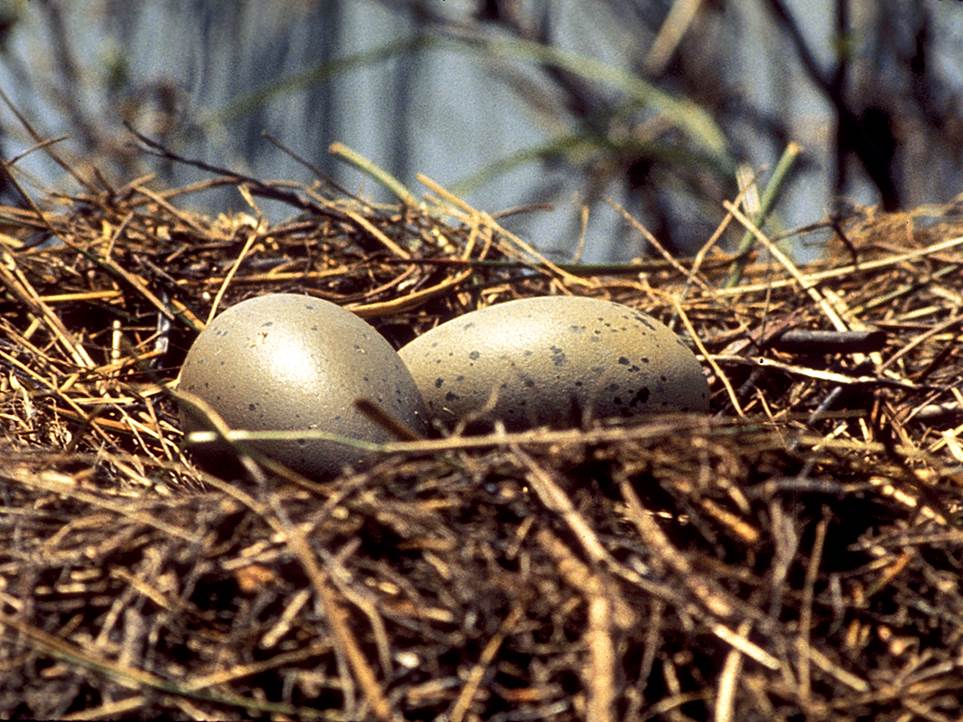
This year, the pair at our Loon Cam 2 site laid their first egg just after noon on May 27th and their second egg in the early morning hours of May 30th. In New Hampshire, loon incubation typically lasts 26–28 days from the laying of the first egg to the hatch of the second chick, so we expected that chicks would hatch sometime between June 22nd and June 24th. Sadly, this window of time came and went with no signs of hatching. We waited a few extra days, thinking that maybe these eggs were just taking a little longer than normal. However, as the days dragged on, it became clear that the loons' eggs were inviable. Viewers watched as the pair continued to dutifully tend to their eggs, which had no chance of hatching.
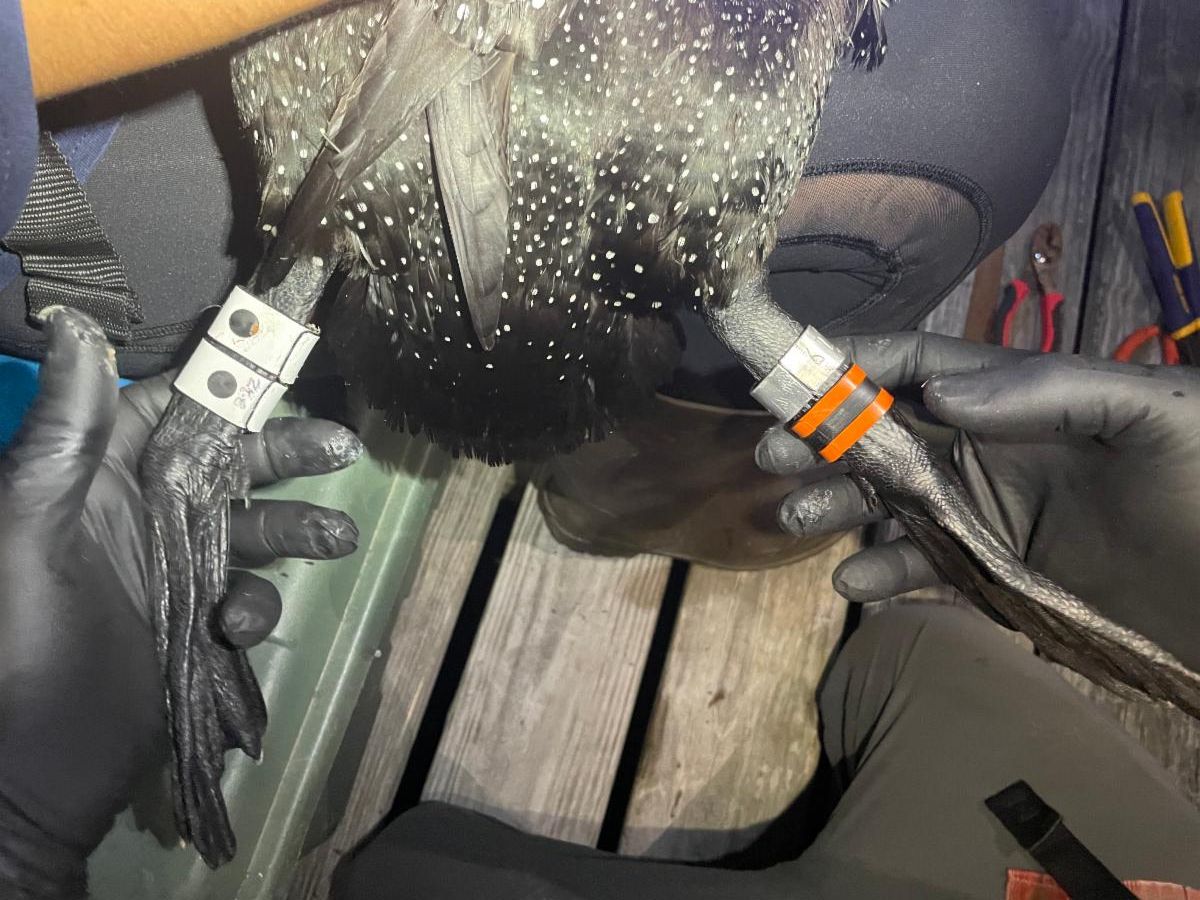
Earlier in the incubation period, we had noticed that the unbanded female of the Loon Cam 2 pair had a fishing hook stuck in her bill, peaking out of her nostril. Knowing that there was no danger of causing the nest to fail since the eggs had proven to be inviable, and wanting to have a chance to catch the female to remove the hook and band her, LPC staff opted to catch her from the nest. On the evening of July 1st, a full week after the eggs should have hatched, the female was caught. During the capture, the hook was dislodged from her bill and fell out. She was given a set of bands so that we will be able to identify her in future years. We took a small blood sample, and preliminary blood tests revealed no health problems caused by the hook.
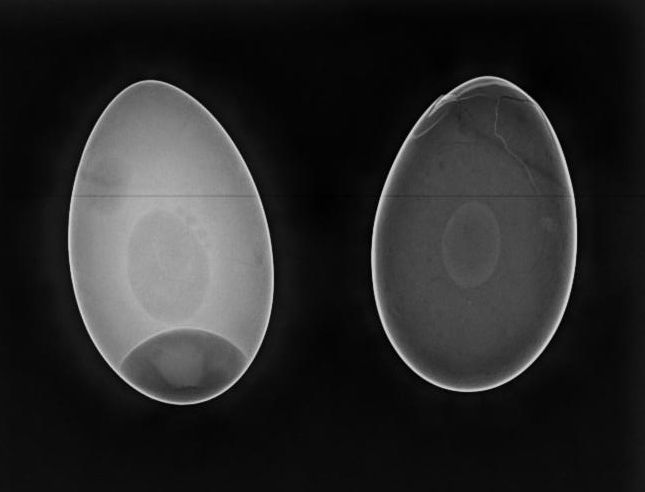
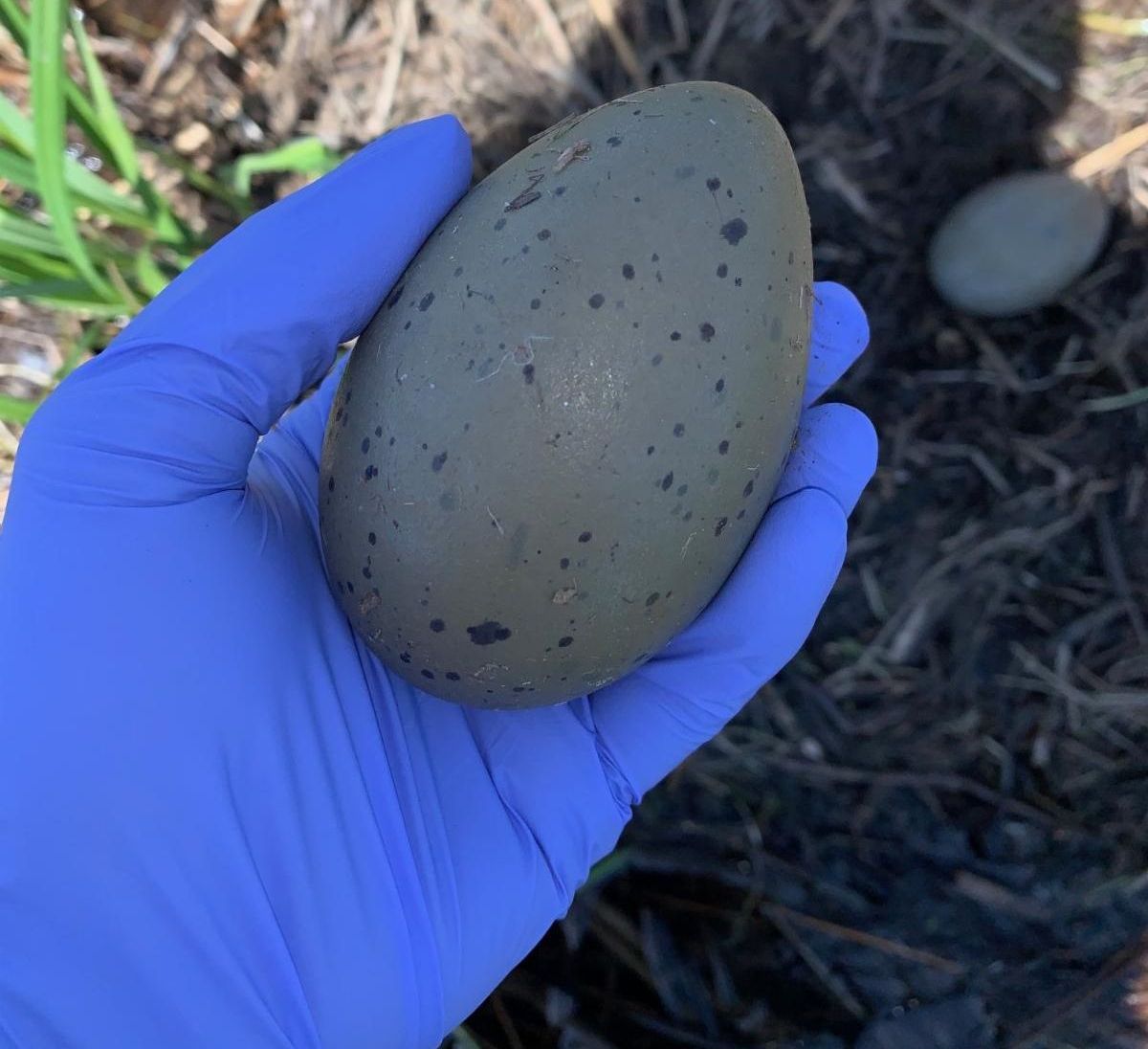
| | The Loon Cam 2 female with her new bands—white dot over white dot on left leg and silver over orange stripe on right leg. | | We were able to collect and x-ray the eggs from the Loon Cam 2 nest. One of the eggs (on the right in the image below) cracked during the collection and leaked a yellowish fluid, consistent with the contents of an egg with little development. X-rays showed that both eggs had a relatively uniform interior with a denser yolk-like mass present. Neither egg showed any evidence of development. Based on these x-ray findings, these eggs seem to be in the very early stages of development, indicating that they were either inviable from the start or stopped developing early in the incubation process. | | X-rays of the Loon Cam 2 eggs indicated that neither egg passed the early stages of development. You'll notice that the egg on the right is cracked—this happened as it was collected, so the crack did not contribute to the failure to hatch. | | Like many Loon Cam viewers, we are disappointed with this nest outcome. But loons are in it for the long haul—as a long-lived species, they have many chances over the course of their lifetime to breed. One year of failure—while disappointing—is not unusual. We look forward to next summer, when this pair will likely try to nest again and may have a better outcome. In the meantime, our Loon Cam 1 loons are still sitting on their eggs, with an expected hatch window of July 15th—17th. You can watch them here. | | About Loons: Hatching Failure | | The term “hatching failure” refers to situations like the one we witnessed on Loon Cam 2, where the eggs remained in the nest through their expected hatch date but ultimately failed to hatch, despite not being lost to predation or other visible causes. While disappointing to see, hatching failure is not uncommon. It is a well documented phenomenon that has been observed in both wild and captive bird populations. One study that analyzed hatching failure rates for 241 different bird species found an average hatching failure rate of 16.8% across species. While it can be complex to calculate the hatching failure of a population, we are looking into doing so for New Hampshire's loons. | | |
Hatching failure results from one of two mechanisms:
- Fertilization failure (the egg was never properly fertilized)
- Embryo mortality (the egg was fertilized, but the embryo stopped developing at some point during incubation).
In cases where eggs show no signs of development (as was the case with Loon Cam 2), it can be difficult to tell which of these two mechanisms was to blame—were the eggs simply never viable, or did something happen very early on in incubation that stopped development? We will likely never know the answer to that question in the case of our Loon Cam 2 eggs, but we can consider the possible contributing factors.
| | Fertilization failure may occur for several reasons. In the case of Loon Cam 2, we know that our banded male has produced chicks in the past with previous mates, so he is unlikely to be infertile. However, there are other things that can go wrong during the fertilization process that can result in the laying of unfertilized eggs, including:problems with a female’s eggs that render them unable to be fertilized, copulation failure that results in sperm not reaching the eggs, and failure of the sperm to fuse with the egg. It is worth noting that just because our Loon Cam 2 eggs showed little to no development, that does not necessarily mean that fertilization failure occurred—one meta analysis found that when eggs show little development, there have been only a limited number of studies that distinguish between fertilization failure and early embryo mortality as the cause. Those studies that have attempted to make the distinction have found that early embryo mortality is actually more common than fertilization failure. | | |
Even when fertilization is successful, developing embryos are vulnerable to a variety of risks that can cause mortality, including:
- Genetic defects that inhibit proper development
- Extreme temperatures (heating, chilling, or dessication)
- Insufficient egg turning during incubation
-
Exposure to environmental contaminants (the impacts of contaminants on reproductive success is an active area of research for us at LPC)
- Microbial infections that invade the egg
While we may never know the exact reason why the Loon Cam 2 eggs failed to hatch this year, the pair's struggles highlight the many challenges that loons face each year. From what we witnessed on the live stream, this pair did everything right—they did not leave their eggs unattended for long stretches of time, they appeared to turn their eggs frequently enough, and they were clearly dedicated to their nest. In spite of their hard work, their eggs failed to hatch. Hatching failure is a natural part of reproduction not just for loons but across many bird species. In New Hampshire, we have seen many pairs overincubate their nests one year only to go on to hatch chicks the next. We remain hopeful that the Loon Cam 2 pair will return next year and, with a little luck, produce some healthy chicks. We thank all who joined us in watching them and caring about them this year.
| | This month, the Flying Loon Ball Cap is on sale for 15% off in our gift shop! Shop online or visit us in person at The Loon Center to take advantage of this deal! All proceeds from our store are used to fund our important work for loons in New Hampshire. Thank you for your support! | | We’re rated by Charity Navigator! You can give with confidence knowing that we have been independently evaluated for effectively stewarding donations. | | Loon Preservation Committee | 603-476-LOON (5666) | www.loon.org | | The Loon Preservation Committee is dedicated to restoring and maintaining a healthy population of loons throughout New Hampshire; monitoring the health and productivity of loon populations as sentinels of environmental quality; and promoting a greater understanding of loons and the natural world. | | | | |