September 17: Presentation: Wild America Coast to Coast by Andy and Beth Greenwood | | |
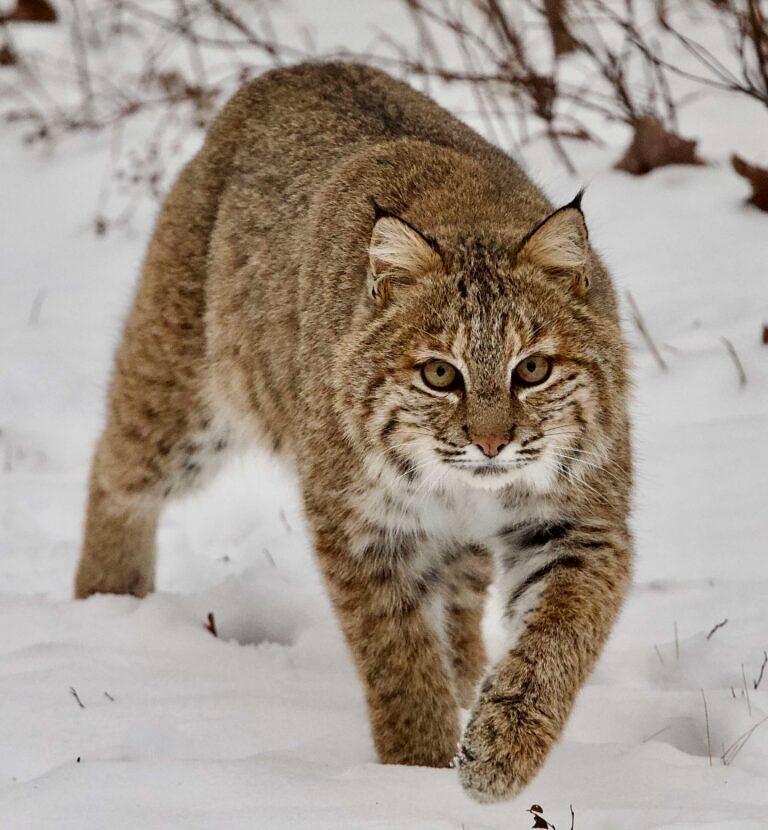
Andy and Beth Greenwood of Keene, NH, have dedicated much of their lives to capturing digital wildlife images, a passion which involves both local and distant travel to respectfully photograph nature. Join us at The Loon Center for a presentation in which Andy and Beth will share images from their 24 years of wildlife photography, including an exciting batch of new images from a recent trip to Yosemite.
This presentation is sponsored by the Lakes Region Chapter of NH Audubon. It will be hosted at The Loon Center (183 Lees Mill Road, Moultonborough NH) on September 17th from 7-8 PM. This presentation is offered in-person only.
| | 2026 State of the Loon Report Recording | | On August 20th, LPC held our Annual Meeting at The Loon Center. This meeting included LPC Executive Director, Harry Vogel, giving the 2026 State of the Loon Report, a preliminary summary of how New Hampshire's loons fared in 2026 and the work that our staff performed to support them. This presentation was recorded and can be accessed on LPC's YouTube channel. To watch, click play on the video below. | | Please note: This report summarizes the preliminary data from our field season. This data will undergo rigorous QA/QC over the coming months, and over the course of that process, the numbers may change slightly. Once the data has been thoroughly checked, we will provide a follow-up written summary of the finalized numbers of the season in both our paper newsletter and our E-Newsletter. Keep an eye out for that later this year, likely in November or December! | | |
August kept LPC staff busy with a number of tasks, including monitoring the survival of chicks hatched earlier in the year, banding loons so that we can continue to learn by tracking known individuals over time, responding to reports of loons in distress, giving presentations about loons and their needs throughout the state, collecting and necropsying all dead loons reported to us, and beginning to retrieve the nest rafts that we floated on lakes earlier in the year to help support loon nesting.
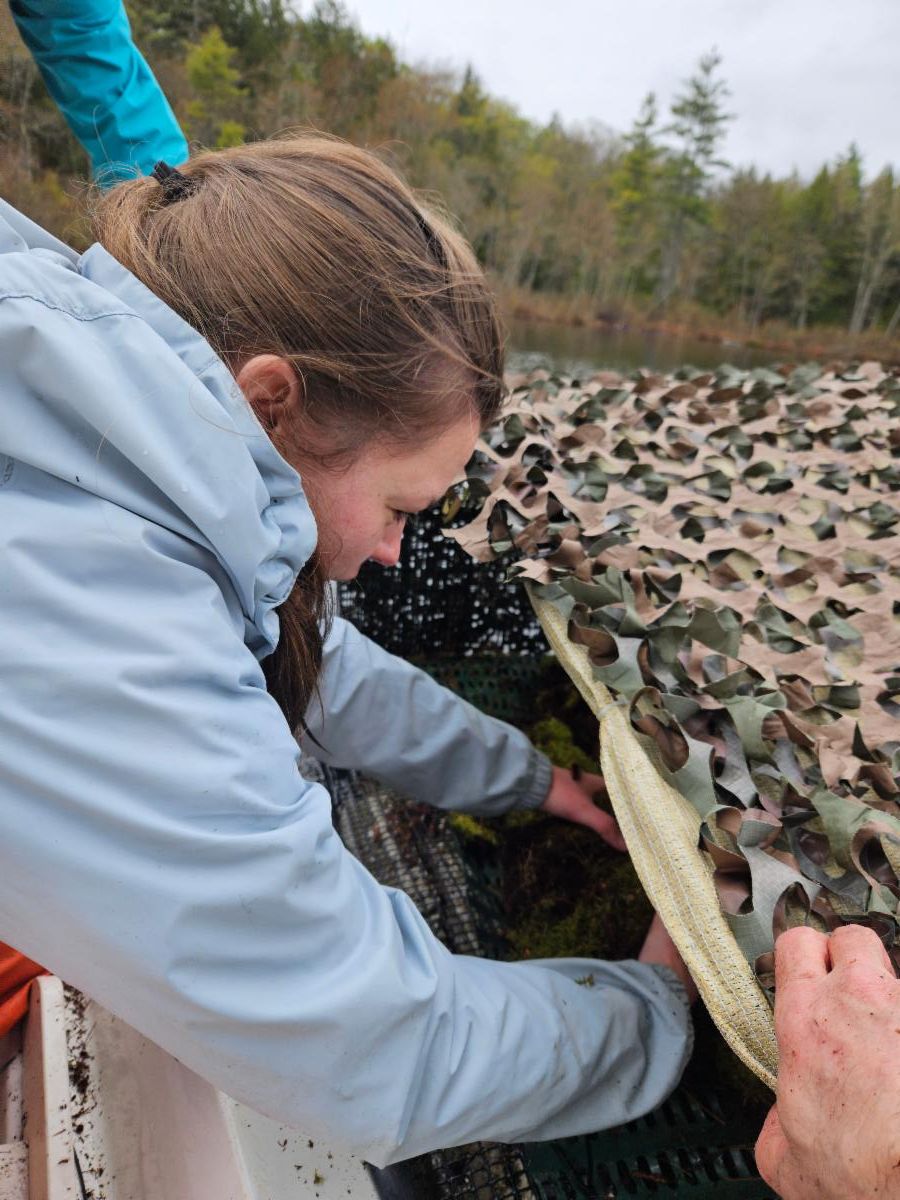
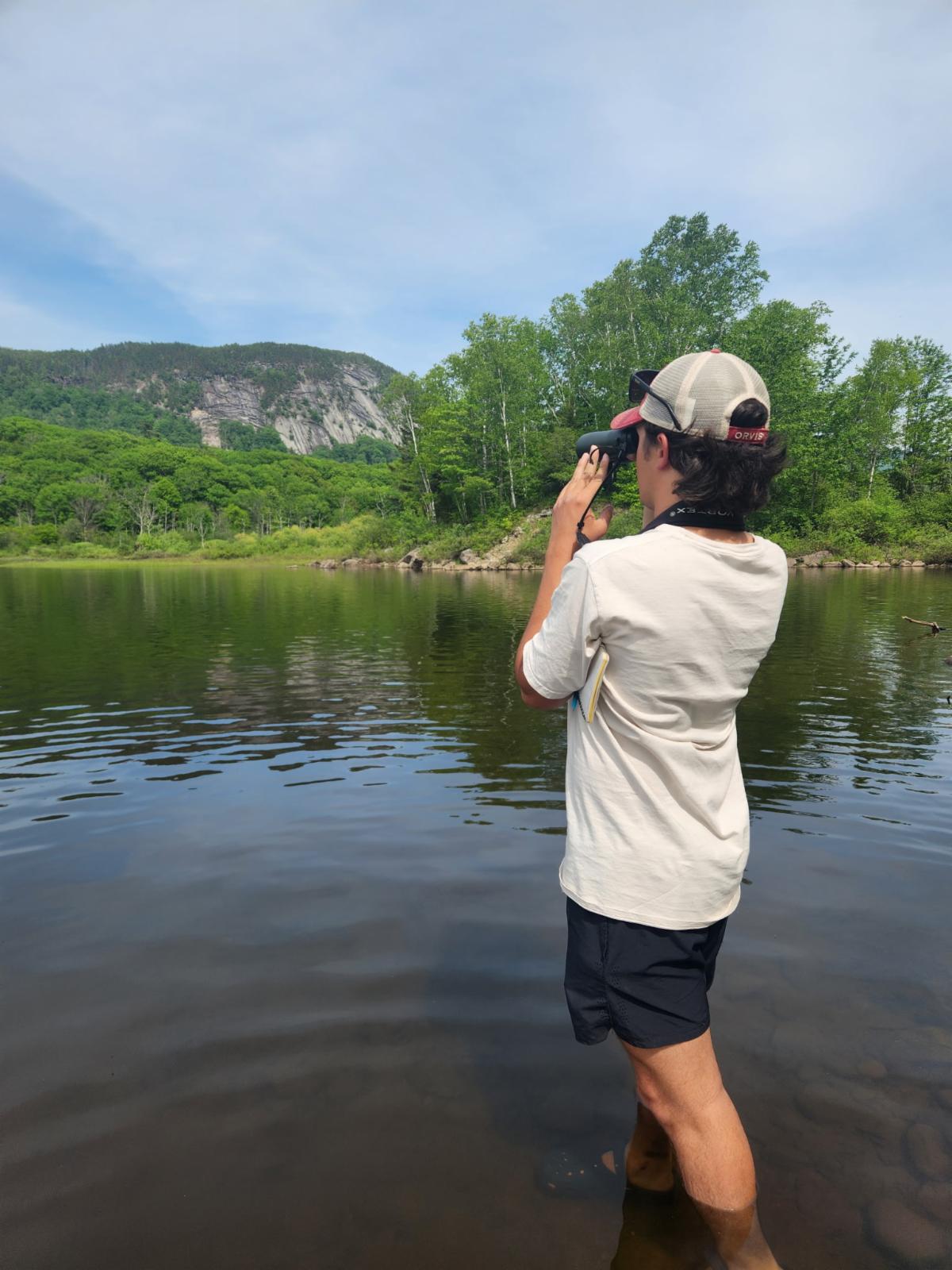
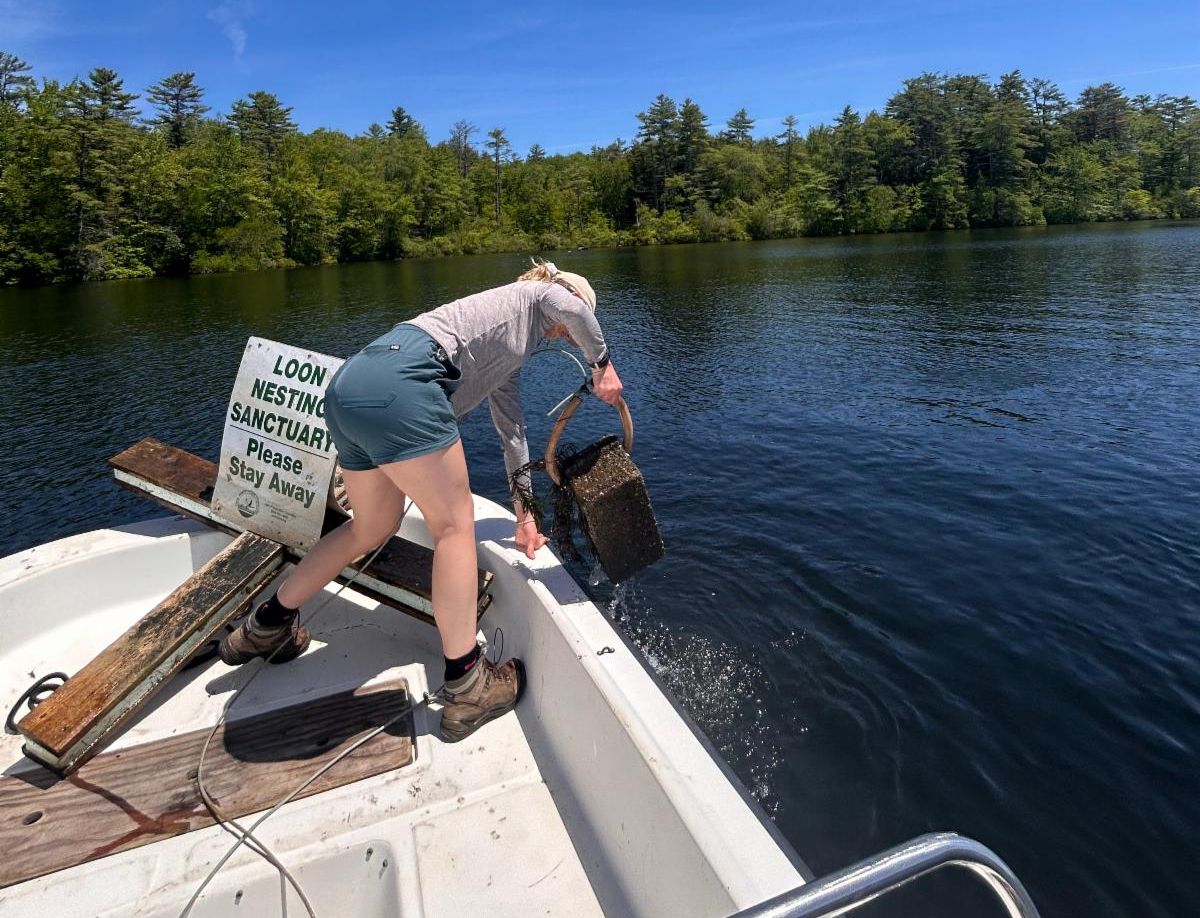
In mid-August, we bid farewell to our wonderful 2026 Field Crew. The photos below show just some of the work that our crew got up to this summer.
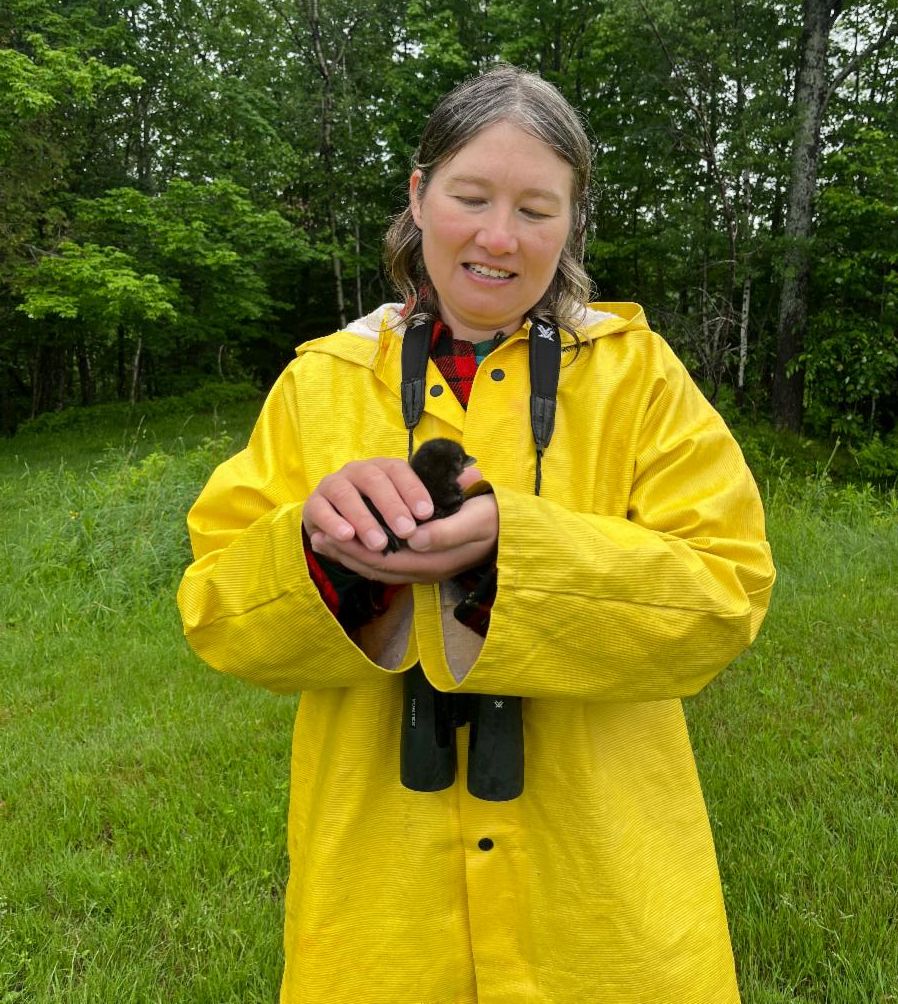
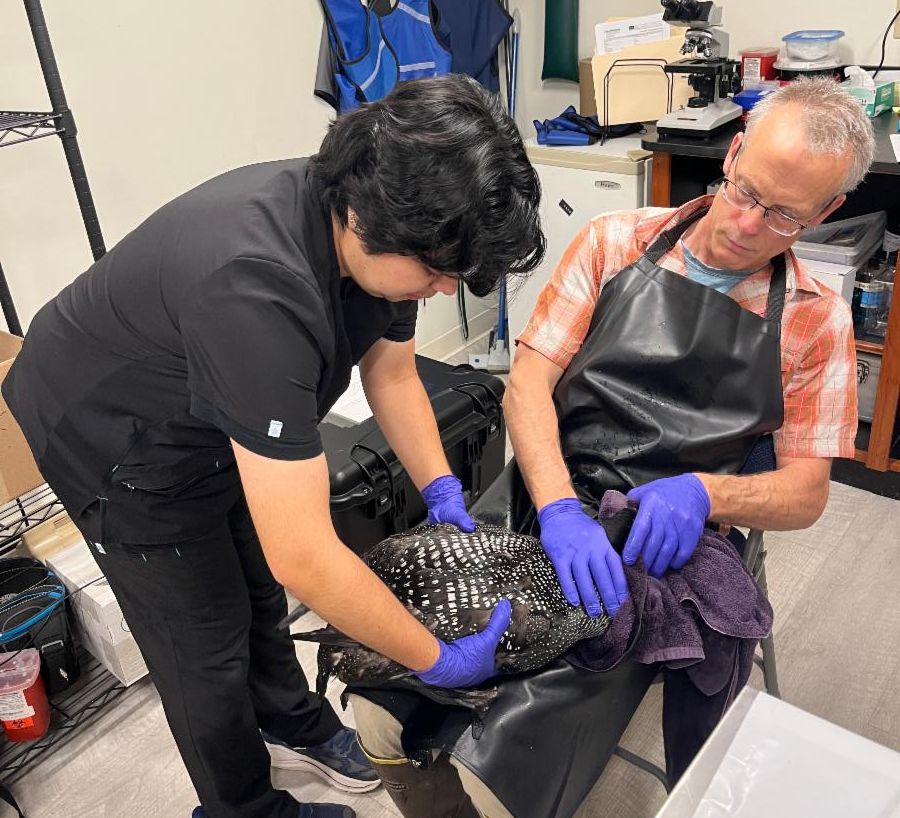
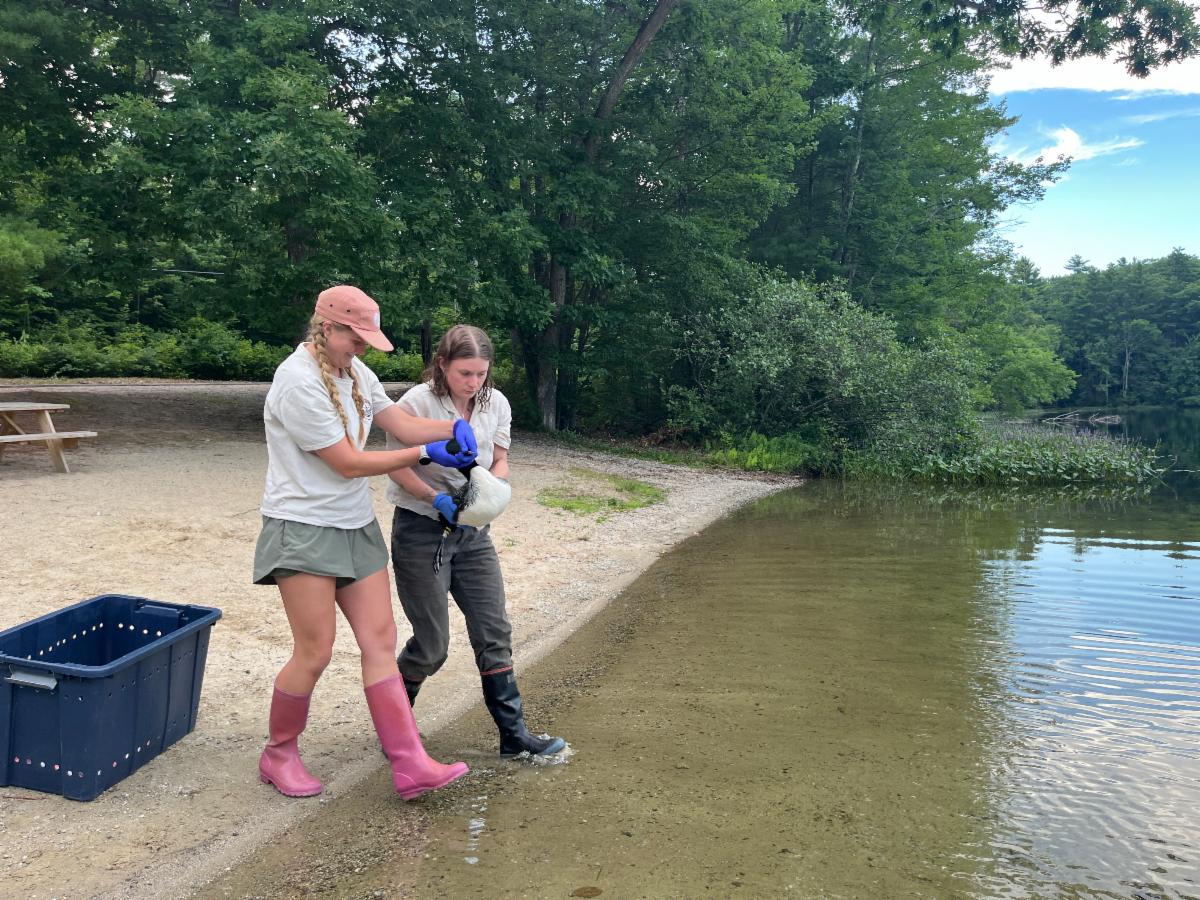
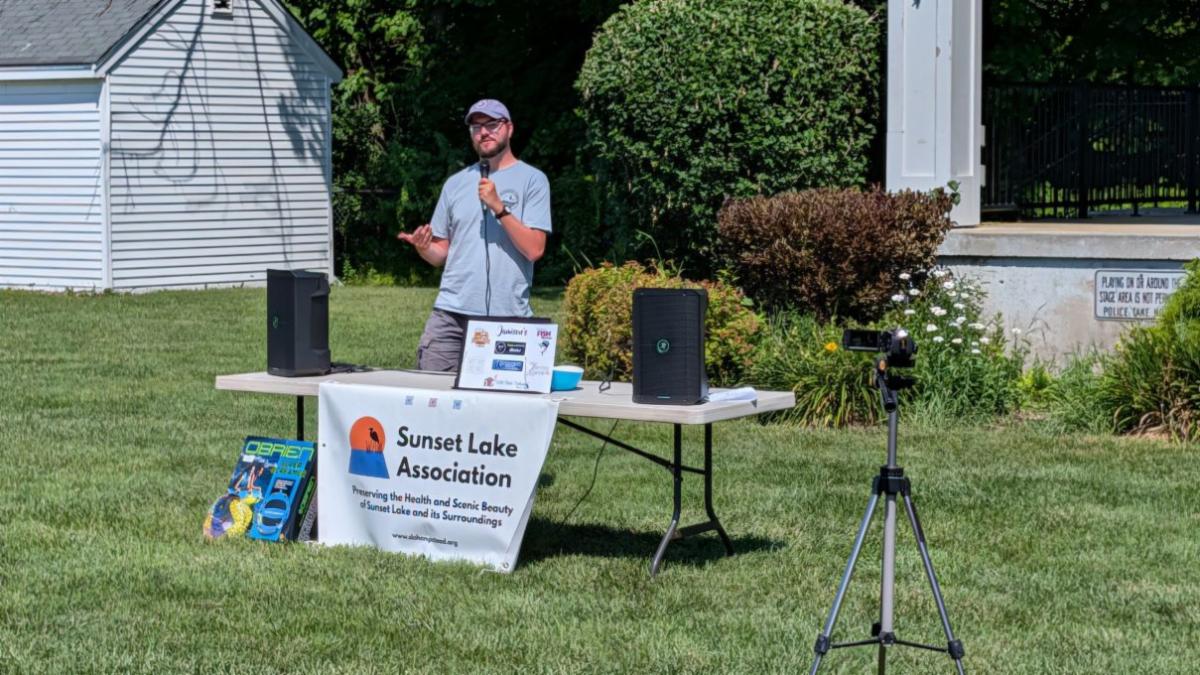
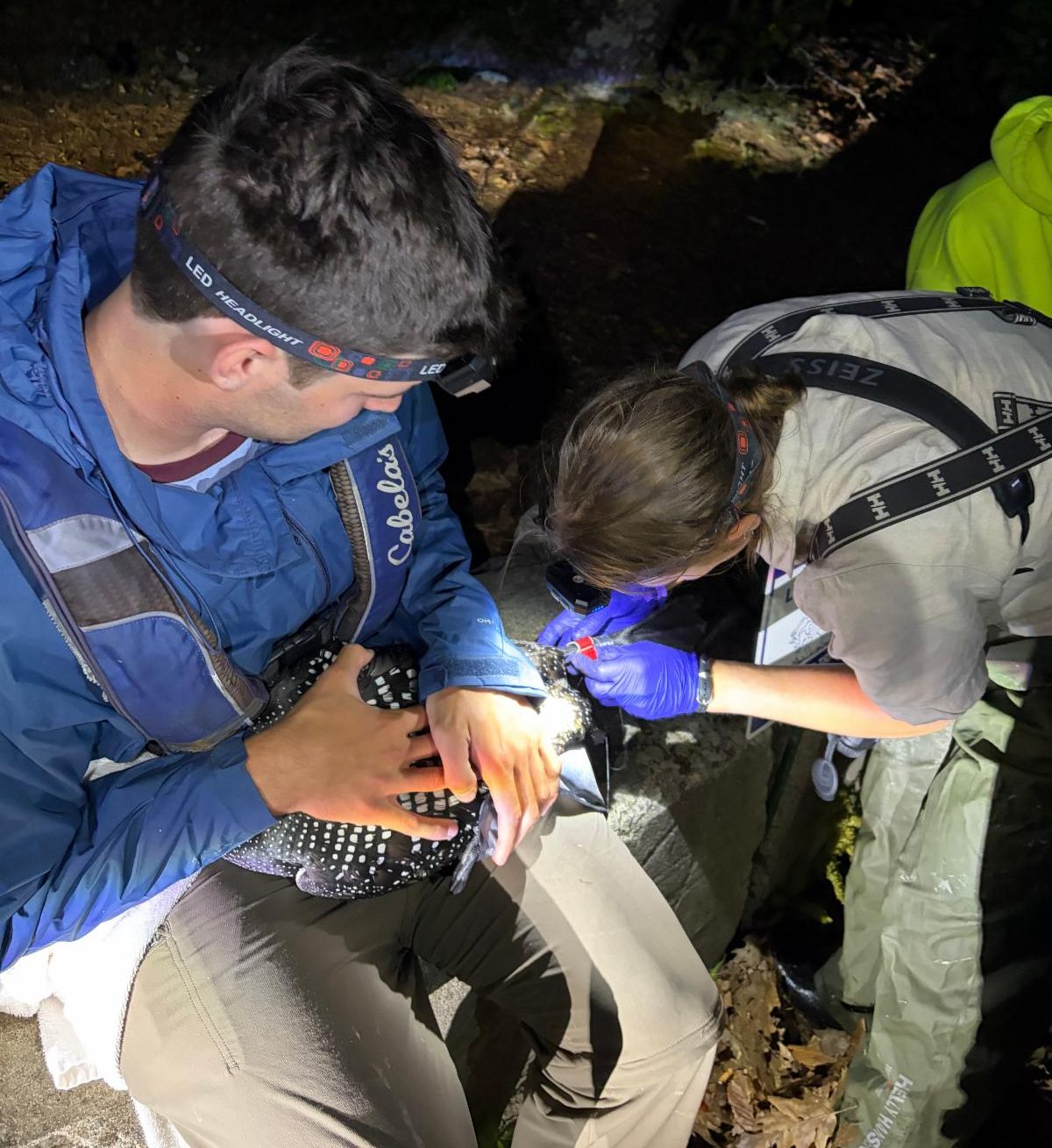
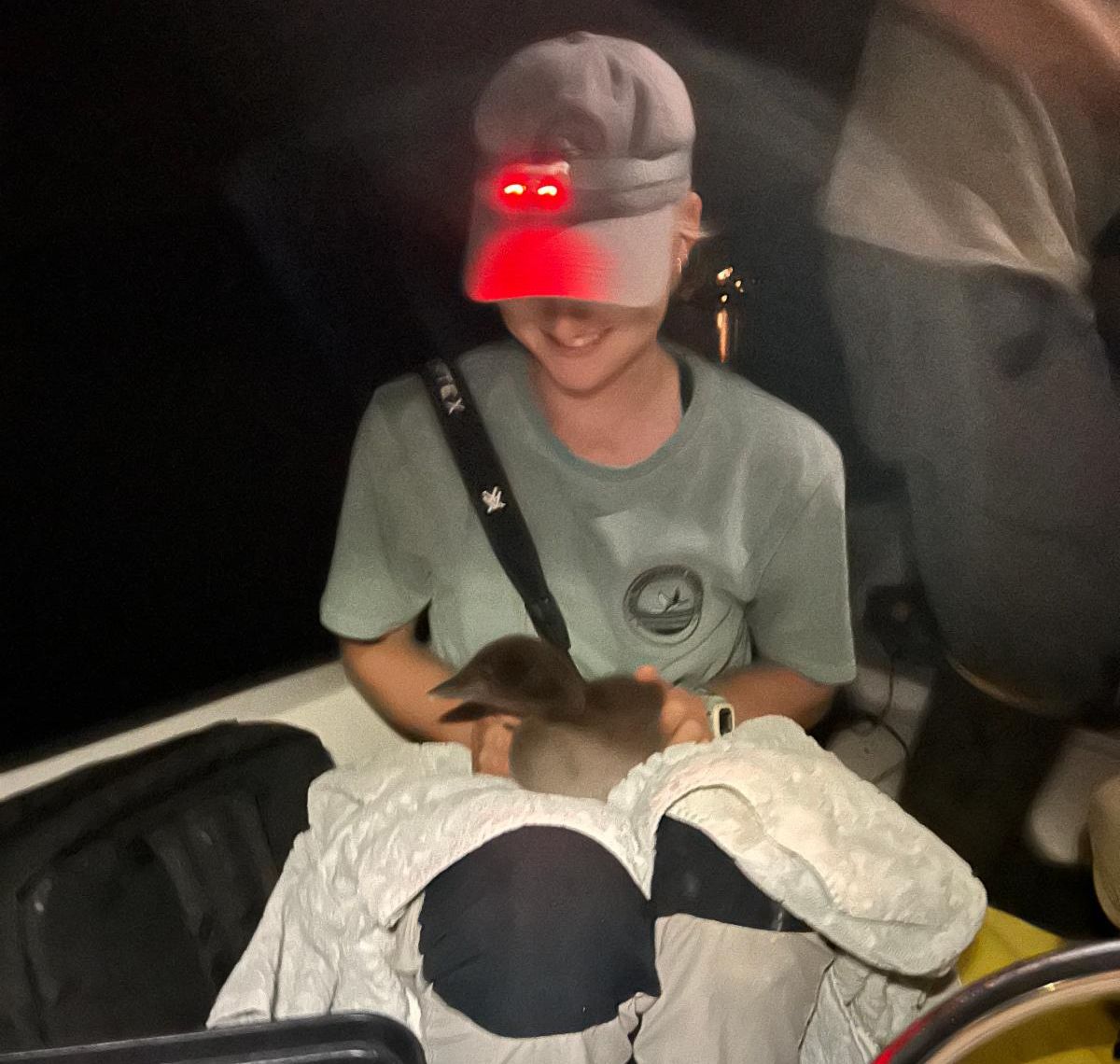
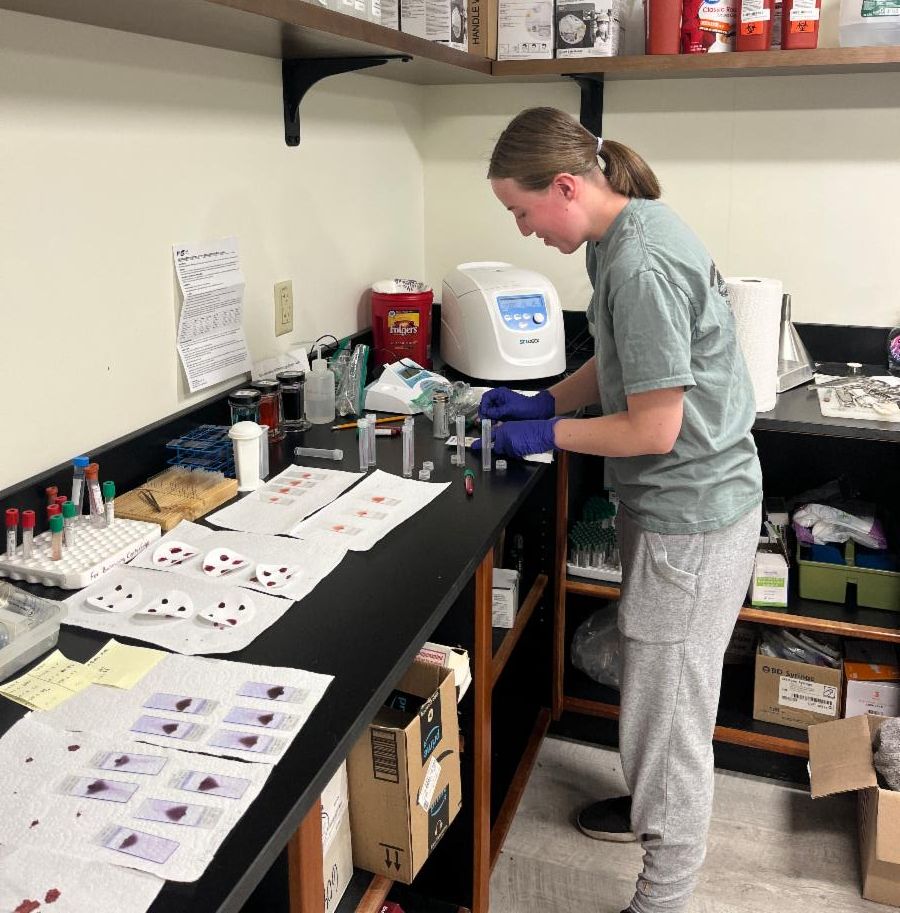
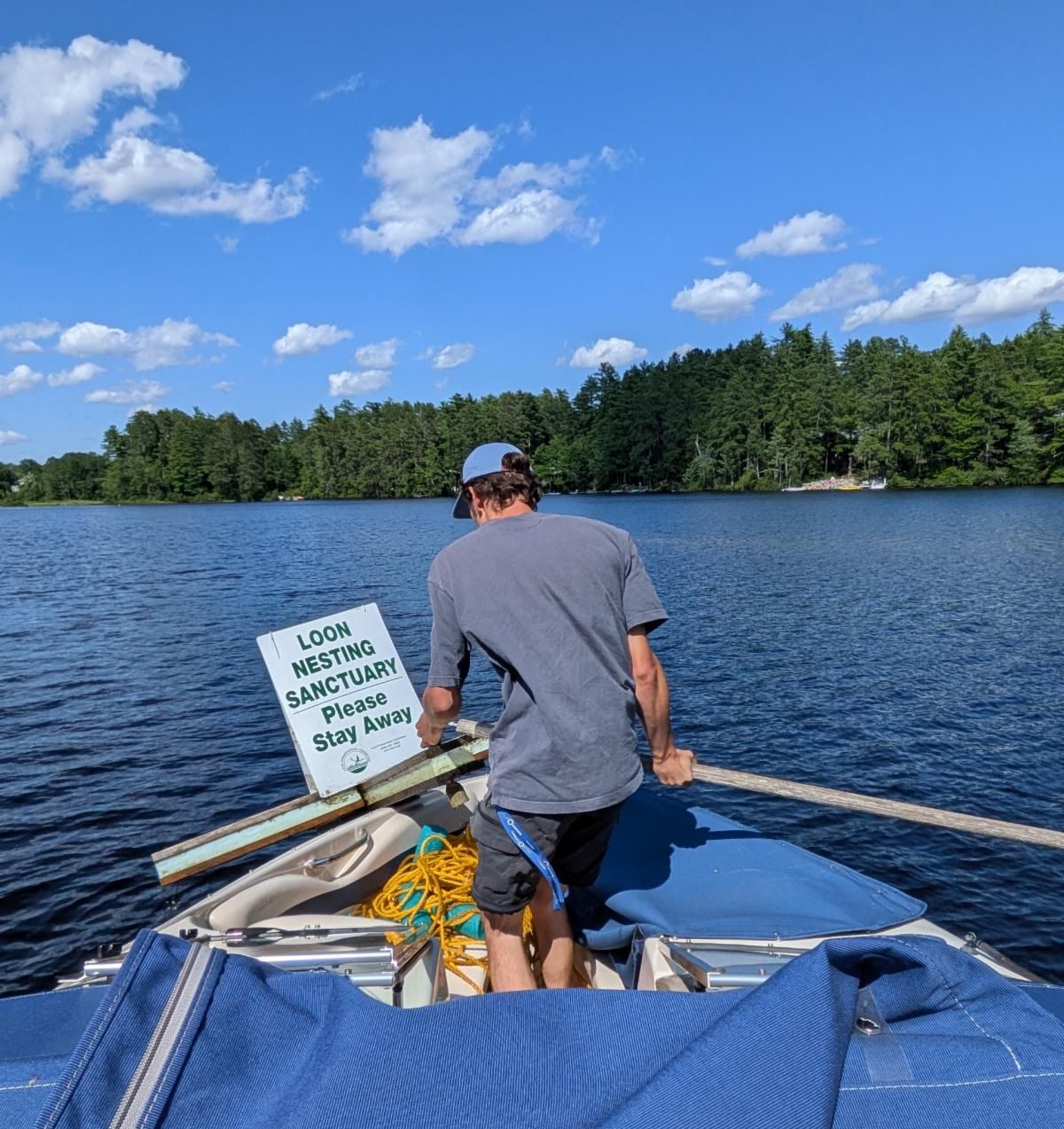
| 2026 Pemigewasset Region Biologist, Nicole Westfall, adds nest material to a nest raft on Winnisquam Lake. | West Lakes Region Biologist, Caden Payne, surveys for loons. | Winnipesaukee North Biologist, Caroline Baxter, floats a sign to protect a loon pair nesting in a location prone to human disturbance. | North Country Biologist, Katharine Turnbull, examines a loon chick that had gone over a dam before reuniting it with its parents. | Veterinary Intern, Cris Pineda, examines a rescued adult loon held by LPC Senior Biologist, John Cooley. | Outreach Intern, Mariah Haug, and Monadnock Region Biologist, Alice Weis, release a rescued loon. | | Seacoast Region Biologist, Mike DiGioia, speaks at the Annual Meeting of the Sunset Lake Association. | | Sunapee Region Biologist, Eli Lammi, holds an adult loon while Monadnock Region Biologist, Alice Weis, places a plastic band on its leg. Banding loons allows us to track individuals over time, gaining valuable insights into life history and movements. | Winnipesaukee South Biologist, Rachel Ford, holds a loon chick during a night of banding. | Veterinary Intern, Sammy Schuchman, processes blood samples collected during a night of banding. These blood samples allow us to evaluate the overall health of the sampled loons and are used in ongoing research projects, including a collaborative project studying the emergence of avian malaria in New Hampshire's loons. | | East Lakes Region Biologist, Marcus Cosentino, retrieves a sign that had been used to protect a loon nest vulnerable to human disturbance. | | Our seasonal field crew worked hard this summer, and we are grateful for the many hours that they spent working to help New Hampshire's loon population. We will miss them, and we wish them the best in their future endeavors! | | About Loons: Loon Chicks' Fall Transition Towards Independence | | |
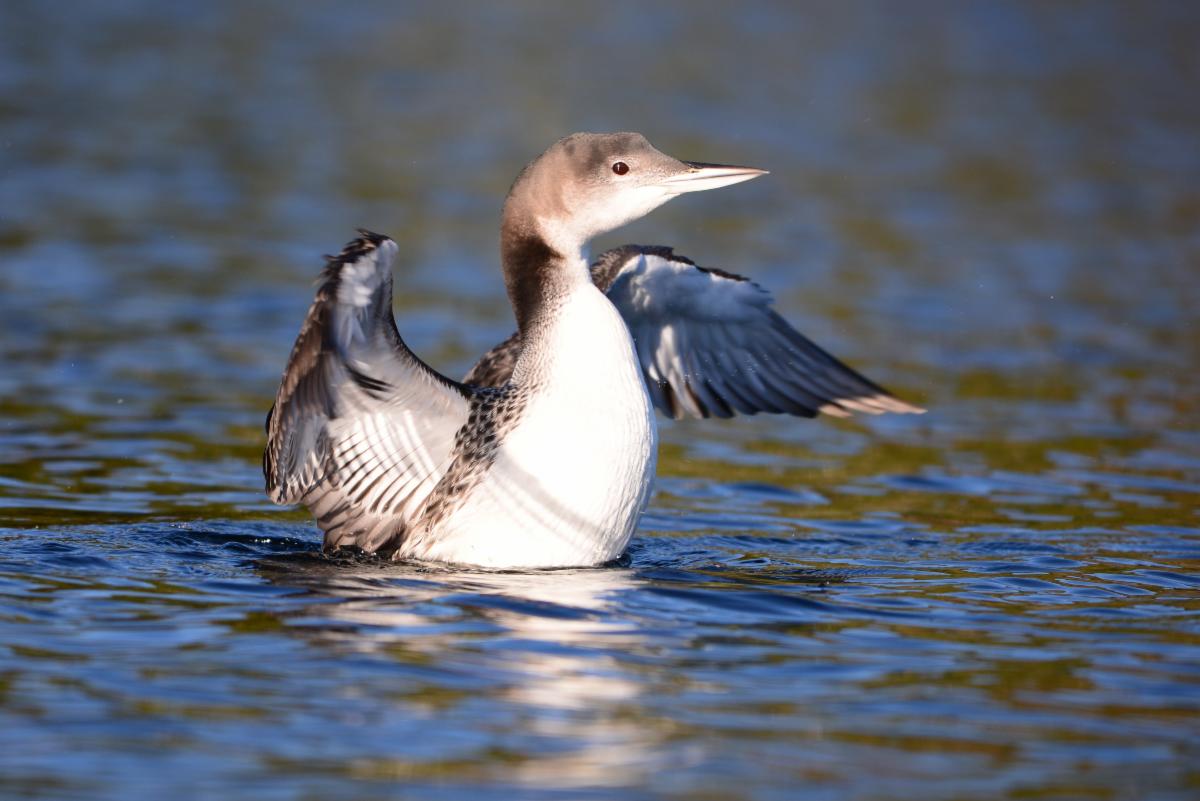
When they first hatch, loon chicks are dependent upon their parents for food as well as protection from predators and intruding loons. Over the course of the first several weeks of their lives, chicks grow rapidly, developing the body structures and skills needed to begin foraging independently. While they remain vulnerable to predators and other loons, their increasing size and ability to dive and evade attack helps them to become less dependent on their parents over time.
Peak hatch time for loon chicks in New Hampshire is the first week of July, which means that during the month of September, our chicks are 8-12 weeks old. This is an important period of time for loon chicks, when they begin to transition from being dependent on their parents to being more independent and preparing for their own migration.
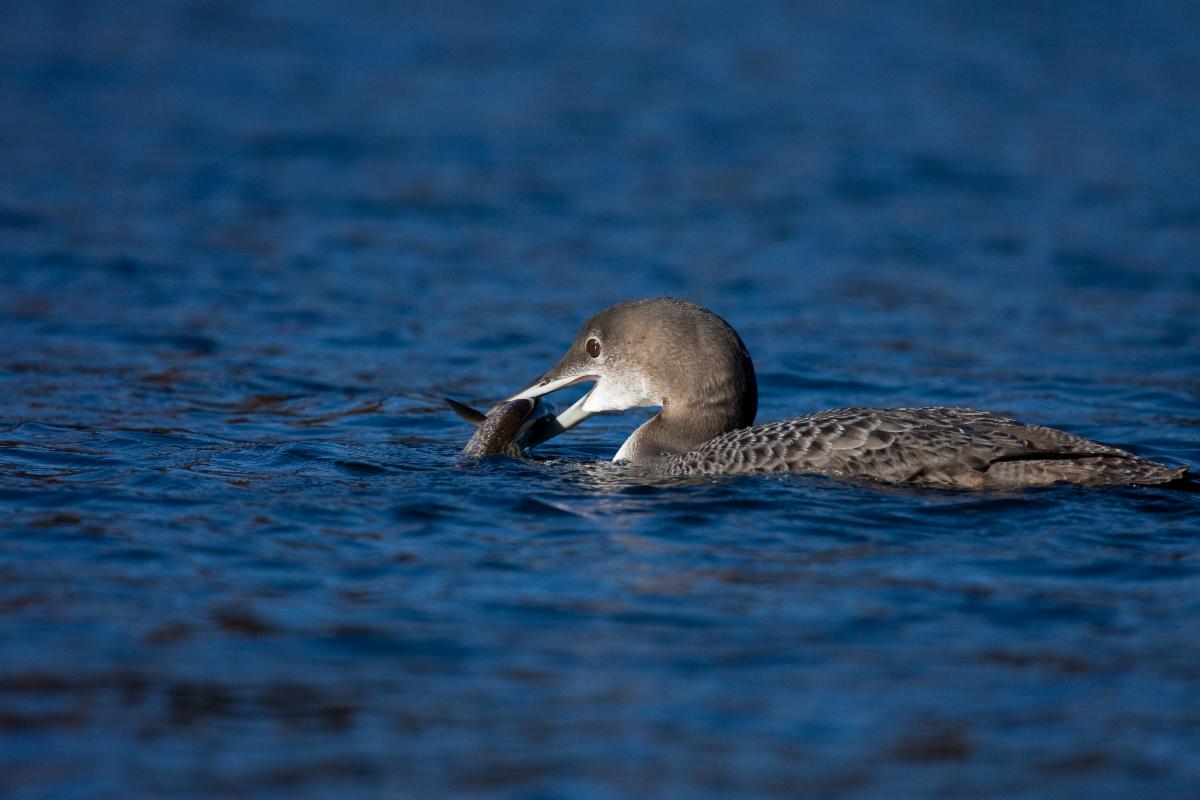
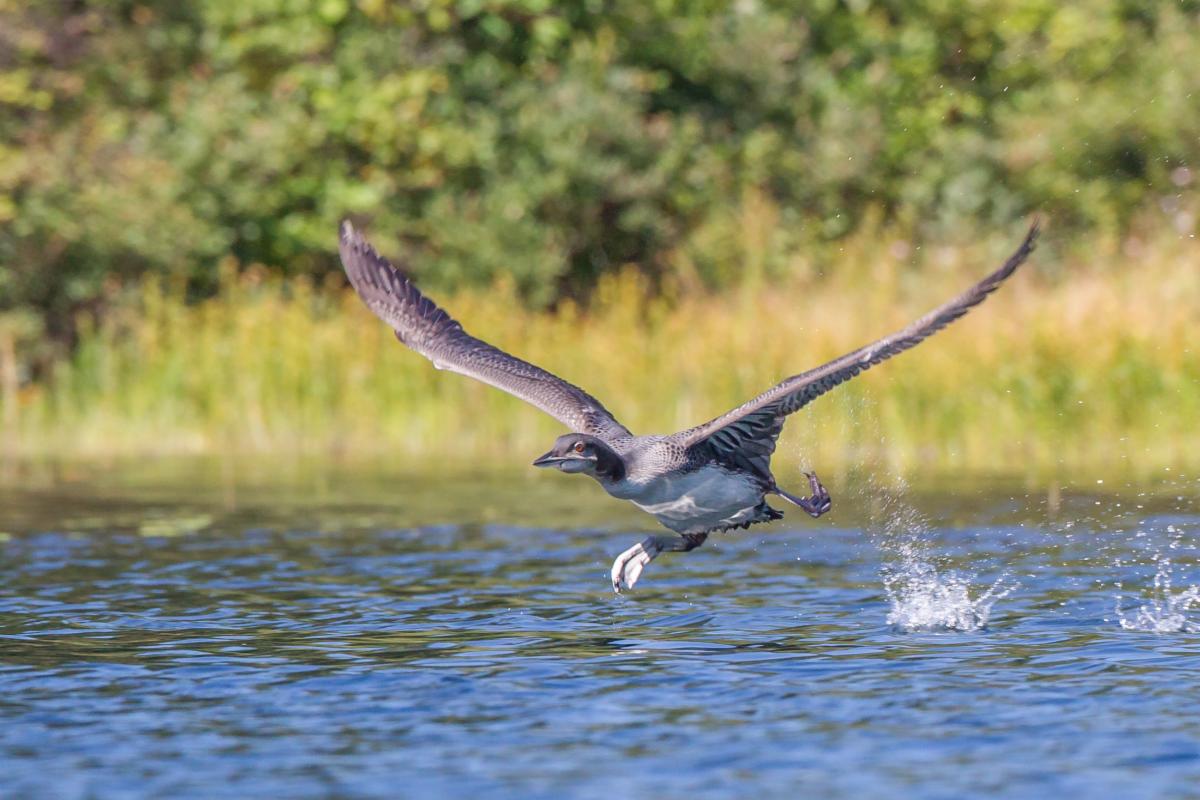
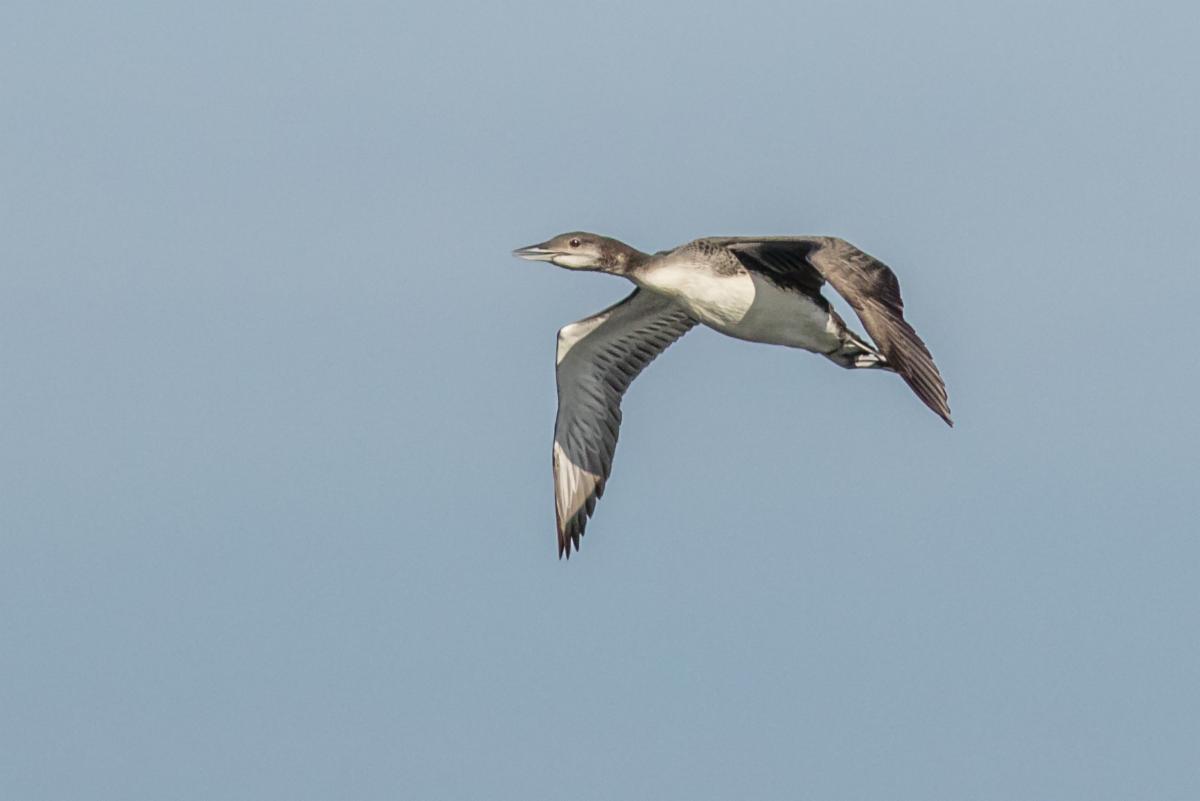
| | Photo courtesy of Kittie Wilson. | | Foraging Independence: By the time they are 8 weeks old, loon chicks’ have developed substantially—their bodies have elongated, their bills have lengthened, and, importantly, their legs and feet have grown, allowing them to swim more efficiently. They have also spent time developing prey pursuit and capture techniques. The result is that at 8 weeks old, juvenile loons have become increasingly capable of catching prey, and they can provide about half of their daily food intake (though they remain dependent on their parents for the other half). At this age, adults begin leaving their chicks alone for longer periods, and chicks spend increasing amounts of time foraging independently, continuing to improve their prey capture skills. By 11-12 weeks of age, juvenile loons are capable of catching all of the food they need for themselves (though the adults can and often do continue to provide the chicks with food for several more weeks). | | Photo courtesy of Brian Reilly | Feather Development and Flight: Though they are covered in down when they hatch, loon chicks soon begin to develop their juvenile plumage. A study of hand-reared loon chicks found that most chicks are completely feathered by the time they are 8.5-9.5 weeks old, and their primary feathers (the long, outer flight feathers at the far ends of the wings, which provide thrust during flight) are fully developed at 9.5-10 weeks of age. As their flight feathers finish growing, juvenile loons begin making flight attempts, running across the surface of the water and flapping their wings. These initial flight attempts likely help them to develop the coordination and physical capacity needed to achieve liftoff and sustain flight. By 11-13 weeks of age, juvenile loons should be capable of taking off and flying, and at this age, they are considered fledged. | Photo courtesy of Brian Reilly. | Fall Wandering: As they become capable of flight at 11-13 weeks of age, juvenile loons may begin to move around. In the fall, they have been documented to visit nearby lakes, presumably to take advantage of feeding opportunities and build up the body condition needed for migration. One study from Wisconsin found that in the weeks post-fledging, juvenile loons preferentially visited large lakes with complex food webs, possibly because these lakes contain a larger prey base (including populations of larger, more calorie-dense fish) than the smaller lakes that are more often used for nesting. Juvenile loons may move repeatedly between their natal lakes and these feeding lakes. | Photo courtesy of Brian Reilly. | |
Keep an Eye Out!
Juvenile loons across New Hampshire will be experiencing the transitions described above over the course of the coming weeks. If you spend time on or around a lake during this time, keep an eye out—you may see juveniles spending long periods of time fishing without an adult nearby or vigorously flapping their wings and running across the water. As fall progresses, you may even begin to see juvenile loons appearing on lakes where no chicks were raised this summer.
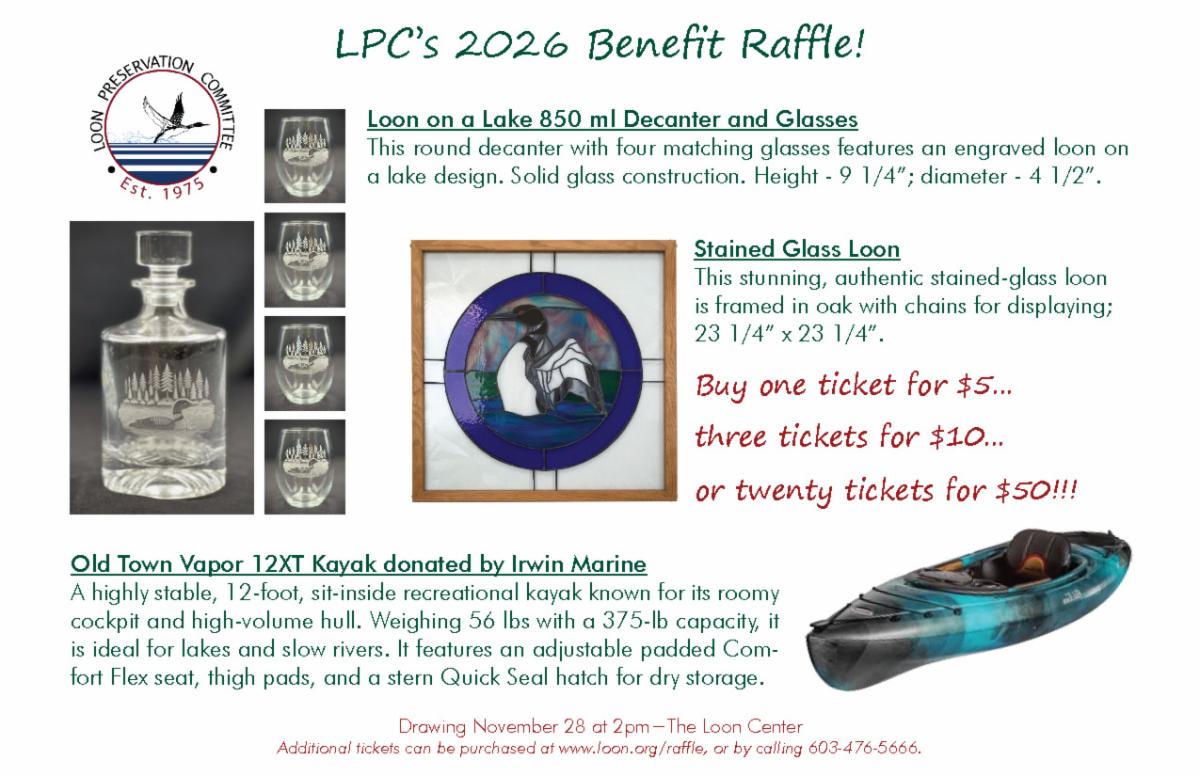
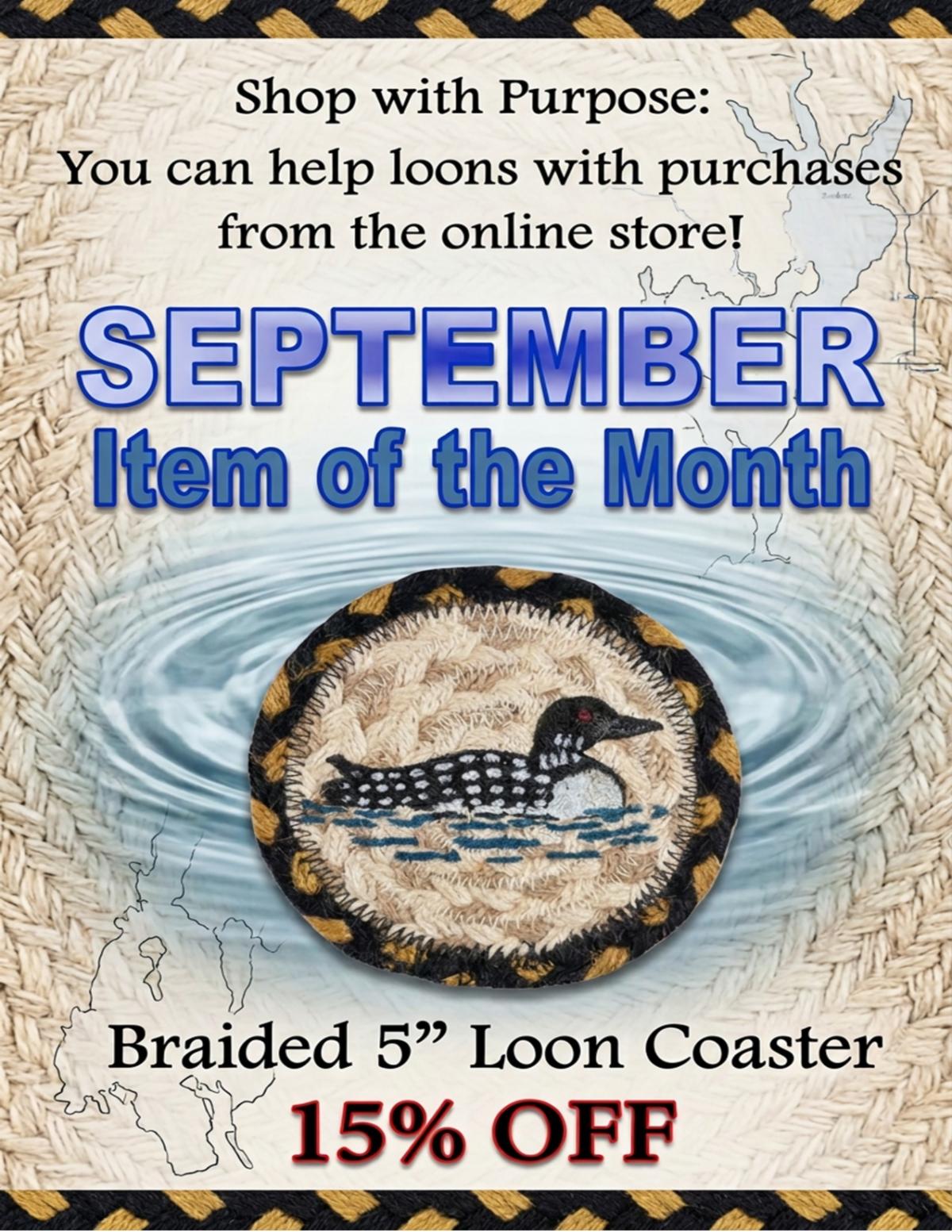
| Take a Chance for Loons! LPC's Annual Benefit Raffle is ongoing! | There is still time to buy tickets for our Annual Benefit Raffle! Take a chance at winning one of three great prizes (shown below), and support our work for New Hampshire's loons in the process! Tickets can be purchased online at loon.org/raffle, by in-person at The Loon Center (183 Lees Mill Road in Moultonborough, NH) or by phone at 603-476-5666. Winners will be drawn at our Holiday Open House on November 28. You do not need to be present at the Open House to win. | | Add a touch of the lake to your home decor with the Braided 5" Loon Coaster, on sale for 15% off in our store this month! This 100% natural jute fiber coaster features a painted Common Loon in breeding plumage. Get yours in our online store, or stop in to The Loon Center to take advantage of this deal! Note: You will need to select 'Loon Coaster: 5 Inch Round' from the drop-down menu. All proceeds from our store sales help to fund our work on behalf of New Hampshire's loons. Thank you for your support! | | We’re rated by Charity Navigator! You can give with confidence knowing that we have been independently evaluated for effectively stewarding donations. | | Loon Preservation Committee | 603-476-LOON (5666) | www.loon.org | | The Loon Preservation Committee is dedicated to restoring and maintaining a healthy population of loons throughout New Hampshire; monitoring the health and productivity of loon populations as sentinels of environmental quality; and promoting a greater understanding of loons and the natural world. | | | | |