Bhutan Foundation | February 2024 | |
|
Greetings from Bhutan,
As we reflect on the close of another eventful year, we do so with deep gratitude for the collective efforts and unwavering support of our donors and partners, which enable us to fulfill our mission at the Bhutan Foundation.
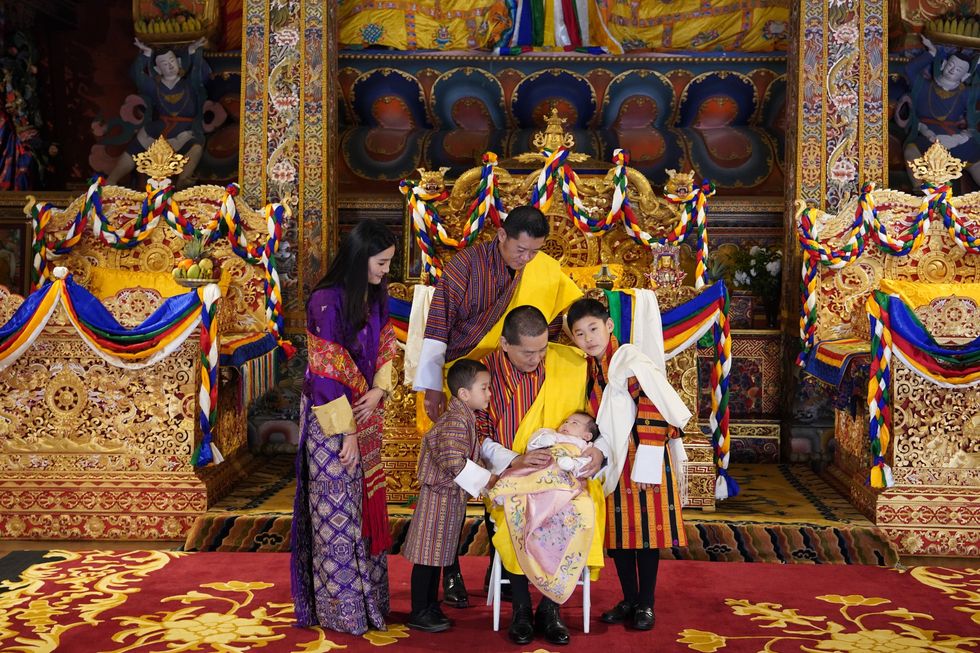
The year 2023 has been remarkable for Bhutan and the Bhutanese people. It began with the joyous birth of Her Royal Highness Gyalsem Sonam Yangden Wangchuck, a moment celebrated with great joy by the people of Bhutan and Their Majesties. Additionally, His Majesty the King unveiled a visionary plan for the development of a mindfulness city in Gelephu, Southern Bhutan, during the National Day Celebration on the 17th of December, heralding a brighter and prosperous future for our nation.
In January, the People’s Democratic Party won the elections and returned to form the next government with a new party, the Bhutan Tendrel Party, in the Opposition.
As we stand on the threshold of the Year of the Dragon, I am delighted to highlight some of our impactful achievements over the past year.
| |
|
The Royal Family with Her Highness Gyalsem Sonam Yangden Wangchuck,
Courtesy of Royal Office for Media
| |
|
Making Health Services Accessible for Nomadic Communities
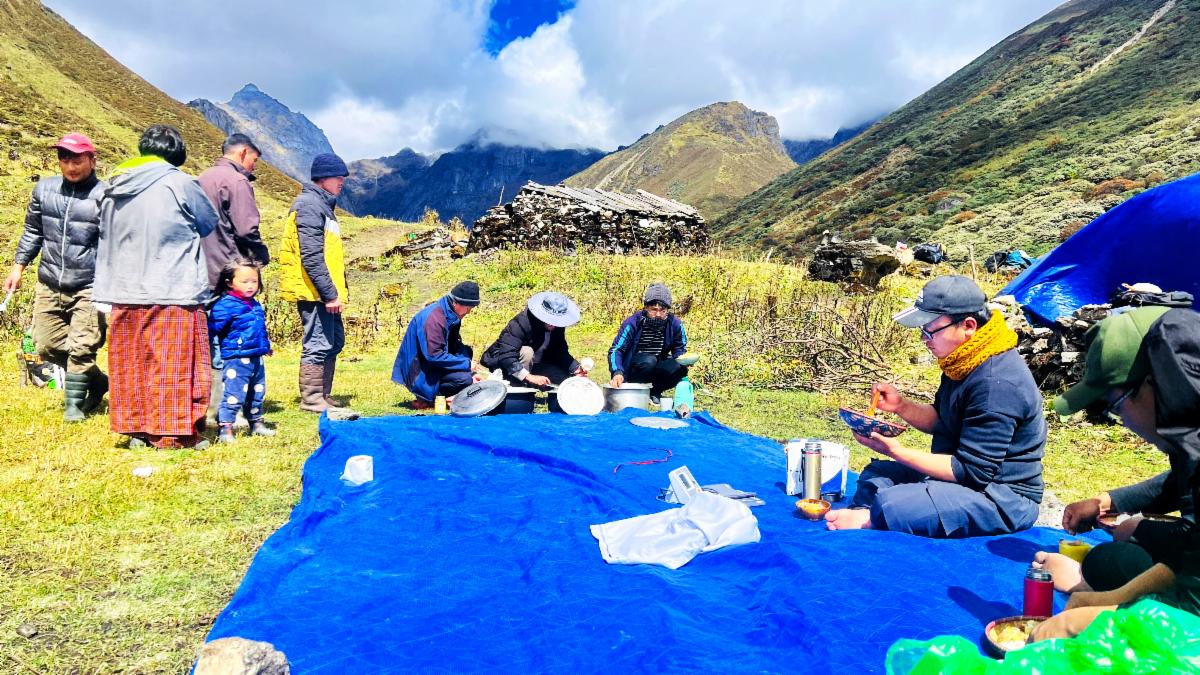
The Foundation, in collaboration with Bumthang Hospital, conducted Annual Health Camps to serve nomadic communities, addressing critical healthcare gaps in remote areas. Bumthang district hosts one of the highest numbers of nomadic populations, who remain beyond the reach of mainstream medical services. Nomadic families miss out on essential health services such as antenatal and postnatal maternity/infant checkups, family planning, childhood immunizations, and routine medical and dental checkups. The 2023 Health Camp covered six communities in the district. Over the course of the 19-day camp, the medical team from Wangdichholing General Hospital provided nine different medical services to over 200 nomads. The health camp has significantly improved the overall health and well-being of the communities while also educating nomads on public health concerns. This healthcare delivery model stands as a positive example of targeted interventions to reach marginalized and remote communities.
Meanwhile, in partnership with the Department of Traditional Medicine Services under the Ministry of Health, the Foundation supported Traditional Medicine Health Camps through the five district hospitals in 2023, providing access to traditional ways of healing.
| |
Nomad Health Camp at Chhokhor Gewong, Bumthang | |
|
Bringing Impacts in Farming Communities
Lately, Bhutan is witnessing an exodus of our young population to other countries in pursuit of higher education and job opportunities. Rural to urban migration is also a major challenge. However, amidst this trend, there are inspiring initiatives such as the Happy Farmers – a group of young, educated individuals who opted to leave their urban jobs and return to their village in Bartsham, Trashigang, in Eastern Bhutan to engage in farming. Happy Farmers was one of the recipients of our Small Grants Program in 2023. We supported their innovative pilot project to establish a biopesticide extraction unit to promote organic farming in their community. The biopesticide has proven highly effective in pest control and enhancing crop growth. Technical expertise for the extraction process was provided by Japanese volunteers. The group has now trained approximately 400 farmers across five communities. Such alternative pesticides are expected to boost production and encourage organic farming practices without having to rely on chemical pesticides.
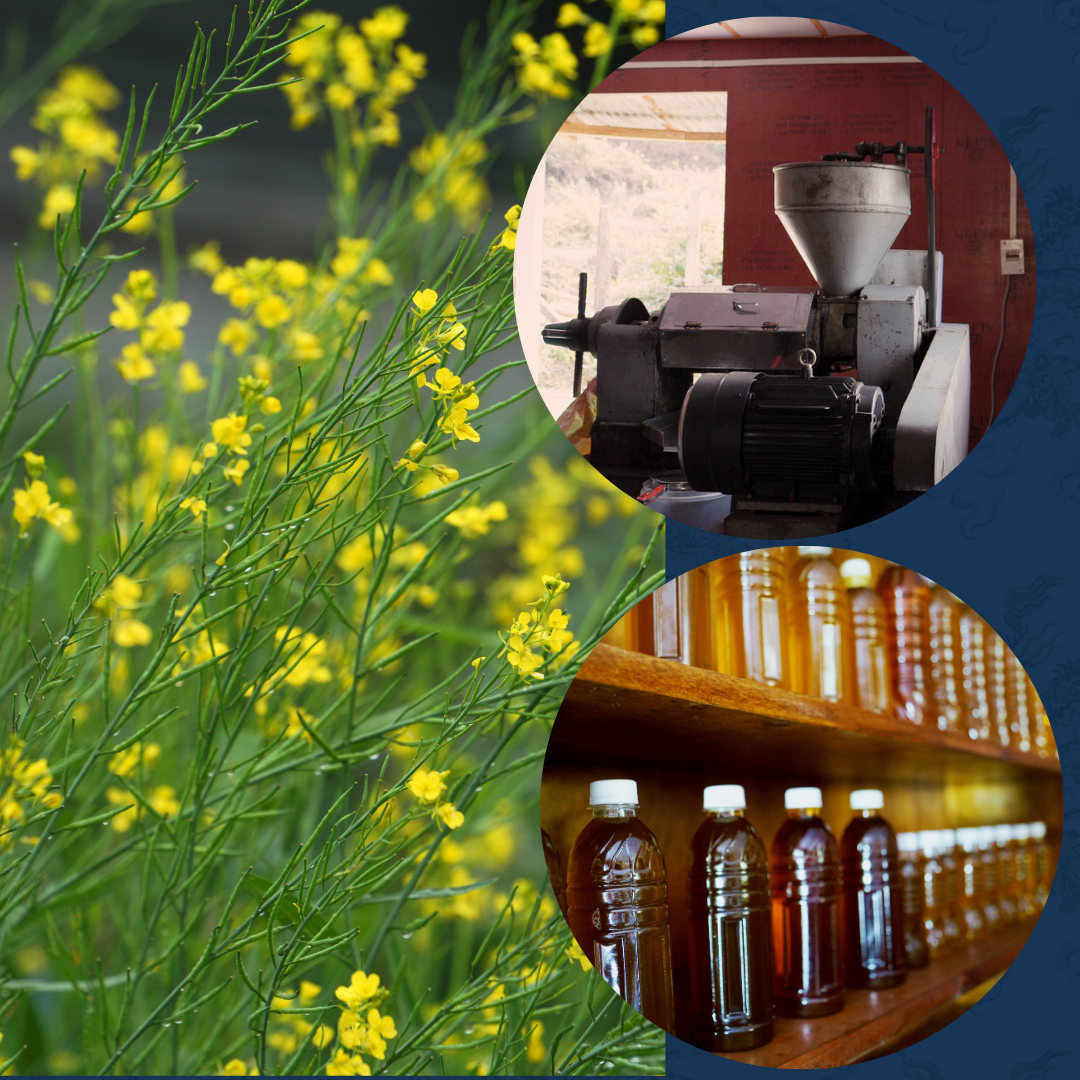
In Samdrup Jongkhar, SJI’s (Samdrup Jongkhar Initiative) improved mustard oil has hit the market with the establishment of the oil extraction unit with support of our Small Grants Program. Mustard growing, which has died down over the years, is now slowly picking up and expanding in Dewathang and its outskirts. Previously, farmers had to take their harvest across the border to India to extract oil, or buy oil from India. Now with an extraction unit set up by SJI, they can either sell their mustard seeds to SJI or extract the oil locally. They can then also use the byproduct as fodder for their livestock. Now, the situation has reversed and instead of buying oil and fodder from India, it is produced locally. SJI has, to date, sold over 1000 liters of mustard oil at the border town. The cultivation of mustard is expected to increase and neighboring farming communities have started growing mustard with the hopes of supplying it to SJI.
As we head south to Panbang, Zhemgang, the Panbang Youth Cooperative (PYC) received a small grant to scale up their production at their farm. PYC practices integrated farming – which includes dairy, poultry and vegetables. The grant helped improve and expand their fishery farm. In 2022, we supported PYC with chain link fencing to mitigate loss of farm produce to wildlife and helped plant 10,000 pineapple saplings. PYC is expecting a bountiful harvest of pineapple this summer which will be supplied to Bhutan Agro Industry for juicing and canning.
These results on the ground show how small grants go a long way in enhancing sustainable and innovative farming practices, thereby improving the livelihoods of the rural farming communities. Moreover, such support helps enhance the local economy and reduce import dependency.
| |
Mustard oil produced through the Small Grants Program by Samdrup Jongkhar Initiative | |
|
Leveraging Technology for Inclusion and Empowerment.
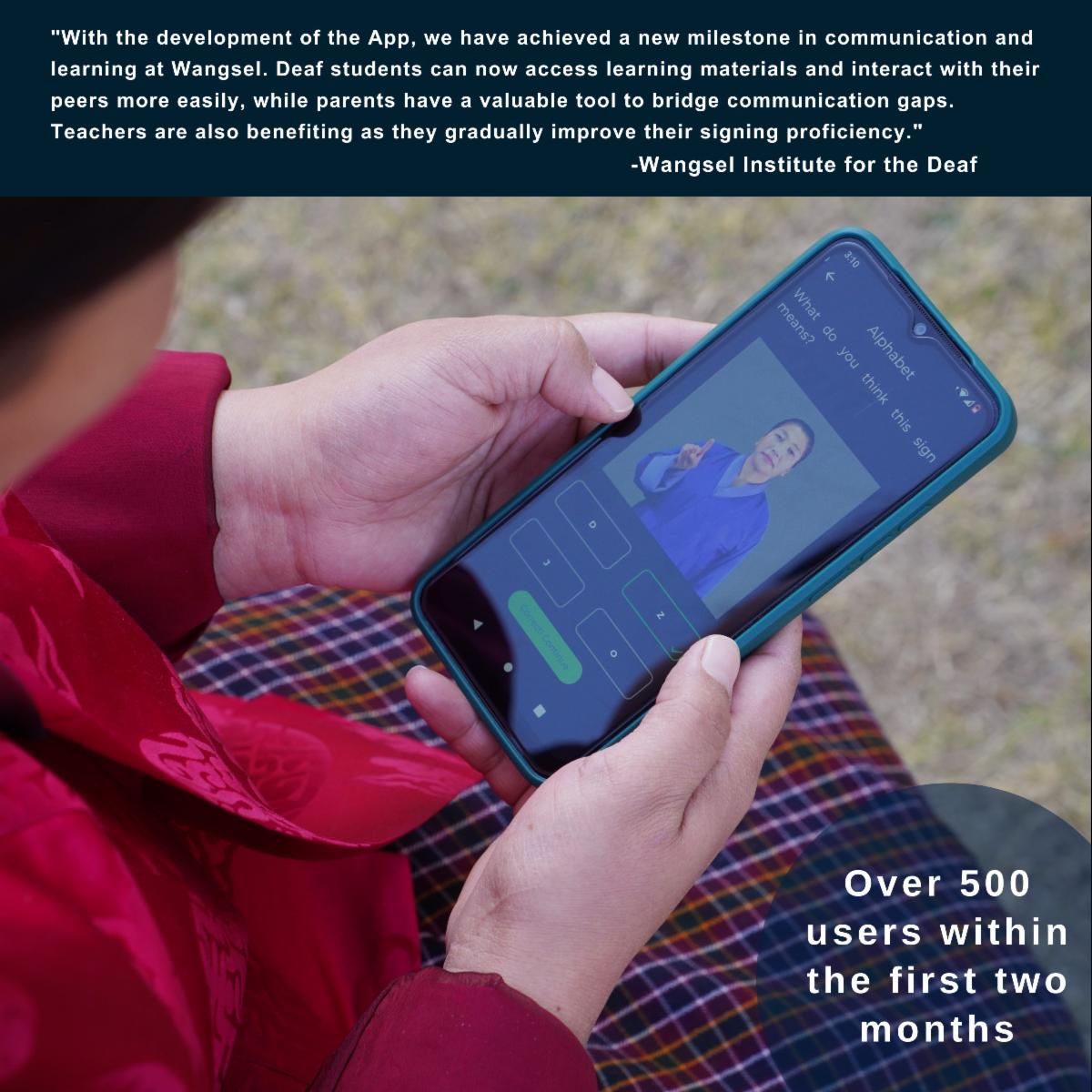
On December 3, 2023, in commemoration of the International Day of Disability we launched the inaugural Bhutan Sign Language App, in collaboration with the Ministry of Education and the Wangsel School for the Deaf. This application is poised to bridge the communication gap between the community with hearing impairment and the broader society. Recognizing the barriers and isolation faced by the deaf community, both externally and within their own families, this initiative was spearheaded by the Wangsel Institute. Within the initial two months of its release, the app has garnered over 500 users and continues to gain traction.
| |
Users exploring the Bhutan Sign Language App | |
|
In a similar endeavor, we are thrilled to announce a new collaboration with the Phensem Parent Support Group, aimed at empowering individuals with disabilities through the use of Assistive Technology (AT) for education, sports, and daily living. Together, we will establish an Assistive Technology Resource Center for children and persons with disabilities, parents, and the community. This center will serve as a focal point for demonstrating AT in action, enabling end users, innovators, teachers, parents, and policymakers to witness firsthand how simple or sophisticated tools can significantly enhance the lives of persons with disabilities.
Simultaneously, our efforts to enhance the capacity of Bhutanese teachers to effectively support children with disabilities in schools are going strong. In partnership with Perkins International and UNICEF Bhutan, we have successfully trained approximately 30 teachers from 24 Early Childcare Development Centers.
As we welcome the new year, we are excited to align our programs with the evolving developmental priorities of the country. In conclusion, we express our sincere gratitude for your steadfast support and extend warm wishes for a joyous Losar (Lunar New Year) celebration, which will be celebrated tomorrow, February 10, 2024.
| |
|
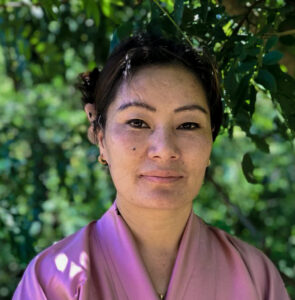
Norbu Dema
Country Director
| |
|
About the Painting
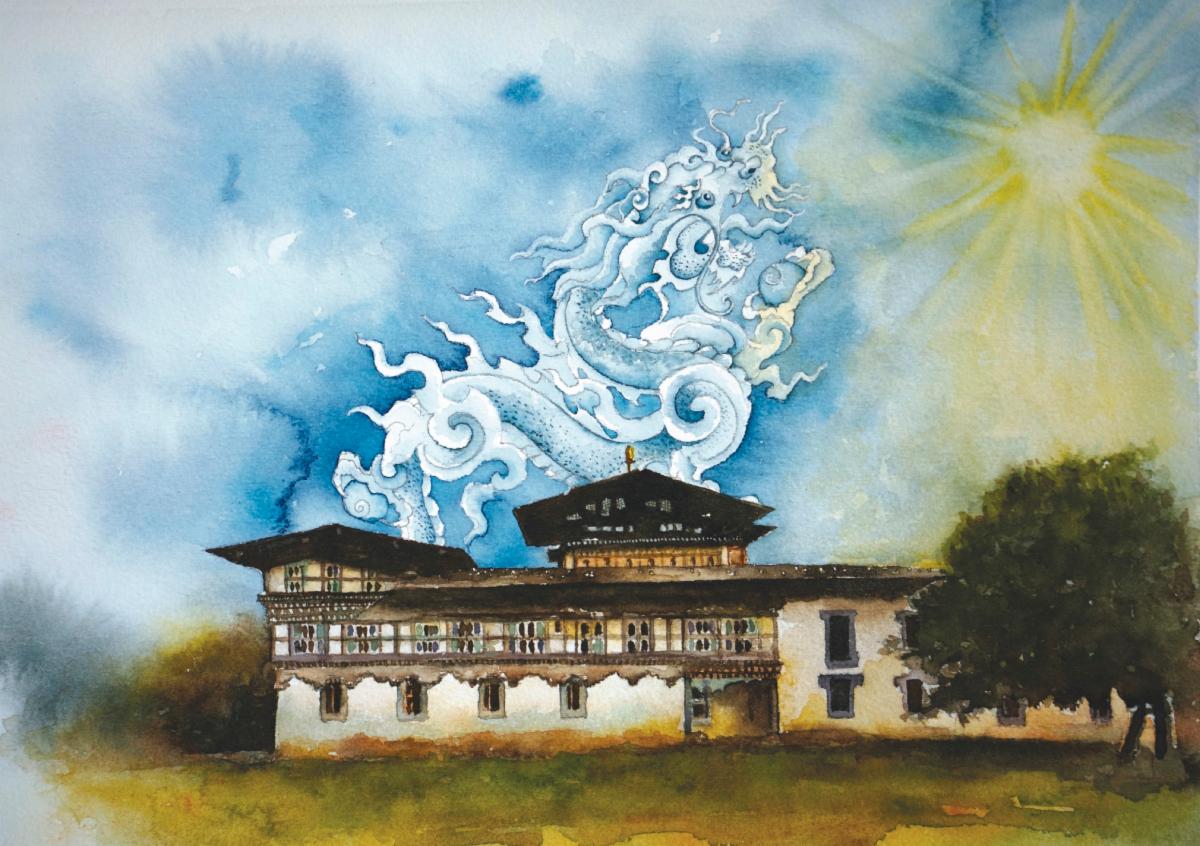
Pema Gyeltshen’s painting pays tribute to the completed restoration of Wangduechhoeling Palace. The celestial dragon soaring in the sky ushers in the new year as a symbol of hope and prosperity. The vibrant portrayal of the Palace embodies the spirit of Bhutan's cultural legacy and reflects the Foundation's commitment to its preservation.
| | | | |