Are you living with brain or leptomeningeal metastasis from breast cancer? You are not alone.

Your Voice Matters


What? The American Brain Tumor Association is partnering with organizations on an important survey based project focusing on the experiences and needs of people living with brain metastases and/or leptomeningeal disease (also known as LMD or Lepto).


Why? Your input is vitally important and will help us develop programs to support people living with and caring for people who have cancer.


Who? If you have been diagnosed with brain metastases and/or leptomeningeal disease and line in the United States, we would love to get your perspective. (It is fine to have someone like a caregiver or a member of your family help you to complete the survey.)


When? Within two weeks of providing your email you will receive a link to take the survey


How? Link to the survey are being distributed individually via email. To request your survey, clink link below 


IMPORTANT INFO: Participation is voluntary and all collected information is anonymized and kept confidential. People who complete the survey will be compensated.

New: MBC Brain Mets Blog & News

Rethinking Brain Metastases

When Lianne Kramer learned her breast cancer had spread to her brain treatment options were limited and often meant whole-brain radiation. Today, advances in targeted therapies and more precise radiation are changing that, offering a new approach with more personalized options and a reduction in long term side effects.

Now, nearly a decade living with metastatic disease, Lianne is a passionate advocate working to improve research, awareness, and care for those with brain metastases. Her story highlights how progress and the power of patient voices, are reshaping what's possible.


Read the full article to learn more about advances and Ms. Kraemer's story.

This story by, Kendall K. Morgan, was published on cancertodaymag.org on December 11, 2025.

EDUCATIONAL RESOURCES

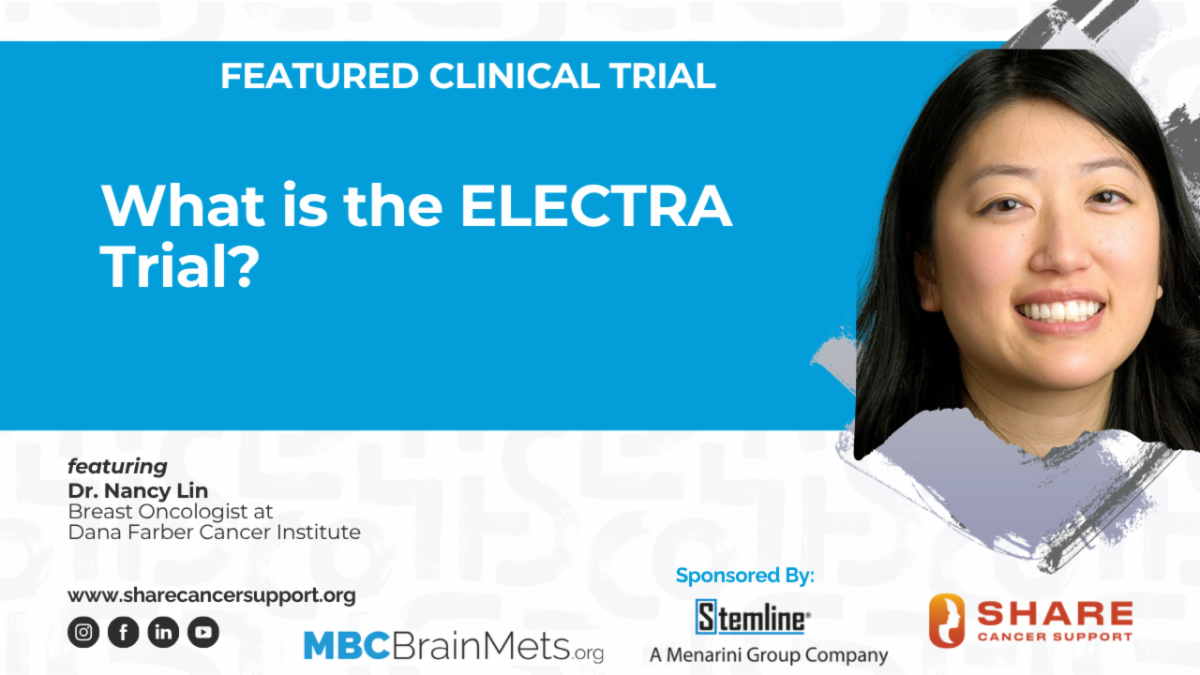
NEW: Featured Clinical Trial

Elacestrant Hormone Therapy and Abemaciclib CDK4/6 Inhibitor for ER+, HER2- Breast Cancer with Brain Metastasis

This is a multi-site, global, open-label study that includes a phase 1b evaluation of elacestrant in combination with abemaciclib in women and men with brain metastases from estrogen receptor (ER)-positive, human epidermal growth factor receptor-2 (HER-2) negative breast cancer. Phase 1b was designed to select the recommended phase 2 dose and is followed by an ongoing phase 2 evaluation of elacestrant in combination with abemaciclib in patients with active brain metastases from ER-positive, HER-2 negative breast cancer.

NEW Research Articles


Stay up-to-date with the latest findings. Explore these recent studies and see what they might mean for you and your care.


February 19, 2026

Treatment for Brain Metastases With Stereotactic Radiation

vs Hippocampal-Avoidance Whole Brain Radiation

A RandomizedClinical Trial


AyalA.Aizer,MD,MHS;Kee-YoungShin,MS;PaulJ.Catalano,ScD;IvyRicca,BA;MarcianaJohnson,MPH;

GrantBenham;KristinRoper,PhD;BeverlySpicer,RN;EileenMann,RN;JenniferNosker,PhD;

MichaelW.Parsons,PhD;MallikaL.Mendu,MD,MBA;JaroslawHepel,MD;FallonChipidza,MD;

MonicaKrishnan,MD;DianaD.Shi,MD;NayanLamba,MD;ItaiPashtan,MD;LukePeng,MD;

BrianAlexander,MD,MPH;PaulD.Brown,MD;PatrickY.Wen,MD;DaphneA.Haas-Kogan,MD;

RifaquatRahman,MD;ShyamTanguturi,MD


This recent clinical trial compared two radiation approaches for people with 5-20 brain metastases who had not been previously treated with brain radiation: targeted stereotactic radiation, which treats only the tumors, and whole brain radiation with hippocampal avoidance. Over six months, patients who received the targeted approach reported fewer symptoms and less disruption to their daily life. While both treatments reported similar amount of serious side effects, fatigue was more common with whole brain radiation. These findings suggest that focusing radiation directly on the tumors may better support patients quality of life.

January 27, 2026

Recent advances in systemic treatment for HER2-negative breast cancer with brain metastases


Chunfang Hao, Jie Zhang, Yuehong Zhu


New treatment approaches are emerging for HER2-Negative breast cancer patients who have been diagnosed with brain metastases. Treating HER2-negative breast cancer that has spread to the brain or leptomeninges (LMD) is challenging, with fewer options compared to HER2-positive disease. However, new research is bringing hopes, with several therapies showing early promise.


Targeted treatments like cdk4/6 inhibitors, for hormone positive cancer, may be more effective when combined with radiation. Newer therapies called antibody drug conjugates (ADCs) including trastuzumab deruxtecan and sacituzumab govitecan, are showing encouraging results by better reaching tumors in the brain. Other options like PARP inhibitors and immune checkpoint inhibitors, may also help some patients, depending on their cancer type.


For leptomeningeal disease, intrathecal therapies (treatment delivered directly into spinal fluid) are becoming an important approach. Researchers are also studying newer drugs designed to overcome treatment resistance. While more research is needed, these advances signal a growing shift towards more personalized treatment options that aim to improve both survival and quality of life.


Read the full article to learn more.

RESOURCES & SUPPORT SERVICES

Support Group


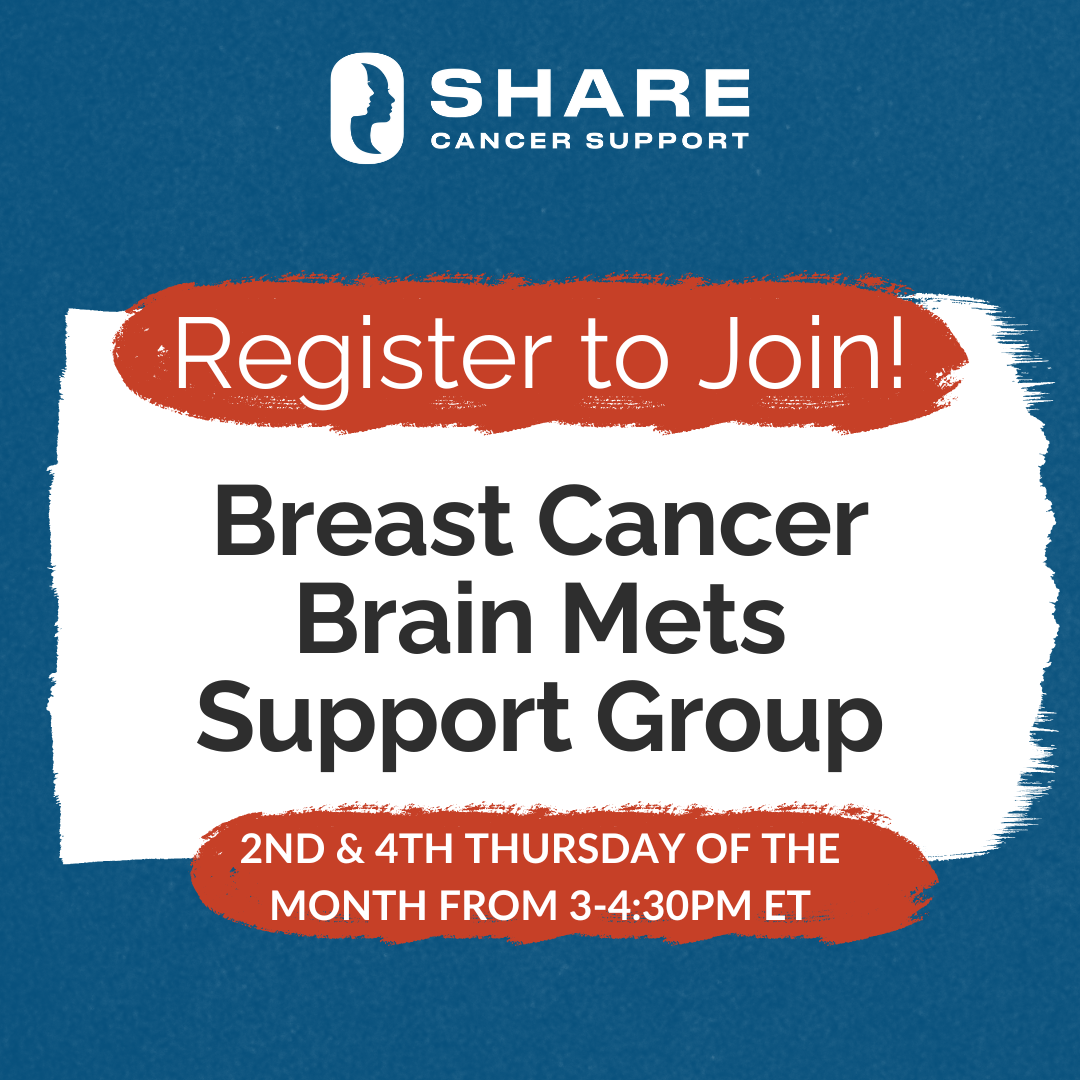
Breast Cancer Brain Mets (BCBM) Support Group

This is a Zoom Support Group meeting twice a month from 3:00-4:30 ET. The group is for women of all ages who have been diagnosed with brain metastases or leptomeningeal disease from breast cancer. Please join us to find hope, support and information from others living with this disease. 


Registration is required for new participants.

PATIENT CORNER

Would you like to Share your Story?

We want to hear from YOU!


We have two different opportunities for you to share your story: blog and video. Your patient voice and story matters. Sharing your story can provide hope and inspiration to others diagnosed or undergoing treatment.

Patient Blog


Would you like to write about your story? For questions or to submit your blog, please email mbcbrainmets@gmail.com for guidance.


No patient should have to go through MBC brain metastasis alone. Read some of our patient stories which are vulnerable, honest, and poignant.

Patient Video


If you are interested in creating a video, please email mbcbrainmets@gmail.com for guidance.


Take a look at the videos from patients living with brain metastasis who share their experiences of receiving a brain metastasis diagnosis, participating in a clinical trial, and undergoing treatments like a craniotomy, whole brain radiation, and others.