Inside Edition


October 7, 2026


Empowering Connections | Elevating Practices | Together in Service

Harvard Body Parts Case Exposes Gap in Federal Law


When Harvard University Medical School settled a lawsuit over the illegal sale and distribution of body parts by the manager of its anatomical gift program, it ended one of the more unusual criminal and civil cases in recent years. But besides costing Harvard $53 million and sending several participants in the scheme to jail, the case had one other strange twist: The people arrested in the federal case were not charged with selling body parts. Instead, they were charged variously with trafficking in stolen goods across state lines and other offenses. That is because there is no U.S. law making the sale of human remains a federal crime.


Significant regulatory gaps

“There is actually very little federal law regarding the dead,” wrote Wake Forest University Professor of Law Tanya D. Marsh, an expert in funeral and cemetery law. “The most significant is the Federal Trade Commission’s Funeral Rule, which requires funeral homes to provide certain disclosures to consumers.”


This gap has led to a thriving market for human skulls and other body parts that, contrary to what one might believe, does not hide in the shadows. Facebook pages, websites, and brick-and-mortar stores are spread out across the country, selling their collections and buying other specimens. It’s all “perfectly legal,” according to The Bone Room, one of the online sellers of human remains.


The lack of federal law regarding the sale of human remains may surprise some, but there are reasons for the confusion, according to The Bone Room. For many years, a major source of human bones was India, which eventually stopped exporting remains in 1987.


“Many U.S. news sources phrased it as a ban on the sale of human bones rather than as a ban on exportation from one particular country with no effect on United States laws,” The Bone Room says on its website.


Importers began relying on China for supply, but that country ended the market in 2008, and no other country “has yet stepped up and material is much more scarce than it once was,” The Bone Room states.


Whenever a legitimate market closes, however, a questionable one opens. The Harvard case was an example. Cedric Lodge, at the time the manager of the Harvard Medical School’s Anatomical Gift Program, removed body parts from the morgue at Harvard Medical School and sometimes brought them to his home in New Hampshire, where his wife, Denise Lodge, would assist in selling the stolen parts to several others. Occasionally, some of the participants would come to the morgue to choose what they were willing to buy. The Lodges dealt with brokers in several U.S. states who then sold skin, brains, heads, and bones to collectors throughout the country. The Lodges were both sentenced to prison on interstate trafficking charges.

The details of their criminal behavior were surprisingly simple, yet graphic. Deals for parts were often made and finalized by electronic messaging and payment systems. The indictment alleged that in 2019, one broker transferred $1,000 to Denise Lodge with a memo that read, “head number 7,” and in 2020 that same broker sent $200 along with a memo that read, “braiiiiiiins.”


Several states ban sales

There are several states where the sale of human remains is illegal, Marsh said–Florida, Georgia, Massachusetts, Missouri, New Hampshire, South Carolina, Texas and Virginia. Following the Harvard case, which included a former mortuary services provider in Arkansas, legislation was introduced in that state to ban the practice as well.


One specific practice is illegal under federal law: Trafficking in remains of Native Americans is illegal under the Native American Graves Protection and Repatriation Act. In addition, nearly every state outlaws grave robbing.


Marsh said that tracking how body parts end up being offered for sale is difficult because the remains have been “de-identified.”


“In other words, the seller does not name the deceased person whose remains are being sold and usually does not reveal how the remains were obtained–and there is no law requiring them to do so,” Marsh wrote.


Proposed legislation would regulate donated remains

There are some federal efforts to clamp down on what is a loosely watched industry. The Consensual Donation and Research Integrity Act, a bipartisan measure introduced in 2025, would create “standards for registration, inspection, chain of cu


stody, labeling and packing, and proper disposition” of human remains donated for medical research and educational purposes, a press release about the bill states.


“Families who choose to donate a loved one’s body for scientific research or educational use do so believing that they are benefiting others and that their loved ones will be treated with dignity and respect,” said Congresswoman Lizzie Fletcher, D-TX. “Sadly, many families have been taken advantage of by a largely unregulated industry.”


The bill does not contain criminal penalties for violating the act, and while the bill calls for the registration of entities that acquire and sell bodies and body parts for profit, the measure makes exceptions for other individuals and groups, including funeral directors, organ procurement organizations and medical schools.


The measure specifically exempts “schools of medicine, dentistry, and mortuary science and research, training organizations and other entities that do not sell for profit a whole body or body part.”


Presumably, that would include institutions such as Harvard Medical School.

Any effort to explicitly criminalize the illicit market in body parts, however, may not be on the horizon, Sam Redman, a history professor at the University of Massachusetts, told Courthouse News Service.


“There’s no interest group representing the dead,” Redman said.

Scam Targets Grieving Families of Veterans


Meg Murphy, the veterans service officer of Pepperell, Littleton, and Groton, shared a notice from the Bourne National Cemetery that an active, predatory scam is targeting grieving veteran families. 


Individuals are posing as members of the Armed Forces, an honor guard, or government employees. The callers are contacting families of deceased veterans —particularly families arranging military funeral honors — and falsely claiming that payment is required for a refundable “insurance policy.” They allege this policy is necessary to cover any liability the honor guard might incur while participating in the service. The callers are reportedly demanding credit-card payment and threatening that the military honors detail will be canceled if payment is not made.


As you all know, military funeral honors are an earned benefit provided at zero cost; no payment is ever required.


Funeral directors are asked to take these actions to protect families:

  • Inform your staff of this scam.
  • Proactively advise veteran and active-duty surviving families during the arrangement process that they should never receive phone calls demanding payment for military honors.
  • If a family encounters this scam, instruct them to hang up, notify you with any concerns, and file a fraud report with the Federal Trade Commission (FTC) at reportfraud.ftc.gov. 

What's the Goal for the Northeast Funeral Women's Collaborative?


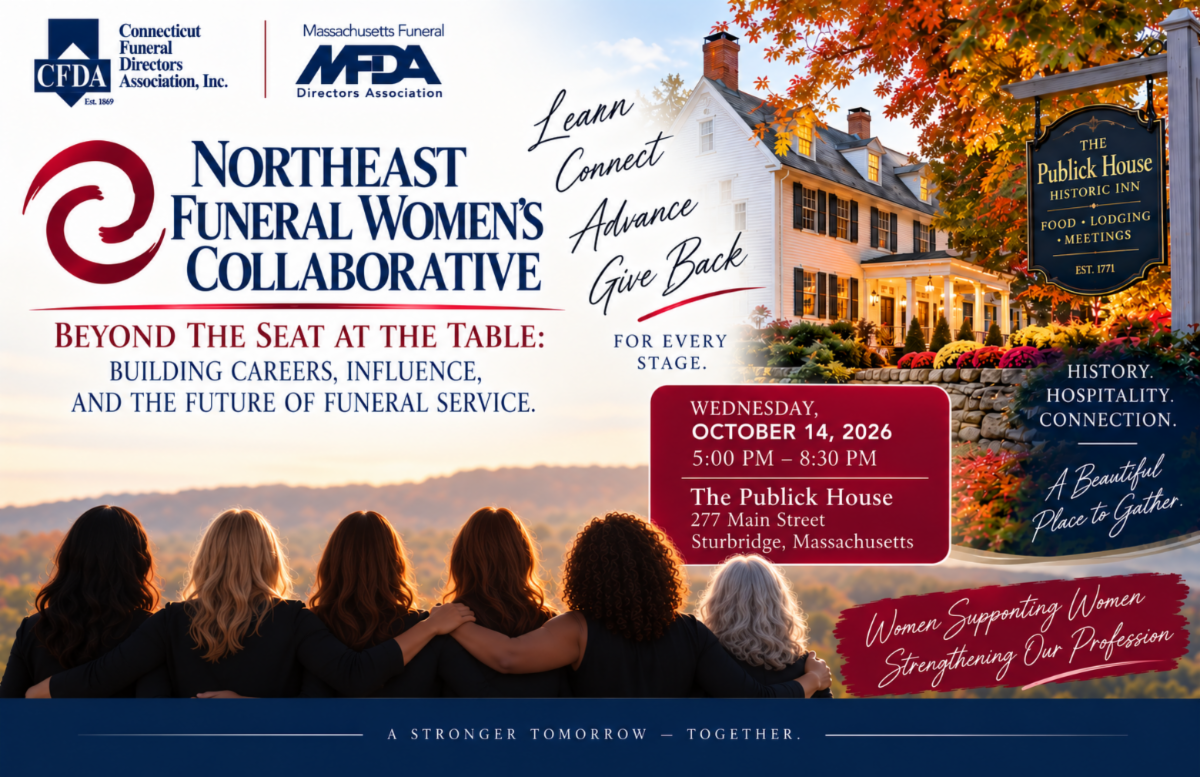
The goal of the Northeast Funeral Women's Collaborative's is to always offer participants something useful and lasting: a new skill, a new friendship, a new opportunity, or a clear next step to help you excel as a funeral service professional. With intention and substance, the Collaborative will become more than a gathering. It will become a northeast professional community that helps women grow, lead, contribute, and strengthen funeral service across our region.


The Collaborative will meet Wednesday, Oct. 14, 2026, from 5 to 8:30 p.m. at The Publick House, 277 Main St., Sturbridge, Mass. Participants will earn 3 CEUs. To register, click here.

Don't Miss the November 12 Professional Embalmers Seminar

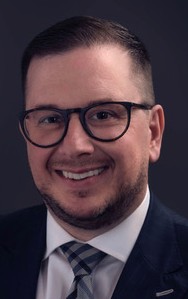
The 2026 Professional Embalmers Seminar will be held on November 12 at the Massachusetts Medical Society Conference Center at Waltham Woods in Waltham. This year's seminar leader is Dominick Astorino, who worked with the Embalmers Advisory Task Force to deliver a program shaped by the recommendations and interests shared by participants at last year’s seminar. The teaching topics will include evaluation of opioid and alcohol abuse cases, embalming strategies and philosophy related to tissue donor cases, and assessment and treatment of gunshot wound cases. Registration is open, so you can register early, as this popular annual seminar has a strong following and is expected to fill quickly. It's pending approval for 4 CEUs from the Massachusetts State Board of Embalming and Funeral Directing. 

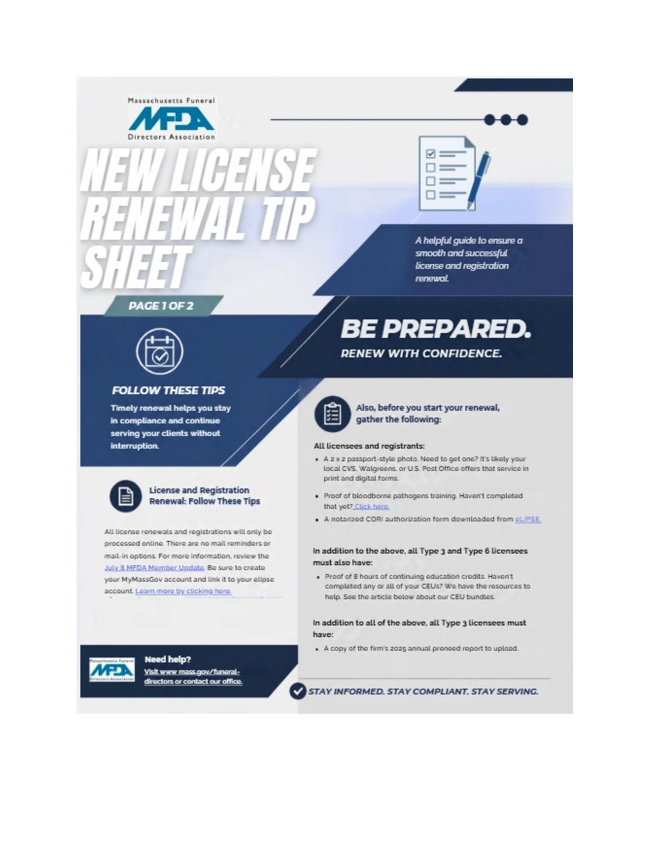
License and Registration Tip Sheet


Haven't renewed your license yet? Here's a new tool prepared by MFDA to help you navigate the process. Click here

Need CEUs?


With busy schedules, work, and family commitments, completing your CEUs may still be on your to-do list. If that’s the case, with license renewals pending, now is the time to check that off.


When investing the time in earning CEUs, choose education that offers real value and information you can put to use in your professional practice. In collaboration with the Cremation Association of North America (CANA), we’re pleased to offer a seven-hour CEU bundle for just $12 per credit hour – $85 for the bundle.  It’s an affordable opportunity to complete your required education while gaining knowledge from a respected colleague within our profession.


The seven-hour bundle includes:

The Cremation Choice – 2.0 CEUs

Communication Skills Fundamentals – 1.0 CEU

Cremation Arrangement Conference Best Practices – 2.0 CEUs

Cremation Phone Shoppers: Your Best First Impression – 1.0 CEU

Presentation without Preservation – 1.0 CEU


A few important reminders:

• You will need to upload your CEU certificates to the eLipse system when completing your license renewal, so CEUs are mandatory!

• The eighth CEU hour should be OSHA training. Learn about or register for our October 8 session.  


To access this special seven-hour bundle offer, click here.

Service Corporation International (SCI) is currently hiring for all roles, including licensed funeral

directors. A hiring event is being held on Wednesday, Oct. 28, from

9 a.m. to 2 p.m. at Waring-Sullivan Dartmouth Funeral & Cremation Service, 230 Russells Mills Road, South Dartmouth. Walk-ins are welcome, but interested individuals are encouraged to RSVP. For more information or to register, click here for a flyer that includes a QR code.

MFDA Calendar

October 8

OSHA Training Session

2 p.m. via Zoom | Register


October 14

Northeast Funeral Women's Collaborative, Sturbridge.

Click here for details.


October 22

OSHA Training Session

2 p.m. via Zoom | Register


November 12

Professional Embalmers Session with Dominick Astorino, Massachusetts Medical Society Conference Center at Waltham Woods in Waltham.


December 10

OSHA Training Session

2 p.m. via Zoom | Register

536 Broad St. #4, Weymouth, MA 02189

info@massfda.org | www.massfda.org

T: 781-335-2031 | F: 781-335-3245


Gary Toye, President

Margaret Nolan, Executive Director

MAVRIC Support and Assistance Resources

REMINDER: RVRS Campaign Directed at Enrolling Offline Medical Certifiers: Funeral homes can assist with RVRS’s efforts to get offline certifiers enrolled in MAVRIC by providing the offline certifier and facility information using this RVRS Non-electronic Certifier Notification Form.

Phone support: Monday-Friday during business hours at 617-740-2667.


Frequently Asked Questions: MAVRIC FAQs for All Users


Account troubles: rvrsaccounts@mass.gov


Record troubles:

rvrsmavricsupport@mass.gov


Help for Funeral Home Users Enrolling in MAVRIC: 

Getting Started with MAVRIC for general information. The Enrollment Guide will walk you through the process. To enroll, click here.

Updated Quick Start Guides:


We've downloaded the MAVRIC Quick Start Guides for your quick access:


Funeral Director Electronic Attestation QSG


Funeral Director Non-Electronic Attestation QSG


Funeral Director Personal Amendment QSG


Frequently Asked Questions: MAVRIC General FAQs

The Massachusetts Funeral Directors Association is the professional community for funeral directors. We are the recognized voice and resource for information on issues affecting the funeral service profession and the bereaved communities we are honored to serve in the many cities and towns throughout the Commonwealth. Together, we leverage our experience, expertise, and influence to anticipate and address issues, build skills, develop practical solutions to business problems, and set the standard for quality service and ethical practice. MFDA represents 290 funeral homes in the Commonwealth of Massachusetts and is the largest representative organization of funeral service professionals in New England. In 2025, our members provided services for over 41,000 families, and during that same period, over 2,000,000 people visited our member funeral establishments. We are a chartered state association of the National Funeral Directors Association and a founding member of the Northeast Funeral Service Partnership, along with the state associations of Connecticut, New York, New Jersey, and Pennsylvania. MFDA was awarded the 2021 Organizational Excellence Award by the New England Society of Association Executives for our work serving bereaved families and communities in Massachusetts during the COVID-19 pandemic.

This email newsletter and any attachments are meant for the exclusive use of the intended recipient or addressee. The information provided in this newsletter is for educational and informational purposes only and should not be construed as legal advice. Readers should consult a qualified attorney for advice regarding their specific legal situation. You are receiving this newsletter because you are a member of the Massachusetts Funeral Directors Association. Please notify MFDA of your correct email address to ensure that you promptly receive MFDA communications. Please review your membership information on our website at www.massfda.org and notify us of any changes to your membership profile or company listing. This newsletter is intended only for the use of the addressee and may contain confidential and/or privileged information. Questions and comments about MFDA's Inside Edition may be directed via email to insideedition@massfda.org or by calling 781-335-2031.