October 2026 | Edition 19 | | |
What Peer Support Means to Me
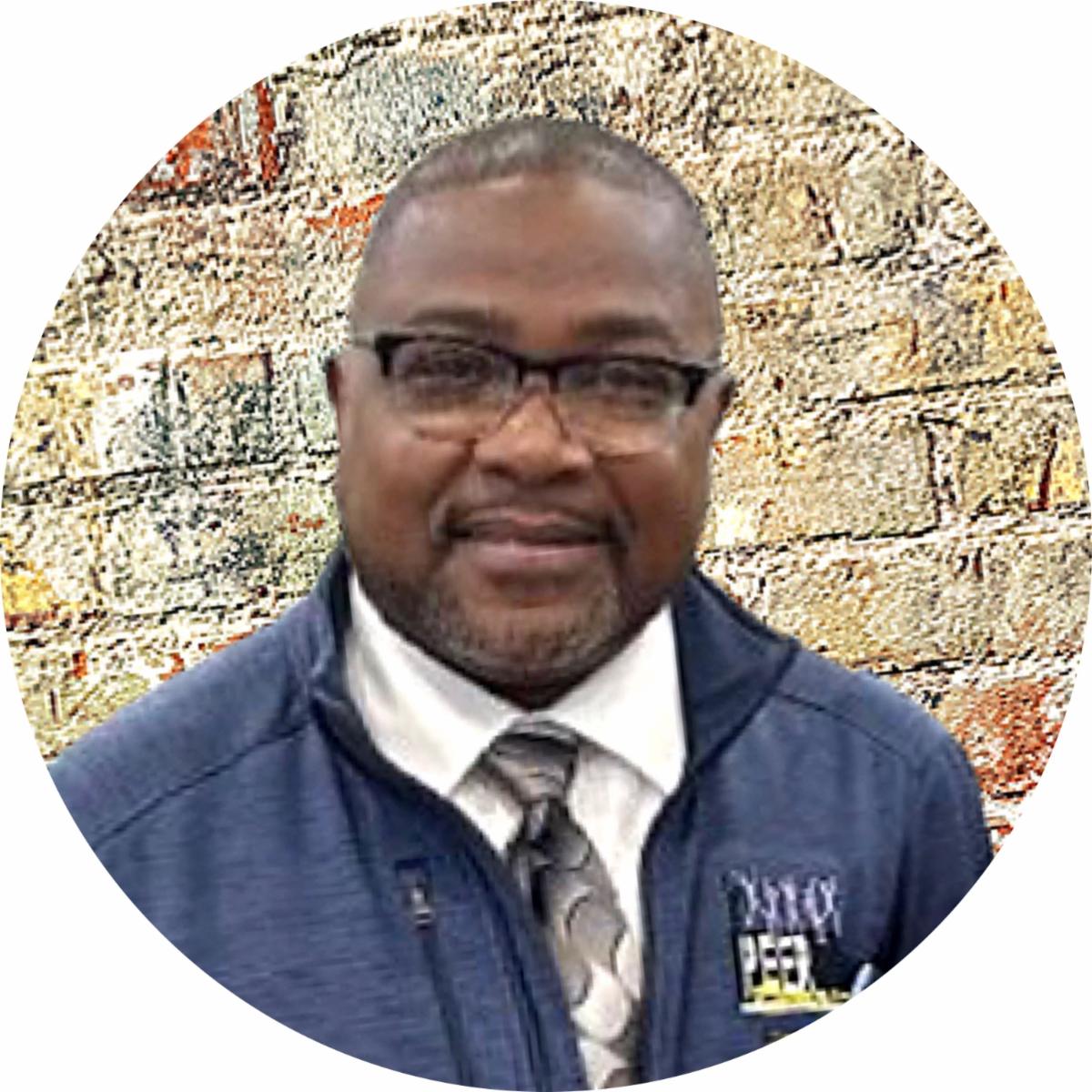
by Kevin Smith, Director of Mental Health Peer Connection (MHPC)
October is Global Peer Support Month, and it gives me a chance to reflect on what peer support has meant in my life and what it continues to mean today.
I was first introduced to peer support in 2003. At the time, I didn't realize how much it would change my life. Like many people, I had faced my own mental health challenges and struggled to find hope and direction. Peer support showed me something different. It showed me that people with lived experience could help one another grow, heal, and move forward.
What stood out to me was that peers saw me as a person, not a diagnosis. They saw my strengths, my potential, and my ability to recover, even when I struggled to see those things in myself. Their belief in me helped me begin believing in myself. Today, peer support is much more than my career. It is a philosophy that guides how I live and work. It is built on respect, understanding, shared experience, and the belief that recovery is possible for everyone. Peer support reminds us that we don't have to walk through life's challenges alone.
As Director of Mental Health Peer Connection, one of the greatest rewards is seeing peer support make a difference every day. I see staff helping people reconnect to their communities, build confidence, overcome challenges, and find hope during difficult times. Sometimes that support comes through helping someone access resources. Other times, it comes from simply listening and letting someone know they are not alone. Those connections can be life-changing.
What brings me the most joy is seeing peer support recognized and celebrated on a much larger scale than ever before. When I first entered this field, many people did not fully understand the value of peer support. Today, peers are helping shape programs, services, and systems across New York State and beyond. Lived experience is finally being recognized as a powerful tool for helping people recover and thrive.
As we celebrate Global Peer Support Month, I am grateful for every peer professional, advocate, ally, and person who has helped move this work forward. I am also grateful for every individual who has allowed a peer to walk beside them on their recovery journey.
Peer support gave me hope when I needed it, purpose when I was searching for direction, and a meaningful way to give back to others. Watching peer support be celebrated around the world fills me with pride because I know firsthand the difference it makes. Peer support changes lives. It changed mine, and I am honored to be part of a movement that continues to inspire hope, connection, and recovery every day.
| |
The Power of Peers
by Stephanie Orlando, CEO, Western New York Independent Living
I first found peer support when I was 15 years old. As a young person, I faced many challenges, including anxiety, depression, trauma, and migraine disorders. There was a time when I was afraid to leave my house. I felt alone and different from everyone around me.
Peer support changed my life.
For the first time, I met people who truly understood what I was going through. They gave me hope and helped me realize I was not alone. Through peer support, I found confidence, connection, and a sense of belonging. Over time, I also found a purpose. I wanted to help others and work to create positive change.
On October 15, we celebrate Global Peer Support Day. It is a time to recognize the power of lived experience and the important role peer support plays in helping people build hope, connection, and community.
As CEO of WNYIL, I could not be prouder of the peer support work happening every day through Mental Health Peer Connection (MHPC). I feel a special connection to MHPC because some of my first advocacy trainings were through Action for Mental Health, the organization from which MHPC grew. Seeing how far MHPC has come is inspiring. What started as a small effort has grown into a strong and respected agency of Western NY Independent Living that has touched thousands of lives across Erie County.
Much of that success has come through a "non-traditional" approach. Peer support is different because it is built on shared life experience and genuine human connection. While services and systems are important, there is something powerful about hearing from someone who has been where you are and understands what you are facing.
Today, peer support is recognized as an important part of wellness and recovery. Peers do not help others because we learned about these challenges in a textbook. We help because we have lived through them ourselves. We share what we have learned and walk alongside others as they find their own path forward.
One of the most powerful parts of peer support is that we take difficult experiences from our own lives and turn them into positive results for others. We use what we have learned to offer support, encouragement, and hope. What once felt like a challenge can become a source of strength for someone else.
That is the true value of lived experience. Every time a peer shares their story, listens without judgment, offers encouragement, or helps someone feel less alone, they are creating the possibility for change. They remind people that recovery is possible, that growth is possible, and that no one has to face life's challenges by themselves.
To the MHPC staff, council members, volunteers, and peers who share their lived experience in service to others: thank you. Thank you for showing up each day with authenticity, compassion, and purpose. Your willingness to transform your own experiences into hope for others changes lives.
At WNYIL, we believe lived experience is a strength. It helps build trust, create connection, and inspire possibility. The impact of MHPC is measured not only by the number of people served, but by the countless moments when someone feels heard, understood, valued, and hopeful because a peer was there.
On Global Peer Support Day, we celebrate all of you. Thank you for sharing your experience, your wisdom, and your hope. Our community is stronger because of it.
| | |
How to Deal with Seasonal Depression
by Adonis T.W. Kernen, B.A., NYCPS-P
| |
With the summer season transitioning from a warm sunny disposition to a more dark, cold, and reserved presentation, many people may wonder why their thoughts, feelings, and behaviors also sway with the changing winds. This phenomenon, called in common-language, Seasonal Depression, or in medical/clinical/academic terminology, Seasonal Affective Disorder (SAD) is common to many locations that have a diverse seasonality, especially in the Queen City known for snow, chicken wings, the Buffalo Bills, and Rick James. Accordingly, the Mayo Clinic, defines seasonal depression as depression that is caused by changing weather. This form of depression starts and ends the same time each year. Attributes of SAD include lost interests in activities once enjoyed, a change in appetite and sleep patterns, a sense of hopelessness, feelings of sadness, anger, guilt, rootlessness, as well as thoughts, feelings and behaviors related to suicide ideations that may lead to self-destructive behaviors.
Things that have helped me manage seasonal depression.
I suffered in the past with SAD. I always felt “off” from mid-October to December. I felt sad, angry, and fearful of tomorrow. I exhibited self-destructive behaviors unsuitable for personal and professional growth. I felt like I was in a boat in a river with no paddle going off Niagara Falls. I was a “hot-mess.” Strategies that helped me combat SAD was to list my thoughts and feelings each day in a journal. I connected with a dedicated licensed mental health specialist who specializes in addressing the concern. Mind you I also navigate with ADHD, General Depression, Complex Post Traumatic Stress Disorder, as well as Anxiety. With psychotherapy, I began to realize the pattern as a culmination of factors outside of myself, and others that originate from within. By understanding through reflection, courageous conversations with myself and my support network, and learning how to forgive, I began to scale myself like an organization does with changes in the environment. With self-respect and humility, I began to move differently like the Buffalo Bills in the second half of the game.
Strategies for maintaining routines, physical activity, and social support during shorter, darker days.
Change is scary for most people. We are human creatures who like familiarity more than something anew. According to the Office of Disease Prevention and Health Promotions, strategies to form routines that keep individuals active during the colder and darker seasons are vital in combating SAD. Routines that aid in combating SAD are as follows:
1. Engage with the environment: This may include taking walks daily, hiking, and/or participating in winter activities such as skiing, snowboarding, bobsledding, and ice skating—just to name a few.
2. Indoor activities: This may include joining a gym, as well as engaging with an online workout community. Dancing to your favorite music is also beneficial in combatting SAD. Cleaning your house is also championed as an intervention to combat SAD. With the common saying “clean house, clean mind”, that make sense for someone who struggles with organizing. I am not a messy person; I am just an unrealized genius!
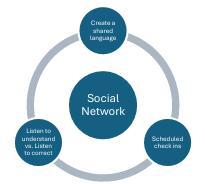
Another important factor to consider when dealing with SAD symptoms is to create and maintain a social support network. Cohen and Wills (1985) defines social support network as “the degree of perceived satisfaction with social relationships.” Social relationships may include family, friends, coworkers, as well as the general community. Knowing what is important to you in general, and more specifically during the SAD season, has been a vital tool that I use to enhance my plan in combatting SAD. One way that helps me do so is to audit my social support network. How I maintain healthy relationships in SAD season is as follows:
How peer support can specifically help those experiencing seasonal depression?
At WNYIL, we strive to serve all who travel to us in need of help on their life journey. A peer support program engages with consumers where they are at in life. With peer support your voice matters in how we tailor a plan that best suits your wants and needs for change, may that be psychosocial rehabilitation, crisis respite, education, individual employment support services, family support training and/or non-medical transportation. With a peer, you will begin to feel less isolated with your thoughts, feelings, and/or behaviors. As the commonly used phrase of “it takes a village” you will transform your perceptions, conception, and implementation on your strengths as an individual on their recovery journey.
Hope is a human concern. I never witnessed, or to my understanding of the concept of witnessing and to witness, in other species such as a dog, fish, or polar bear attributes of hope. Recovery is non-linear, or in other words, is more dynamic than what the medical model entails. Recovery is a lifelong journey. For me, who is still in recovery with many noted factors, recovery is a roadmap that I truly value not only as a peer whose words matter for the greater good, but also as a consumer. It is a lifestyle on itself that I feel will elevate my mind, body, and spirit to where I need to be; where we all deserve which is at a level of peace, homeostasis, and forever growth.
| | |
Affirmations for Positive Transformations
by Amanda Hergert, Benefits Advisor, NYCPS-P
| |
Positive affirmations are supportive statements we say out loud (or in our heads) to cultivate healthier thoughts, emotions, and behaviors. From time to time, we are all guilty of allowing that negative internal monologue to creep in, and lie to us about our worth, abilities and talents.
Using the practice of speaking positive affirmations to one’s self is a fantastic way to keep your headspace clear. Developing a practice of speaking positive affirmations, even for 5 minutes each morning has shown significant improvements in overall well-being, social well-being, and reductions in anxiety and negative mood.
The most effective means is to speak affirmations into the mirror, so you can look yourself in the eye. This approach increases self-awareness and turns your brain off “auto-pilot. It also strengthens your brain’s emotional response to your spoken words.
Below are some of my very favorite affirmations for you to try out for yourself. You can also create some of your own that apply directly to your circumstances.
“I am worthy, capable, confident, and strong. I believe in myself, trust my journey, and grow into my best self every day”.
“I am resilient and recover quickly from setbacks. Each day is a new opportunity to grow and thrive”. “I am focused, determined, and motivated. I have the power to create the life I want”. “I am growing and improving every day. I embrace change as an opportunity to learn. I choose progress over perfection”.
“I am proof enough of who I am and what I deserve”.
“I breathe in healing; I exhale the painful things that burden my heart”.
“I can hold two opposing feelings at once, it means I am processing”.
“I hold community for others and am held in community by others”.
“I practice gratitude for all that I have, and all that is yet to come”.
“There is something in this world that only I can do. That is why I am here”.
| | |
My Journey from Community of Practice to International Peer Movement
by Samuel Floyd, Peer Support Specialist, Renewal Center
| |
One thing I have been most proud of throughout my work as a peer professional was stepping into the role of facilitator for Western New York's Peer Community of Practice meetings. Each gathering reminded me why I entered this work. Every week was an opportunity to create space for connection, learning, and shared growth among peers who understood the power of lived experience. Facilitating those meetings quickly became a highlight of my professional and personal life. What was expected to be a well-attended gathering quickly became a standing-room-only event.
Peer supporters, advocates, leaders, family members, and people from all walks of life filled the room. As I looked around, I realized I was witnessing something larger than a meeting. It felt like a family reunion, not one defined by blood, but by choice. We were united by a shared commitment to transform our struggles into something meaningful. We were people who had experienced challenges, setbacks, recovery, and growth, and who had chosen to use those experiences to help change the world around us. Although that moment remains a powerful memory, it was not my first rodeo as a peer.
Throughout my journey, I have had the privilege of supporting others, building community, and learning from countless people whose courage and resilience continue to inspire me. Yet the Community of Practice felt different. It represented something special. It showed me what is possible when peers come together with intention, compassion, and a shared belief that lived experience is a source of wisdom. As my world expanded beyond Western New York, I found myself inspired by organizations and learning communities that embody the values at the heart of the peer movement. One example is One New Heartbeat in California, a community-based organization dedicated to promoting mental, emotional, and physical well-being through peer support, education, recovery focused programs, and culturally responsive services. Their work centers on the belief that no one should have to struggle alone and that people can heal and grow when they have meaningful support and opportunities for connection. What resonates with me most is their commitment to amplifying lived experience through storytelling, creativity, and peer-led approaches.
In many ways, their work reflects the same spirit I witnessed in our Community of Practice meetings: people transforming their life experiences into pathways of hope for others. I have also been deeply inspired by the School for Transformative Mental Health created by the Institute for the Development of Human Arts (IDHA) in New York City. The school's approach challenges traditional understandings of mental health by centering rights, self-determination, community, lived experience, and holistic care. Through its training and curriculum, IDHA creates space for peers, clinicians, advocates, and community members to learn together while exploring alternatives that move beyond a purely medical model of mental health. What attracts me to this work is its belief that personal healing and social transformation are connected. It invites us not only to support individuals but also to imagine systems and communities that better honor our humanity.
These experiences have reminded me that the international peer movement is not a single organization or philosophy. It is a growing constellation of people, programs, and communities reimagining what support, recovery, and belonging can look like. Whether I am sitting in a Community of Practice meeting in Buffalo, learning from peers in California, or engaging with transformative mental health leaders in New York City, I find the same heartbeat: a commitment to honoring lived experience as a source of wisdom, leadership, and change. To me, the international peer movement is not simply a professional network or a collection of organizations.
It is a living community of people around the world who believe that healing, recovery, and growth are strengthened through mutual support, shared experience, and human connection. Across countries, cultures, and communities, peers are demonstrating what is possible when people are trusted as experts in their own lives. For that reason, being invited to participate in the International Peer Leadership Incubator Program feels like an incredible privilege. I see it as both an honor and a responsibility. It is an opportunity to learn from peer leaders across the globe, to share lessons from my own community, and to contribute to a growing international conversation about the future of peer support.
Personally, I hope this experience helps me grow as a leader. One area of growth I am especially excited about is developing a stronger global perspective. Bringing what I have learned here, in my home of Western New York, to global conversations. I want to deepen my understanding of how peer support is practiced in different cultures and contexts. By learning from peers around the world, I hope to expand my own leadership skills, challenge my assumptions, and become a more thoughtful and effective advocate for recovery and wellness. I also hope the impact extends far beyond my own development.
One community outcome I would like to see is a stronger bridge between local peer communities and the broader international movement. I want to bring new ideas, partnerships, and innovations back to Western New York while sharing our region's strengths and successes with the world. My hope is that these connections will create more opportunities for peers to learn from one another, strengthen our workforce, and expand the reach of peer support in meaningful ways.
Looking back, I can trace a line from those Community of Practice meetings to this new opportunity. The crowded rooms, the honest conversations, the friendships formed through shared experience, and the collective vision of a better future prepared me for this moment. What began as a commitment to show up for my local peer community has opened the door to a global movement. As I begin this next chapter, I carry with me the voices of the peers who have shaped my journey. They remind me that leadership is not about standing above others. It is about standing alongside them. From community of practice to international peer movement, I am grateful for every step of the journey and excited to see where the path leads next.
| | |
Global Peer Support Celebration Day: Honoring the Power of Shared Experience
by Annie Oneil, MHPC Outreach Specialist
| |
Every year on the 3rd Thursday in October, people around the world come together to recognize Global Peer Support Celebration Day—a day dedicated to honoring the incredible impact of peer support in promoting hope, healing, and recovery. This international observance shines a light on the essential role that peer supporters play in helping individuals navigate mental health challenges, substance use recovery, and other life experiences through the power of shared understanding.
Peer support is built on a simple but powerful principle: people who have lived through similar experiences can offer unique understanding, encouragement, and hope to one another. Unlike traditional clinical relationships, peer support is based on mutual respect, empathy, and the belief that recovery is possible. Peer specialists, recovery coaches, and peer advocates use their lived experience to inspire others, reduce isolation, and help people find their own path toward wellness.
Global Peer Support Celebration Day reminds us that recovery does not happen in isolation. Across communities, cultures, and countries, peer supporters are helping individuals rediscover their strengths, build confidence, connect to resources, and achieve meaningful goals. Whether someone is taking their first steps toward recovery or continuing a lifelong wellness journey, having someone who has "been there" can make all the difference.
The celebration also recognizes the growing global movement to integrate peer support into healthcare systems, behavioral health services, schools, workplaces, and community organizations. Research continues to demonstrate that peer support can improve engagement in services, reduce feelings of loneliness, increase hope, and empower people to become active participants in their own recovery.
This year's celebration is an opportunity for all of us to acknowledge the compassion, resilience, and dedication of peer supporters everywhere. It is also a chance to educate our communities about the value of lived experience and to challenge the stigma that too often surrounds mental health and recovery.
At the Mental Health Peer Connection and Renewal Center, we know firsthand that healing happens through connection. Every conversation, every shared story, and every act of encouragement remind us that no one has to face life's challenges alone. Peer support creates a sense of belonging, fosters resilience, and demonstrates that recovery is not only possible, it is achievable.
As we celebrate Global Peer Support Celebration Day on October 15, 2026, let us thank the peer supporters who walk alongside others with compassion and authenticity. Their willingness to transform personal challenges into sources of hope continues to change lives every day.
Together, we celebrate the voices of lived experience, the strength found in community, and the belief that hope grows stronger when it is shared.
| | |
Trapped in Happiness
Tiffany Jordan, MHPC Administrative Assistant
| |
I didn’t she couldn’t escape
I didn’t know why every time I saw her, she was crying.
I didn’t know the bruises hid her beautiful chocolate complexion,
while her smiling eyes kept pretending she was fine.
I didn’t know her smile was painted on,
like a Halloween mask hiding what was wrong.
I didn’t know she wasn’t feeling safe or free,
or that the person hurting her was someone she loved deeply.
Her home looked perfect—
vacuum lines in the carpet,
coasters neatly placed on the table.
But I didn’t see the broken dishes in the trash.
I didn’t know she felt like trash,
when she was so valuable to me.
Jewelry was shining from her neck and ears.
I didn’t know her neck was sore.
I didn’t know her ears still hurt
from the screams she heard the night before.
She left the house every day,
but I didn’t know she couldn’t get away.
I didn’t know she was so afraid
I didn’t know she didn’t choose to stay
I didn’t know what happened behind closed doors.
I didn’t know the doors were locked,
And the windows were locked,
and she couldn’t escape.
| | |
Southern Style Collard Greens
Kevin Smith
(My personal favorite)
Ingredients
- 3 to 4 pounds fresh collard greens (or 2 bundles collards, washed, stemmed, and chopped)
- 1 large Smoked turkey wing
- 1 medium yellow onion (diced)
- 3 to 4 cloves garlic (optional)
- 4 to 6 cups chicken stock or broth
- 2 to 3 cups of water (as needed)
- 3 tablespoons of white distilled vinegar
- 1 teaspoon crushed red pepper flakes (optional)
- 1 teaspoon sugar (to balance bitterness, optional)
- Salt and black pepper to taste
Instructions
- Prep the Greens: Wash the collard greens thoroughly in cold water to remove any dirt or sand. Strip the leaves away from the tough central stems and discard the stems. Roll the leaves together and slice them into rough 1-inch strips.
- Build the Broth: Heat a large pot or Dutch oven over medium heat with a splash of oil or butter. Sauté the diced onions and minced garlic until soft and fragrant (about 3 to 5 minutes).
- Simmer the Turkey Wing: Add the chicken stock, water, and the smoked turkey wings to the pot. Bring to a boil, then reduce the heat to low, cover, and simmer for about 30 minutes so the smoky flavor infuses the broth, and the meat starts getting tender.
- Add the Greens: Add the chopped collard greens to the pot. They will look like too much at first, but they will wilt down within 10 to 15 minutes. Add the red pepper flakes, sugar, salt, and black pepper.
- Slow Cook: Cover the pot and simmer on low heat for 45 minutes to 1.5 hours, stirring occasionally, until the greens are completely tender.
Corn Bread on the side and ENJOY!!!!!!!
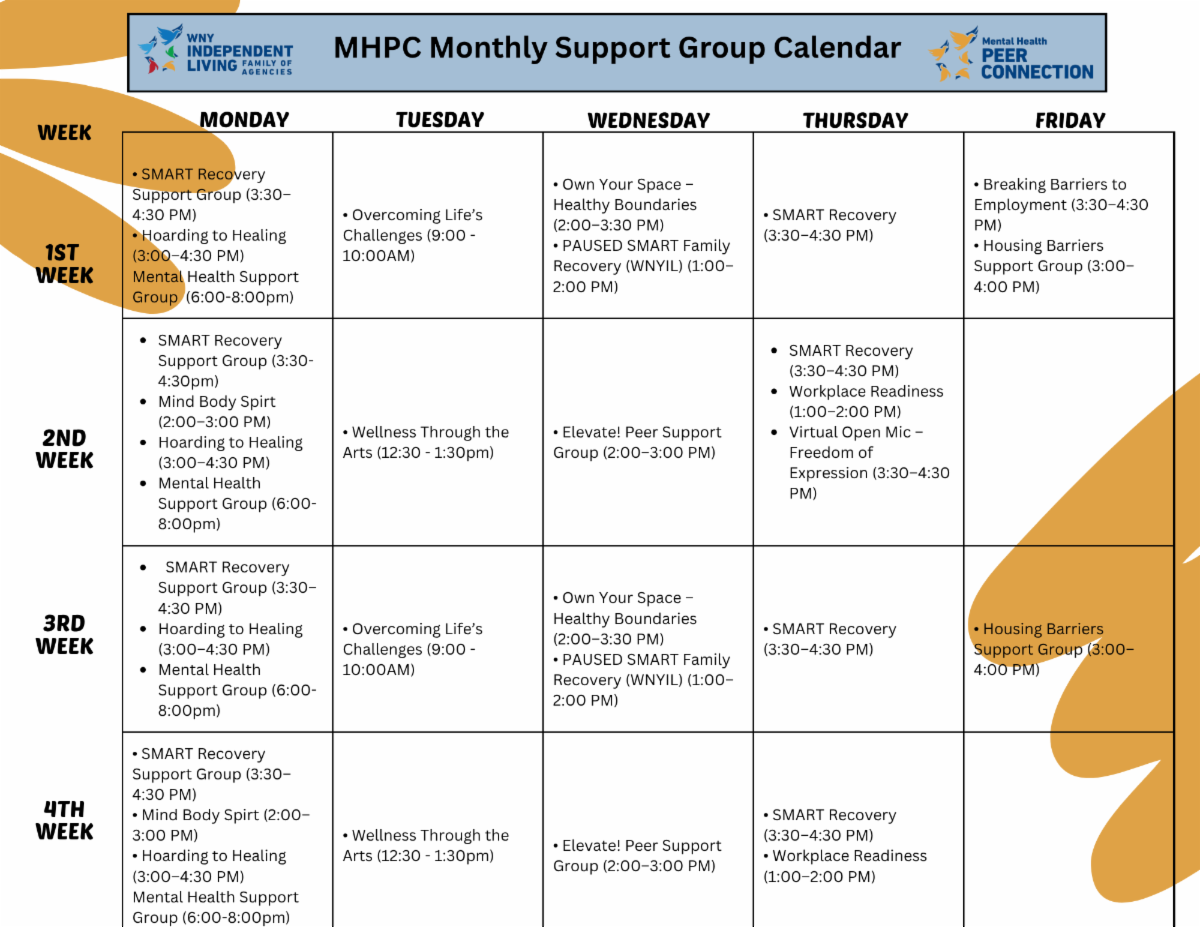
| | Mental Health Peer Connection Support Group Calendar | | |
Breaking Barriers to Employment
Support for overcoming employment obstacles.
RSVP: Zanus Cook – 716-836-0822 ext. 173/533
SMART Recovery Support Group
Evidence-based recovery skills for SUD.
RSVP: Tim Van Valkenburg – 716-836-0822 ext. 135
Own Your Space – Healthy Boundaries
Build healthy boundaries and self-advocacy skills.
RSVP: Tegwanda Alford – 716-836-0822 ext. 169
Virtual Open Mic – Freedom of Expression
Creative sharing space for expression and connection.
RSVP: Tegwanda Alford – 716-836-0822 ext. 169
Wellness Through the Arts
Relaxation through art-based wellness activities.
RSVP: Lancia Woods – 716-836-0822 ext. 193
Overcoming Life’s Challenges
Shift perspective using gratitude and positive thinking.
RSVP: Jahneen Jamison – 716-836-0822 ext. 171
Workplace Readiness
Peer support that helps individuals prepare for employment
RSVP: Jack Green – 716-836-0822 ext. 167
SMART Family Recovery (WNYIL)PAUSED
Tools for communication, boundaries & stress.
RSVP: Carla Kenney – 716-836-0822 ext. 164
Elevate! Peer Support Group
Peer-led coping and support for daily life challenges.
RSVP: Brooks – 716-836-0822 ext. 183
Housing Barriers Support Group
Help navigating challenges in finding/keeping housing.
RSVP: Ashanti – 716-836-0822 ext. 160
Mind, Body, Spirit
Find peace, balance, and connection through meditation, energy healing, and wellness activities.
RSVP: Amanda Hergert – 716-836-0822 ext. 526
Hoarding to Healing
Support for decluttering and building organizing skills.
RSVP: Annie O’Neil – 716-836-0822 ext. 144
Mental Health Support Group
Open to anyone with Mental Health Challenges.
RSVP: Marie Therese Kersten– 716-435-0238
| |
🍂October Word Scramble
Global Peer Support Day Edition
Can you unscramble these words?
REPE → ______________________
TROPSUP → ______________________
YRECVORE → ______________________
HPEO → ______________________
GNINETSIL → ______________________
TYNUMMOC → ______________________
GNILAEH → ______________________
YHTAPME → ______________________
SENLLEW → ______________________
NOITCENNOC → ______________________
GNIGARUOCNE → ______________________
NOITAVOCDA → ______________________
⭐ Bonus Question
What month is Global Peer Support Day celebrated each year?
| |
Answer Key to Word Scramble
Peer
Support
Recovery
Hope
Listening
Community
Healing
Empathy
Wellness
Connection
Encouraging
Advocacy
Bonus: October
| |
| | |
October Kindness Challenge:
Reach out to one person each week with a phone call, text, or handwritten note to let them know you're thinking of them.
| | | | "Peer support reminds us that recovery is possible, hope is powerful, and no one has to face life's challenges alone. Together, we build stronger, healthier communities—one connection at a time." | | | | |