At the end of September, MISTRA hosted a roundtable exploring how South Africans construct and express their identities within an evolving political landscape. The event delved into themes including the rise of ethnic and language-based politics, youth and gender identities, migration, regional solidarities, and the impact of economic inequality on people’s sense of belonging. The event was attended by leading scholars and public intellectuals who unpacked how these intersecting forces shape politics and nation-building today. | | |
| MISTRA, in collaboration with the Forum on China-Africa Cooperation (FOCAC), hosted a Seminar in September. At the event, MISTRA experts, policymakers, researchers, and business leaders from across Africa and China unpacked new trends in infrastructure development and industrialisation and discussed green technology partnerships, and sustainable economic modernisation. In his opening remarks, MISTRA’s Executive Director, Joel Netshitenzhe, emphasised that, rather than lamenting negative global dynamics, Africa and China can use their collective agency to drive socio-economic development through the ten modernisation partnership plans announced at the 2024 FOCAC Summit. |
| |
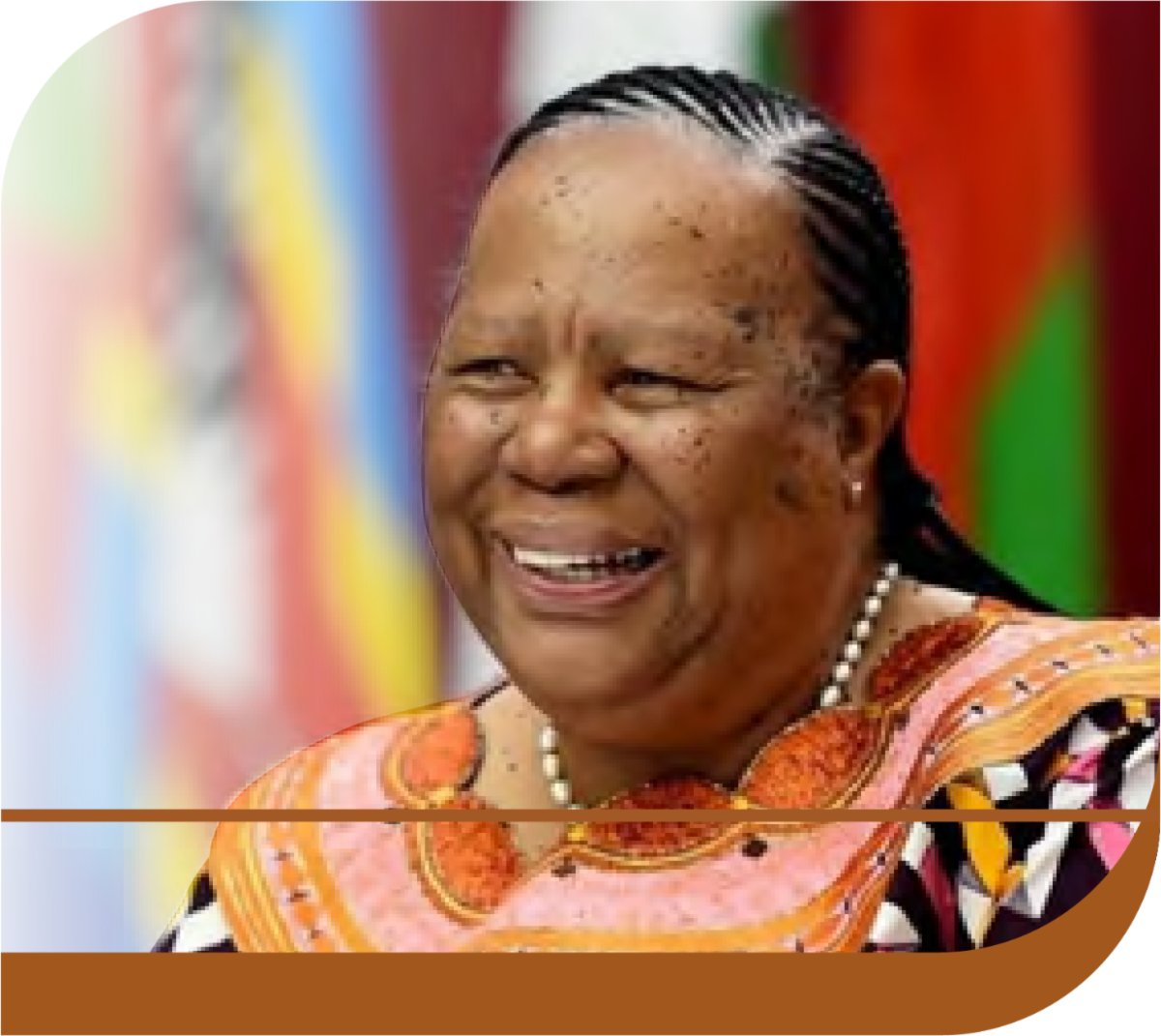
The 13th Mapungubwe Annual Lecture, hosted in partnership with the University of Johannesburg, on 4 September 2025, was delivered by Dr Naledi Pandor, Chairperson of the Board of Trustees at the Nelson Mandela Foundation. Dr Pandor was a Member of Parliament from 1994 until 2024 and served as a cabinet minister from 2004 to 2024 in key portfolios, including International Relations and Cooperation, Home Affairs as well as Higher Education and Science and Technology.
During her address, she reflected on the theme “Has the world moved under our feet”. She unpacked current geopolitical developments and explored what place Africa occupies in these shifting grounds.
| |
| | | |
In August, MISTRA officially launched the Coalitions Barometer II (2023 – 2025). This publication is the latest in our ongoing analysis of South Africa’s coalition politics.
The MISTRA Coalitions Barometer II draws on case studies from approximately 80 local governments, alongside analysis of the unfolding national and provincial coalition governments. It builds on MISTRA’s previous works, including a comprehensive book on Marriages of Inconvenience, to illuminate how the country’s political culture is adapting, and at times struggling, to manage this new governance landscape.
At the launch event, primary author, Professor Susan Booysen, led a discussion unpacking how these dynamics are shaping South Africa’s coalition era and what they mean for future political stability and democratic accountability.
| | |
Drawing on South Africa’s own history as the only country to have voluntarily dismantled its nuclear weapons programme, MISTRA presented a high-level virtual dialogue on the role that African countries can play in advancing a global disarmament agenda. Nuclear disarmament has attained greater prominence in light of the recent Israeli and Iranian conflict, and the bombing of Iranian nuclear facilities by the US. During the webinar, MISTRA explored the implications of emerging geopolitical dynamics on nuclear disarmament, and the responsibilities of civil society in fostering nuclear awareness.
The dialogue was addressed by Dr Trita Parsi, Executive Vice President at the Quincy Institute for Responsible Statecraft with responses by Kudakwashe Mapako, Researcher in Public International Law and Professor Jo-Ansie van Wyk, International Politics Lecturer at the University of South Africa (UNISA).
| | |
In July, the University of Limpopo, in partnership with the Lawrence Madimetja Phokanoka Foundation (LPMF) and the Office of the Premier of Limpopo, hosted the Second Annual Lawrence Phokanoka Memorial Lecture.
The theme of this year’s lecture, “Celebrating the Life and Times of Lawrence Phokanoka: Reflections on Theory and Praxis in the Current Conjuncture”, looked to re-examine the connection between progressive ideas and practical action in today’s socio-economic context. The event featured the Lecture by Joel Netshitenzhe, MISTRA’s Executive Director as well as reflections by prominent leaders and organisations.
2025 marks the 20th anniversary of the passing of Phokanoka, a revered struggle stalwart, intellectual, and advocate for social justice. The lecture served as a celebration of his enduring legacy and an opportunity to engage in critical debate on contemporary socio-political challenges facing South Africa.
| | Looking ahead, MISTRA has various events coming up. Look out for invitations in the coming weeks. | | MISTRA launched its latest book, The State of the South African State. This volume assesses the South African state three decades into its democracy, and a year after the formation of the GNU. It examines the state within a long-term historical context, but with a specific focus on events and trends that have become prominent since 2014. It seeks to answer the following core research question: ‘What is the current capacity of the South African state to develop and implement effective public policy, conduct efficient and service-oriented governance, and effectively address the problems plaguing the South African nation?’ | | |
Peter Delius is an author and a professor in the History Department at the University of the Witwatersrand in Johannesburg. He has devoted much of his research to precolonial history and published numerous books and articles on the history of the Pedi Kingdom and rural transformations in the 20th and 21st centuries. He has also contributed to debates on rural development, land restitution and tenure reform.
Peter has compiled several book chapters for MISTRA. In the book Land in South Africa: Contested Meanings and Nation Formation, he examines how land and agrarian reform shape nation-building, citizenship, and identity formation. His work in the book, Traditional leadership in a Democracy, reflects on the key dynamics of pre-colonial polities and their implications for the role of chiefs in contemporary South Africa. He was also a central contributor MISTRA’s book Mapungubwe Reconsidered: A Living Legacy.
| | 13th Mapungubwe Annual Lecture | | MISTRA Coalitions Barometer II | | | | |