Commission Newsletter • Spring 2025

Six Species

Thank you for your continued support!

We are committed to our mission under the Marine Mammal Protection Act and continue to work tirelessly on the responsible management of our shared marine resources. The Commission appreciates the support received for the work that we have carried out over the past five decades. See our Chair’s message for more details. 

For about 1 penny per American per year, the Marine Mammal Commission has met its Congressional mandate to conserve marine mammals for over 50 years. 

National Marine Mammal Stranding Network Meeting

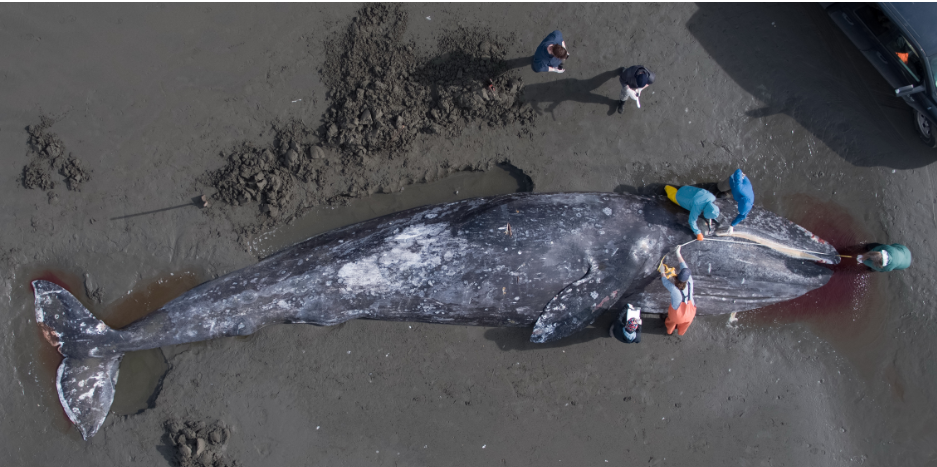
U.S. Marine Mammal Stranding Response Network responders examine a dead gray whale in Ocean Shores, Washington. Credit: Cascadia Research Collective

Marine Mammal Commission staff attended the National Marine Mammal Stranding Network virtual meeting in late April 2025. This was the first joint meeting of the 120+ stranding organizations in a decade. The meeting covered an array of topics including an overview of network funding, mental health and wellness for stranding network members, and lessons learned from stranding and Unusual Mortality Events (UMEs) across the nation. The network also discussed emerging threats to marine mammals (e.g., avian influenza) and new techniques and best practices in stranding response.


Stranding Network partners provide critical emergency response services to sick, injured, or dead marine mammals and collect valuable biosurveillance and baseline health data about marine mammal populations. The stranding network is primarily supported through the Prescott Grant Program, which provides funding for network members via a competitive grant process. In the case of UMEs, there is also a small pool of funds available to stranding partners through the UME Contingency Fund. The critical work of these stranding networks would not be possible without ongoing funding and the commitment of dedicated and mission-critical volunteers.


To learn more about the history, challenges, and opportunities for stranding networks, check out the recent opinion piece in Marine Mammal Science led by Commission Chair Frances Gulland and coauthors. 

New Video About the Commission!

Check out the Commission’s new video, featuring footage from many colleagues and partners engaged in marine mammal conservation nationwide and narration by our Executive Director. A special thank you to Jess Kusher, a 2025 Knauss Sea Grant Fellow at NOAA, for taking the lead on this project

Commission Factsheet about the

Marine Mammal Protection Act

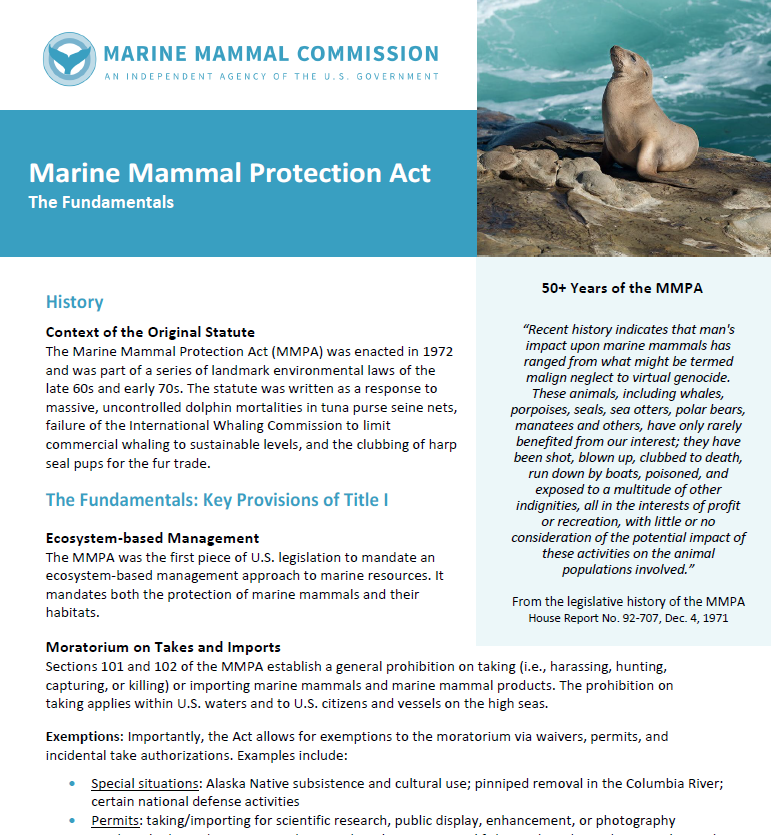
The Commission has published a new fact sheet on the fundamentals of the Marine Mammal Protection Act (MMPA). The Marine Mammal Protection Act (MMPA) was enacted in 1972 as part of a series of landmark environmental laws of the late 60s and early 70s. The MMPA was the first piece of U.S. legislation to mandate ecosystem-based management. It mandates protection of marine mammals and their habitats. View the fact sheet to learn more about the historical context of the Act and its key components.

Marine Mammal Commission Factsheet on

MMPA Fundamentals

Arctic Watch Update

The Commission is a proud partner of Arctic Watch, a collaborative initiative aimed at addressing the growing risks of vessel traffic in Alaska’s Arctic. Focused on the Bering Strait region, Arctic Watch works to enhance communication and real-time monitoring of sea traffic to support safe shipping and protect the environment, wildlife, and subsistence practices of local communities. The Arctic Watch Operations Center, managed by the Marine Exchange of Alaska, provides 24/7 monitoring and real-time data on weather, vessel locations, and marine safety. This collaboration with Arctic communities, Alaska Native tribal governments, and state and federal agencies is committed to sharing information, including on areas where marine mammals and subsistence activities are present and areas to be avoided by ships. 


Last year, Arctic Watch held a Partners' Meeting in Juneau with Tribal delegates from the Bering Strait Region to discuss community information needs and concerns regarding increasing vessel traffic and its impact on marine mammals and subsistence hunting practices. Feedback from the meeting has been used to refine the program, resulting in a report to be published soon, along with the development of real-time monitoring tools to support safe maritime practices and address community concerns. To learn more about the Arctic Watch program, visit the website and check out the new video that highlights its goals and impact. 

Continuing 14 Years of Mekong River Dolphin Conservation

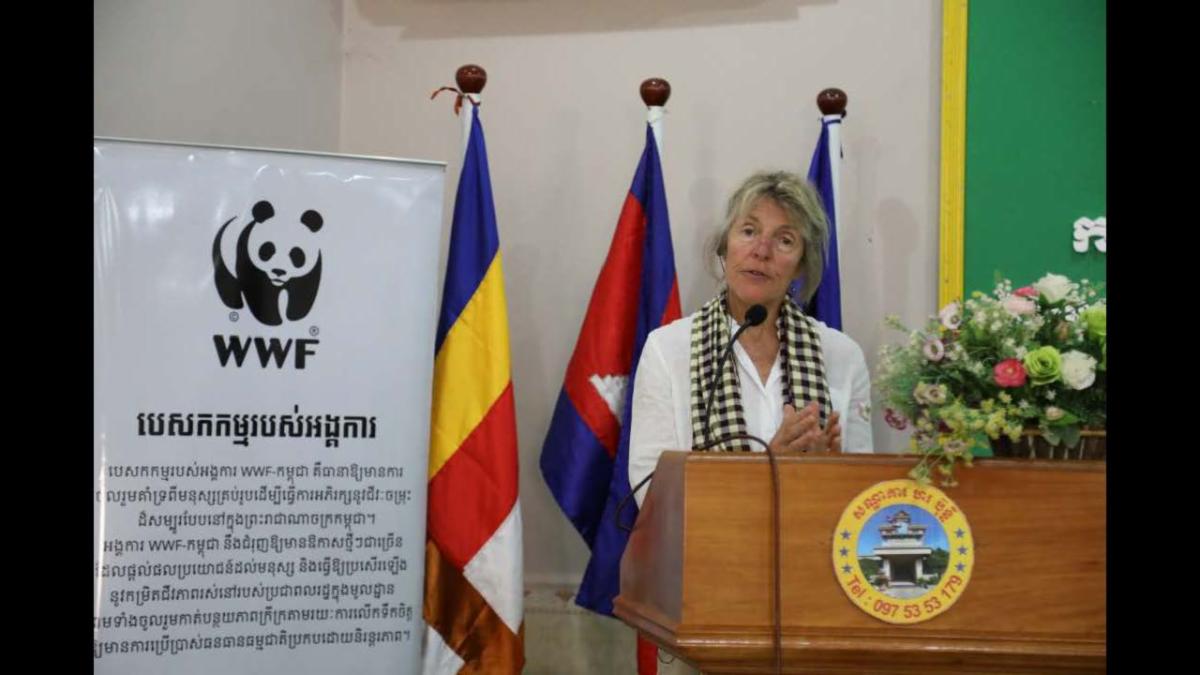
Commission Chair Frances Gulland speaks at the WWF-Cambodia International Expert Workshop

Commission Chair Frances Gulland participated in the WWF-Cambodia International Expert Workshop on Management and Conservation of Irrawaddy Dolphins in the Mekong River, 24th - 25th March 2025. The Mekong Irrawaddy dolphin population remains critically endangered, with fewer than 100 adult individuals estimated to survive today. Her participation, as a veterinarian expert on determining the causes of death of marine mammals, continues over 14 years of technical engagement with WWF-Cambodia advising on the Mekong River population of Irrawaddy dolphins. The Commission also supported the participation of Mr. Jason Allen of the Sarasota Dolphin Research Project who is an expert on dolphin population assessment. The technical workshop followed a privately organized Mekong dolphin swim to raise awareness for Irrawaddy dolphins.  


For more on the Commission’s efforts to conserve freshwater dolphins and porpoises, visit our website. 

Stay Tuned for Info about our Annual Meeting

Look out for an upcoming announcement about the Commission's 2025 Annual Meeting! Each calendar year, the Commission holds its annual meeting in a different region of the country to examine regional issues, as well as priority topics at the national and global levels. At our annual meetings, we engage other federal agencies, stakeholders, and interested members of the public on the science, policy, and management issues related to the Commission’s mission to conserve marine mammals and their ecosystems.

Browse our Annual Meeting webpage to view meeting agendas, session summaries, and presentation materials from our most recent meetings.

New MMC-affiliated publications, media, and reports!

Below are a few recent highlights that reflect some of the ongoing scientific research, collaborations, interviews, and accomplishments of our world-renowned marine mammal scientists. For a reminder about our Commissioners, Committee of Scientific Advisors, and staff, visit our website


Right Whale Calves and Concerns - Daniel Palacios 


Marine Mammal Stranding Networks in the 21st Century - Frances Gulland


Humpback Whales at the Mouth of the Chesapeake - Andy Read


Bottlenose Dolphin Ecolocation Behavior - Randall Wells


Drivers of Large Whale Movements in the California Current - Daniel Palacios


North Pacific Right Whale Habitat Use - Andy Read

Visit mmc.gov