MOD Newsletter: February 2026 | | Message from the Executive Director | | |
Dear MOD community:
I hope you all are staying warm and came through the recent blizzard safe. The storm was a good reminder that if you haven't already, please take a moment to make sure accessibility is woven into your individual, family, or community emergency plan. Our partners at the Massachusetts Emergency Management Agency (MEMA) have some helpful information and resources for accessible emergency planning - like what to include in an emergency kit, maintaining access to critical medical devices during an emergency, and planning ahead for accessible transportation during an emergency.
Here at MOD, staff that had power and internet connectivity in their home worked remotely, answering questions, and guiding people through disability-related civil rights and architectural access questions on our phone lines, email, and via our website.
One of the most common topics we get asked about is reasonable accommodations (RAs) and modifications (RMs).
If you're facing a barrier because of your disability, you have the right to ask for a reasonable accommodation or modification:
-
At work: To help you perform the essential functions of your job. For example: A flexible work schedule to manage the side effects of medications or a specialized office chair. Request a reasonable accommodation from your employer’s ADA Coordinator, HR office, or your supervisor.
-
At home: To equally enjoy your housing. For example: A closer parking spot to your rental unit or a hand railing installation in your apartment. Request a reasonable accommodation or modification from your housing provider’s ADA Coordinator or ask your landlord directly.
-
At your college or university: To give you equal opportunity and access to your education. For example: An exception to a mandatory meal plan due to a restrictive medical diet or an automatic opener to the door of a biology lab. Contact your university’s Disability Services office or 504 Coordinator.
Asking for a reasonable accommodation doesn't guarantee you'll get one. There are several reasons your request can legally be denied, and it's important to include certain information in your request to make the process go smoothly, get your needs met, and avoid getting off on the wrong foot with your employer, landlord, or school.
If you think you need a reasonable accommodation or modification and aren't sure where to start, visit our disability rights and access page! Our expert team has put together these helpful guides to help you figure out if a reasonable accommodation is the best option for your situation, guide you through the request process, and understand your rights if your request is denied.
Thank you for being our partner in advancing accessibility.
Allan Motenko
Executive Director
Massachusetts Office on Disability
| | Where to go for help with disability-related housing issues | | |
MOD does not help people search for or pay for housing. Our agency's focus is helping people understand disability-related laws and what to do if those laws are violated.
We know that it can be difficult and frustrating to find affordable and accessible housing. The Executive Office of Housing and Livable Communities’ housing resources for people with disabilities page has some tips and resources for finding housing, paying for housing, and navigating housing resources.
Eligibility for housing programs is usually based on income, not disability. If you have particular requirements or urgency because of your disability, you can usually specify this as part of the standard application process. You don’t need to fill out a separate application.
Our disability rights in housing page has guidance on disability-related housing laws and what they mean for you.
| |
Healey-Driscoll Administration Releases Massachusetts Digital Accessibility and Equity Strategic Plan
The Healey-Driscoll Administration, through the Digital Accessibility and Equity Governance Board, released its Digital Accessibility and Equity Strategic Plan this month. The Plan defines the mission, vision, goals, and strategies to advance digital accessibility and equity within executive department agencies.
MOD serves on the Digital Accessibility and Equity Governance Board and works with other board members and the Commonwealth's Chief IT Accessibility Officer to ensure executive department agencies are meeting digital accessibility requirements.
| |
MOD in the news: $5.9 million in Municipal Accessibility Improvement Grant Funds awarded to 86 Communities
MOD's Municipal ADA Improvement Grant Program provides reimbursement funding to Massachusetts cities and towns to improve accessibility for people with disabilities. In the fiscal year 2026 cycle, over $5.9 million was awarded to 86 communities across the Commonwealth. ADA Improvement Grant funding can be used for accessibility planning through ADA Self-Evaluation and Transition Plans. It can also be used to fund capital projects, like:
| |
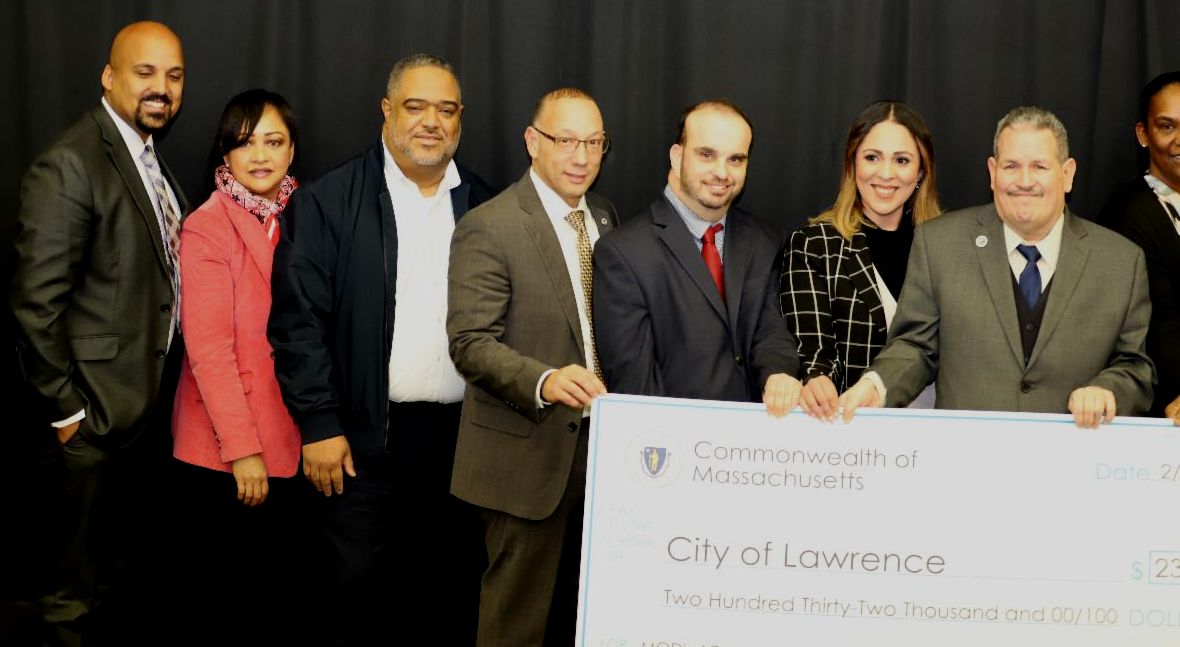
Photo: Lawrence officials and MOD Executive Director Allan Motenko pose with a giant check for $232,000 to the City of Lawrence from the Commonwealth of Massachusetts. The City of Lawrence was awarded an ADA Improvement Grant to make architectural accessibility improvements to Lawrence Public Library.
Left to right: State Sen. Pavel Payano, State Rep. Estela Reyes, State Rep. Francisco E. Paulino, State Rep. Frank Moran, MOD Executive Director Allan Motenko, Lawrence Public Library Director Janelle Abreu, Lawrence ADA Coordinator Richard Rodriguez, Lawrence Commission on Disability Member Dalma Morales
| |
Tax incentives for businesses to remove access barriers
Businesses can take advantage of two federal tax incentives available to help cover costs of making access improvements for customers with disabilities:
- A tax credit for small businesses that remove access barriers from their facilities, provide accessible services, or take other steps to improve accessibility for customers with disabilities
- A tax deduction for businesses of all sizes that remove access barriers in their facilities or vehicles
If your business spends money each year to meet ADA requirements, you can use these tax incentives annually. You can apply them to many types of accessibility improvements, but not to the cost of new construction. Any access barrier removal must meet federal accessibility standards.
| |
Snow removal at MBTA bus stops
Uncleared snow and ice at bus stops can create access barriers for people with disabilities. If there is an MBTA bus stop abutting your home or business, you may be responsible for clearing it. If you can't clear it due to a disability, see MOD's snow removal and accessibility page for guidance.
Here's who is responsible for clearing snow and ice at MBTA stops and stations:
-
Subway and Commuter Rail stations: MBTA
-
High frequency bus routes: MBTA
-
Non-frequent bus routes: Municipality/property owner
-
Bus stop with shelter: Shelter owner
Note that cities and towns can delegate snow removal responsibility to property owners (like homeowners and businesses) by adopting certain ordinances or bylaws. If the municipality assigns the responsibility for clearing the sidewalk to the property owner, then the property owner can choose to assign the responsibility to the renter in the lease.
Check your municipality's snow removal ordinances and your lease to clarify who is responsible for clearing the sidewalks (including any bus stops on them) that are next to your home or business.
| |
Digital accessibility help: Office hours with the ACCESS team
The Executive Office of Technology Services and Security's Accessibility Center for Consulting, Education and Support Services (ACCESS) team hosts weekly digital accessibility office hours.
Office hours are exclusively for state agencies, municipalities, and public schools. They are held via Zoom on Wednesdays and Fridays from 10 AM to 12 PM.
Register for the office hours series to get the recurring meeting in your calendar and learn from others. You'll be able to post related questions in the Q&A panel, and the ACCESS Team will attempt to address them while working with the people who have booked a time slot.
Book a 10 minute time slot to discuss the accessibility of any project you are working on, such as (but not limited to) documents, websites, communications, designs, data visualization, or training materials. When you join the meeting, you will be added as a panelist so you can share your screen and use your camera and microphone.
You will need a free Zoom account associated with your Massachusetts state, municipality, or school email to register or book a time slot.
| |
Is That a Service Animal? What Rights Apply Where
Northeast ADA Center
Tuesday, March 3 | 1 - 2 PM
Virtual
Hosted by the Northeast ADA Center, this webinar will explain the differences between service animals and assistance animals and where each is legally allowed to go. This webinar is designed to help people with disabilities, businesses, and the public better understand rights and responsibilities across different settings.
Register: Is That a Service Animal? What Rights Apply Where
| |
MOD's Community Access Monitor (CAM) trainings
Various times
Virtual
The Community Access Monitor (CAM) Program trains you to survey buildings for accessibility and use your skills to advocate for compliance with various rules and regulations.
It is designed for people who want to advocate for increased access in their community and those who want to understand their obligations to provide access to the disability community, such as building inspectors, architects, business owners, builders, and Commissions on Disability.
The training covers:
- History of disability laws, regulations and rights
- Regulations of the Massachusetts Architectural Access Board (MAAB)
- Americans with Disabilities Act (ADA) standards for accessible design
- New construction/alterations and existing facilities
- Effective communication
- How to survey a facility
- How to advocate for access
- Rights and responsibilities of a Community Access Monitor
Time commitment and registration instructions:
Beginner CAM training is a two-day training from 10 AM - 3 PM each day (10 hours total). There will be short breaks throughout. Registering online will register you for day 1. The link will register you for Day 1 only. Once you register, we will register you for Day 2. You will receive emails from Zoom with the meeting links for Day 1 and Day 2.
To obtain a Course Completion Certificate for the 2-Day Online CAM training, you must attend at least 75% of each of the sessions.
Register for a CAM training (10 AM - 3 PM each day):
Please note: Registration is limited. If you receive a message that the registration is full, please sign up for another training date or contact Ralph DeCicco, MOD's Access Specialist, at Ralph.DeCicco@mass.gov or (617) 979-7312.
Advanced CAM training
Advanced CAM trainings are available for people who have completed the 2-day CAM training in the past. You will be directly invited from MOD through email.
On-site site visit training
On-site site visit trainings are available for people who have completed the 2-day CAM training in the past. You will be directly invited from MOD through email.
|
National ADA Symposium
Great Plains ADA Center and the ADA National Network
Monday, May 4, 2026 - Wednesday, May 6, 2026 | 10:30 AM - 6:30 PM (Eastern)
Virtual
Cost: $175 for one day or $475 for full conference
This three-day training event offers 36 sessions covering all areas of the Americans with Disabilities Act (ADA) presented by nationally recognized experts in issues related to the ADA. View the agenda and session descriptions and register online. One-day and full conference registration options are available.
Register: National ADA Symposium
Deadline to register: April 24, 2026
| | Meet MOD's newest team members! They look forward to working with you. | |
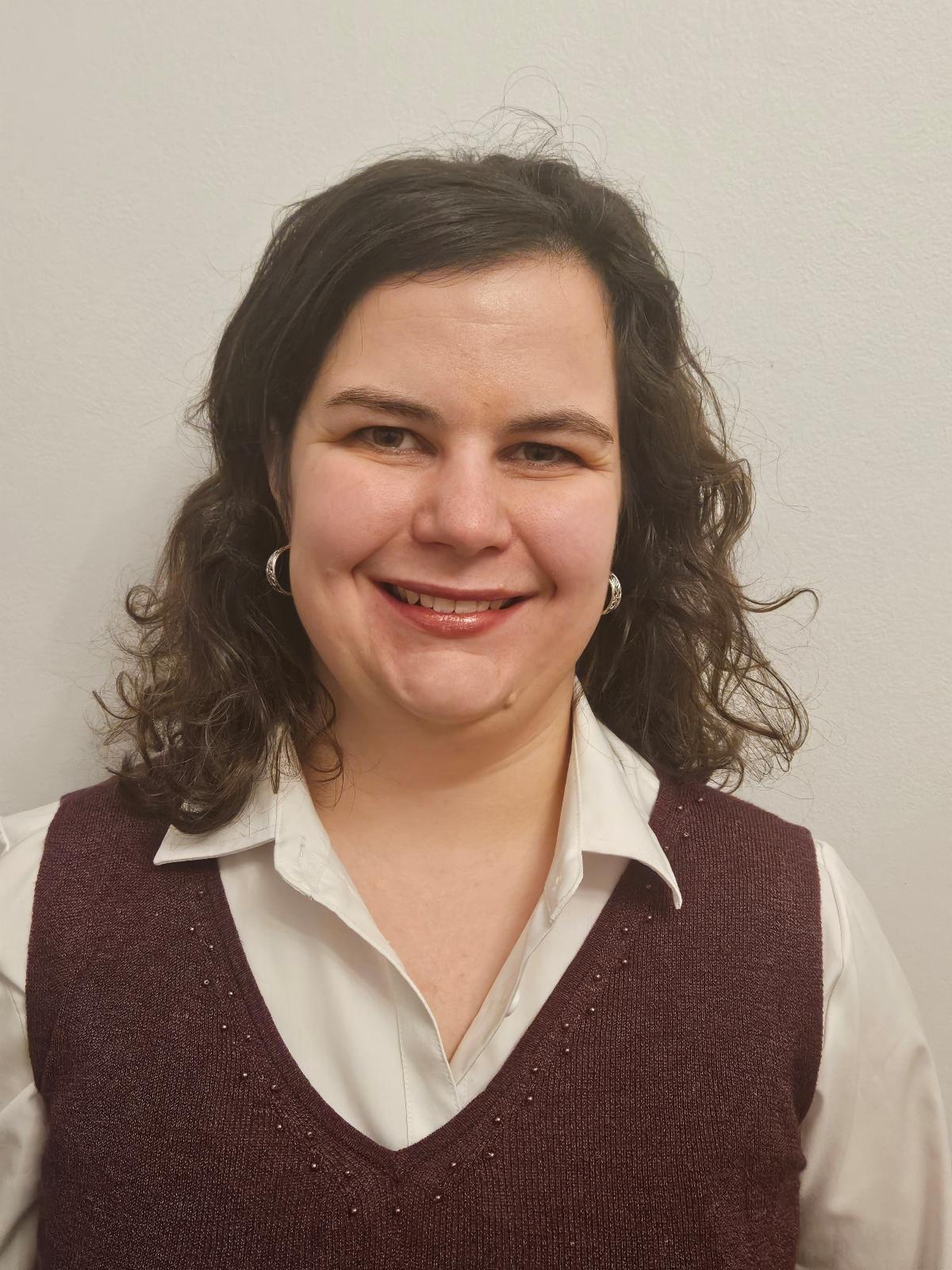
Grace Ballenger
Grace Ballenger joined MOD as a CAP Advocate at the start of 2026. She has used her organization and communications skills for a variety of mission-driven organizations, most recently as an office manager at a mediation and dispute resolution nonprofit. As a CAP Advocate, Grace informs, guides, advocates for, and represents people with disabilities who are receiving or are applying for vocational rehabilitation or independent living services.
| | |
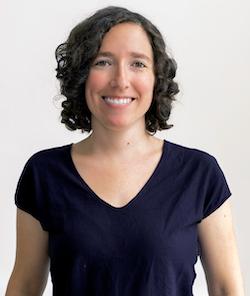
Declan Gould
Declan Gould joined MOD in June 2025 as a Disability Rights Information Specialist. In her current role as CAP Advocate, she informs, guides, advocates for, and represents people with disabilities who are receiving or are applying for vocational rehabilitation or independent living services. She most recently worked at Temple University as Assistant Professor of Teaching Instruction, where she co-led the faculty disability text circle and served on the Senate Committee on Faculty Disability Concerns. Her book, Disability in Contemporary American Poetry, will be published by Bloomsbury Academic in April 2026.
| | |
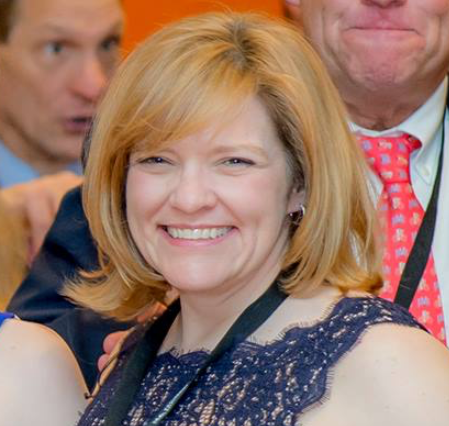
Meighan McCrea
Meighan McCrea joined MOD as the General Counsel in January 2026. Prior to coming to MOD, Meighan worked at the Boston Office of the U.S. Department of Education’s Office for Civil Rights for 19 years, serving as a civil rights attorney and team leader. Meighan developed significant expertise in disability law while enforcing civil rights at elementary, secondary, and postsecondary schools. Outside of work, Meighan spends time hiking and napping with her dog and husband (in that order), seeing live music whenever possible, and biking with her Pan Mass Challenge team.
| | | Our Company | Contact Us | FAQs | Privacy Policy |
| | | |