MORE FROM 61ST VENICE BIENNALE | | |
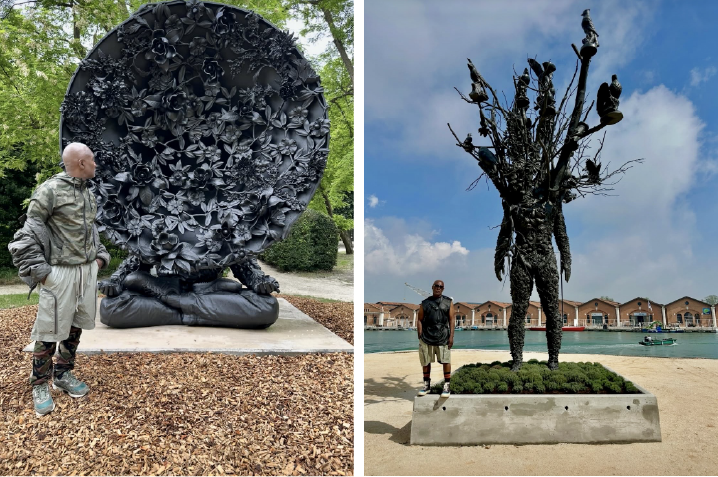
Nick Cave
In the company of greatness. Nick Cave at the opening of In Minor Keys — the 61st Venice Biennale, conceived by the late Koyo Kouoh. Cave's Two Points in Time at Once features five works displayed in Arsenale and two of his monumental bronzes installed outdoors. Here he stands with his works Amalgam Meditation and Origin
| | |
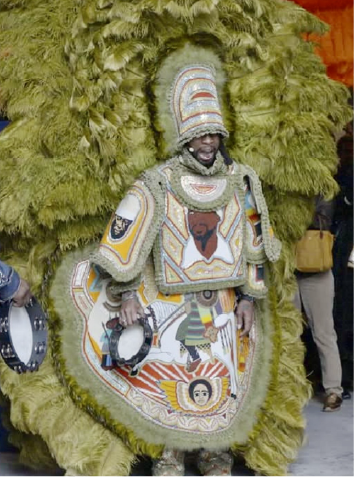
Big Chief Demond Melancon
Big Chief Demond Melancon — the first Black Masking Indian to participate in the Venice Biennale — at the opening of In Minor Keys. A tradition born in New Orleans, carried to the Grand Canal. Click picture to see processional.
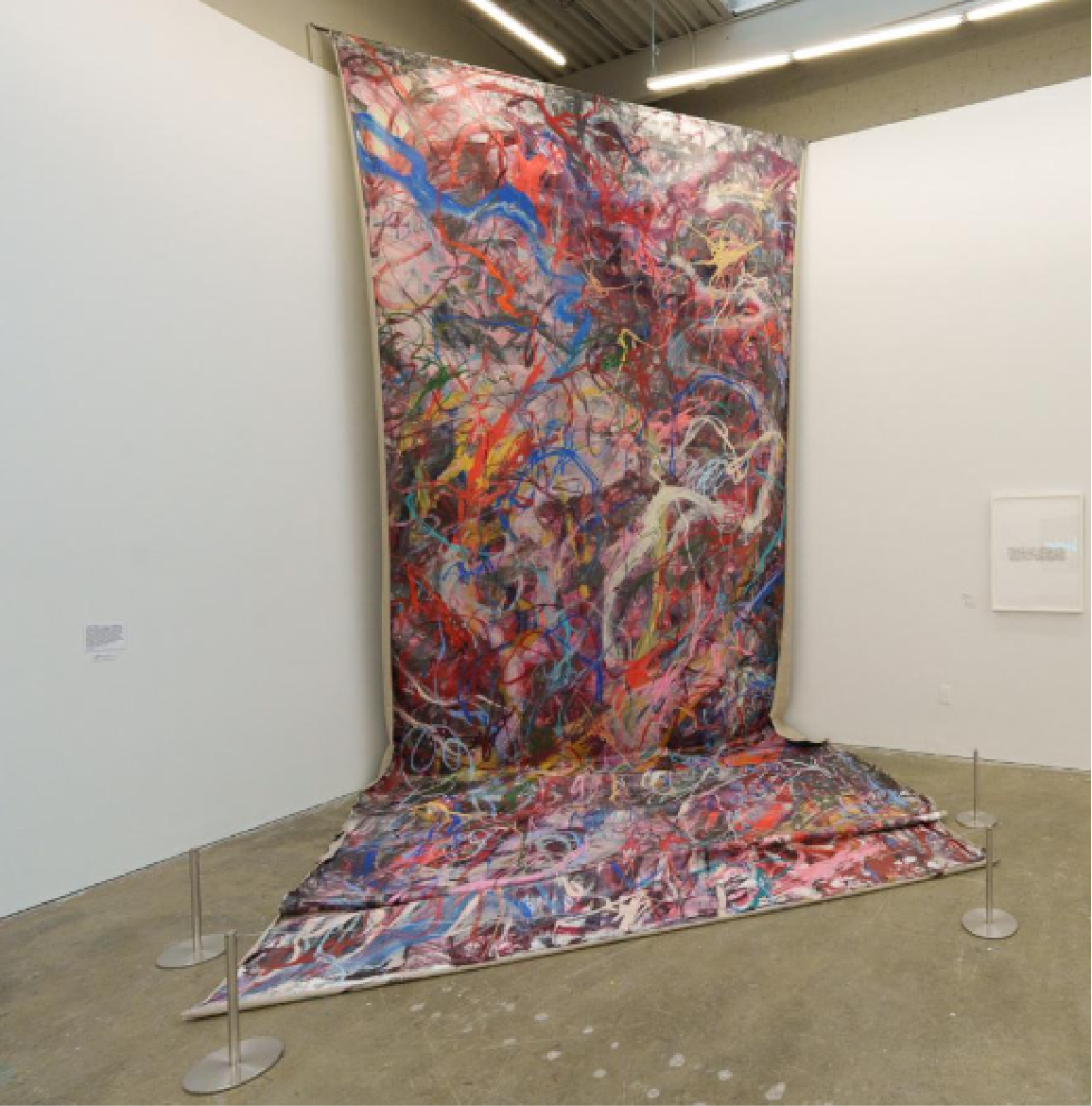
| | WHAT’S LEFT UNSAID? UNBOUND NARRATIVES | EMBODIES LANGUAGE AT ATLANTA CONTEMPORARY | | Installation by a'driane nieves | | |
Review by Ming Joi
Speechlessness is seldom experienced by a woman of words like me, but what is there to say when the artworks do all the talking / take the words out of my mouth / speak for the silent moments / phrase it in a way my tongue would never try? In Unbound Narratives: Embodied Language, a group show at Atlanta Contemporary, Bethany Collins, February James, a’driane nieves, and Gabi Madrid challenge the unsaid; instead, the inner thoughts, personal vocabularies, and living libraries of women artists are laid bare, stripped of form, and transformed into raw, fluid material.
Curator Karen Comer Lowe organized this exhibition as a complement to the GA Women’s to Watch Book Art Revolution, and both shows are on view at Atlanta Contemporary until May 17, 2026. In our age of threats to literacy and arts education, being bookish has become an aesthetic weapon; these shows employ visual artists as creative writers, encouraging close reading. Rightfully so, the literary and visual arts have long been complementary learning tools.
For Bethany Collins, words and language are her material. White Noise and Erasure series are early responsive works completed during Collins's graduate studies at Georgia State. An Alabama native now based in Chicago, Collins experienced the “often-awkward and sometimes-stilted conversations concerning race and racial identity in graduate critiques, studio visits, conversations among friends, or even inquiries from strangers,” during her time in the South. Her chalkboard drawings obscure the hateful messages into delicate abstractions that, from afar, read as a starry night sky or textural TV static. Collins controlled black and white palette reveals the gray areas between words, their uses, and meanings. The blackboard drawings, such as So What Are You? (White Noise) are joined by works on paper of Collins’ Erasure series. The series title explaining the process, Collins erased entries of Webster’s New World Dictionary, rubbing, chewing, and obscuring the definitions of “mixed” and other terms that denote race.
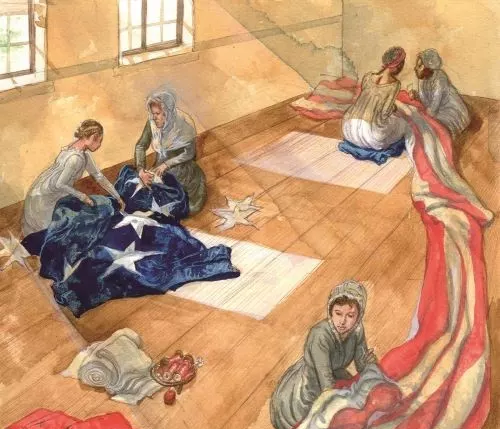
| | THE UNSEEN HAND | GRACE WISHER AND THE FLAG'S HIDDEN STORY | | An artist's depiction of the sewing of the Star Spangled Banner. Grace Wisher is one of the girls in the upper right. | | |
Before the Star-Spangled Banner became America's most recognizable symbol, a ten-year-old free Black girl named Grace Wisher helped stitch it into existence. Apprenticed to Baltimore flag-maker Mary Pickersgill around 1810, Grace spent six weeks sewing the flag that would later inspire Francis Scott Key to write the national anthem. When the story was told, however, Pickersgill, her daughter, and her nieces received the credit. Grace — poor, Black, and a girl — was erased entirely.
Historians Daina Berry and Kali Gross have written that Black girls and women like Grace "literally stitched themselves into our nation's history," even as mainstream accounts continuously overlooked their contributions. Grace had three strikes against her in a society that marginalized Black women and girls to what scholar Treva Lindsey calls the "margins of the margins." Her labor was essential. Her name was not considered worth remembering.
That erasure is precisely what makes Pigment International's exhibition Glory! Glory! so urgent and so timely. The exhibition, which concluded its celebrated run at Chicago's Zhou B Art Center in March 2026, is now traveling across Illinois — carrying its message to new communities and audiences statewide. Featuring works by Paul Branton, Chris Clark, Nnaemeka Ekwelum, Candace Hunter, Reggie McFly, Nate Austin, and Robert Lewis Clark, the show reclaims the American flag as a site of Black testimony, protest, and public memory.
Where history failed to record Grace Wisher's hand in this national symbol, these six contemporary Black artists refuse the same silence — completing what was left undone.
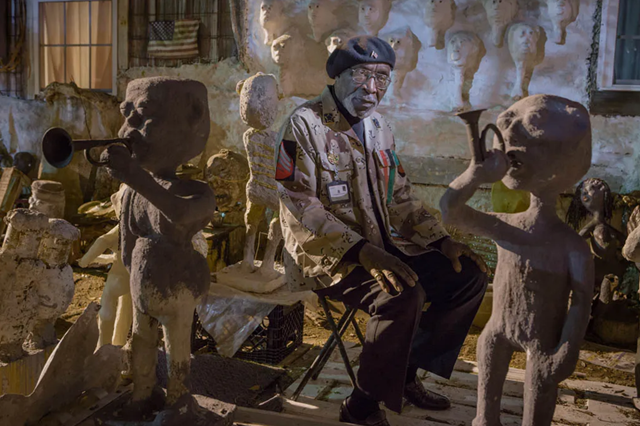
| | Dr. Charles Smith's Monumental is at Intuit Art Museum | | |
Intuit Art Museum (IAM) opens its latest exhibition, Monumental: Sculpture by Dr. Charles Smith, with a free public celebration on Thursday, May 21, from 5–7 pm at 756 N. Milwaukee Avenue in Chicago's West Town neighborhood. The exhibition runs through April 22, 2027.
A Vietnam veteran and self-taught sculptor, Dr. Charles Smith (b. 1940) has dedicated his life's work to memorializing the people, histories, and cultural moments the mainstream art world has long overlooked. His practice — rooted in what curators define as "anti-monumentalism" — inverts and challenges the conventions of traditional monument-making, centering instead the lived experiences of Black Americans and Black communities across America.
From memorials to Hurricane Katrina victims and the Underground Railroad, to tributes honoring Chicago's first Black postmaster, Henry McGee, Smith's expansive body of work spans more than 600 sculptures. Curated by IAM Assistant Curator Christina Stavros, the exhibition draws from the museum's permanent collection alongside select loans, including several recently conserved works making their return to public view.
The opening celebration is free and open to all, with curators on hand and light refreshments served. Advance register here.
| |
LEADERSHIP SHIFT | LORI DIMUN JOINS DRIEHAUS FOUNDATION AS SENIOR PROGRAM DIRECTOR, ARTS AND CULTURE | | |
The Richard H. Driehaus Foundation has named Lori Dimun as its new Senior Program Director, Arts and Culture — a significant appointment for Chicago's philanthropic landscape. Dimun transitions from her role as President & CEO of the Harris Theater for Music and Dance, where she spent fifteen years leading the storied venue through key positions including COO before ascending to its top post in 2020.
With assets exceeding $450 million, the Driehaus Foundation is among Chicago's most influential philanthropic organizations, providing general operating support and capacity-building grants to arts service organizations citywide. The Foundation's arts and culture portfolio focuses not on programming, but on infrastructure — the management consultation, administrative training, and operational backbone that keeps creative organizations financially viable and mission-driven.
Dimun brings an insider's understanding of nonprofit arts sustainability, having navigated the realities of audience development, board engagement, and donor cultivation at both the Harris Theater and Steppenwolf Theatre Company, where she began her career in 2004.
"I am excited to work alongside the Driehaus Foundation team to help strengthen the conditions that enable Chicago's cultural ecosystem to flourish," Dimun said.
| | |
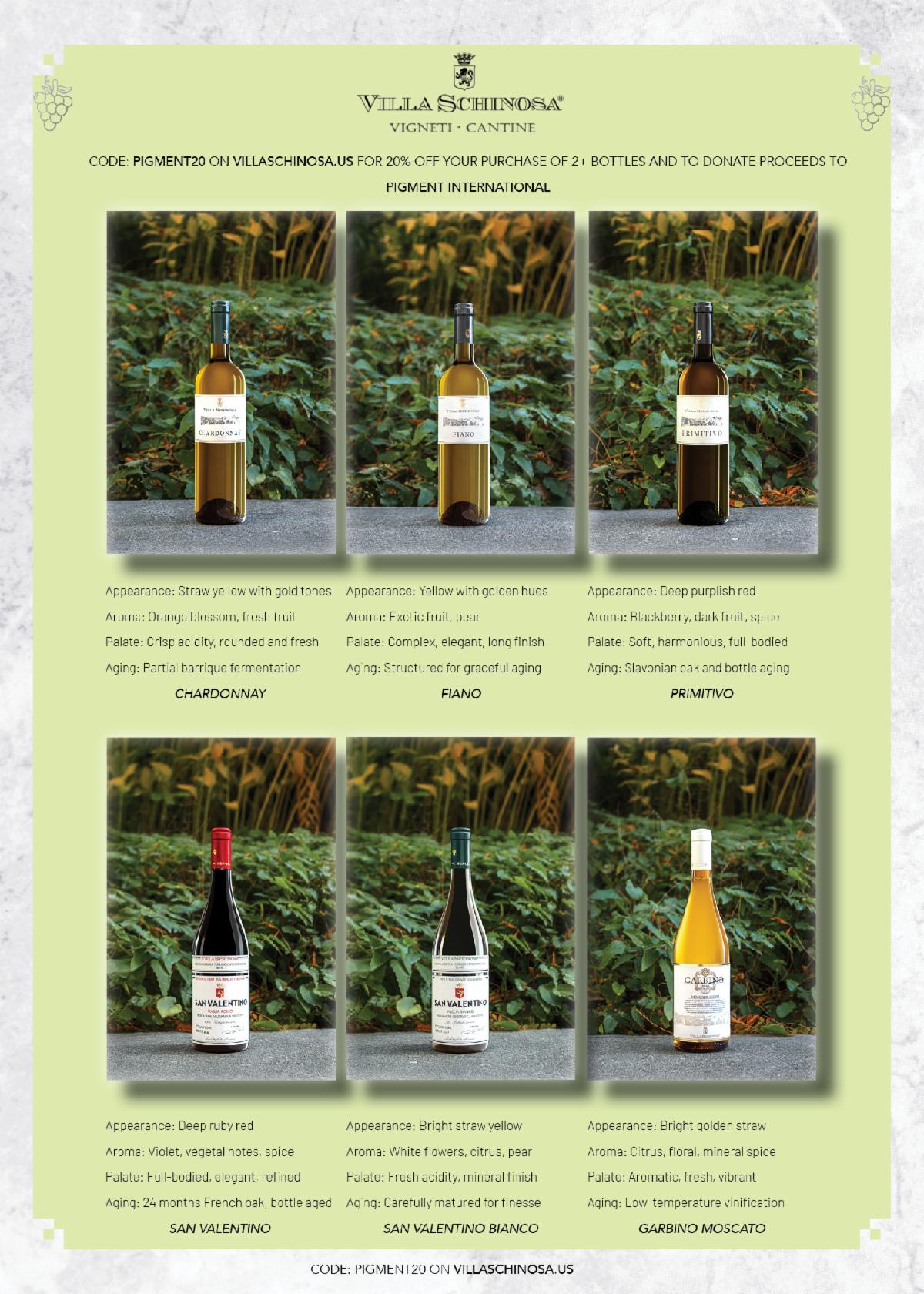
BRING THIS ITALIAN HOME
Order select Villa Schnosa wines in AprIl using Promo Code "PIGMENT20" and members receive 20% off purchases of 2+ bottles. 10% of orders during April will be donated to Pigment. International "
| | | | |