Volume 65, Issue 4 | April 15, 2024 | |
- EVENTS & ANNOUNCEMENTS - | |
|
Book Your Room for ACE 2025 Now!
The Michigan Pharmacists Association closed the books on its final Annual Convention & Exposition (ACE) at the Detroit Marriott at the Renaissance Center in February after a 15-year run in the Motor City.
ACE will move around for the next few years, starting with the 2025 edition April 11-13, 2025, at the Grand Traverse Resort and Spa just outside of Traverse City! Information on registration, exhibitors and sponsorship will become available later this year, but it's not too early to block off your calendars as pharmacy's biggest continuing education event in Michigan takes its show on the road. You can book your room now by clicking the button below.
We can't wait to see you "Up North" in 2025!
| |
|
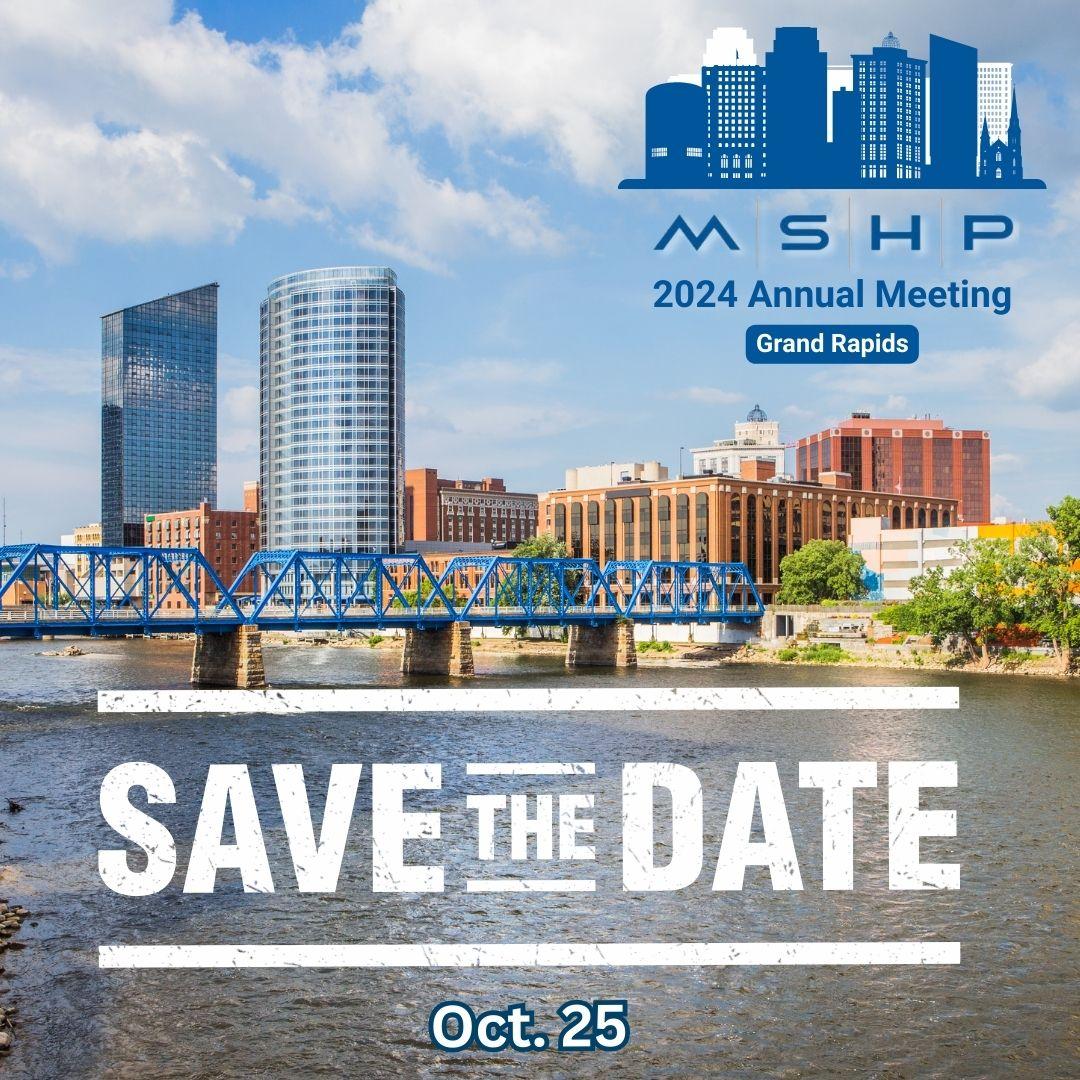
MSHP Annual Meeting Oct. 25 in Grand Rapids
Join the Michigan Society of Health-System Pharmacists (MSHP) for its 2024 Annual Meeting at the Sheraton Grand Rapids Airport Hotel! The MSHP Annual Meeting offers continuing education for pharmacists, residents and pharmacy technicians, along with a chance for exhibitors and sponsors to showcase products and network with MSHP members. Student pharmacists are highly encouraged to attend and participate in all activities.
Registration, exhibitor and sponsorship information will be available later this year. Stay tuned!
| |
|
How to Apply 'Less Not Loss' in Ambulatory Care
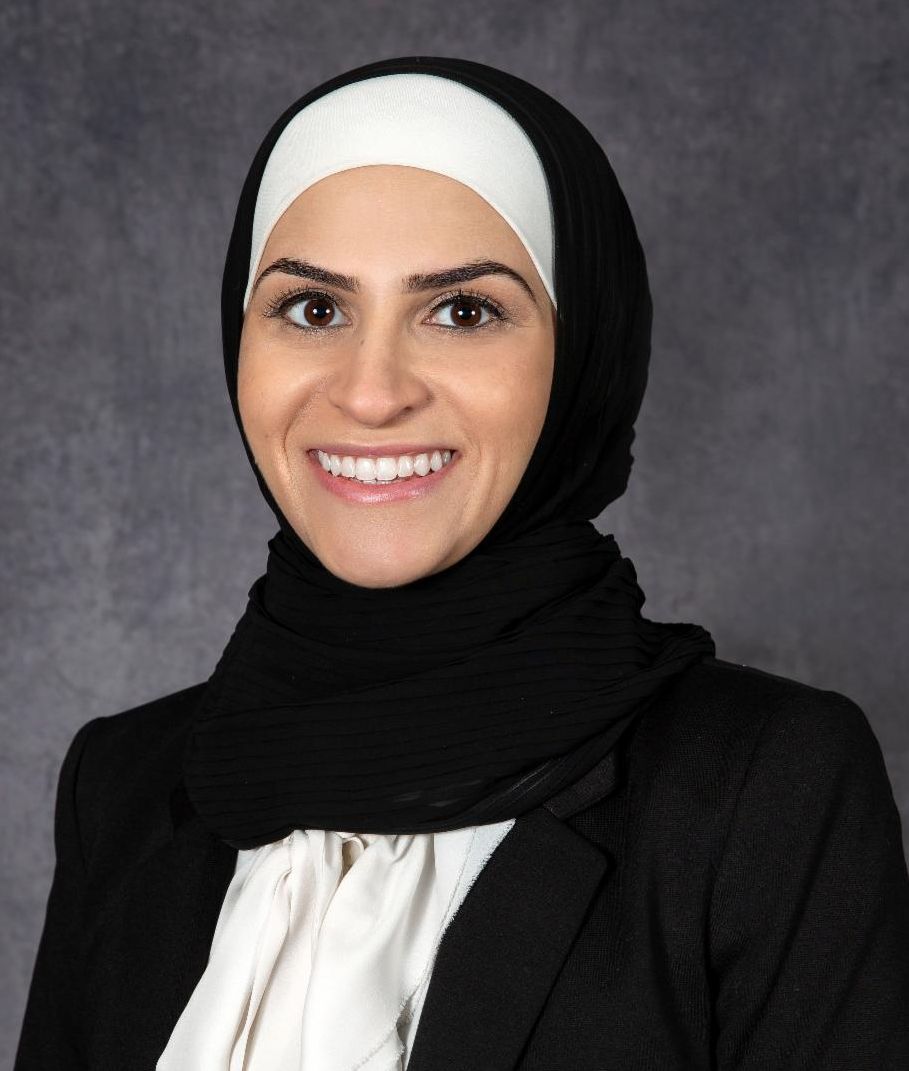
Nada Farhat, Pharm.D., BCPS, BCACP, Michigan Medicine,
MSHP Board of Directors
| |
|
When MSHP President Kyle Schmidt presented the organizational theme for this year, “Less, Not Loss,” I immediately started to think of strategies to apply this concept to ambulatory care practice. In ambulatory care settings, there are various administrative tasks that pharmacists initially take responsibility for while working to establish their practice site. For example, many pharmacists in this setting “manage” their own schedules – taking care of scheduling patients, rescheduling missed visits, and rearranging their schedule as needed for time off – when many of these tasks take time away that could be focused on clinical responsibilities. Over time, unfortunately, these responsibilities may become an inherent part of the pharmacist’s role when these tasks could otherwise be delegated to administrative or support personnel so the pharmacist can focus on direct patient care activities.
Beyond administrative tasks, we should continue to ensure that we are practicing at the top of our license. Although we have the skill set to “room” a patient, medication management should be the focus of our practice. Other members of the interprofessional care team, such as medical assistants, may be able to help with checking vital signs, managing patient requests for refills, and assisting with the approval of medications and supplies.
Our pharmacy extenders, including pharmacy technicians, can also play a vital role in the ambulatory care setting. Implementation of a pharmacy technician within a specialty clinic has been shown to improve the efficiency of prior authorization (PA) claims and has also demonstrated increased provider satisfaction.1 Furthermore, the results and approval rate of PA requests have been found to be similar between pharmacists and pharmacy technicians, further supporting their role in assisting with these requests.2 The role of pharmacy technicians may not need to be specific to an ambulatory care clinic but may be centralized and shared amongst other clinics and/or specialties within the health system.
In addition to pharmacy technicians, pharmacy students, interns and residents can also assist in various capacities in ambulatory care practice. For clinics that are more limited in terms of financial resources, pharmacy extenders can assist with the administrative or routine clinical tasks described above. Additionally, they may be able to assist with working up patients, completing medication reconciliation, and even conducting visits under pharmacist supervision. Over time, pilot projects demonstrating the impact of pharmacy extenders may support funding for a more permanent role in the ambulatory care setting.
While it is true that pharmacists wear many hats and can function quite autonomously, we must change the landscape for the advancement of the profession. More attention should be transitioned to clinical tasks that cannot be performed by other personnel and require the unique skill set of a pharmacist. As members of the interprofessional team, pharmacists work toward the same common goal and vision, which is to improve and advance patient care. If we continue to build practices that focus on top-of-license care, it may feel as if we are doing less, but ultimately, our patients and profession will be gaining more.
References
-
Jones EM, Francart SJ, Amerine LB. Embedding an Advanced Pharmacy Technician in an Adult Specialty Pulmonary Clinic to Complete Prior Authorizations Improves Efficiency and Provider Satisfaction. J Pharm Pract. 2022 Aug;35(4):551-558.
-
Carico R, et al. Evaluation of a Pharmacy Technician-Based Medication Prior Authorization Program. JAPhA 2021 Aug;61(4):425-431.
| |
|
The Ambulatory Care Survival Guide Spotlight
By Andrew Bush. Pharm.D., PGY1 pharmacy resident, Bronson Methodist Hospital
The MSHP Ambulatory Care Committee has created a “survival guide” that encapsulates key resources to help pharmacists establish or expand an ambulatory care practice. Foundational ambulatory care practice items and Michigan-specific resources were included from a variety of pharmacists who practice throughout Michigan. This guide includes information spanning topics of legal implications, required credentialing and privileging and much more.
For pharmacists looking to start an ambulatory care pharmacy practice and gain buy-in from leadership, the survival guide has a plethora of resources regarding billing practices. These include potential billing opportunities in primary and specialty care, in addition to specific billing codes and reimbursement requirements. Another section that may be appealing is the expansion of pharmacy practice, which provides suggestions for how an ambulatory care pharmacist can start making a difference within a multidisciplinary team. This includes expanding their involvement in antimicrobial stewardship, performing comprehensive medication management visits, or transitioning to provide more virtual support at their practice sites.
This guide is ideal for new practitioners, including pharmacy residents, in the ambulatory care pharmacy space who are seeking resources to help establish their roles in their practice settings. For example, the guide goes in-depth on a collaborative practice agreement, the legal requirements involved, and suggestions of what to include. Collaborative practice agreements are one of the many ways that pharmacists have been able to advance their roles within the ambulatory care space by building rapport with providers and having the flexibility to practice independently in order to more efficiently care for patients.
Additionally, the survival guide is also beneficial for established ambulatory care pharmacists. The pharmacist quality metrics and dashboard development section provides resources on how to optimize the process of metric collection so that data can be provided to leadership personnel, stakeholders, the interprofessional team, and more.
There are regular updates to this survival guide that will help ambulatory care pharmacists continue to improve their practice. Future goals include additional resources focused on social determinants of health and health-related social needs. The committee is open to suggestions for additional future topics to include in the survival guide.
Please use the following links to visit the Ambulatory Care Pharmacy Practice website and the survival guide:
| |
|
MSHP at ACE 2024
By Josh Matson
Pharm.D. candidate, Ferris State University
The Michigan Pharmacists Association (MPA) Annual Convention & Exposition (ACE) was held Feb. 23-25 at the Detroit Marriott at the Renaissance Center this year. It was a fantastic event with live continuing education programming, along with events and opportunities to engage with exhibitors, fellow pharmacy professionals and others with connections to the pharmacy world. This year’s ACE was another opportunity to celebrate the accomplishments and triumphs of colleagues and discuss the challenges facing the profession.
The Michigan Society of Health-System Pharmacists (MSHP) once again sponsored continuing education programs during the convention. On Feb. 23, Amber Lanae Martirosov, Pharm.D., an associate clinical professor at Wayne State University, and Melissa Pleva, Pharm.D., a pharmacy assistant director of the specialty clinical service at the University of Michigan Health, presented “Biological Therapies: Improving Patient Outcomes Through Collaborative Care Models in Ambulatory and Specialty Pharmacy Practices.” Pharmacists and pharmacy technicians learned about the roles of specialty pharmacy and the potential collaboration models that can be set up between specialty pharmacies and ambulatory care pharmacy services to ensure the best outcomes for patient medication clinical assessment, education and access.
A panel of current pharmacy residents came together on Feb. 24 to present on current and relevant medications and practice updates for pharmacists and technicians in a session titled “Clinical Pearls for Pharmacy 2024.” Sarah Jaszcz, PGY2 emergency medicine resident at Detroit Receiving Hospital, discussed when it might be appropriate in treatment regimens to use subcutaneous insulin in diabetic ketoacidosis. Allison Johnson, PGY2 infectious diseases pharmacy resident at Detroit Receiving Hospital, presented the recent breakpoints for antibiotics released by the Clinical and Laboratory Standards Institute and how that may impact antibiotic susceptibility reports. Allison Spitery, PGY2 ambulatory care pharmacy resident at Henry Ford Health, provided information on the use of biologic therapies in asthma and COPD, including specific inflammation targets and clinical trials related to their use. Peter Puskar, PGY1 pharmacy practice resident at Henry Ford Wyandotte Hospital, shared the recent advancements and landmark studies involving parenteral iron supplementation in heart failure.
As part of an annual tradition, MSHP hosted the Student Luncheon on Feb. 24. A group of MSHP members joined student attendees to engage in conversations about pharmacy practice areas, tips for students to prepare for their third and fourth years of pharmacy school, and other topics. We are grateful to all of the pharmacists who volunteered their time as table facilitators for this event!
Throughout the convention, MSHP was positively represented by members who attended. Organization members provided educational programming as speakers, were given awards, participated in the House of Delegates and more. We would like to thank everyone who attended another successful convention! Be sure to keep an eye out for announcements regarding the MSHP annual meeting on Oct. 25 in Grand Rapids and mark your calendars for next year’s ACE, which will be held April 11-13, 2025, in Traverse City!
| |
|
Disparities in Kidney Transplantation
Among Minority Populations
Champa Danappanavar, Pharm.D. candidate,
University of Michigan College of Pharmacy
The pharmacy profession encompasses potent scientific acumen, enabling pharmacists to manage therapies for complex drug regimens and design medication regimens for a plethora of disease states. However, pharmacists hold another less emphasized, yet equally as important responsibility beyond their scientific scope. As one of the most trusted professions and most accessible health care providers, pharmacists hold the duty of identifying non-medical factors that influence patients' access to resources and subsequent health outcomes.1,2
The term "social determinants of health" (SDoH) was coined by renowned health inequality experts Michael Marmot and Richard Wilkinson, who recognized a direct, undeniable link between lower socioeconomic status and deteriorating health outcomes.3 Their research showed that factors such as demographics, transportation, health literacy, and economic policies significantly impacted the health outcomes of diverse populations. A notable topic in the study of SDoH effects on health outcomes is minority populations’ probability of receiving a kidney transplant. Racial disparities exist in kidney transplant populations and pharmacists can play a proactive role in reducing these inequities.
In the United States, the pathway to organ transplantation is complex – hindered by barriers that restrict access – and fraught with challenges that some may never overcome. Patients must be equipped with resources and support to navigate through a sea of information and diagnostic tests, or risk drowning before even coming close to finding a donor match. Unfortunately, the realities of this process are much more difficult for minorities.
Minority groups are less likely to have health insurance and are consequently less likely to visit their physicians for annual check-ups.4 The lack of regular care often leads to minorities discovering they are living with advanced-stage conditions, such as kidney disease when it is much more difficult to treat. Due to significantly higher rates of heart failure, diabetes, and hypertension in these populations, their chance of having organ failure is higher than in white individuals. Black Americans are four times more likely than their white counterparts to need a kidney transplant, yet they are four times less likely to receive one.2 These disparities are also evident in other minority populations.4
Pharmacists are often the most accessible healthcare professionals for uninsured and underinsured patients, as no appointment or insurance is required to consult with them. As pharmacy professionals, we are uniquely positioned to play a paramount role in preventive care. For instance, when patients are picking up their hypertension medications, pharmacists should inquire about their blood pressure and family history of hypertension and organ failure. Pharmacists should take the time to educate patients on how uncontrolled blood pressure can lead to kidney failure and offer monitoring services under a collaborative practice agreement. Additionally, through motivational interviewing, pharmacists can play a pivotal role in boosting medication adherence to prevent organ failure and provide personalized recommendations for healthier lifestyle choices.
For individuals undergoing the kidney transplant process, pharmacists should assist in translating medical jargon into patient-friendly language, particularly for patients with lower health literacy levels. Additionally, pharmacists should help patients access affordable transportation options to ensure they can attend crucial hospital visits and remain engaged in the transplant process. With these services, pharmacists will build trust with patients and better equip them to navigate the complexities of receiving a transplant.
The profound gap in health care access for minorities due to SDoH reflects a broader systemic issue within our society. Pharmacists' multifaceted role in patient care can help bridge this gap by providing preventative counseling, translational tools and essential resources. In continuing to be patient advocates, pharmacists can tailor their support and play a critical role in reducing disparities in kidney transplant access and outcomes among minority populations.
References
-
Megan Brenan and Jeffrey M. Jones. (2024, February 14). Ethics ratings of nearly all professions down in U.S. Gallup.com. https://news.gallup.com/poll/608903/ethics-ratings-nearly-professions-down.aspx
-
Ng, Y.-H., Pankratz, V. S., Leyva, Y., Ford, C. G., Pleis, J. R., Kendall, K., Croswell, E., Dew, M. A., Shapiro, R., Switzer, G. E., Unruh, M. L., & Myaskovsky, L. (2019). Does racial disparity in kidney transplant waitlisting persist after accounting for Social Determinants of Health? National Library of Medicine, 104(7), 1445–1455. https://doi.org/10.1097/tp.0000000000003002
-
Osmick, M. J., & Wilson, M. (2020). Social Determinants of health—relevant history, a call to action, an organization’s transformational story, and what can employers do? American Journal of Health Promotion, 34(2), 219–224. https://doi.org/10.1177/0890117119896122d
-
Race, Ethnicity, & Kidney Disease. National Kidney Foundation. (2023, January 13). https://www.kidney.org/atoz/content/minorities-KD
| |
Southeastern Michigan Society of Health-System Pharmacists | |
|
By Farzad Daneshvar, Pharm.D., BCPS; SMSHP president-elect
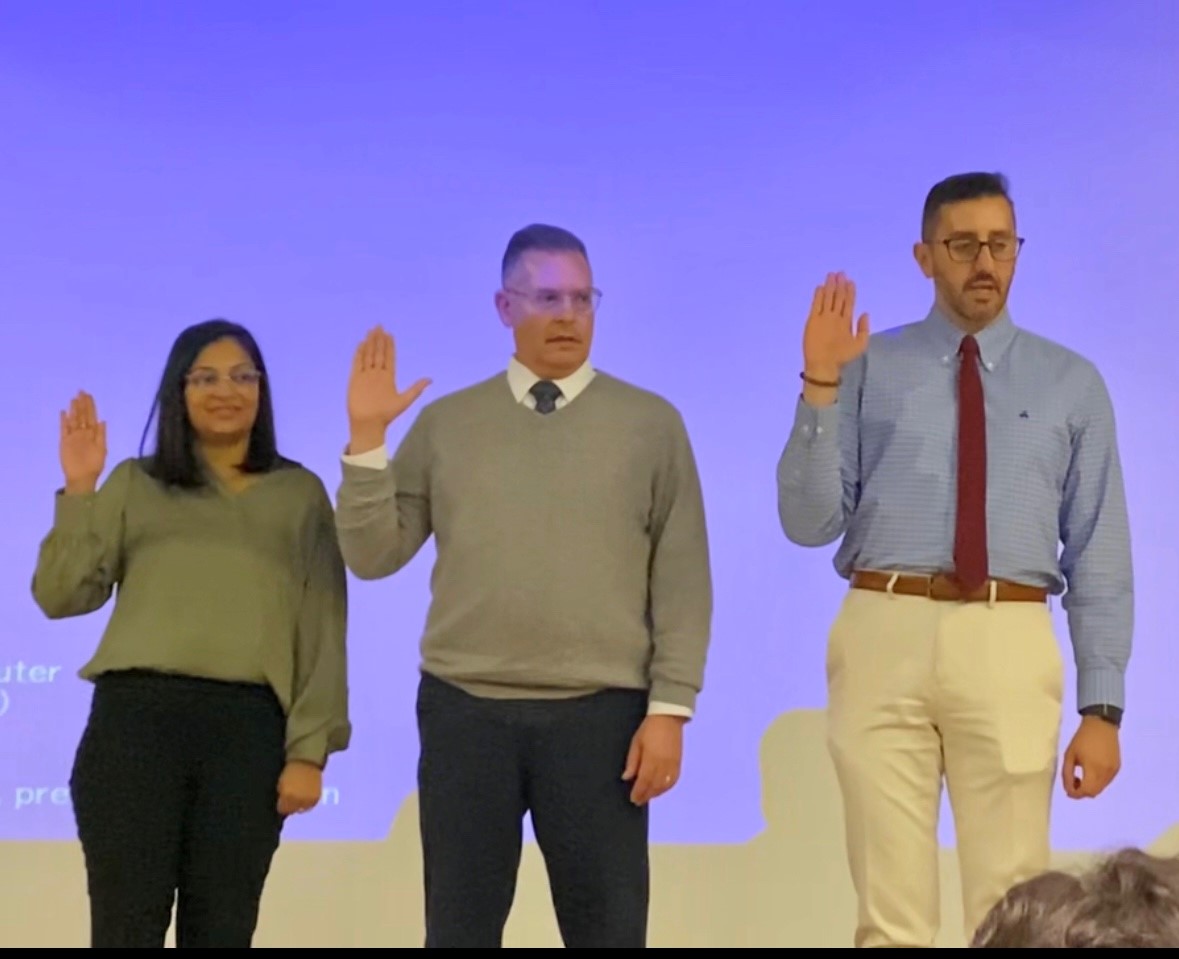
The Southeastern Michigan Society of Health-System Pharmacists (SMSHP) had a strong finish to 2023. I had the honor of receiving the Community Service Award in addition to being installed as the president-elect for 2024 during our annual awards banquet in November.
| Sweta Patel, Pharm.D., CSP, left, Richard Valone, Pharm.D., BCPS, center, and Farzad Daneshvar, Pharm.D., BCPS, right, were installed as SMSHP's newly-elected executive board members during the annual awards banquet Nov. 8, 2023. | |
|
The newly installed SMSHP board had a successful and productive leadership and planning retreat in December. The society’s main priority in 2024 is to increase membership by 10%. To achieve this goal, several strategies have been discussed. First, the board is exploring opportunities to provide hybrid continuing education (CE) programs in an effort to offer convenience and flexibility to general members.
Secondly, a survey was conducted to inquire about additional types of events and offerings deemed valuable to our members. It was discovered that in addition to targeted high-quality CE programs, members are interested in services aimed toward professional growth and development, such as resume reviews and mentorship.
To expand networking opportunities, a social mixer event is being planned for this summer. Lastly, the board has aimed to increase our online and social media presence.
We’ve had a strong start to our CE programming this year. On Jan. 10, Amber Lanae Martirosov presented “Updates in Interstitial Lung Disease” at the Italian American Banquet Center in Livonia. A great and informative discussion on “An Introductory Guide to Understanding and Applying Pharmacogenomic Testing in Patient Care” from Amy Pasternak took place at the same venue on Feb. 14. On March 13, we heard Nour Kadouh, our Exemplary Resident CE Award recipient, present “Breaking the Cycle of Trauma: Enhancing Pharmacy Learner Psychological Safety” at the Gazebo Banquet Center in Warren.
| 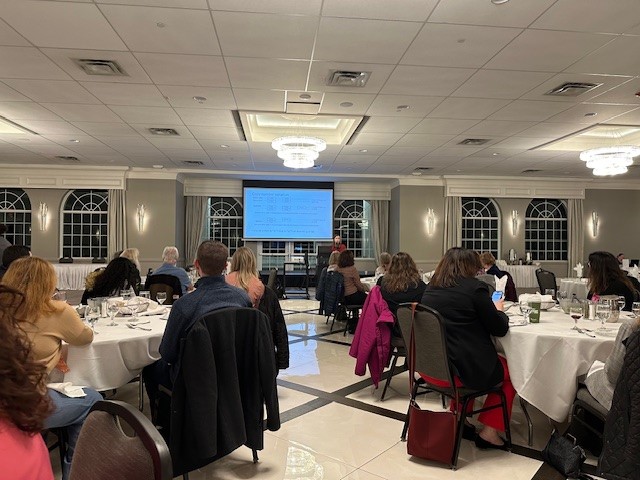 | |
Amy Pasternak, Pharm.D., BCPS, at podium, delivered a CE on “An Introductory Guide to Understanding and Applying Pharmacogenomic Testing in Patient Care” Feb. 14. | |
|
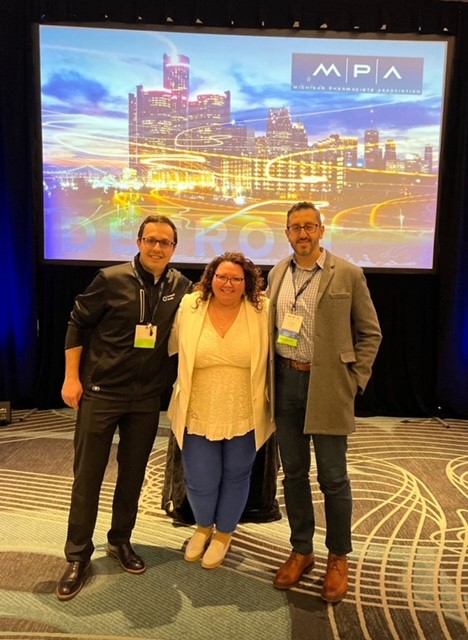
Additionally, four board members were proud to represent SMSHP at the MPA House of Delegates Feb. 25! President Jessica Jones, Pharm.D., BCPS, BCCCP; the newly-elected MPA Speaker of the House Dmitriy Martirosov, Pharm.D., BCIDP; Denise Propes, CPhT, and I enjoyed contributing to the discussion with our fellow delegates and partner organizations in voting to support initiatives that continue to advance the profession of pharmacy forward in the state of Michigan.
If you are a member who would like to get more involved, please reach out to SMSHP President Jessica Jones or let us know via our website, smshp.org.
| Dmitriy Martirosov, Pharm.D., BCIDP (left); Jessica Jones, Pharm.D., BCPS, BCCCP (center), Farzad Daneshvar, Pharm.D., BCPS (right), Denise Propes, CPhT, represented SMSHP at the MPA House of Delegates session on Feb. 25, 2024. | |
|
OFFICERS
PRESIDENT | Kyle Schmidt | 616-685-6675 | Mercy Health St. Mary's, Grand Rapids
PRESIDENT-ELECT | Stacy Brousseau | 269-341-7407 | Bronson Methodist Hospital, Kalamazoo
IMMEDIATE PAST PRESIDENT | Michelle Dehoorne | 313-343-6381 | Ascension, Detroit
TREASURER | Marc Guzzardo | 810-606-6095 | Ascension, Detroit
EXECUTIVE VICE PRESIDENT | Edward Szandzik | 313-587-6279 | Detroit
DIRECTORS
Diana Kostoff | 313-725-7925 | Henry Ford, Detroit
Nada Farhat | nmhammou@med.umich.edu | Michigan Medicine, Ann Arbor
Julie Schmidt | 269-341-7999 | Bronson Methodist Hospital, Kalamazoo
Amber Lanae Martirosov | 313-916-3494 | Wayne State University
REGIONAL SOCIETY REPRESENTATIVES
CENTRAL | Tim Ekola | 734-845-3418 | VA Ann Arbor Healthcare System
NORTHERN | Miranda Maitland | mirandapmaitland@gmail.com | My Michigan Medical Center, Sault Ste. Marie
SOUTHEASTERN | Farzad Daneshvar | 248-910-2222 | AstraZeneca
WESTERN | Ben Pontefract | bpontefract@gmail.com | Ferris State University, Big Rapids
MANAGING EDITOR | Ryan Weiss | (517) 377-0232 | Michigan Pharmacists Association, Lansing
| |
The MSHP Monitor is a publication of the Michigan Society of Health-System Pharmacists, published as a service to its members.
Michigan Society of Health-System Pharmacists - An Affiliated Chapter of the American Society of Health-System Pharmacists and a Practice Section of the Michigan Pharmacists Association
| | | | |