Volume 65, Issue 6 | June 15, 2024 | |
- EVENTS & ANNOUNCEMENTS - | |
MPA's Jesse Hogue Elected Chair of ASHP House of Delegates | |
|
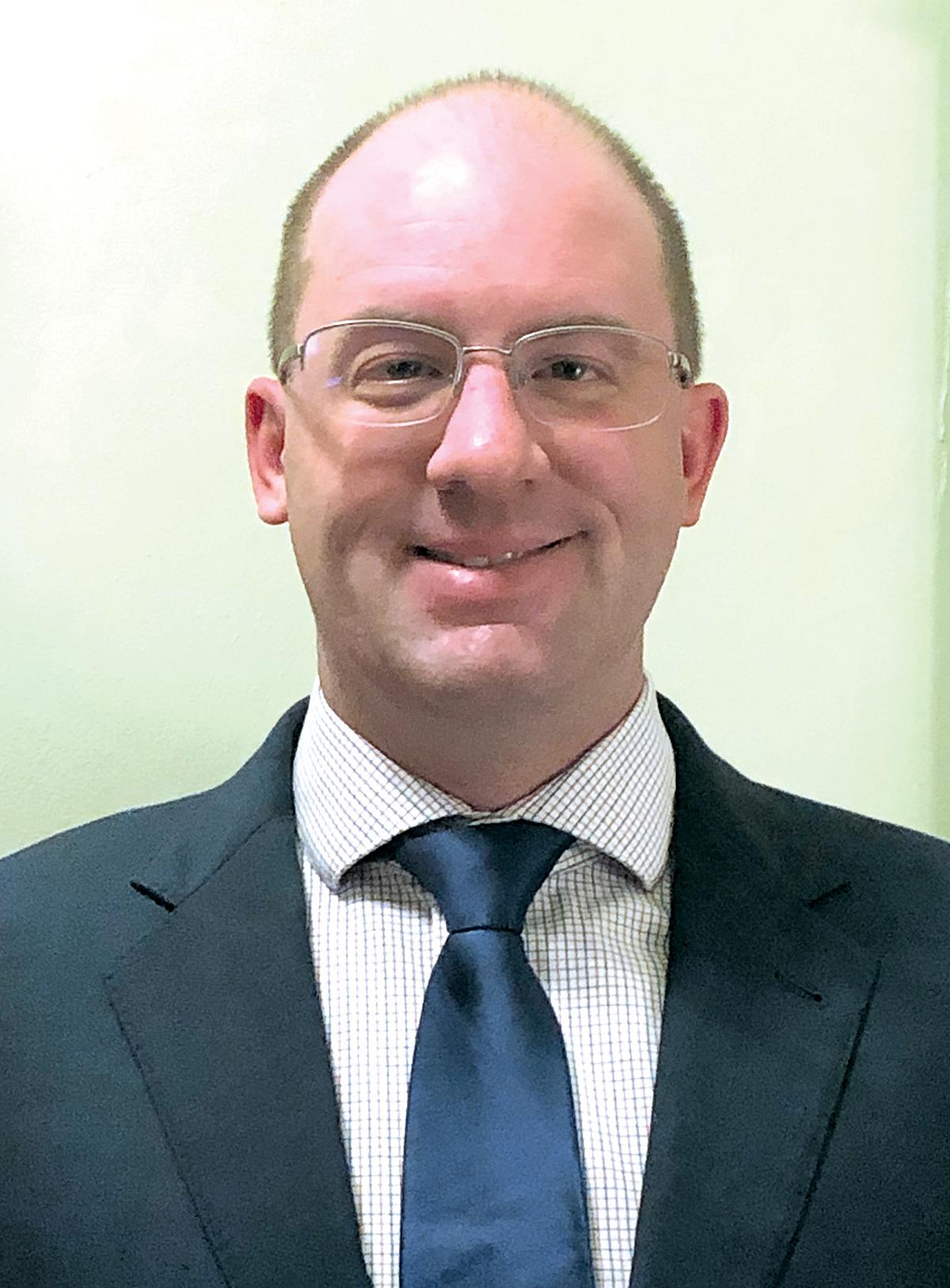
Congratulations to MPA member Jesse Hogue, who was elected and installed as chair of the American Society of Health-System Pharmacists' (ASHP) House of Delegates June 11!
Hogue's term as chair will expire in 2027. The chair presides at all meetings of the House of Delegates, is a member of the ASHP Board of Directors and represents the House of Delegates at all Board meetings. Specific responsibilities include:
-
Guides the House of Delegates in its interpretation of the ASHP governing documents, precedents, and Robert's Rules of Order as they relate to the business of the House.
- Advises the Board of Directors on issues and actions likely to be raised by the House of Delegates.
- Recognizes certified delegates or alternates appearing before the House as the enrolled and recognized delegate from each state.
- Conducts and presides at any open hearing, in conjunction with any House of Delegates session.
- Extends the privilege of the floor during the meeting of the House of Delegates.
- Conducts the order of business of the House of Delegates.
- Serves as liaison between the submitter of resolutions for consideration by the House and the Committee on Resolutions.
- Consults with the parliamentarian concerning current and pending procedural matters before the House.
- Serves as Board liaison to House caucuses.
- Prepares reports to the Board of Directors and the House on actions taken at meetings.
Hogue is the pharmacy education coordinator, the PGY-1 pharmacy residency director and an emergency department pharmacist at Bronson Methodist Hospital in Kalamazoo. He currently serves on the ASHP Commission on Credentialing and has been a Michigan delegate to the ASHP House of Delegates for 15 years. He has previously served on the ASHP Council on Education and Workforce Development.
Hogue has been an outstanding member of MPA, having served as president, treasurer, and executive board member for the Michigan Society of Health-System Pharmacists (MSHP). He also served on the MPA Executive Board and in the MPA House of Delegates. He is a Fellow of MPA and a member of the MPA Hall of Honor. Other accomplishments include the MSHP Pharmacist of the Year, the MSHP Joseph A. Oddis Leadership Award and the MPA Distinguished Young Pharmacist of the Year Award.
| |
|
Register for the MSHP Annual Meeting Oct. 25 in Grand Rapids
Join the Michigan Society of Health-System Pharmacists (MSHP) for its 2024 Annual Meeting at the Sheraton Grand Rapids Airport Hotel! The MSHP Annual Meeting offers continuing education for pharmacists, residents and pharmacy technicians, along with a chance for exhibitors and sponsors to showcase products and network with MSHP members. Student pharmacists are highly encouraged to attend and participate in all activities.
Registration is available now! Click the buttons below to get started.
| |
|
Book Your Room for ACE 2025 Now!
Start planning for the Michigan Pharmacists Association (MPA) 2025 Annual Convention & Exposition April 11-13, 2025, at the Grand Traverse Resort and Spa just outside of Traverse City! Information on registration, exhibitors and sponsorship will become available later this year, but it's not too early to block off your calendars as pharmacy's biggest continuing education event in Michigan takes its show on the road. You can book your room now by clicking the button below.
MPA is encouraging guests to make ACE 2025 their Michigan "staycation." Whether it's a round of golf or exploring the sights and sounds of the beautiful Traverse City area, there are limitless activities at ACE 2025.
| |
|
Less, Not Loss: Deprescribing
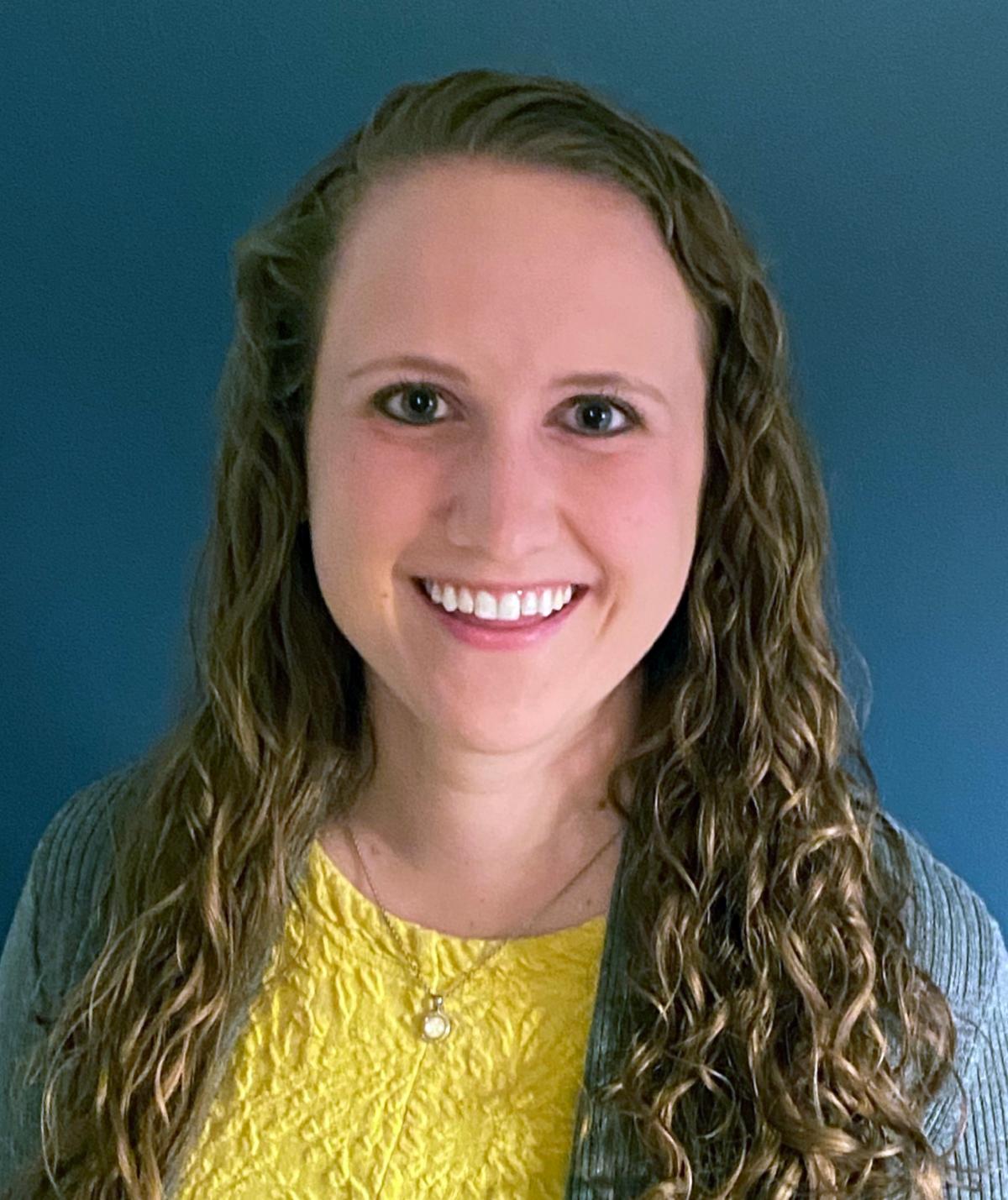
Julie Schmidt, Pharm.D., BCPS; cardiology clinical pharmacist, Bronson Methodist Hospital, Kalamazoo; MSHP director
| |
|
When I first heard this year’s organizational theme “Less, Not Loss,” I started thinking not only about how I can apply it to our organizational goals, but also how I can apply it in my day-to-day practice as a pharmacist. One area that came to my mind was deprescribing. In general, approximately 30% of Americans 65 or older take more than five prescription medications. This does not include supplements or over-the-counter medications. I often find my patients take multiple supplements and/or OTC products as well. As pharmacists, we are in a unique position to evaluate proper medication use and make sure each medication is safe, effective and essential for our patients.
Deprescribing is “a set of interventions to identify inappropriate or unnecessary medications and discontinue them.” Deprescribing often leads not only to decreased pill burden, but also to fewer falls, improvement in cognition and even improved survival. The American Academy of Family Physicians states that collaborative practice agreements with pharmacists can help facilitate multiple parts of the deprescribing process. Deprescribing is generally found to have four main parts:
-
Review all current medications. The first step starts with knowing exactly what the patient is taking. Patients should be instructed to bring all prescription medications, as well as OTC and supplements, to an appointment.
-
Identify any inappropriate, unnecessary, or harmful medications. With the patient, review all medications they are currently taking. This is the time to consider which medications are beneficial and which may be causing harm. Also consider what medications may be inappropriate (such as Beers list), as well as those that lack an indication or efficacy. Consider stopping any medications that are causing a negative side effect. Common “targets” of deprescribing include aspirin, NSAIDs/COX-2 inhibitors, PPIs, benzodiazepines, antipsychotics and antihypertensives.
-
Plan deprescribing with the patient. Patients may often resist stopping medications, especially medications they have been taking for a long time. Stopping a medication may cause a patient to be concerned their condition will worsen, or that it will contradict the original prescriber. Consider stopping one medication at a time or tapering medications if necessary. Assure patients they will be monitored for worsening conditions or potential withdrawal effects. Explain the potential adverse effects of keeping their medication(s) as well as the potential benefits of deprescribing.
-
Regularly re-review medications. The process of deprescribing needs to be monitored closely given that some medications may cause withdrawal symptoms or need to be tapered. Deprescribing is not just a one-time deal – many patients see multiple providers and medications can accumulate quickly. All medications should be reviewed at least on a yearly basis.
While we focus on our organizational theme of “Less, Not Loss” this year, I would challenge all of us not only to focus on the essentials for our organization, but also to utilize only essential medications for our patients.
References
-
American Academy of Family Physicians. “Deprescribing Unnecessary Medications: A Four-Part Process.” https://www.aafp.org/pubs/fpm/issues/2018/0500/p28.html
| |
|
Health-System Owned Specialty Pharmacies Improve Continuity of Care for Patients on Oral Anticancer Medications
By Amanda Sumerix, PGY-1 resident, impatient pharmacy,
Bronson Methodist Hospital
For patients prescribed oral anti-cancer medications (OAMs), adherence is critical to achieving adequate response to the therapy. However, the convenience of taking OAMs in the home may come at the expense of adherence. In 2010, a study on adherence to aromatase inhibitors found that 1 in 4 patients were non-adherent to their OAM one year after initiating therapy.1 Other studies have shown that severity of symptoms, complexity of OAM regimen and duration of treatment can all impact adherence.2-8 The benefit of receiving infusions in clinic is that health care providers assume responsibility for safe and effective administration and are immediately available to respond to unwanted side effects of treatment. Patients taking OAMs assume the burden of learning how to properly store and manage their OAM regimen in addition to managing the symptoms and progression of their cancer and other comorbidities. With more responsibilities and a lack of immediate access to healthcare professionals, patients rely on pharmacists to help manage OAM therapies at home.
Because OAMs are specialty medications, these agents are typically managed by a pharmacist working for a specialty pharmacy. Studies have shown that patients who use a specialty pharmacy owned by the same health system as their oncologist are initiated on treatment sooner and have better adherence to OAMs than patients who fill OAMs with external specialty pharmacies.8-10 One way pharmacists at health system-owned specialty pharmacies (HSOSPs) improve adherence is by communicating with providers via the shared electronic health record (EHR). A 2020 American Society of Health-System Pharmacists survey of HSOSPs found that over 90% of HSOSP pharmacists document patient interactions directly in the EHR, contributing to smoother transitions and continuity of care.11
This same study found that two-thirds of HSOSP pharmacists are involved in treatment decisions before therapy is prescribed, demonstrating the high level of interdisciplinary cooperation within these health systems. Additionally, many HSOSPs offer on-call pharmacist consultation, which provides an extra layer of support for patients trying to manage side effects at home, helping patients adhere to OAM therapy.11
Pharmacists at HSOSPs are not the only drivers of improved adherence. Many HSOSP models include in-clinic liaison support. These liaisons are typically pharmacy technicians embedded in oncology clinics who are available to assist patients with access and initiation of OAMs. Liaisons have several responsibilities including insurance benefit confirmation, initiation of prior authorizations and acquisition of patient financial assistance.
High out-of-pocket costs is one of the major barriers to adherence that patients on OAMs face. A 2011 study found that patients with OAM copays greater than $30 a month were less likely to adhere to therapy.1 In addition to financial support, liaisons can also alert providers to drug shortages to further prevent delays of care. Having an in-clinic liaison relieves patients of some of the financial and logistic stress associated with starting OAM therapy.
Continuity of care is central to HSOSP models. Adherence to OAMs is improved by communication and documentation in the shared health system EHR. Collaborative interdisciplinary decision making, patient access to a pharmacist during off hours and financial and logistic support from liaisons also improves adherence. Although patients prescribed OAMs continue to navigate many obstacles to adherence, HSOSP pharmacists and liaisons help mitigate these barriers and improve patient outcomes.
References
- Sedjo RL, Devine S. Predictors of non-adherence to aromatase inhibitors among commercially insured women with breast cancer. Breast Cancer Res Treat. 2011;125: 191–200.
- Partridge AH, Avorn J, Wang PS, et al. Adherence to therapy with oral antineoplastic agents. J of Nat Can Inst. 2002;94(9):652-661.
- Mathes T, Pieper D, Antoine SL, et al. Adherence influencing factors in patients taking oral anticancer agents: A systematic review. Can Epid. 2014;38:214-226.
- Berry DL, Blonquis TM, Hong F, et al. Self-reported adherence to oral cancer therapy: Relationships with symptom distress, depression, and personal characteristics. Dove Press. 2015;9:1587-1592.
- Muluneh B, Deal A, Alexander MD, et al. Patient perspectives on the barriers associated with education adherence to oral chemotherapy. J Onc Pharm Practice. 2018;24(2):98-109.
- Corter AL, Broom R, Porter D, et al. Predicting nonadherence to adjuvant endocrine therapy in women with early stage breast cancer. Psych Onc. 2018;27:2096-2103.
- Jacobs JM, Pensak NA, Sporn NJ. Treatment satisfaction and adherence to oral chemotherapy in patients with cancer. Amer Soc Clin Onc. 2017;13(5):327-485.
- McCabe CC, Barbee MS, Watson ML, et al. Comparison of rates of adherence to oral chemotherapy medications filled through an internal health-system specialty pharmacy vs external specialty pharmacies. Am J Health-Syst Pharm. 2020;77:1118-1127.
- Sheikh T, Wu C, Kalfayan N, Sakamoto L, Shane R. Health-system specialty pharmacy impact on oral chemotherapy outcomes. [Abstract]. Journal of Clinical Oncology. 2021;39(28):240-240.
- Academia EC, Meijias-De Jesus CM, Stevens JS, Jia LY, Yankama T, Patel C, Lee J. Adherence to oral oncolytics filled through an internal health-system specialty pharmacy compared with external specialty pharmacies. Journal of Managed Care Specialty Pharmacy. 2021;27(10):1438-1446.
- Stubbings J, Pedersen CA, Low K, et al. ASHP national survey of health-system specialty pharmacy practice 2020. Am J Health-Syst Pharm. 2021;78:1765-1791.
| |
|
Alteplase vs. Tenecteplase – A Review of Recent Literature
By Alisia Chen, Pharm.D., PGY-2 solid organ transplant pharmacy resident; Hadil Shalan, Pharm.D., PGY-1 pharmacy practice resident; Anna Wu, Pharm.D., PGY-1 pharmacy practice resident, University of Michigan Health
Alteplase, a tissue plasminogen activator, has long been considered standard of care thrombolytic treatment for patients with acute ischemic stroke (AIS).1 Tenecteplase is a genetically-modified form of alteplase, which results in a longer half-life and increased fibrin specificity. The longer half-life allows for easier administration via intravenous (IV) push and increased fibrin specificity may potentially reduce the risk of hemorrhage.2
While the 2019 American Heart Association/American Stroke Association guidelines for the early management of patients with AIS acknowledge the use of tenecteplase for patients eligible for mechanical thrombectomy or those with minor neurological impairment, they have not endorsed it for use as standard therapy. Alteplase remains the only approved thrombolytic for treatment of AIS in the United States. Since the publication of these guidelines, recent clinical trials have shifted opinions, with many institutions adopting tenecteplase, reflecting its growing acceptance in clinical practice.
Figure 1: Comparison of Alteplase vs. Tenecteplase3-4
| |
|
The assessment of stroke severity is typically done using the National Institutes of Health Stroke Scale (NIHSS) and Modified Rankin Scale (mRS). NIHSS is a quantitative measure of stroke-related neurological deficit, while mRS assesses the degree of disability or dependence in daily activities after a stroke.
Figure 2: National Institutes of Health Stroke Scale5
| |
Figure 3: Modified Rankin Scale (mRS)6 | |
|
The AcT trial was a multi-center, open label, randomized, controlled, non-inferiority trial conducted at 22 primary and comprehensive stroke centers across Canada, which compared intravenous tenecteplase with alteplase for treating AIS. Patients were given either alteplase 0.9 mg/kg or tenecteplase 0.25 mg/kg. The primary outcome was the proportion of patients with a score of 0 to 1 on the mRS at 90 days, up to 120 days. The trial found that tenecteplase was non-inferior to alteplase in achieving functional independence (mRS of 0-1) 90 to 120 days after treatment. Both drugs showed similar safety outcomes, including rates of symptomatic intracerebral hemorrhage and 90-day mortality. This suggests that tenecteplase, with its simpler administration method, could be a viable alternative to alteplase for thrombolysis in acute ischemic stroke.7
In the prespecified secondary analysis of the AcT trial, the focus was on patients with large vessel occlusion (LVO) stroke. This subgroup analysis included patients with intracranial internal carotid artery, middle cerebral artery and basilar occlusions. The main outcomes measured were the mRS score, mortality, symptomatic intracerebral hemorrhage and angiographic outcomes related to successful reperfusion. The findings indicated that tenecteplase conferred similar reperfusion, safety and functional outcomes compared to alteplase among patients with LVO stroke. The primary outcome (mRS score 0-1) was achieved by a comparable proportion of participants in both the tenecteplase and alteplase groups. Additionally, the rates of symptomatic intracerebral hemorrhage and mortality were similar between the two groups, reinforcing the safety profile of tenecteplase.8
The TRACE-2 trial was a phase 3, multicenter, prospective, open-label, randomized, controlled, non-inferiority trial evaluating tenecteplase 0.25 mg/kg versus alteplase 0.9 mg/kg in Chinese patients who were not ineligible for mechanical thrombectomy within 4.5 hours from symptom onset. Tenecteplase was found to be non-inferior to alteplase in functional outcomes based upon a shift in the mRS to 0-1 at three months. Symptomatic intracranial hemorrhage within 36 hours was 2% in both groups.9
A multi-center, prospective, observational cohort study in the United States was conducted comparing tenecteplase and alteplase in routine clinical practice. The study aimed to assess its feasibility in workflow times with its overall clinical outcomes. Tenecteplase was found to have practical advantages with shorter door-to-needle time within 45 minutes, target door-in-door-out time within 90 minutes and more favorable outcomes at discharge than alteplase.10
Current literature supports that tenecteplase 0.25 mg/kg is as effective as alteplase for treatment of acute ischemic stroke within 4.5 hours of symptom onset. Tenecteplase offers a longer half-life, greater fibrin specificity, ease of administration and cost-savings in comparison to alteplase, despite its current use for acute ischemic stroke as an off-label indication.
References:
- Powers WJ, Rabinstein AA, Ackerson T, et al. Guidelines for the Early Management of Patients With Acute Ischemic Stroke: 2019 Update to the 2018 Guidelines for the Early Management of Acute Ischemic Stroke: A Guideline for Healthcare Professionals From the American Heart Association/American Stroke Association. Stroke. 2019;50(12):e344-e418. doi:10.1161/STR.0000000000000211
- Thomas GR, Thibodeaux H, Errett CJ, et al. A long-half-life and fibrin-specific form of tissue plasminogen activator in rabbit models of embolic stroke and peripheral bleeding. Stroke. 1994;25(10):2072-2079. doi:10.1161/01.str.25.10.2072
- Activase (alteplase) [prescribing information] South San Francisco, CA: Genentech Inc; September 2022.
- TNKase (tenecteplase) [prescribing information]. South San Francisco, CA: Genentech; March 2023.
- Lyden P, Brott T, Tilley B, et al. Improved reliability of the NIH Stroke Scale using video training. NINDS TPA Stroke Study Group. Stroke. 1994;25(11):2220-2226. doi:10.1161/01.str.25.11.2220
- van Swieten JC, Koudstaal PJ, Visser MC, Schouten HJ, van Gijn J. Interobserver agreement for the assessment of handicap in stroke patients. Stroke. 1988;19(5):604-607. doi:10.1161/01.str.19.5.604
- Menon BK, Buck BH, Singh N, et al. Intravenous tenecteplase compared with alteplase for acute ischemic stroke in Canada (AcT): a pragmatic, multi-center, open-label, registry-linked, randomized, controlled, non-inferiority trial. Lancet. 2022;400(10347):161-169. doi:10.1016/S0140-6736(22)01054-6
- Bala F, Singh N, Buck B, et al. Safety and Efficacy of Tenecteplase Compared With Alteplase in Patients With Large Vessel Occlusion Stroke: A Prespecified Secondary Analysis of the ACT Randomized Clinical Trial. JAMA Neurol. 2023;80(8):824–832. doi:10.1001/jamaneurol.2023.2094
- Wang Y, Li S, Pan Y, et al. Tenecteplase versus alteplase in acute ischemic cerebrovascular events (TRACE-2): a phase 3, multi-center, open-label, randomized controlled, non-inferiority trial [published correction appears in Lancet. 2023 Apr 1;401(10382):1078]. Lancet. 2023;401(10377):645-654. doi:10.1016/S0140-6736(22)02600-9
- Warach SJ, Dula AN, Milling TJ, et al. Prospective Observational Cohort Study of Tenecteplase Versus Alteplase in Routine Clinical Practice. Stroke. 2022;53(12):3583-3593. doi:10.1161/STROKEAHA.122.038950
| |
|
Street Medicine: A Unique Approach to Low Barrier Care
By Ashley Mesman, BS, Pharm.D. candidate 2024
Those who work in health care ultimately have a common goal: caring for others. I made it a mission during my fourth year of pharmacy school to find ways to give back to my community and I was given an opportunity that changed my perception of patient care. Street Medicine Kalamazoo (SMKzoo) was established in January 2021 with the goal of meeting patients where they are, both physically and mentally. SMKzoo offers health care services for people who are homeless, living on the streets, in encampments, in shelters or other temporary housing by traveling to areas in need within the city.
The team consists of two physicians, a rotation of medical residents, a social worker and, once a week, a volunteer pharmacist. In terms of medical services, the team offers on-site diagnostic testing services, wound care, pregnancy care, HIV testing and treatment, and treatment of acute and chronic medical conditions. The team picks up medications from local pharmacies each day and allows patients to pick them up during drop-in appointments to limit the burden of transportation. SMKzoo also partners with harm reduction services within the city to provide treatment for substance use disorder, including medications for alcohol, opioid and methamphetamine use disorders.
As incentive for care, the team provides patients with items they need such as food, water, socks and other basic supplies which are collected via donations and given to patients weekly. Patients are provided transportation tokens for the city's bus system, which aid in attending referral appointments. While not necessary for care, providing more than medical care builds rapport and helps the team ensure they will see the patient again.
In working with the team as a student pharmacist, I helped facilitate their mobile pharmacy. With a small inventory, providers are forced to think outside of the box in treating ailments. All medications are purchased with money from grants and are dispensed at no cost to patients, who often do not have access to insurance coverage. The social worker attempts to enroll qualifying patients in Medicaid when possible.
I am looking forward to continuing to volunteer with SMKzoo as a resident pharmacist after graduation. I hope to pass on my passion for this service to the next generation of students in Kalamazoo, with hopes of changing the perception of low-barrier care for future generations of pharmacists.
| |
|
Western Michigan Society of Health-System Pharmacists
By Benjamin Pontefract, WMSHP president
The Western Michigan Society of Health-System Pharmacists (WMSHP) has had a great start to 2024. I had the privilege of beginning my role as president and Jessie Prociv was voted president-elect. We were joined by many returning executive board members, including two new electees, Kelsey Ernst and Destiny Hughson. We also created a new leadership role, the Continuing Education Chair, which Ernst is currently serving in.
WMSHP has continued to provide excellent continuing education presentations. We started off strong in January with a virtual event where Ryan Tomlin, Pharm.D., BCPS, AAHIVP, gave a fantastic presentation on HIV pre-exposure prophylaxis. Megan Leigh, Pharm.D., gave a great overview of toxicology and medication overdose management at another virtual event in February. We resumed our in-person events in March with Alicia Lane, MSN, RN, presenting on buprenorphine management in the emergency department, which was held at fan favorite eatery, Martell’s in Kalamazoo. We held our annual Residency Research CE event in April at Founders Taphouse in Grand Rapids, where Keitasha Arnold and Mackenzie Miller presented on their residency research focused on metformin’s cardiovascular benefits and risk factors associated with treatment failure in skin infections, respectively.
Through the hard work of our resident board member, Abby Poort, WMSHP also hosted a successful volunteering event in March. WMSHP members partnered with students from Ferris State University to serve at the Renucci House in Grand Rapids on March 9. Through this service, our volunteers prepared breakfast for 27 guests. Given the significant interest that was shown for this event, we plan to look into offering this again in the future.
We also held our biggest event of the year, the 55th Annual WMSHP Spring Seminar! I hope to have seen some of you there! There was a fantastic line-up of speakers and topics, including:
- Susan DeVuyst-Miller, Pharm.D., AE-C – “Addressing Bias to Improve Sexual Orientation and Gender Identify Healthcare.”
- Autumn Neff, Pharm.D., MBA – “Anticoagulation in Special Populations.”
- Dr. Nick Rademacher, MD – “Treatment of Opioid Use Disorder in the Emergency Department.”
- Kyle Schmidt, Pharm.D., BCCCP – “Update on Ischemic Stroke Management”
- Deeb D. Eid, Pharm.D. – “Evidence-Based Law and Pharmacist Prescriptive Authority.”
As we move into the summer, our board will be conducting its yearly planning meeting to discuss plans for the next year. We will also be hosting our annual West Michigan Whitecaps game on Aug. 8. WMSHP members receive a free ticket and an all-you-can-eat barbecue buffet! If you are interested in joining us, you can sign up at WMSHP.net/event-5677691. Come on out and enjoy some hot dogs and cracker jacks!
It has been a pleasure serving as your president thus far. If you are interested in getting more involved, head on over to WMSHP.net and get in touch!
| |
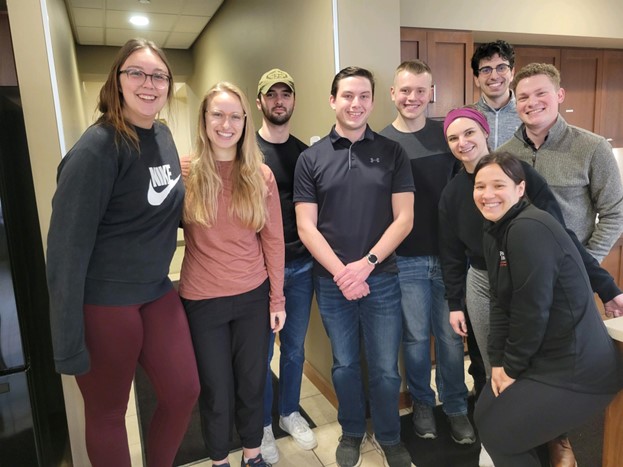
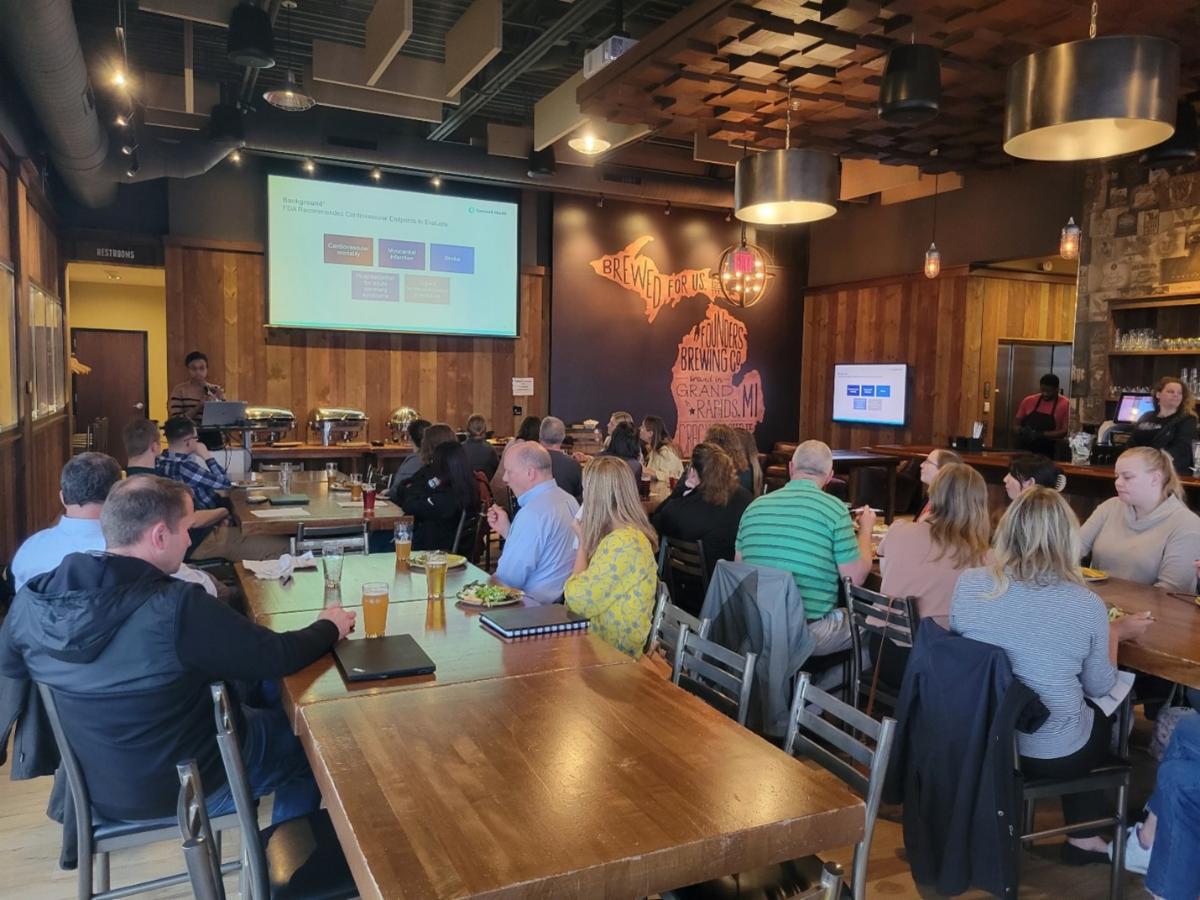
ABOVE: March volunteers, from left, Kristina Stoncius, Abby Poort, Jarrett Brown, Owen Eckardt, Caleb Skiba, Ashli McCarrell, Marcus Stefano, Katelyn Eidenberger and Brenden Bectal. RIGHT: Keitasha Arnold, Pharm.D., at podium, delivered a CE titled “Metformin and Cardiovascular Outcomes in Type 2 Diabetes: A Retrospective Study” in April. | |
|
|
Tim Ekola, B.S.Pharm., Pharm.D., MBA
Chief of pharmacy services,
Lt. Col. Charles S. Kettles VA Medical Center, Ann Arbor
| |
|
Member Since: 2013
Describe Your Role/Day in the Life: In my role as chief of pharmacy, I work collaboratively with other leaders of the health system to build strong teams focused on delivering veteran-centric care. The pharmacy service is comprised of inpatient, outpatient and ambulatory care, with more than 120 dedicated pharmacy staff members providing high-quality, cost-effective pharmaceutical care in a wide range of programs.
Why You’re an MSHP/MPA Member: As a member of MSHP/MPA, I have gained a network of like-minded pharmacy professionals looking to continually advance our profession. Through these connections, I continue to grow and find comfort and support knowing that I am not alone in the challenges facing the complex nature of today’s healthcare. Through my active participation, I have a voice in advocating for pharmacists, pharmacy technicians and other support staff. I see MSHP/MPA as building the foundation for tomorrow’s leaders, and I am proud to be part of that future.
Recent Accomplishments: This past November, I participated in an American Society of Health-System Pharmacists (ASHP) podcast titled, “Veterans Day Tribute: Stories of Service to Country and the Profession,” as one of three military service members highlighted in 2021. I also currently serve as the Capital Area Pharmacists Association (CAPA) representative on the MSHP Board of Directors and the MSHP Board liaison to the MSHP Organizational Affairs Committee.
How MPA has helped you achieve any accomplishments?: Through my interactions and commitment with various MSHP/MPA committees, I have remained engaged in the current issues facing pharmacy leaders. I have had the pleasure of working with state and national leaders on pharmacy technician advancement and pharmacist provider status.
| |
|
CE Speaking Opportunities At Non-Pharmacy Organizations
The MSHP Publications Committee was charged in 2024 with identifying opportunities for pharmacists to present at non-pharmacy organization meetings. After surveying MSHP membership in April, the committee compiled a list of organizations. Click the button below if you're interested in presenting.
| |
|
OFFICERS
PRESIDENT | Kyle Schmidt | 616-685-6675 | Mercy Health St. Mary's, Grand Rapids
PRESIDENT-ELECT | Stacy Brousseau | 269-341-7407 | Bronson Methodist Hospital, Kalamazoo
IMMEDIATE PAST PRESIDENT | Michelle Dehoorne | 313-343-6381 | Ascension, Detroit
TREASURER | Marc Guzzardo | 810-606-6095 | Ascension, Detroit
EXECUTIVE VICE PRESIDENT | Edward Szandzik | 313-587-6279 | Detroit
DIRECTORS
Diana Kostoff | 313-725-7925 | Henry Ford, Detroit
Nada Farhat | nmhammou@med.umich.edu | Michigan Medicine, Ann Arbor
Julie Schmidt | 269-341-7999 | Bronson Methodist Hospital, Kalamazoo
Amber Lanae Martirosov | 313-916-3494 | Wayne State University
REGIONAL SOCIETY REPRESENTATIVES
CENTRAL | Tim Ekola | 734-845-3418 | VA Ann Arbor Healthcare System
NORTHERN | Miranda Maitland | mirandapmaitland@gmail.com | My Michigan Medical Center, Sault Ste. Marie
SOUTHEASTERN | Farzad Daneshvar | 248-910-2222 | AstraZeneca
WESTERN | Ben Pontefract | bpontefract@gmail.com | Ferris State University, Big Rapids
MANAGING EDITOR | Ryan Weiss | (517) 377-0232 | Michigan Pharmacists Association, Lansing
| |
|
The MSHP Monitor is a publication of the Michigan Society of Health-System Pharmacists, published as a service to its members.
Michigan Society of Health-System Pharmacists - An Affiliated Chapter of the American Society of Health-System Pharmacists and a Practice Section of the Michigan Pharmacists Association
| | | | |