Volume 64, Issue 10 | Oct. 15, 2023 | |
- EVENTS & ANNOUNCEMENTS - | |
Register Now for the MSHP Annual Meeting! | |
|
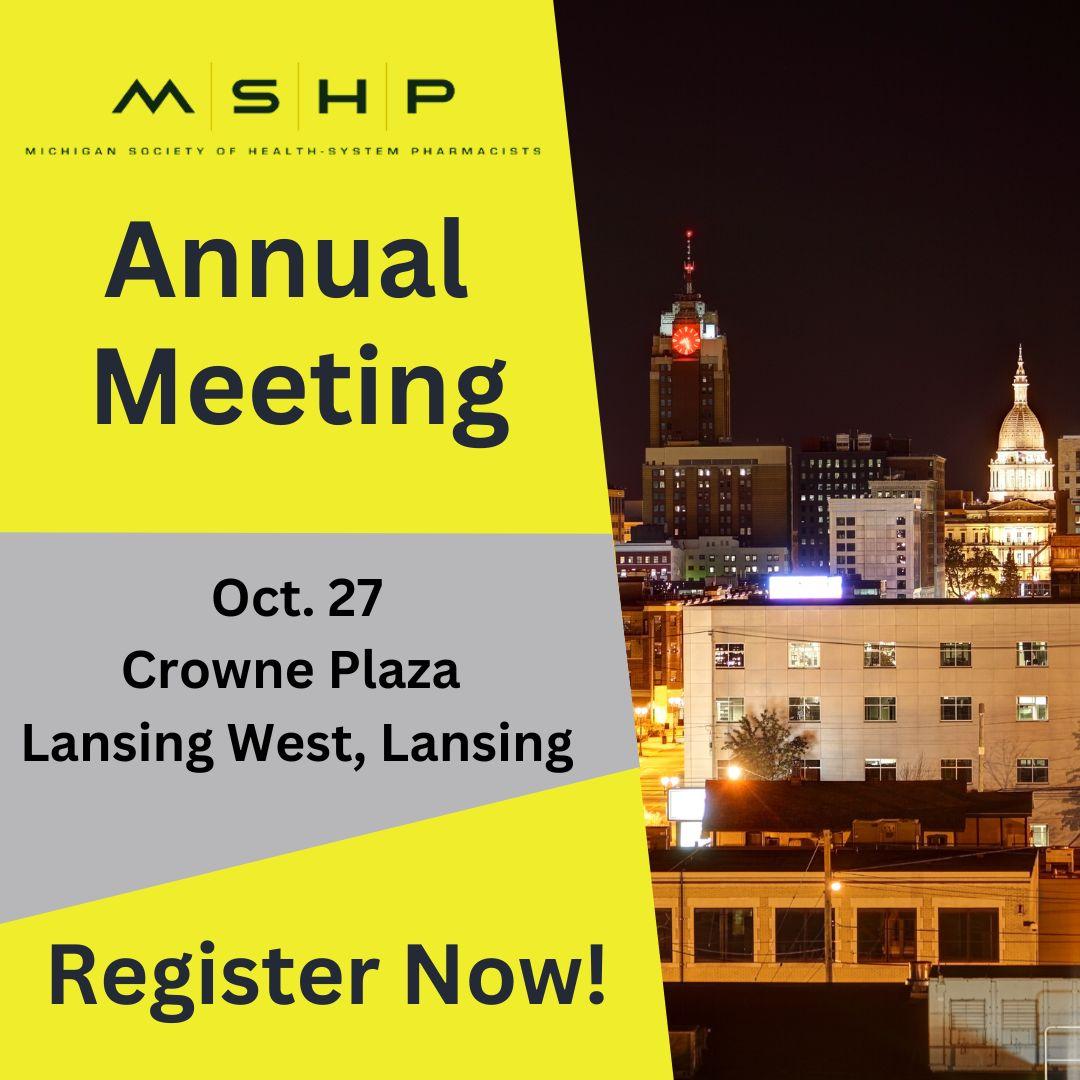
Registration is open for the Michigan Society of Health-System Pharmacists (MSHP) Annual Meeting, which will be held Friday, Oct. 27, at the Crowne Plaza Lansing West, 925 S. Creyts Road in Lansing.
Held each fall, the MSHP Annual Meeting offers up to six hours of live continuing education credit. Programming is geared toward health-system pharmacists, residents, pharmacy technicians and student pharmacists. The MSHP Annual Meeting focuses on clinical, leadership management and residency topics as well as other general areas of pharmacy practice.
In addition to continuing education programs, the event offers the annual MSHP Town Hall Meeting to install new MSHP Board of Directors members into office officially, recognize volunteers and award recipients, a clinical skills competition for students and an exhibit hall to provide attendees with a chance to exchange ideas and learn about new products and services.
| |
|
ACE 2024 Registration is Open!
It's time to start planning for 2024! Registration opened Oct. 10, so reserve your spot now.
The signature event of Michigan Pharmacists Association, the Annual Convention & Exposition (ACE), will take place Feb. 23-25, 2024, at the Renaissance Center in downtown Detroit. This will be MPA's last ACE in the Motor City for a while as we hit the road for Traverse City in 2025 and Lansing in 2026, 2027 and 2028, so don't miss out!
ACE is the premier continuing education event for pharmacists, pharmacy students and pharmacy technicians in Michigan. There will be something for everyone at ACE 2024.
Looking forward to seeing you all there!
| |
|
Coming Soon: Vote In MPA Elections
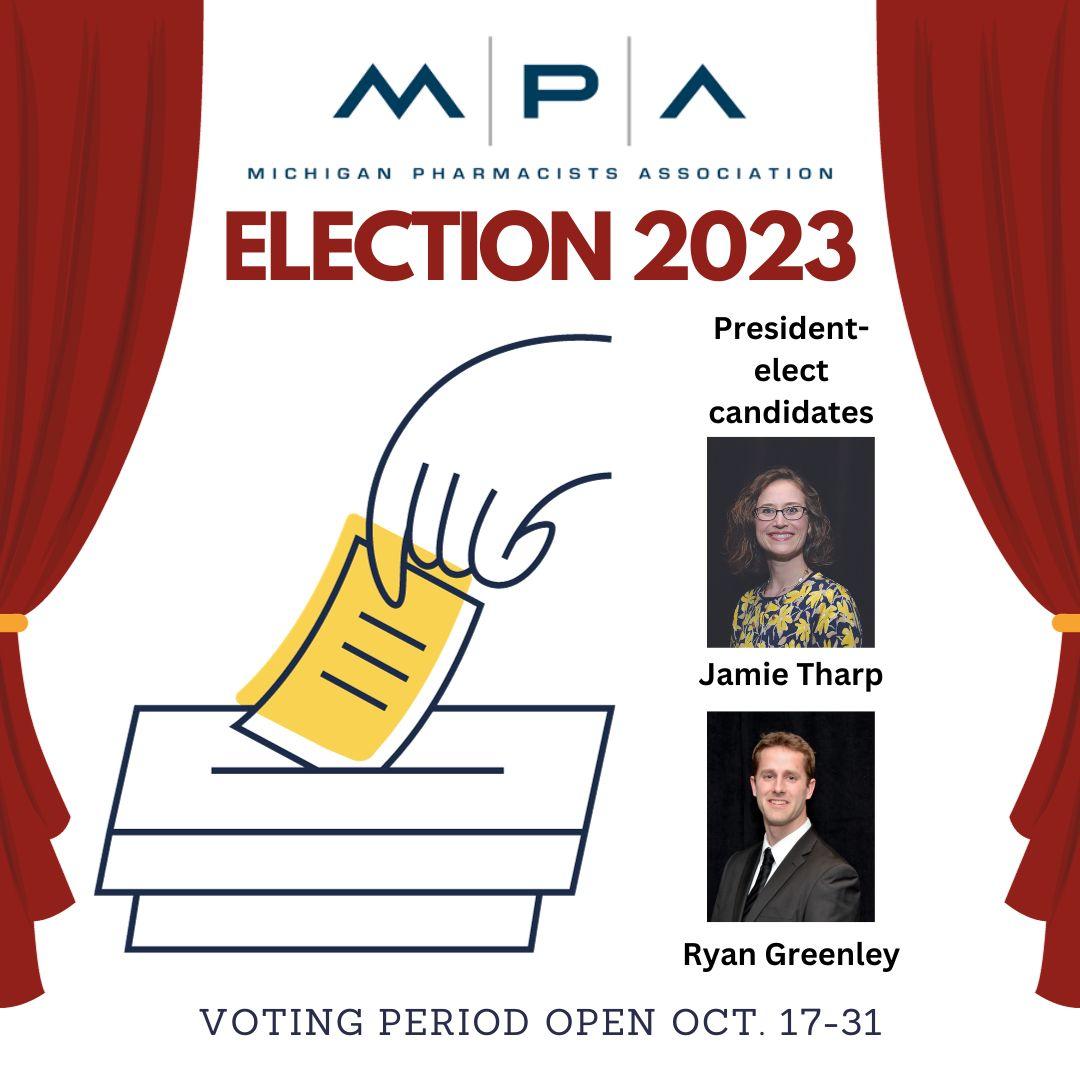
MPA will soon open voting for its 2023 elections. Voting will open Tuesday, Oct. 17. MPA members will have until Tuesday, Oct. 31 to cast their votes.
Look for ballots to be emailed to member early this week.
| |
|
Getting the Most Out of Your Membership
By Marc Guzzardo R.Ph, MBA, MSHP treasurer
As the treasurer for the Michigan Society of Health-System Pharmacists (MSHP), I am glad to report that MSHP is a financially healthy component of MPA. MSHP hosts many activities for our members throughout the year and does an excellent job of securing income to cover the expenses of member activities. Each member of MSHP supports the organization’s finances in multiple ways. As a starting point, your membership dues provide the foundation to cover our costs.
Additionally, your active participation in MSHP activities also supports MSHP finances. Many in-person events hosted by MSHP, such as our annual meeting, are sponsored by vendors. Vendors will only sponsor an event if they know it will be well attended. They want to know that a large number of our members is recognizing their sponsorship dollars.
There are multiple ways that you can get the most out of your MSHP membership and provide additional financial support to MSHP.
Participate in the MSHP activities offered. Not only will you benefit from the activity by learning and networking, you will allow us to attract additional sponsor dollars because they see members actively attending. When vendors are present at MSHP events, stop to say hello and thank them for their sponsorship. Certainly, in the long run vendors are in business to sell a product or service, but at an event they just want to provide support to MSHP and know that the members appreciate their support.
Participate in the reverse expo that is held prior to the MSHP Annual meeting. Each year MSHP hosts a reverse expo that gives pharmacy leaders and vendors an opportunity to connect. Pharmacy leaders that participate will meet with multiple vendors for brief five-to-seven minute sessions. The reverse expo is by far the single largest revenue producer for MSHP. Use this link to learn more about the reverse expo scheduled for Oct. 26. The reverse expo is a virtual event allowing pharmacy leaders to participate from anywhere.
Purchase your insurance from the MPA’s agency, PSI Insurance Agency. Yes, MPA owns an insurance agency. The insurance agency produces revenue that supports MPA and MSHP activities. PSI offers insurance policies from several different well-known insurance companies. Thus, members often can move their insurance to the PSI insurance agency, keeping the same coverage from the same company at the same cost. The only difference is that the profit margin from the policy goes to MPA/MSHP instead of another agency. This is a great way to support the profession of pharmacy in Michigan without any additional expense to our members.
The agency has a team of experienced professionals dedicated to serving the insurance needs of MPA members. PSI offers a wide range of personal insurance products, such as home, auto, umbrella and life. They also offer professional liability insurance both for individual pharmacists and corporations. When needed, they can assure members have the most appropriate insurance coverage at the best possible price. Consider purchasing your insurance from PSI and supporting pharmacy in Michigan. Their office number is (517) 484-1467, or visit psiinsurance.net.
Many thanks to all MSHP members for your contributions to pharmacy practice in Michigan through your membership, active participation and support.
| |
|
- AMBULATORY CARE -
MSHP Ambulatory Care Survival Guide: Update for 2024
By Sarah Hoerner Leonard, Pharm.D., BCPPS; clinical pharmacy specialist, ambulatory care, Corewell Health West
In 2021, the MSHP Ambulatory Care Pharmacy Practice Committee (ACPPC) first published the Ambulatory Care Survival Guide for pharmacists practicing in the state of Michigan. This guide was designed to serve as a resource and springboard for new and experienced ambulatory care pharmacists. It includes state-specific information regarding credentialing and privileging, billing practices, quality metrics, and dashboard development.
This year, the ACPPC has worked to incorporate a brand-new section into the Survival Guide, which is dedicated to health-related social needs (HRSN). HRSN is a term developed by the Centers for Medicare and Medicaid Services (CMS) and is defined as "the social and economic needs that individuals experience that affect their ability to maintain their health and well-being." HRSN applies to five core domains: housing instability, food insecurity, transportation problems, utility help needs and interpersonal safety.1
Pharmacists are often the most accessible and frequently visited members of the health care team and may learn about a patient's HRSN before other providers. With a better understanding of HRSN and the pharmacist's role in these areas, we can improve the health and well-being of our patient population.
This update to the Survival Guide will include examples of how pharmacists can triage HRSN to optimize medication management and will offer tools and resources for pharmacists to utilize in the ambulatory care setting. The revised Survival Guide will also include updates to the billing section (please see the article published in April's MSHP Monitor for more details) as well as some formatting changes. Please look for the updated MSHP Ambulatory Care Survival Guide on MSHP's website in early 2024.
References
1. oregon.gov/oha/HPA/dsi-pcpch/AdditionalResources/Health-related%20Social%20Needs%20vs%20the%20Social%20Determinants%20of%20Health.pdf (accessed 8/21/23).
| |
|
Why I am a member of MSHP
By Christina Wood, CPhT
I became a member of MPA/MSHP about six years ago in hopes of networking, collaborating with other pharmacy professionals and ultimately help address legislative and regulatory initiatives that affect pharmacy practice. While I practice as a licensed and certified pharmacy technician, I believe that technicians and pharmacists should play an active and contributing role in advocating the value of pharmacy professionals’ contributions to patient care. I noticed that MSHP's objectives align with my professional values and mission.
The role of pharmacy technicians has undergone significant advancements over the last 10 years. Some key changes and developments include expanded responsibilities and roles, direct involvement in patient care activities, and collaborative practice models that enable pharmacists and pharmacy technicians to work together more closely. While these are just a few advancements over the years, pharmacy technicians are now expected to actively participate in interprofessional teamwork, contributing their expertise and insights to promote optimal patient care.
I believe that being a member of the MSHP has provided pharmacy professionals unique opportunities to advance our profession through offered continuing education events; networking events, including the annual convention and exposition; several committees that allow members to advance pharmacy practice in Michigan; access to resources, support and training materials; and encouraging leadership development.
My goal in daily practice is to ensure that we provide the best patient-focused care we can. Through MPA/MHSP, we are better served to do so. I encourage all new and seasoned pharmacy professionals to get involved in one of MPA’s practice sections, such as MSHP, as well as their MPA local associations. As the saying goes, “Together, we can do better.”
| |
|
Global Initiative for Chronic Obstructive
Lung Disease – 2023 Updates
Tyler Bringedahl, Pharm.D., Elaine Chau, Pharm.D., Madeline Fouts, Pharm.D., Emiley Hua, Pharm.D., PGY1 residents at Trinity Health Muskegon
Chronic obstructive lung disease (COPD) is characterized by restricted airflow and breathing difficulties.1 It is estimated that about 6% of Americans are diagnosed with COPD and was the fourth-leading cause of death in Americans in 2018.1 COPD can be caused by a culmination of genetic and environmental factors, with smoking being one of the most common causes.2 A commonly-referenced guideline for treating COPD is the Global Initiative for Chronic Obstructive Lung Disease (GOLD) Report. This report aims to review evidence for assessing, diagnosing and treating people with COPD.2 The GOLD Report is regularly updated, with the 2023 report being the fifth major revision of GOLD.
Pharmacological therapy continues to be recommended in conjunction with non-pharmacological tactics described in the 2023 GOLD recommendations. Previously, the ABCD assessment tool was utilized to determine what medications to initiate in patients who fall within the groups of A-D. Now, a revised version of the scale, ABE, recognizes the clinical relevance of exacerbations independent of symptom level.2 This revision repositions long-acting beta-2 agonists (LABA), long-acting muscarinic agonists (LAMA) and LABA with inhaled corticosteroids (ICS).
Group A includes individuals who have 0 or 1 moderate exacerbations that do not lead to hospital admission and a modified Medical Research Council Dyspnea Scale (mMRC) score between 0 and 1 or a COPD Assessment Test (CAT) score of less than 10. A bronchodilator is recommended for patients who are classified as group A. Group B includes 0 or 1 moderate exacerbations that do not lead to hospital admission and a mMRC score greater than or equal to 2 or a CAT score greater than or equal to 10. A LABA+LAMA is recommended for patients categorized in group B. Group E patients are those with two or more moderate exacerbations or one or more leading to hospitalization. A LABA/LAMA is recommended for patients who fall into group E. Additionally, for group E individuals with blood eosinophil levels of 300 or higher, a LABA+LAMA+ICS may be considered.
The guidelines no longer endorse the use of LABA+ICS in COPD. They have found that adding an ICS has little or no effect at a blood eosinophil count level less than 100. This thought extends to guidelines for maintenance therapy.2 If a patient on monotherapy experiences exacerbations, then escalation to LABA+LAMA is recommended. For patients who develop blood eosinophil levels at 300 or higher on their current maintenance, therapy may be escalated to LABA+LAMA+ICS. For patients with persistent exacerbations on LABA+LAMA, escalation to LABA+LAMA+ICS is also recommended if blood eosinophil levels are 100 or higher.
As previously mentioned, non-pharmacological treatment should be used in combination with pharmacological therapy for better overall management of COPD. According to the GOLD Report, recommendations for all patients initially diagnosed with COPD include smoking cessation and physical activity.2 Furthermore, based on the group classifications, pulmonary rehabilitation is also considered an essential non-pharmacological treatment for patients in groups B and E, due to their high risk for exacerbations and symptom burden.2 Pulmonary rehabilitation is a supervised program that focuses on improving dyspnea, quality of life and daily functioning, which can provide benefit for most patients with COPD.2-3 However, with the advent of the COVID-19, the use of telerehabilitation became a more highly-sought option. Multiple studies have shown that telerehabilitation has comparable effects to in person sessions; however, standard practices have not yet been put in place as the evidence for its use is still being collected.2,4-5
Additional recommendations for management of COPD include routine vaccinations. The GOLD Report has guidance for vaccinations that may reduce risk of serious illness or death in patients with COPD. It is recommended that patients with COPD receive the influenza vaccine annually.2 Apart from the prevention of lower respiratory infection with the influenza virus, limited evidence has suggested that this vaccination may be associated with lower incidences of COPD exacerbations.2 The GOLD Report’s recommendations for pneumococcal vaccinations align with standard recommendations from the Centers for Disease Control and Prevention. One option listed by the CDC is to receive a single dose of the 20 valent pneumococcal conjugate vaccine (PCV20) and the other option is to receive one dose of the 15-valent pneumococcal conjugate vaccine (PCV15) followed by one dose of the 23-valent pneumococcal polysaccharide vaccine (PPSV23).
Although data is limited, it has been demonstrated that the vaccination against pneumococcal disease may reduce the likelihood of COPD exacerbations.2 In accordance with CDC guidance, it is recommended that patients with COPD also receive the Tdap, shingles and COVID-19 vaccines.2
The 2023 COPD guidelines have provided a streamlined approach to initiating treatment in COPD patients and minimizing the use of ICS in patients. Their recommendations for the best therapy to reduce mortality includes the proper use of LAMA+LABA+ICS in addition to non-pharmacotherapy considerations, such as smoking cessation and pulmonary rehabilitation. Especially since the emergence of COVID-19, it is important for providers to remain vigilant with COPD patients who contract COVID-19. The overall treatment should be patient individualized based on their specific needs and preferences.
References
-
Basics About COPD. Centers for Disease Control and Prevention. Updated June 30, 2023. Accessed August 28, 2023. https://www.cdc.gov/copd/basics-about.html
-
2023 Gold Report - Global Initiative for Chronic Obstructive Lung Disease. GOLD. April 28, 2023. Accessed July 17, 2023. https://goldcopd.org/2023-gold-report-2/.
-
Pulmonary Rehabilitation for Chronic Lung Diseases. Cleveland Clinic. Accessed August 4, 2023. https://my.clevelandclinic.org/health/articles/8904-pulmonary-rehabilitation-is-it-for-you.
- Bourne S, DeVos R, North M, et al. Online versus face-to-face pulmonary rehabilitation for patients with chronic obstructive pulmonary disease: randomised controlled trial. BMJ Open. 2017;7(7):e014580. Published 2017 Jul 17. doi:10.1136/bmjopen-2016-014580
- Cox NS, Dal Corso S, Hansen H, et al. Telerehabilitation for chronic respiratory disease. Cochrane Database Syst Rev. 2021;1(1):CD013040. Published 2021 Jan 29. doi:10.1002/14651858.CD013040.pub2
- Tamondong-Lachica DR, Skolnik N, Hurst JR, et al. GOLD 2023 Update: Implications for Clinical Practice. Int J Chron Obstruct Pulmon Dis. 2023;18:745-754. Published 2023 May 5. doi:10.2147/COPD.S404690
- Halpin DMG, Rabe AP, Loke WJ, et al. Epidemiology, Healthcare Resource Utilization, and Mortality of Asthma and COPD in COVID-19: A Systematic Literature Review and Meta-Analyses. J Asthma Allergy. 2022;15:811-825. Published 2022 Jun 17. doi:10.2147/JAA.S360985
| |
|
- STUDENT FOCUS -
Taking a Cardiac Minute –
Updates on the Prevention of Atrial Fibrillation
Alyssa DiMondo, Pharm.D. Candidate 2024
Risk scores and atrial fibrillation (AF) seem to go hand-in-hand, like peanut butter and jelly in a sandwich. Pre-diagnosis practices utilize multiple risk score calculations including, the CHARGE-AF risk score, the Framingham-AF risk score and the ARIC risk score. Post-diagnosis of atrial fibrillation utilizes the CHA2DS2-VASc and HAS-BLED scores to determine the annualized risk of stroke recurrence and the patient’s baseline bleeding risk prior to potential initiation of thromboprophylaxis.
Even with this robust clinical toolkit in our back pocket, AF still accounts for more than 454,000 hospitalizations in the United States every year and contributes to about 158,000 deaths.1 While our understanding of the clinical significance of AF has evolved over the last 20 years, there is still room for advancement in the prevention and pharmacologic management of AF.2
Recent clinical research published by the European Society of Cardiology (ESC) investigates the development and validation of an AF lifestyle risk score, which can be used to identify individuals at risk in the general population.3 The primary focus of this trial is individual lifestyle factors of patients, which have been described as the “fourth pillar” of atrial fibrillation management. The study also seeks to determine if these lifestyle risk factors can be incorporated into a clinical risk model to predict the risk of AF development.
The HARMS2-AF score, which was developed in the UK Biobank (UKB) and externally validated in the Framingham Heart Study (FHS) population, assesses both 5-year risk and 10-year risk of atrial fibrillation development. It is a point-based calculation, set on a scale of zero to 14 points; weighted risk scores were then further stratified based on AF probabilities from the regression model as follows: score 1-4, score 5-9 and score 10-14. The factors include: hypertension (four points); age (60-64 years, one point; 65 or older, two points); raised BMI, 30 kg/m2 or more (one point); male sex (two points); Sleep apnea (two points); smoking (one point); and alcohol (seven to 14 standard drinks per week, 1 point; 15 drinks or more per week, two points). Looking at the results, the Kaplan-Meier estimate of AF risk demonstrated a linear relationship between rising HARMS2-AF risk scores and AF development, with the greatest risk observed in the highest risk quartile (HARMS2-AF 10-14).
Five out of the studied seven risk factors are recognized by the study as modifiable with targeted lifestyle interventions, which can give clinicians a stepping stone to prevention. Prediction models prior to the HARMS2-AF score have incorporated some lifestyle factors, but also included non-routinely accessible factors such as electrocardiography or echocardiography parameters, which made calculation less practical. Looking head-to-head at prevention scores, the HARMS2-AF score performed comparably with the CHARGE-AF risk score and outperformed the Framingham-AF risk score and the ARIC risk score. In addition, the ESC has noted that this is the largest analyzed study (314,280 individuals) using prospective cohort data evaluating and externally validating the predictive performance of an AF lifestyle risk factor score across two large distinct populations from two different continents.
The HARMS2-AF risk score is the newest to evaluate the relative contribution of both modifiable and non-modifiable risk factors (i.e. gender, age) to AF development. Through implementation of the HARMS2-AF risk score, clinicians can provide an enhanced prediction to their patients for estimating the probability of atrial fibrillation development, which will lead to earlier targeted interventions of these risk factors.
References
-
Centers for Disease Control and Prevention. Atrial Fibrillation. Centers for Disease Control and Prevention. Published September 8, 2020. https://www.cdc.gov/heartdisease/artial_fibrilation.htm
-
Atrial Fibrillation: A Timeline of This Veritable Quandary. American College of Cardiology. https://www.acc.org/membership/sections-and-councils/fellows-in-training-section/section-updates/2015/12/15/16/58/atrial-fibrillation
-
Segan L, Canovas R, Nanayakkara S, et al. New-onset atrial fibrillation prediction: the HARMS2-AF risk score. Published online June 23, 2023. doi: https://doi.org/10.1093/eurheartj/ehad375
| |
|
Western Michigan Society of Health-System Pharmacists Update
By Shelby Kelsh, Pharm.D., BCPS, WMSHP president; associate professor of pharmacy practice, Ferris State University
College of Pharmacy
| |
|
The Western Michigan Society of Health-System Pharmacists (WMSHP) had a busy summer planning events for this fall.
It wasn’t all work and no play though. We enjoyed a great night at LMCU Ballpark to watch the West Michigan Whitecaps. This fall, we have our monthly continuing education (CE) planned for September, October and November. We are also excited to co-host a Residency Showcase with Ferris State University in person for the first time in three years. While we haven’t set a date, yet we are planning on helping students by hosting mock interviews this fall as well.
If you are interested in learning more about WMSHP, please visit WMSHP.net.
| |
|
OFFICERS
PRESIDENT | Michelle Dehoorne | (313) 343-6381 | Ascension, Detroit
PRESIDENT-ELECT | Kyle Schmidt | (616) 685-6675 | Mercy Health St. Mary's, Grand Rapids
IMMEDIATE PAST PRESIDENT | Shawna Kraft | (734) 232-6667 | Michigan Medicine, Ann Arbor
TREASURER | Marc Guzzardo | (810) 606-6095 | Ascension, Detroit
EXECUTIVE VICE PRESIDENT | Edward Szandzik | (313) 587-6279 | Detroit
DIRECTORS
Stacy Brousseau | (269) 341-7407 | Bronson Methodist Hospital, Kalamazoo
Diana Kostoff | (313) 725-7925 | Henry Ford, Detroit
Nada Farhat | nmhammou@med.umich.edu | Michigan Medicine, Ann Arbor
Julie Schmidt | (269) 341-7999 | Bronson Methodist Hospital, Kalamazoo
REGIONAL SOCIETY REPRESENTATIVES
CENTRAL | Tim Ekola | (734) 845-3418 | VA Ann Arbor Healthcare System
NORTHERN | Miranda Maitland | mirandapmaitland@gmail.com | My Michigan Medical Center, Sault Ste. Marie
SOUTHEASTERN | Jessica Jones | (313) 982-5737 | Beaumont Health, Detroit
WESTERN | Shelby Kelsh | shelbyKelsh@ferris.edu | Ferris State University, Big Rapids
MANAGING EDITOR | Ryan Weiss | (517) 377-0232 | Michigan Pharmacists Association, Lansing
| |
The MSHP Monitor is a publication of the Michigan Society of Health-System Pharmacists, published as a service to its members.
Michigan Society of Health-System Pharmacists - An Affiliated Chapter of the American Society of Health-System Pharmacists and a Practice Section of the Michigan Pharmacists Association
| | | | |