From The Industrial Ink Report:
GS1 Sunrise 2027: Why Your Current Coding Strategy May Already Be Obsolete
For nearly 50 years, manufacturers have relied on the humble UPC barcode. It has become so common that most production teams rarely think about it. That is about to change.
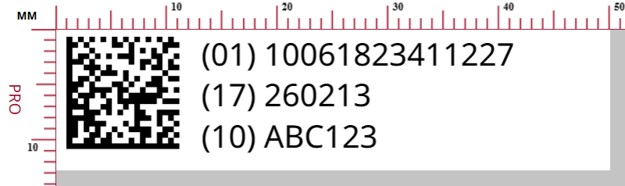
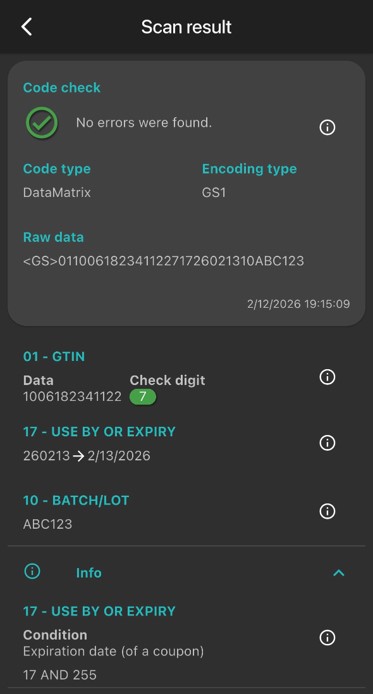
A global initiative known as GS1 Sunrise 2027 is driving one of the biggest transformations in product identification since the introduction of the barcode itself. Retailers, brand owners and manufacturers are preparing for a future where 2D barcodes such as QR Codes and GS1 DataMatrix codes become standard throughout the supply chain. These codes can contain significantly more information than traditional UPC barcodes, including lot numbers, expiration dates, serial numbers, traceability data and consumer-facing digital content.
Why This Matters to Manufacturers
Most discussions surrounding Sunrise 2027 focus on retailers and consumers. That is a mistake. The real impact will be felt on packaging lines. Many existing coding systems were designed primarily for simple date codes, lot numbers and basic identification. As manufacturers begin incorporating larger, more sophisticated 2D codes, print quality requirements become substantially more demanding. A barcode that scans perfectly in the plant may fail at a distribution center, retail checkout or warehouse scanner if print quality is inconsistent. This means coding technology is moving from being a production requirement to becoming a critical component of supply chain performance.
What Changes on the Production Floor?
The transition to 2D codes will place greater emphasis on:
• Print resolution
• Contrast quality
• Code verification
• Ink performance
• Substrate compatibility
• Scanner readability
In many applications, the quality of the printed code will become just as important as the information it contains. A poorly printed QR code carrying traceability information is worse than no QR code at all.
The Hidden Ink Challenge
Many manufacturers are focusing on software, scanners and compliance. Few are asking the most important question: Can our current ink reliably produce high quality 2D codes on our packaging materials? As code density increases, factors such as ink spread, drying time, adhesion and substrate interaction become increasingly important. The same ink that produces excellent date codes may not always produce optimal results when printing complex 2D symbols. This is why coding and marking teams should be evaluating both printer performance and ink performance long before 2027 arrives.
Q&A
Q: Is GS1 Sunrise 2027 a law?
No. It is an industry initiative led by GS1 to prepare retailers and manufacturers for widespread use of 2D barcodes at point of sale and throughout the supply chain.
Q: Will traditional UPC barcodes disappear immediately?
No. Most organizations expect a transition period where traditional and 2D codes coexist.
Q: Why should coding and marking professionals care?
Because code quality, readability and traceability will become increasingly important as manufacturers adopt 2D identification systems.
Q: What should manufacturers do now?
Begin evaluating how current printers, inks and packaging materials perform when producing high density 2D codes.
The Bottom Line
Most manufacturers believe Sunrise 2027 is a barcode story.
It is actually a coding and marking story. The companies that begin evaluating their printers, inks and substrates today will be far better positioned when customers, retailers and supply chain partners start demanding more data from every package. The future of product identification is not simply about printing more information.
It is about printing more information reliably.
Sources
GS1 Sunrise 2027 https://www.gs1us.org/industries-and-insights/by-topic/sunrise-2027
GS1 US 2D Barcode Initiative https://www.gs1us.org/upcs-barcodes-prefixes/2d-barcodes
GS1 Global Standards https://www.gs1.org
About The Industrial Ink Report
The Industrial Ink Report is published by USinks.com and covers industrial inks, coding, marking, labeling, traceability, packaging technologies and manufacturing trends impacting production facilities throughout North America.
|