Montana Beaver Working Group |
|
Connecting people and sharing resources to advance the beaver's keystone role
in watershed health
|
|
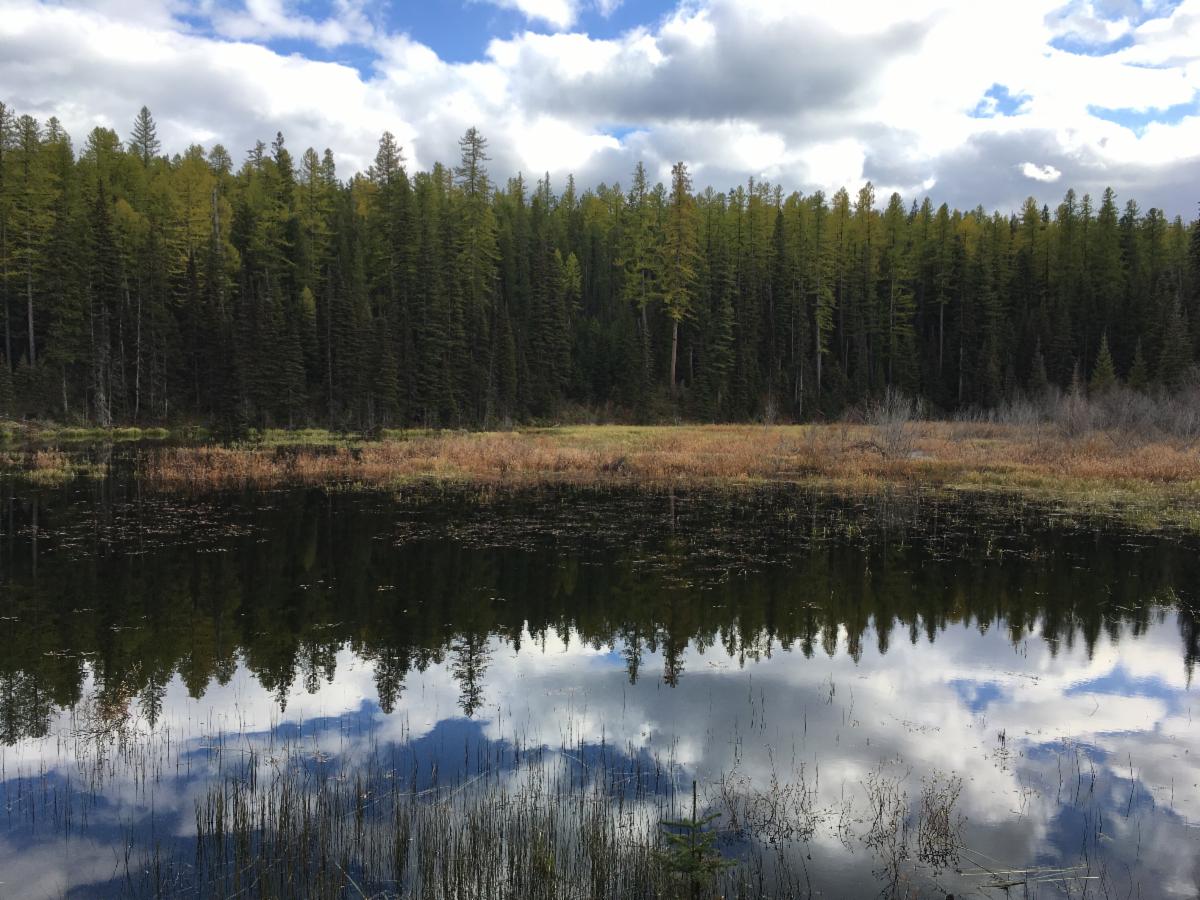
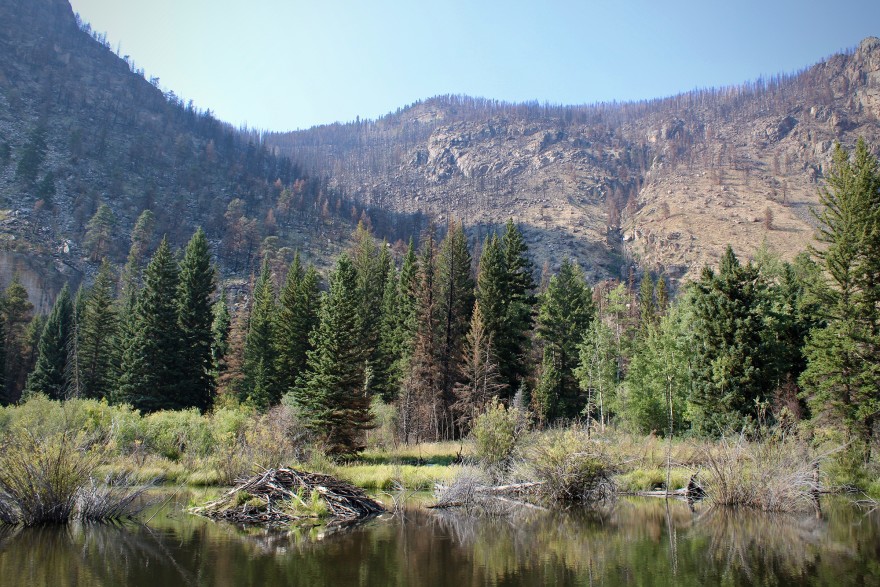
In case we've forgotten, this beaver wetland on the Flathead National Forest is here to remind us why Montana is called Big Sky Country, and the Treasure State. Photo: Rob Rich
|
|
Advocating for Beaver Restoration in National Forest Plans
Authors: Sarah Bates (National Wildlife Federation), Taylor Simpson and Taylor Heggen (University of Montana Alexander Blewitt III College of Law), and Lowell Chandler (University of Montana W.A. Franke College of Forestry & Conservation). 2021.
Each and every American has the opportunity to steward our country's diverse patchwork of public lands. With 175 national forests and grasslands spread across 193 million acres, that opportunity translates to a big responsibility. But people don't have to do the stewardship alone. In fact, the work we do on these lands is best done with the wild species who live there, and especially the beaver, the keystone species supporting the natural processes we need to protect. A Guide to Advocating for Beaver Restoration in National Forest Plans is here to encourage public engagement in the national forest planning process, and to ensure that newly revised plans include affirmative and proactive language around beavers and beaver habitat restoration.
National forest plans set the overall management direction for a given forest with guidance for the design and execution of specific management actions. As the pace, scale, and magnitude of climate change has become increasingly evident, there is an urgent need for these plans to explicitly address the impacts and implications of a rapidly changing climate, and offer solutions to build resilience and ecological integrity.
And while there are many components and outcomes of national forest plans, this guide focuses on how these plans can help protect and restore ecological integrity by expanding the range of existing beaver populations in national forests, encouraging nonlethal controls to address conflicts with culverts and other human-built structures, and—where appropriate and supported by best available science—reintroducing beavers in suitable habitat. Beavers can activate and magnify people's best intentions for public land, and this guide provides resources and sample language for individuals and organizations wishing to ensure that beaver restoration is included in ongoing forest plan revisions. The authors focus in particular on the western forests where beavers provide “natural climate solutions.” By building dams that restore groundwaters, connect floodplains, and expand the wetlands and riparian habitat, beavers ensure a more resilient landscape in a warming West.
Reviewing and commenting on a forest plan can be intimidating, given the size, complexity, and breadth of topics in these documents. But you don’t need to be an expert to provide meaningful feedback, and you shouldn't feel the need to comment on each and every plan element. By sharing your values and concerns, by flagging parts of the plan where you see opportunities for improvement, and by providing positive feedback for strong provisions in a draft plan, you will advance and inform a dialogue that supports the development and implementation of more effective forest plans, with better management decisions for years to come.
A Guide to Advocating for Beaver Restoration in National Forest Plans benefited from the involvement and input of a number of individuals and organizations. The authors would particularly like to thank the students engaged in the University of Montana Natural Resources Law Clinic under the supervision of Professor Sandi Zellmer for conducting much of the research on which the guide was based. They are also grateful for review and suggestions from the following individuals: Michael Anderson (The Wilderness Society), Professor Martin Nie (University of Montana), Jon Haber (U.S. Forest Service, ret.), Lizzy Mckeag (Idaho Wildlife Federation), and Andrew Jakes (National Wildlife Federation). This guide complements and is organized similarly to, the publication A Guide to Advocating for Climate-Smart Restoration in National Forest Plans, available at https://www.nwf.org/BeaverForestPlans.
|
|
Lunch with Montana Watershed Coordination Council
Zoom
October and November, 2021
Beginning in October, join MWCC and its watershed partners on occasional Wednesdays for an hour of learning, sharing, and connecting over lunch. These informal, online gatherings will begin at noon with a brief (10- to 15-minute) presentation by one of MWCC’s network partners on a topic relevant to local watershed conservation. The rest of the hour will be dedicated to questions and discussion.
On November 10, Wendy Weaver, Executive Director of Montana Freshwater Partners (MFP) (formerly Montana Aquatic Resources Services), will talk about the many services MFP offers to local watershed conservation organizations, including Channel Migration Zone Easements, mitigation for stream and wetland impacts, and a wide range of technical services.
A recording of the October 13 event will be made available. Stay tuned.
To register for the November 10 Conservation Conversation with MWCC and Montana Freshwater Partners, click here. If you’d like to present at an upcoming Conservation Conversation with MWCC, reach out to Watershed Programs Coordinator Terri Nichols at terri@mtwatersheds.org.
|
|
Colorado Beaver Summit
Zoom
October 21-22, 2021
Following successful online summits in New Mexico and California earlier this year, Colorado is eager to be next. Details are filling out for their October 21-22 Zoom event, which is focused on “nature-based water-resource restoration, including re-establishment of beavers across their traditional range, especially in headwater regions.” The Montana Beaver Working Group will be represented in a panel at this summit sharing lessons learned from our organizing efforts. Learn more here.
|
|
Low-Tech Process-Based Restoration in Montana's
Prairie Landscape
Zoom
November 17-18, 2021
|
The workshop will offer participants a chance to learn about LTBPR activities currently underway, discuss lessons learned and challenges, and identify priorities for scaling up across the Northern Great Plains. As a secondary goal, workshop planners Sarah Bates and Lisa Eby hope this event allows people engaged in LTPBR the chance to meet one another and build new or expanded partnerships.
The expected workshop audience will include resource managers with federal, state, and tribal agencies; conservation organizations; watershed and ranchers’ groups; landowners; and researchers. The workshop assumes attendees will bring a working knowledge of the benefits and approaches to LTPBR (briefing resources will be provided in advance), and it will include focus sessions for a practical discussion of lessons learned and priorities going forward.
This workshop will be hosted by the National Wildlife Federation, with support from the National Fish & Wildlife Foundation, in partnership with the U.S. Bureau of Land Management-Montana/Dakotas Office and the University of Montana.
Please direct any questions to Sarah Bates (batess@nwf.org) or
Lisa Eby (lisa.eby@mso.umt.edu)
|
|
Beaver Con 2022
Building Climate Resilience: A Nature-Based Approach
Hunt Valley, MD
March 8-10, 2022
|
|
|
|
Registration is now open for the second East Coast BeaverCON 2022 (building off the successful model hosted in Oregon in alternating years). This in-person beaver conference is back to become even better. In addition to registration, the organizing committee is eager to accept new sponsors and consider abstracts and poster proposals from willing contributors. Find out more here.
|
|
So You Want To Do Some Stream Restoration?
Ninth Annual Workshop on Science for Trout Stream Restoration
Recorded program from August 11-12, 2021, available here
Stream restoration is an urgent need with implications for the future, but what can we learn from its past? Despite the great expense and effort spent to physically reconstruct degraded streams, mounting watershed stressors are forcing us to reconsider the theory and practice that drive stream restoration. The prevailing form-based approaches are no longer enough, suggests NOAA's Chris Jordan. To solve the root problems and advance stream health, Jordan makes the case for low-tech approaches that focus on function and process. Only by appreciating the necessary interdependence between life and the structure of streams can we help them achieve true health. This presentation offers a vital foundation to understand how and why we can restore dynamic, resilient systems.
|
|
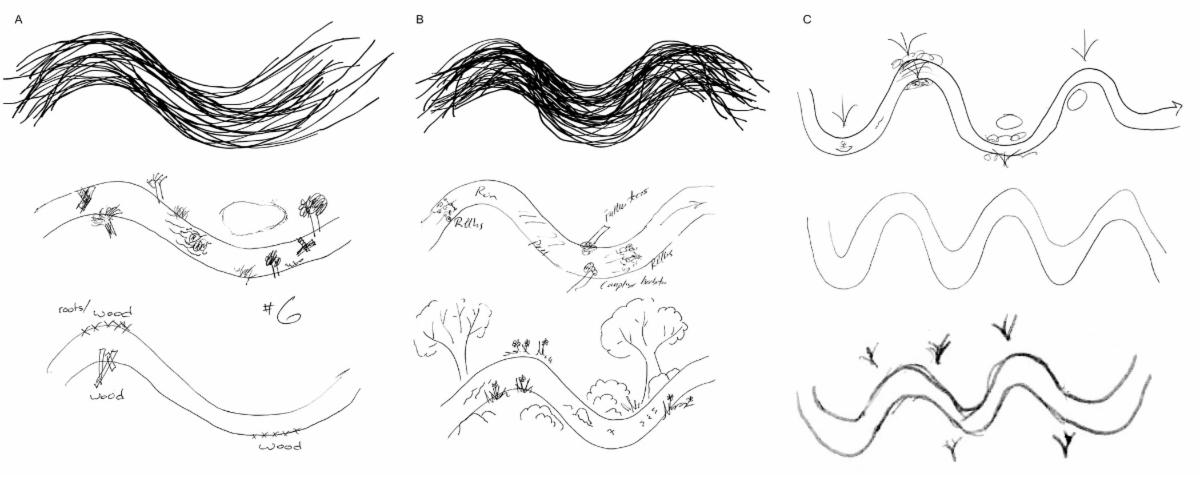
In his presentation, Jordan makes impactful mention of "The Ideal Meander: Exploring freshwater scientist drawings of river restoration." In this fascinating study published in Freshwater Science, the researchers found that most scientists drew single-thread "ideal meanders" when asked to draw a restored stream channel. The implications of this study are complex and largely experimental, and yet highly provocative. Check out the study here, and ask yourself: What would your drawing include? Image Credit: Wilson, K., S.L. Baker, and G.M. Kondolf. 2020. The ideal meander: Exploring freshwater scientist drawings of river restoration. Freshwater Science. 39 (2).
|
|
Dam It! Beavers and Us
High Desert Museum
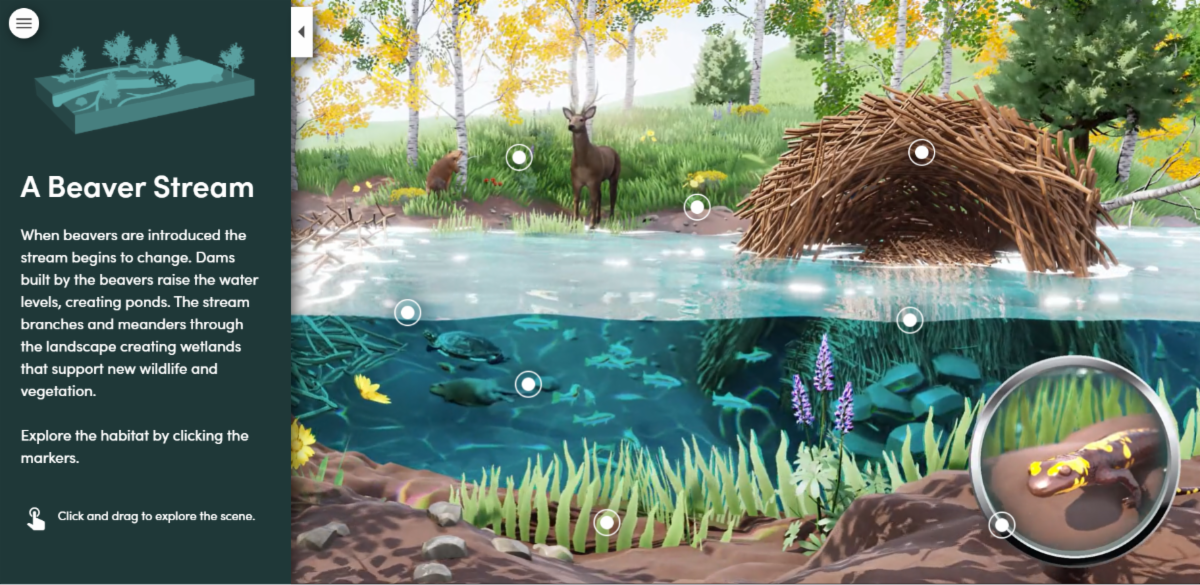
When it comes to visualizing streams, the High Desert Museum makes sure the vision is lively. For most of 2021, they have hosted an interactive, innovative exhibit that, in the words of curator Louise Shirley, "tells a story of turning around our relationship with the beaver. It explores the surprising power of the humble beaver to help us combat some of the impacts of climate change, such as drought, wildfires, and biodiversity loss." While the physical installation at HDN's physical location in Bend, Oregon came to a close on October 3, the exhibit's complementary digital component will continue to help children of all ages to "see" the wide-ranging impacts of beavers.
|
|
The interactive beaver exhibit at the High Desert Museum is sure to inspire children of all ages.
Image Credit: High Desert Museum.
|
|
Even Colorado's Largest Widlfire Was No Match for Beavers
Colorado Public Radio
Alex Hager, September 23, 2021
"Deep in the Cameron Peak burn scar, nestled among charred hills, there’s an oasis of green — an idyllic patch of trickling streams that wind through a lush grass field. Apart from a few scorched branches on the periphery, it’s hard to tell that this particular spot was in the middle of Colorado’s largest-ever wildfire just a year ago..." So begins this recent radio account, showing how "the wetland was spared thanks to the work of beavers." You may think you've heard this story before, and perhaps you have: This scenario has been playing out in Montana, Idaho, California, and so many other places that are facing the heat. As we aim to encourage ecosystem resilience in the increasingly flammable West, this is a case worth studying.
|
|
The Cameron Peak fire burned 208,663 acres in fall of 2020, making it the largest wildfire in Colorado's state history. While some slopes were entirely consumed in flame, the engineers living within this active beaver lodge diversified the impact by keeping their valley lush and green. Photo: Alex Kager / KUNC
|
|
Beaver Movers:
New Insights on Relocation from Oregon State University
Oregon Public Radio
Rolie Hernandez, September 9, 2021
After more than a century of moving beavers around the country, more questions than answers remain. The goals have varied and results remain mixed, but most contemporary practitioners now see that the relocation requires far more nuance than once thought. Genetic diversity, disease transmission, beaver social life, and wildlife policy are just a few of the considerations that today's beaver movers must consider, as well as the ever-important role of location, location, location.
Oregon's Coast Range is one of the most complex arenas for beaver movements, not only because of its topographic complexity but also because it includes naturally dispersing beaver populations alongside those intensively transplanted by people. Using 292 genetic samples they gathered from beavers in the region, researchers at Oregon State University have found good gene flow exists among this population and some other intriguing new insights for practitioners. You can learn more about their work and how beavers move here.
|
|
Please send photos, stories, upcoming events, and other resources to:
Rob Rich, National Wildlife Federation
MT Beaver Working Group newsletters are posted online and can be found here.
|
|
|
|
|
|
|