|
“It takes guts to be gentle and kind.” —The Smiths
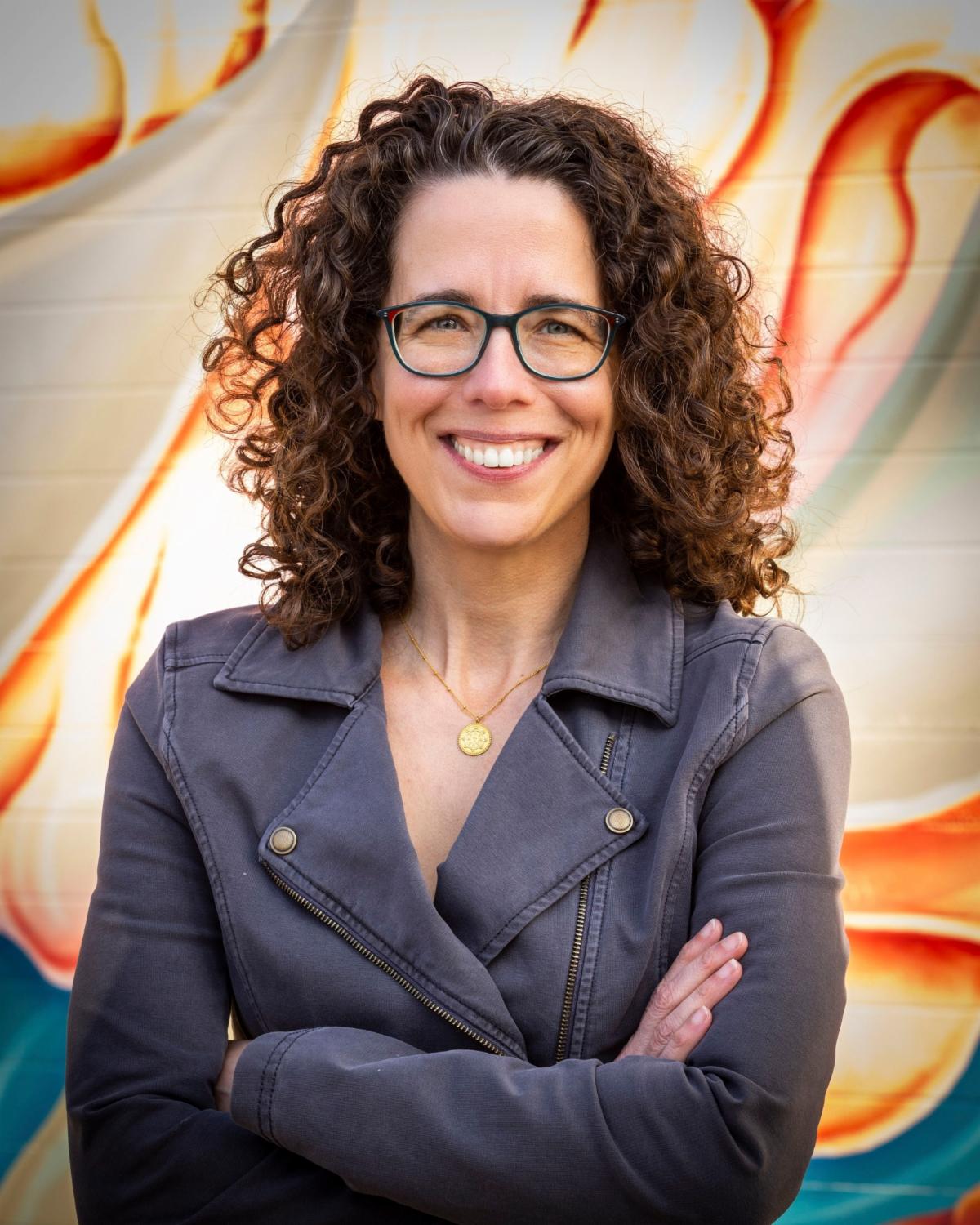
Jane Friedman has spent her entire career working in the publishing industry, with a focus on business reporting and author education. Established in 2015, her newsletter The Bottom Line provides nuanced market intelligence to thousands of authors and industry professionals; in 2023, she was named Publishing Commentator of the Year by Digital Book World. Jane’s expertise regularly features in major media outlets such as The New York Times, The Atlantic, The Today Show, Wired, Fox News, and BBC.
Friedman’s impact on publishing education spans multiple formats and audiences.
-
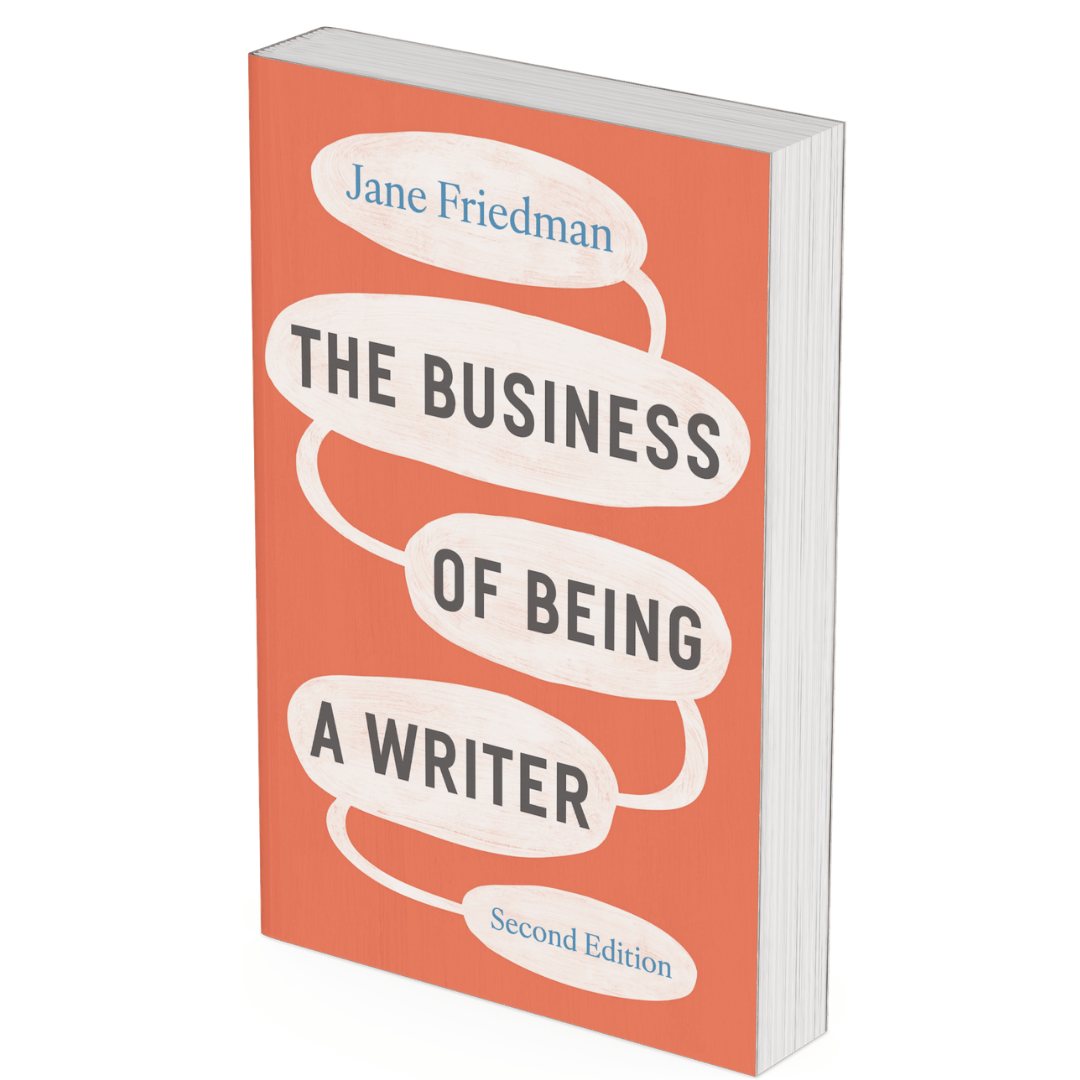
Her book, The Business of Being a Writer, Second Edition (The University of Chicago Press), is used as a classroom text by many writing and publishing degree programs. It received a starred review from Library Journal.
-
She reaches thousands through speaking engagements and workshops at diverse venues worldwide, including NYU’s Advanced Publishing Institute, the AALA’s People of Publishing Conference, the Los Angeles Review of Books Publishing Workshop, Frankfurt Book Fair, the ECPA Leadership Summit, and numerous MFA programs.
- She has helped shape the next generation of publishing professionals through curriculum development at Southern New Hampshire University’s MFA program and faculty positions at the University of Virginia and University of Cincinnati.
-
She has served on the board of several nonprofit organizations, including WriterHouse and The Facing Project. She is currently a board member at Short Reads.
As a trusted industry resource, Friedman has advised and served multiple organizations, including Writer’s Digest, the Virginia Quarterly Review, The Chicago Manual of Style, and the Editorial Freelancers Association. She has served on grant panels for the National Endowment for the Arts, the Whiting Awards, and the Creative Work Fund, bringing her expertise to the development of literary culture and arts funding.
Her long-running newsletters exemplify her commitment to helping writers navigate the publishing landscape: Electric Speed, published since 2009, reaches more than 30,000 subscribers, while The Bottom Line serves as an industry beacon for more than 5,000 publishing professionals. In collaboration with The Authors Guild, she authored The Authors Guild Guide to Self-Publishing, further cementing her role as a trusted voice in publishing. Read more at her website
The Keynote
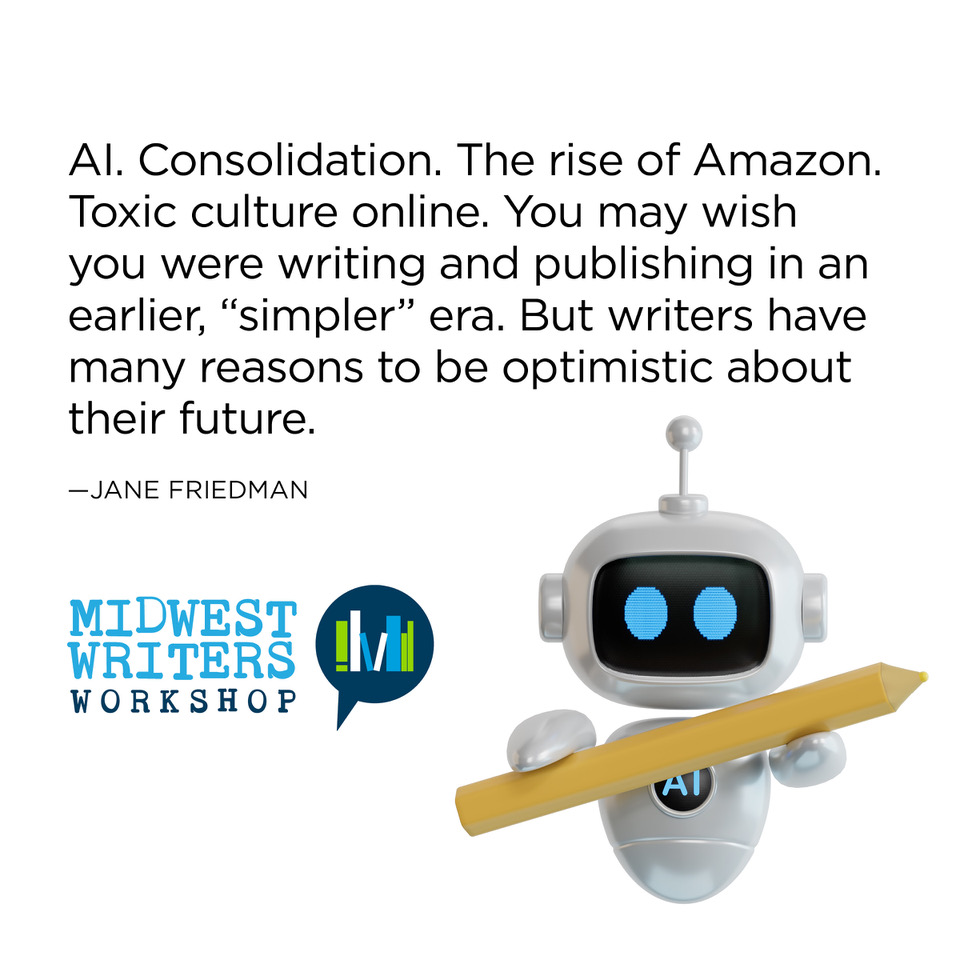
Why Writers Are the Protagonists in Publishing’s Future - AI. Consolidation. The rise of Amazon. Toxic culture online. You may wish you were writing and publishing in an earlier, “simpler” era. But writers have many reasons to be optimistic about their future.
|
The Business of Being a Writer, Second Edition
Published by The University of Chicago Press, The Business of Being a Writer, Second Edition (2025) offers the business education writers need but so rarely receive. It is meant for early-career writers looking to develop a realistic set of expectations about making money from their work or for working writers who want a better understanding of the industry. It’s often used as a classroom text in creative writing programs.
Order The Business of Being a Writer, Second Edition
| |
MWW: My understanding is that direct sales are a driving force in income for indie authors and it seems like a great advantage for them in the control and distribution of their product. What are some of the challenges or disadvantages that authors should be aware of?
JF: The logistical challenges are probably the biggest. You’re becoming an online retailer, so that means you have to source the product, anticipate demand and store inventory for print books or merchandise, if applicable (which might mean having a garage or spare bedroom—or a rented space), and fulfill and ship the product. And I haven’t even touched on processing payments, refunds, and taxes. So it can sound like a lot, and it is, but online retailers have figured this stuff out. Other authors have figured it out. It’s not rocket science. But you have to be committed and have some confidence there’s demand if you’re going to that trouble.
The authors who succeed at direct sales almost universally have substantial platforms first— large email lists, TikTok/Instagram/YouTube presences, or crowdfunding followings. Direct sales reward authors who are willing to operate like full-time content creators (e.g., daily social, email marketing, exclusives for superfans), which is a fundamentally different and more demanding job than just writing books.
MWW: I’ve heard some authors talk lately about “Lean Publishing,” where authors publish an in-progress work and use reader feedback to complete or reshape their stories. It reminds me somewhat of the collaborative setup of Wattpad. Do you see this method gaining traction? What impact could this have on the writing world?
| |
JF: This has been around in some form since the early 2010s, but it’s become more prevalent with authors who are prolific by nature and have a knack for serialization. On the fiction side, those people tend to be using, as you point out, Wattpad, but there’s also Royal Road and YouTube (look up Derek Slaton as a stellar example). Some of the most popular stories today are coming out of the fan fiction community, which is very reader oriented.
On the nonfiction side, Substack is popular, although I think it’s better for market testing and reader community, not the greatest for serializations. There are always exceptions, of course.
MWW: I’ve quoted you often from a talk you gave at our conference a few years back: “self-publishing is changing the face of the publishing industry.” (And yet, I can’t help but notice the stigma it carries with some readers and authors.) Can you expound on this point a bit more? I’m curious if there are some indie-author tricks that traditional publishers have adopted.
JF: The stigma remains if you’re on the literary/MFA side of the community. If you went to the annual AWP conference (Association of Writers & Writing Programs) in Baltimore this past spring, you wouldn’t have found a single panel discussion focused on self-publishing at the entire event of 10,000 writers. That’s astonishing to me.
I was just on a get-published panel at a very literary leaning conference (which shall not be named) where I was clearly invited because I was the one panelist who could speak about, collectively, all the options that are not traditional publishing. I can play that role if asked, but if that’s how you’re setting up the panel, then you’re not really helping writers understand the landscape. You have 3 or 4 panelists, typically agents or people who only believe in traditional, who probably don’t understand what’s happening in the indie market, and will probably imply something is wrong with self-publishing at some point, and then you get me, the one person who has to represent all these other paths (e.g., self, hybrid, paid services, and more) that have little if nothing in common.
Self-publishing is not a monolith, just as traditional publishing is not a monolith. If I could characterize indie authors as having tricks, they tend to place a lot of value on reader engagement (which publishers are quite poor at and look to authors to do), flexibility in how they approach the market (they learn to pivot when conditions change), consistency (in genre, in output, in who they’re serving), and dismissal of all the status and prestige markers that traditional publishers and authors tend to care about. Being overly concerned about status and prestige can get in the way of making good career decisions. For example, it would make zero sense for an indie author to spend a lot of time submitting stories or essays to literary journals and magazines or contests when they reach so few people, pay pennies, and take eons to respond. What kind of sense does that make? Only makes sense if you’re looking to play that prestige game.
MWW: I heard you say in an interview recently that “hybrid publishers have a bad habit of going out of business.” Is there a case-by-case basis for this, or has there been an overarching cause? What do you think these publishers could do differently to become a more reliable pillar of the industry?
| |
JF: Unfortunately, it’s on a case-by-case basis, but—not to be too blithe about it—publishing is not an industry you go into with the expectation of making a fortune. You’ll turn a large fortune into a small fortune, that’s the well-worn joke. Hybrid publishers charge money to authors to stay in business, and they have trouble staying in business because authors sometimes really can’t pay enough to keep the show going if their books don’t sell. It says a lot about how hard this business is from an economics perspective. The hybrids that I find most reliable are exceedingly cautious with the projects they take on. They essentially become selective in the same way that traditional publishers are selective.
MWW: You’ve been clear that AI, when used with discretion, is a great tool for authors. I’m wondering if you’ve seen a lot of pushback on that stance, especially since many authors view its use as a deal with the devil. Can you offer a few examples of how this new technology can simplify or even enhance the writing life?
JF: I receive pushback all the time. At first people emailed me personally, telling me how disappointed they are that I advocate for AI. (For the record, I don’t consider myself an AI advocate, but I am an AI user, which equates to advocacy for some people.) These days, the criticism tends to be less in my face and more in communities or forums. Someone who was once a reader, when learning about my position on AI, wondered in a message thread why we can’t have nice things any more.
I use AI daily. Here’s how I used it today.
- I asked AI to summarize key points across 15 articles I’ve written and published, on selling memoir, to make it easier for me to decide on what material to include in a presentation on that same topic.
- I asked AI to read my notes from an hour-long panel I heard at US Book Show, and tell me what unique information was in that panel that wasn’t already published at my site. (Keep in mind, my site has been going since 2011. At this point, I’ve forgotten as many articles as I remember.)
- I asked AI to review 130 publishing deals from 2026 and create a spreadsheet with the following information: the author; the title; whether the publisher was Big Five, small press or university press; whether the author appeared to be established or new (something I need to research further); the key theme or topic of the book; and the date of the deal. This is work that would’ve easily taken me a full day without AI. With AI, it took about 10 minutes.
It’s also important to describe what I don’t use AI for, which is many things, but to give you an idea:
- I don’t use AI to create or design my presentations. I’ve seen AI do this for other people, and the results are awful. But I imagine the tools will get better or people will stop using the tools as badly as they are now.
- I don’t use AI to write my articles, but I will use it to summarize them for SEO purposes (25-word snippets).
- I don’t use AI to help me come up with ideas for my work because frankly it always has below average ideas compared to me, even on my worst days.
| |
|
WRITING SERVICES SALE RIGHT NOW!
Sarah Schmitt is offering the "Plot Doctor" package for 30% off until July 18. Limited supply.
Did you know MWW offers Writing Services? Get a sample of manuscript reviewed by one of our experienced evaluators. Check out their bios, specialties, and services here.
Email midwestwritersworkshop@gmail.com to set up a manuscript evaluation
| |
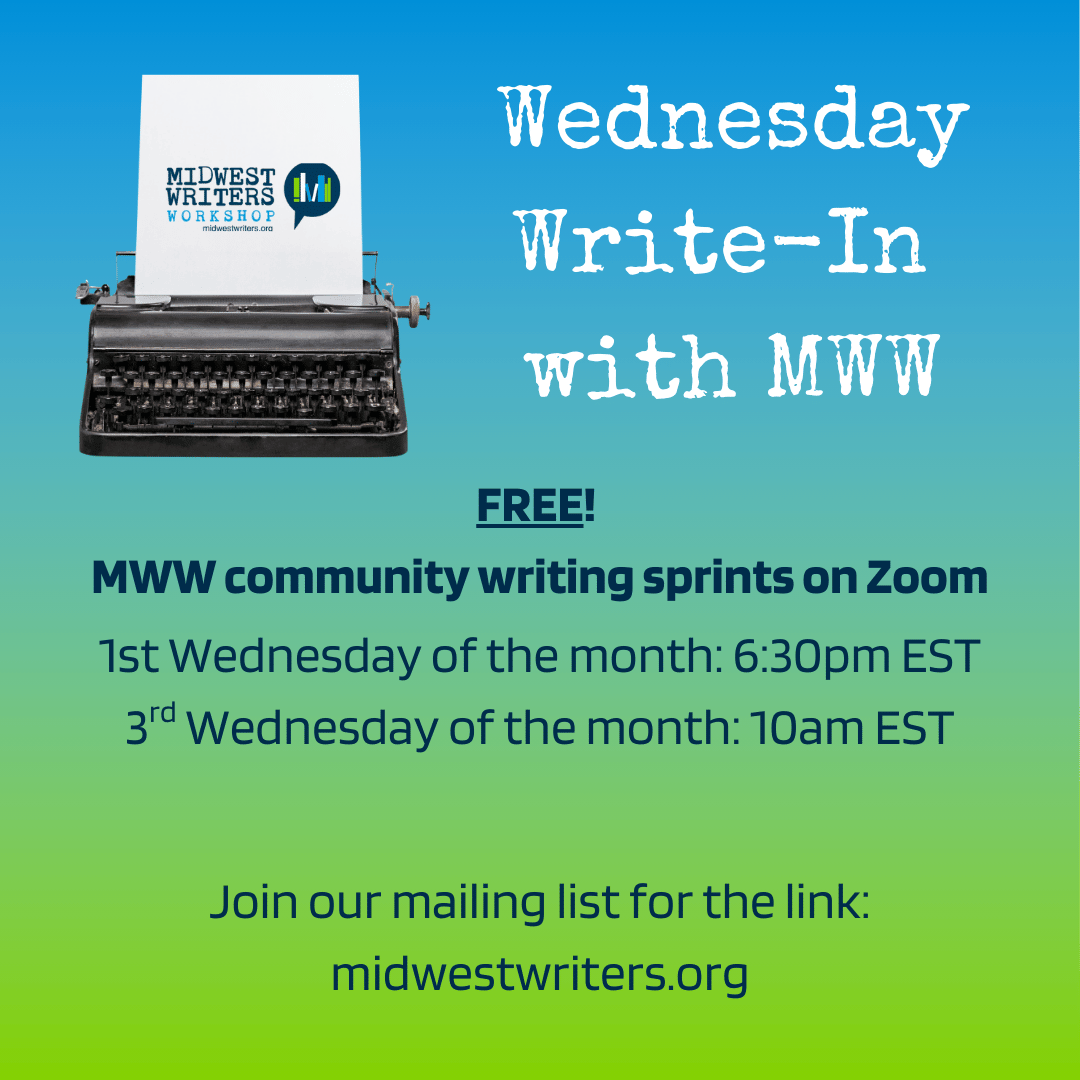
The "Wednesday Write-In" helped dozens of writers in its inaugural year (including me!) and we've decided to double it!
We will now meet at 6:30pm EST the first Wednesday of each month AND at 10:00am EST on the third Wednesday.
What is the Write-In?
This is a FREE 30-minute Zoom session where we get together and WRITE. That's it! But it sure gets your butt in the seat!
It might seem weird to have the Brady-Bunch Zoom screen filled with people not talking to each other, but please trust me: It works. It creates an accountability; it creates a space where your sole purpose is to get words down on paper. I might allow for a *little* chit-chat :)
Let's dedicate 30 minutes of our day, twice a month, to generating words and developing our craft!
| | Writing the book is only the beginning. Discover why successful authors don't go it alone. Learn proven strategies, marketing techniques, bookstore/library outreach, and career-building insights from veteran authors. Join the Vendela community where ongoing support becomes your competitive advantage. Your next chapter starts here. Vendela: traditional publishing for today’s author. | Available from major booksellers on June 30, 2026! | | |
Placing an ad in one of our conference programs, conference-specific emails, or our weekly newsletter* is a way to get your information out to interested writers!
Click the button below for more details on what advertising opportunities we offer.
*currently we have ~4,000 subscribers with a ~45% open rate
| | See What Else MWW has to Offer | | |
WRITING SERVICES
Get those pages in tip-top shape!
MWW Writing Services connects writers to trained experts in the field to help them to improve their writing with relationship-based, craft-centered guidance. The Manuscript Evaluation opportunity during our summer workshops has been so popular over the years that we wanted to develop this online connection.
MWW Writing Services will help writers in fiction genres (general, literary, mystery, thrillers, young adult, middle grade, women’s, etc.), nonfiction, and poetry, as well as query letters and synopses.
| |  | |
Finish an essay, a book, a paragraph? Have something published? Tell us about something exciting you’ve done with writing and/or publishing in the past year. Bonus points if you can tell us how MWW has made an impact on your writing.
Send your success stories and links to midwestwritersworkshop@gmail.com
MWW is dedicated to building a community where writers can network
with others and grow.
| | | |
Every writer wants to improve their craft, and the best way to do that is in a supportive, welcoming community--like the Midwest Writers Workshop!. That's why we offer gift certificates in any amount. Nudge the writer in your life to take that next step!
Gift certificates are good for one year from the purchase date and can be applied towards any of our conferences or Writing Services
| | | |
Join our Facebook group to take part in writing discussions, announcements, encouragements, and the occasional writing meme.
| | | | | |