|
*Vote for Lakes: Questions to Ask Your Candidates
*Meeting the Moment: Maine Conservation Alliance Policy Guide
*Lake Protection Coalition Update
*Native Plant Spotlight: Red Osier Dogwood
*Lakeside Lighting that Reduces Light Pollution
| | Vote for Lakes: Questions to Ask Your Candidates | |
A Message from Susan Gallo
Fall is my favorite time of year! I love the dry air. I love adding a layer when I go outside. I love putting my garden to bed. And while I don’t love political ads and get annoyed at the visual clutter that political signs create along our roadways, I also remind myself how lucky I am to participate in the democratic process.
As a 501(c)3 nonprofit organization, Maine Lakes cannot advocate for candidates or parties. But we can encourage our members to vote and to speak up for strong lake protection policies.
One of the best things you can do at this time of year is reach out to your local candidates and ask them about actions they would take to protect Maine’s lakes.
Ballotpedia, a nonpartisan nonprofit dedicated to informing the public about elections, has a page listing all our House candidates HERE and another page listing Senate candidates HERE.
If you need help finding your Senate or House districts, Ballotpedia also has interactive maps of all Maine legislative districts HERE.
Some topics to help start a conversation about lakes with your legislator:
-
Your Favorite Lake: Ask candidates if they have a favorite lake, and if they have any favorite lake activities. If you are a volunteer or a member of an association, share more about the work you do and why lakes are important to you.
-
Lake Economics: Ask candidates if they are aware that Maine’s Great Ponds (lakes and ponds over 10 acres in size) provide over $14 billion in value to the Maine economy each year, including values from drinking water, recreation, real estate, and summer camps. Share that maintaining high lake water quality protects real estate values.
-
Invasive Aquatic Species: Ask candidates if they know about the 38 waterbodies in Maine that are infested with invasive aquatic species and if they will work to keep strong protections like “Clean, Drain, Dry” in place.
-
Lake Funding: The vital work to protect lakes is woefully underfunded, and lake protection work lacks an on-going, sustained funding source. Ask them if they would sponsor legislation to create a reliable funding source that would better protect our Great Ponds, which are a public resource deserving of public funding.
Thank you for speaking to your candidates and for taking the time to vote either in advance or on election day - Tuesday, November 3!
| | |
As an Environmental Priorities Coalition (EPC) member, Maine Lakes was invited to participate in the development of Maine Conservation Alliance (MCA) Policy Guide, a document that will guide the advocacy work of MCA for the next five years.
We were thrilled to see lake protection as a priority for MCA, and we look forward to working with MCA and EPC members to turn these priorities into policies. The excerpt below highlights lake protection priorities. You can read the entire guide HERE.
We can act now to protect Maine’s scenic, recreational, and working waters.
Clean water is essential to every single one of us. Maine is home to more than 6,000 lakes and ponds that are interconnected with 32,000 miles of rivers, streams, and brooks. Our sporting heritage and outdoor industries depend on clean water and functional lake and river ecosystems that support fisheries and a wide variety of wildlife habitats.
Maine’s beautiful waters attract recreationists, summer campers, home buyers, and many thousands of visitors that support our tourism economy. Our waterbodies play vital roles in local communities by supplying clean drinking water to nearly half of Maine’s water districts and by funding key municipal services through the tax revenue of high-value waterfront properties.
But Maine’s lakes and waterways are at risk. More frequent and intense storms are eroding soils and pumping nutrient pollution into lakes and streams while warming waters are promoting algae growth and the spread of invasive species. Poorly performing septic systems, especially in sandy soils next to lakes and ponds, add to the burden of pollution.
Here in Maine, we are fortunate that lakes and ponds over 10 acres in size are considered public resources. But as the impacts of pollution and climate change accelerate, Maine’s current investment in water protection can no longer keep up with the need. Lake associations and watershed organizations raise millions of dollars each year and provide thousands of volunteer hours to support the state’s work, but they have also reached their limits of capacity.
More funding, staffing, and support for lake and stream protection work will be essential in the coming decade, or we risk losing this valued part of Maine’s outdoor heritage.
Key Policy Actions
-
Establish a secure, long-term funding source for lake and stream protection work that supports increased capacity at state agencies and broadens the scale and scope of local lake protection projects.
-
Research and publish a county-by-county blueprint for land and water protection over the next 10 years, actively engaging communities in prioritizing high-need, high-value projects that are distributed fairly across regions and funded creatively with local and nonprofit partners.
-
Support the implementation and enforcement of common-sense regulations for improving water quality, including updates to shoreland zone protections, new design standards for septic systems that ensure wastewater is properly treated, restrictions on toxic pesticide and fertilizer applications, and stronger inspection protocols for aquatic invasive species.
To learn more visit the Maine Conservation Alliance website.
| | Lake Protection Coalition Update | | |
While the Lake Protection Coalition (LPC) has been quiet since the legislative session ended in May, we can assure you we have been busy!
LPC steering committee members have been meeting with funders and lake advocates, and have crafted a three-year action plan to move LPC priorities forward, including the creation of a long-term and sustainable funding source to keep Maine’s lakes clean and healthy.
Plan goals include:
-
Strengthening the operational capacity of the Lake Protection Coalition by hiring an LPC program manager and building the LPC as a resource for individuals, organizations, and businesses
-
Developing the economic case and justification for lake protection by supporting a UMO graduate student’s research quantifying current lake-protection spending, comparing it to actual need and projected future need
-
Strengthening relationships with state and municipal decision-makers by creating outreach materials and training opportunities for decision-makers
-
Increasing stakeholder engagement in advocacy for lake protection by increasing grassroots activism and bringing together stakeholders and decision-makers
-
Advancing lake protection policy and regulatory changes by drafting a suite of priority lake protection policies and lobbying for their passage
To learn more, and to sign up to be part of the coalition, visit the "Act Now" tab at the LPC website
HERE.
| | Native Plant Spotlight: Red-osier Dogwood | | |
By Lilit Mathieu
Maine Conservation Corps, Shore Corps Steward
Lake Auburn Watershed Protection Commission
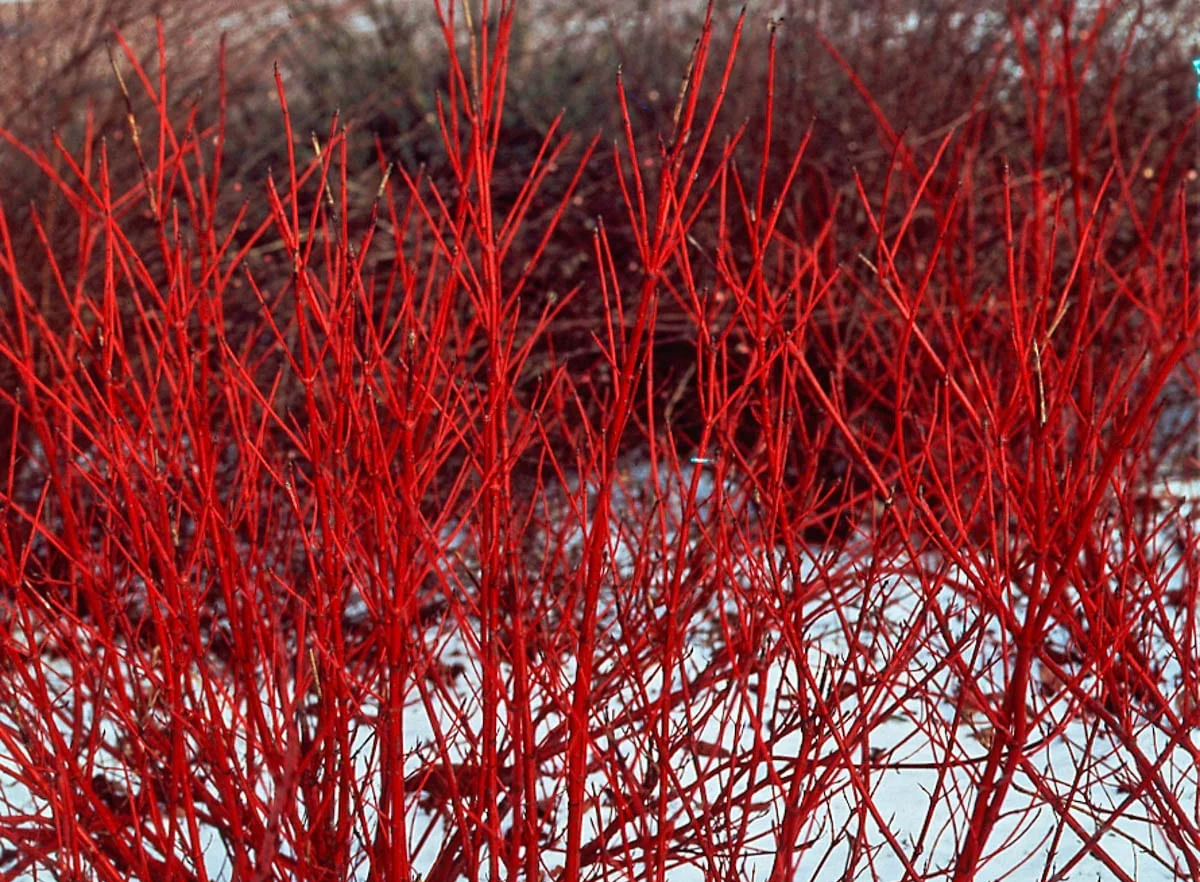
Red-osier Dogwood (Cornus sericia or Swida sericia) is a striking native Maine shrub commonly used in landscaping, but it has another purpose - controlling soil erosion!
This shrub has a fibrous root system that spreads horizontally, which supports surrounding soil and prevents erosion. This dogwood species is also host to over 120 caterpillar species, so if you want to control erosion and provide pollinator habitat, this shrub is a great choice for you!
Red-osier Dogwood can be easily identified by its bright red to yellow bark that is dotted by large white lenticels. Its leaves are opposite with smooth margins, and starting in May, this species produces flat-topped panicles of tiny white flowers, each carrying four petals with pointed tips. Red-osier Dogwood has a white pith (stem center), which is a key difference from its close cousin Silky Dogwood (Cornus amomum), which has an orange pith. In the winter, dogwoods have pointy buds with two scales that meet in the middle and sometimes have residual berries.
Red-osier Dogwood is one of the many species that can be propagated by live staking, which is when 12" - 36" segments of branches are planted at least half way into the ground. With consistent moist soil contact, the nodes on the branch planted below ground will produce roots, while the segment above ground will grow leaves and branches. Live staking is a great low-impact (and also low-cost) shrub propagation and erosion control method for lakeshores.
While early spring is the more typical time to propagate shrubs by live staking, you can also propagate a shrub like Red-osier Dogwood this way in late fall before the ground freezes.
You can learn more about live staking HERE.
More information about Red-osier Dogwood can be found HERE.
| Lakeside Lighting That Reduces Light Pollution | | |
Lakeside Lighting: Finding Ways to Reduce Light Pollution Impacts on Local Wildlife
by Caroline Seibert, LakeSmart Coordinator
Originally published in LakeSmart Living, a newsletter for homeowners participating in the LakeSmart program, June 2026.
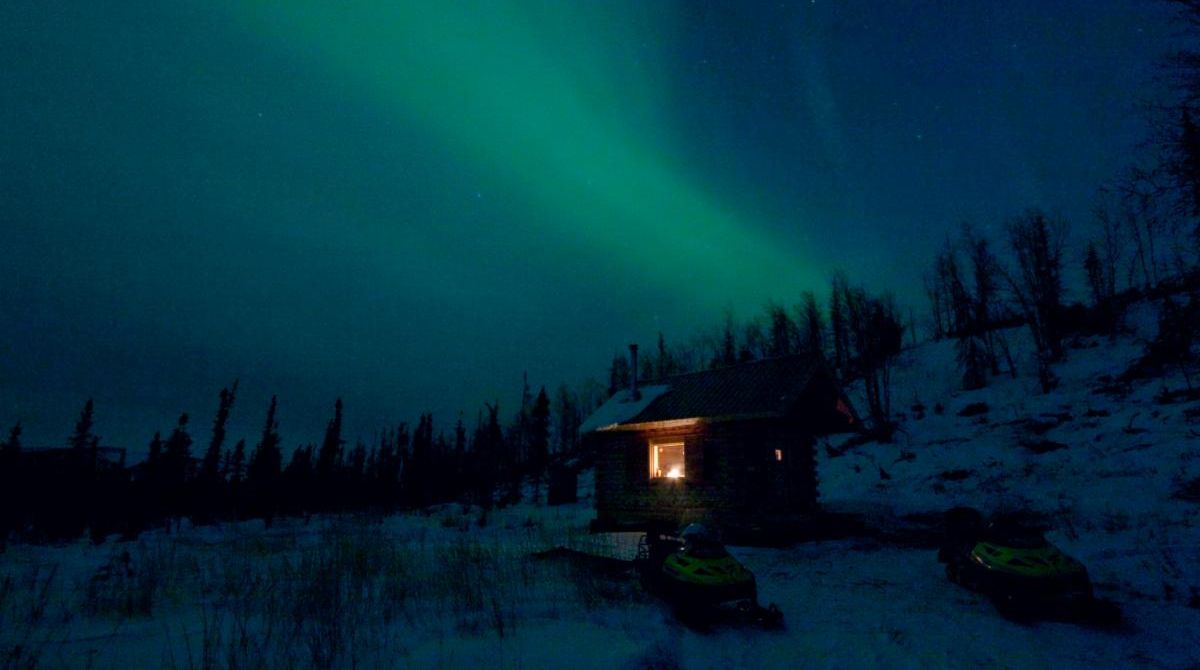
Did you know that Maine is home to the largest contiguous area of dark skies east of the Mississippi River?
This night-time treasure is part of what makes our experience ‘up to camp’ so incredible. Besides our own enjoyment of the stars, there are many benefits to keeping our skies pitch dark – local wildlife! Reducing the use of artificial lights at lakeside camps is critical for the migratory movement of some birds and amphibians, as well as the pollination efforts of many insects. Many moths in particular, are nocturnal, often specialist pollinators, that can easily become disoriented by outdoor lighting. Other nocturnal pollinators that are affected by light pollution are bats, and some species of beetles and bees. Many amphibians rely on dark nights for reproductive signaling (think peepers!).
You can improve wildlife's survival chances by incorporating some of the practices below!
Easy steps to lessen your light pollution impact:
- Shoreland lights matter! Reflections of lights on the lake surface can be seen for miles. Reduce or eliminate dock lighting where possible.
- Use downward facing lights with opaque reflector shades.
- Consider motion detectors for security lighting.
- Replace blue-toned (cooler) light bulbs, with warmer-toned lights.
| | |
In Related News...
To help darken our skies and reap more of the benefits described above, Maine’s Act to Promote Responsible Outdoor Lighting requires new or replacement outdoor lighting on public property or funded by public funds to meet strict dark-sky standards starting September 30, 2026.
The law applies only to new construction or replacement lighting installed using public funds or on public property (such as streetlights, schools, and town offices). Lights on private property are exempt. Regulated lights emitting more than 1,000 lumens must be fully shielded to direct light downward to eliminate upward sky glow.
To reduce blue light and glare, regulated lights must by 3,000 kelvins. Nonessential public lighting (like decorative facades, illuminated advertising, and vacant sports fields) must be off during designated late-night hours, with exemptions for outdoor sports lighting, emergency lighting, and lighting for public highways and sidewalks.
| | |
To manage communications from Maine Lakes,
click here to change your communication preferences.
To opt out of all e-newsletters from us, including
Advocacy Alerts, LakeSmart News, and the monthly newsletter,
click the unsubscribe button below.
Join us on Facebook, Instagram and LinkedIn
| | | | |