April 2024

Decorative image with the text "Museum Roundup/ News and Updates from the Maine State Museum"

The Latest...

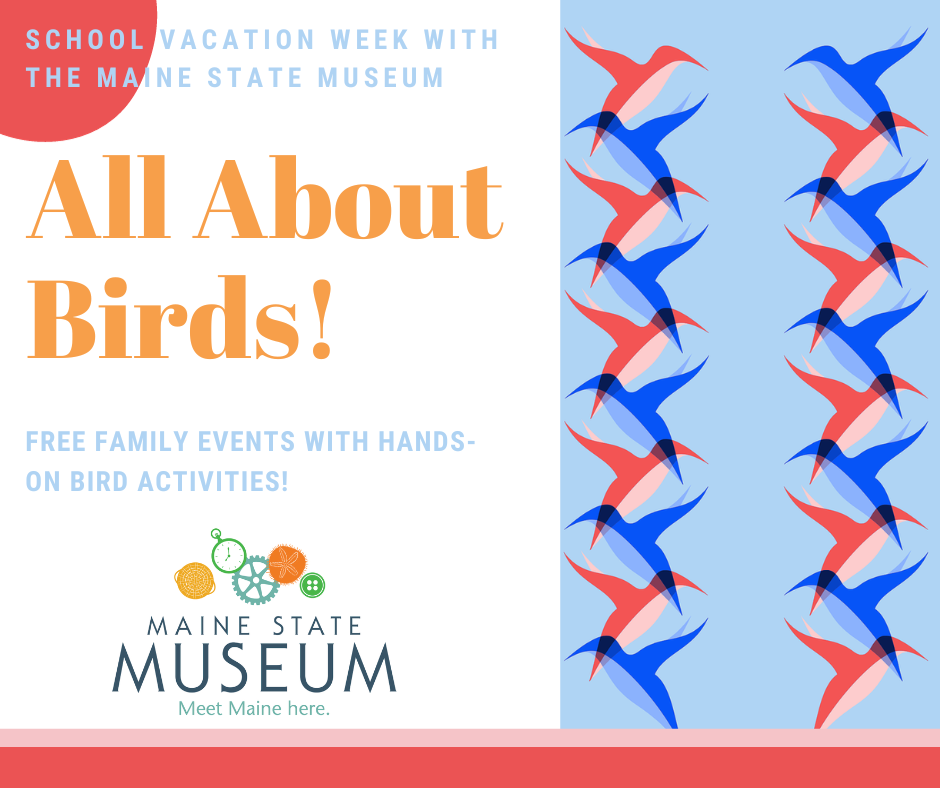
Family Bird Programs Return in April!

Maine State Museum educators are traveling to four more libraries for April school vacation!


The All About Birds! free family events are jam packed with hands-on activities inspired by our feathered friends. We will build nests, match beaks, fold origami, and more!

April 16- Skidompha Library, Damariscotta

April 17- Waterville Public Library, Waterville

April 18- Turner Public Library, Turner

April 19- Bailey Public Library, Winthrop


Click here for more info!

Oh Baby, It's an Eclipse!

Baby wearing eclipse glasses

A museum staff member's baby is turning one on April 8th, the day of the eclipse. Happy birthday!


She's wearing her glasses to remind you to be careful when looking up - click here for tips on safe eclipse viewing.

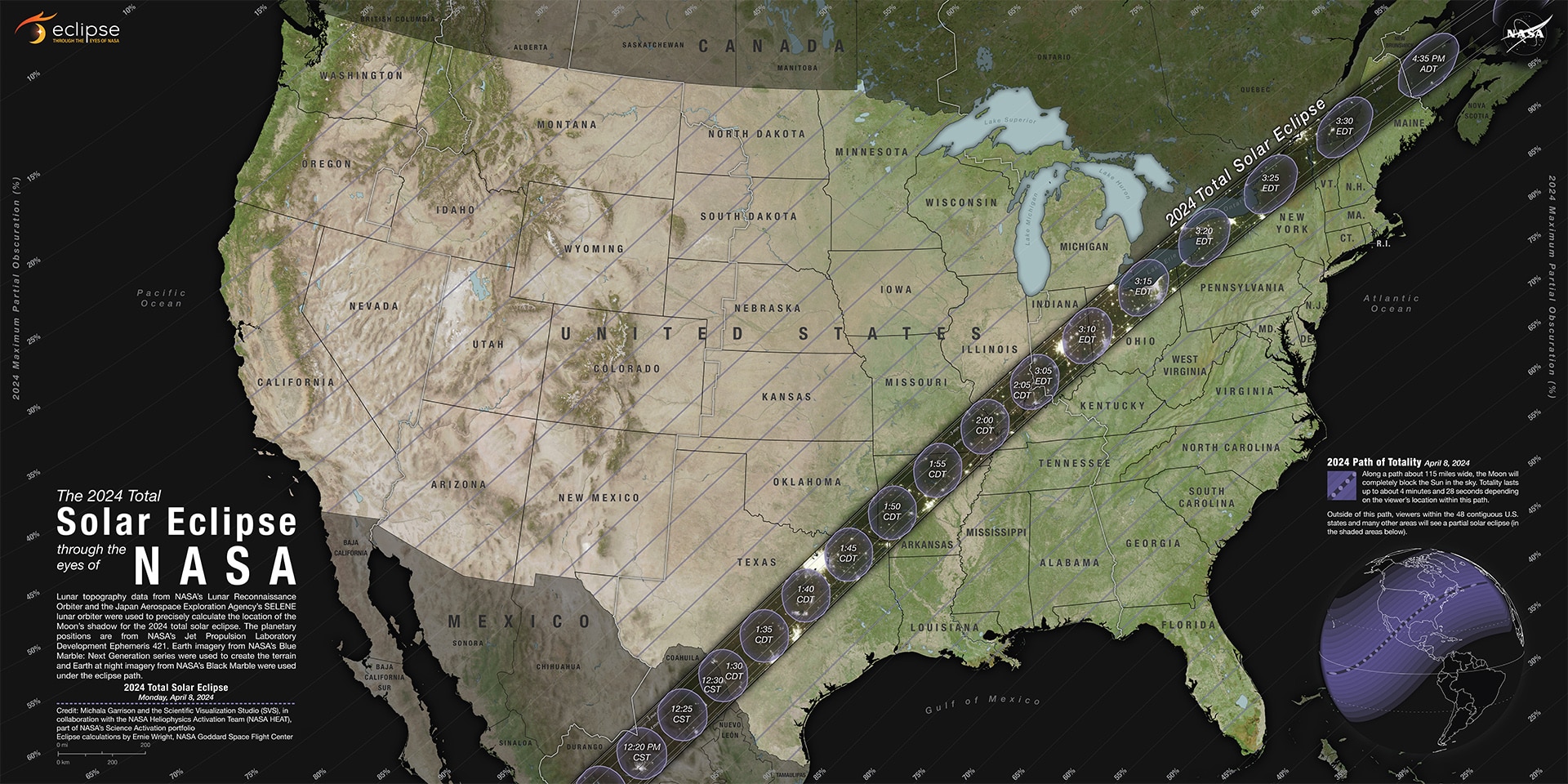
The path of the 2024 eclipse

Remembering the 1963 Solar Eclipse

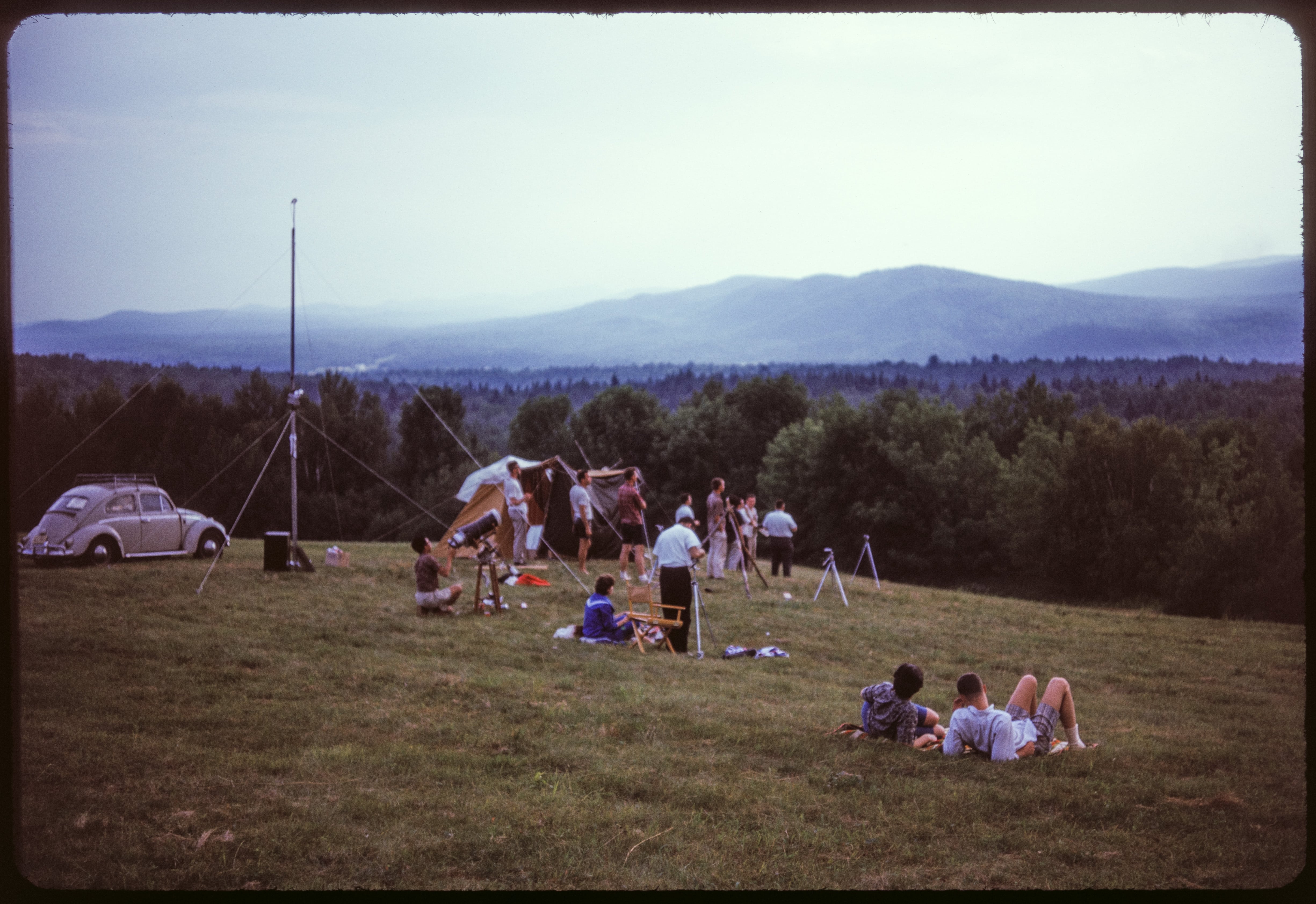
Photograph by Paul Fournier. Eclipse viewers in Bingham, Maine, looking southwesterly toward Old Bluff Mountain on July 20, 1963.

Many people will doubtless feel a sense of déjà vu during the total solar eclipse that will be viewable in some parts of Maine this year on April 8. Those lucky few (tell us who you are!) were also in Maine on July 20, 1963 for a total eclipse.


The July 1963 eclipse was a rare event for Maine. The central part of the total eclipse’s 53-mile wide swath ran from northern Franklin County southeasterly to Bar Harbor. Other than Alaska, Maine was the only state in the path of totality.

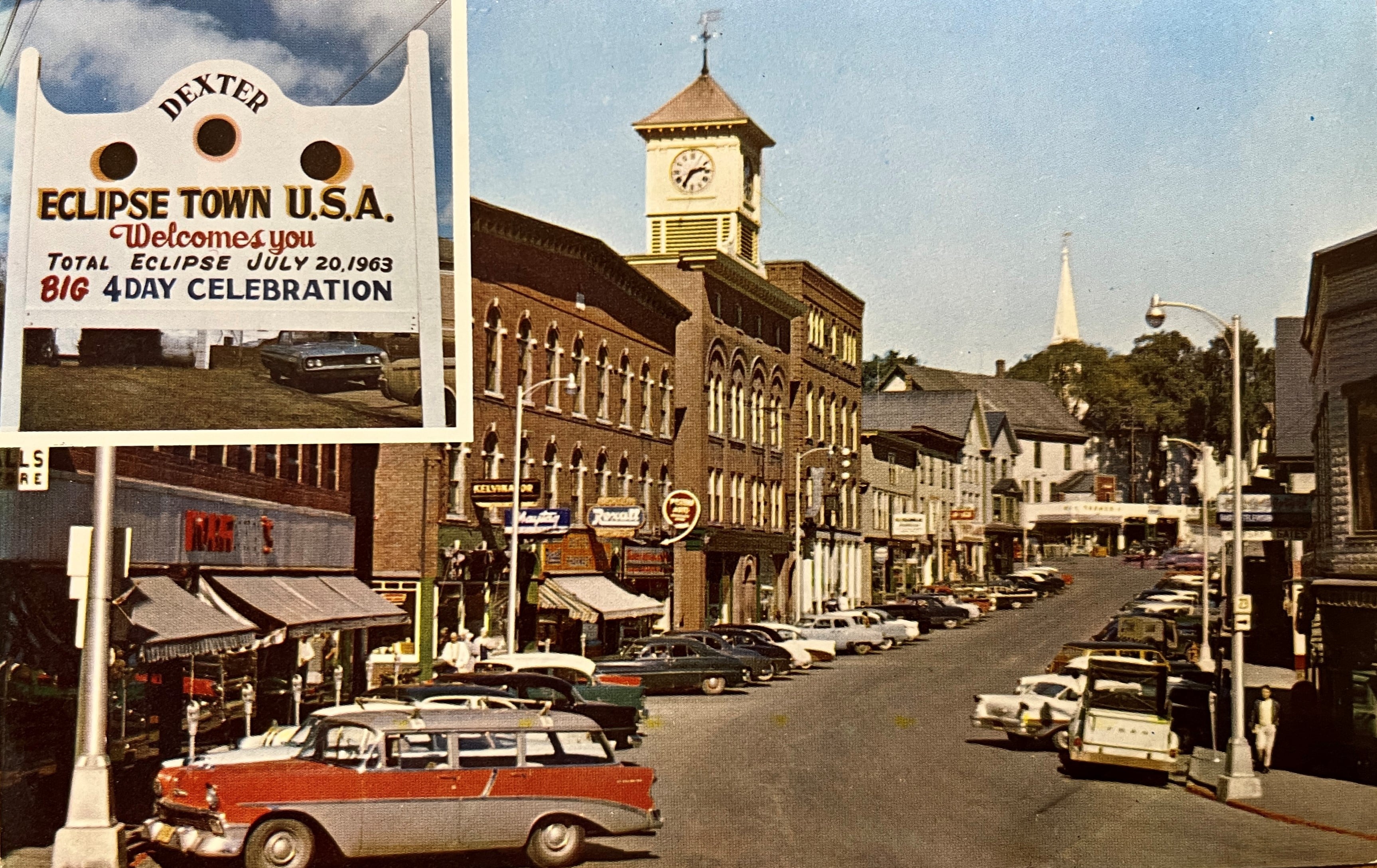
 Main Street in Dexter, Maine, 1963

As the center of the eclipse’s totality path, Dexter, Maine was the star of the 1963 show. The town drew thousands of eager observers from across the country. Special arrangements were made to increase local accommodations and campsites. Celebratory events were held, and Dexter’s traditional 4th of July celebration was rescheduled to the eclipse weekend.


As is always true in Maine, weather was on the minds of many in July 1963. What happened? Clouds and fog parted just in time for the total eclipse in some towns, but not so at all for others. Still the anticipated economic boon to the state bore fruit. The estimated 200,000 visitors who came to Maine to experience the eclipse contributed over $10 million in tourism revenue in 1963, or over $101 million in today’s dollars.


Best wishes to all for a cloudless, unforgettable April 8, 2024 total eclipse in Maine!

"No, 'Twas No Eclipse" - The Mystery of Maine's Other Dark Day

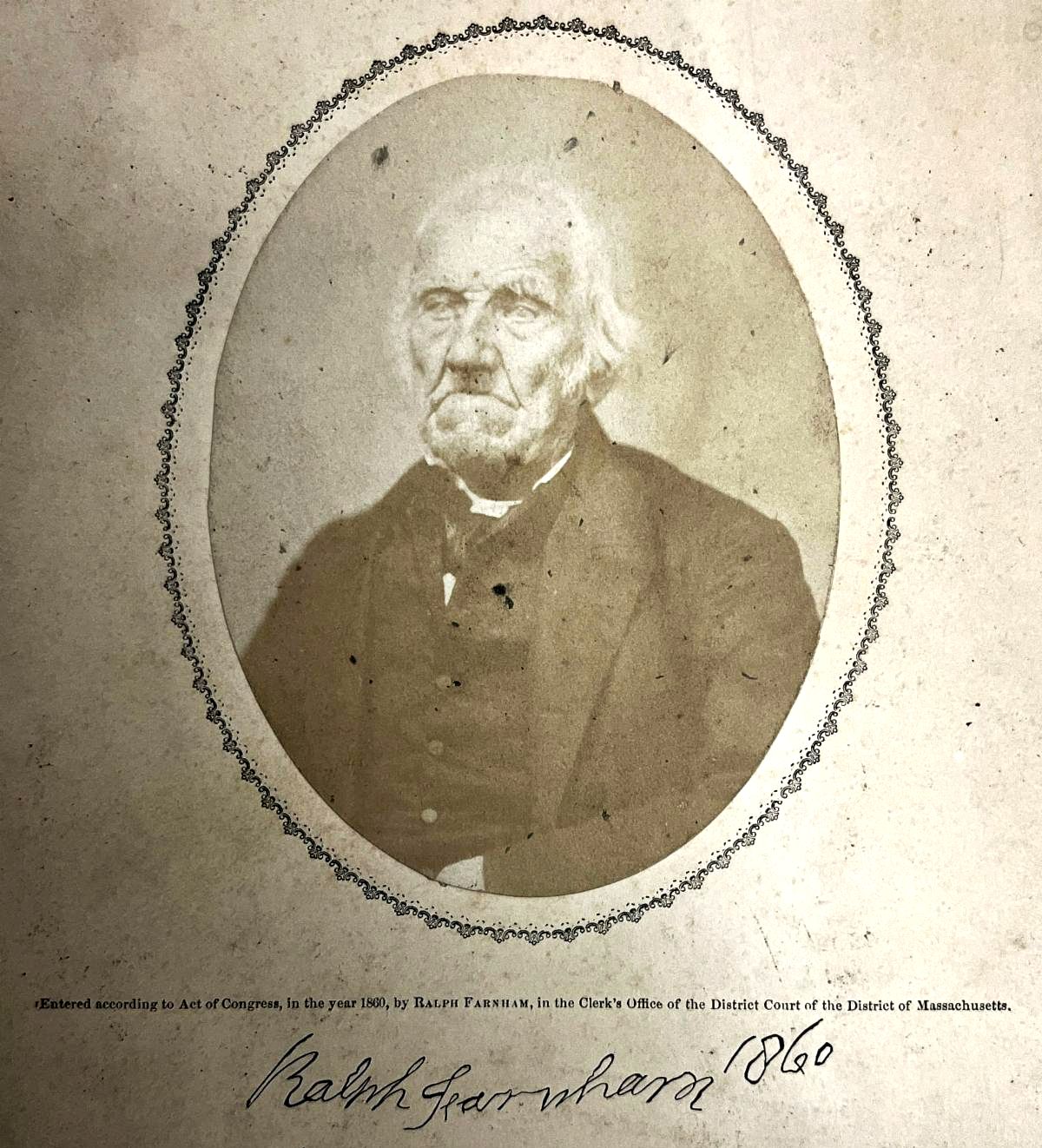
Ralph Farnham, born in Lebanon, Maine in 1756, led a relatively quiet life until his 104th year. His notoriety as the last survivor of the Battle of Bunker Hill, and one of Maine’s few living Revolutionary War veterans, propelled him into the national spotlight in 1860. Farnham was celebrated for his service and age in his hometown of Acton, Maine as well as Boston, Massachusetts. His life story was published in the Biographical Sketch of the Life of Ralph Farnham of Acton, Maine by C.W. Clarence. Sales from this booklet and images of Farnham helped support him beyond the $61.66 yearly pension he received for his military service.


The booklet includes Farnham’s memories of the “dark day” of May 19, 1780. On that day, Farnham was attending a social gathering at a neighbor’s house when a young woman noticed the abrupt darkness, saying that “it was growing dark, though not a cloud was visible.”


As Farnham and others hastened homeward, he had not gone far into the forest before it was too dark to proceed. Noticing the sudden quiet, he sat on the trunk of a fallen tree, and “awaited the sound of the Archangel’s trump, expecting to see the dead arise, and the heavens unroll—for he thought the judgment day had come.” Farnham did not know how long he sat there, but as it began to grow lighter, he found his way home.

While the author of Farnham’s book insisted that the event was a total solar eclipse, of which one was visible in October 1780, Farnham remained resolute, “No, ‘twas no eclipse.” To him, it was a spiritual sign. The true source of the “dark day” that encompassed much of New England remained a mystery for over two centuries. Today, evidence by the University of Missouri Center for Tree-Ring Science has shown it was most likely caused by massive wildfires burning in Canada. Large smoke columns were carried into the upper atmosphere, blocking out the sun from New Jersey to eastern Canada.


Image: Ralph Farnham photographed in 1860. MSM2024.9

Did you miss last month's Roundup? You can always read back issues here.

MAINE STATE MUSEUM  www.mainestatemuseum.org

Support the Maine State Museum

Facebook  Instagram  YouTube