|
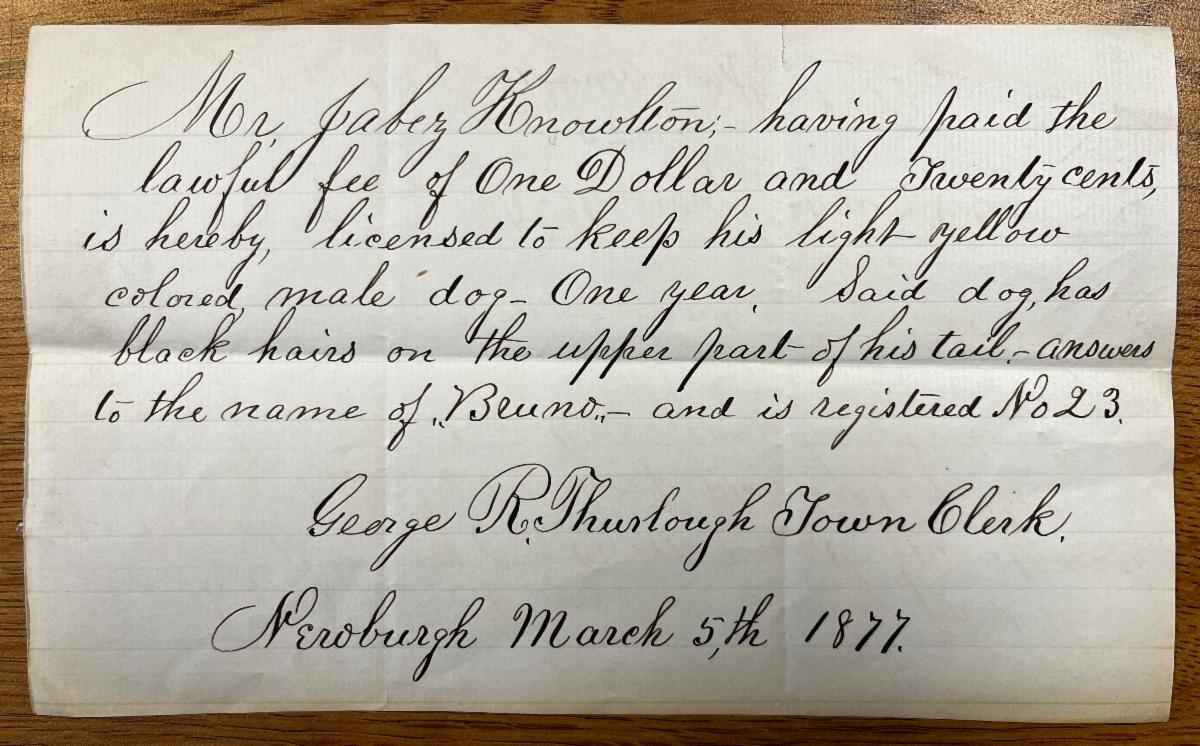
The early Maine dog license pictured at left was issued March 5, 1877, one week before Maine’s “Dog Law” went into effect.
Newburgh, Maine store owner Jabez Knowlton paid the standard fee registering his dog Bruno, described as a light yellow dog with black hairs on the upper part of his tail. You can imagine Bruno lazing in the sun at the Knowlton family store as he waited for pats by all who came by.
Virginia is credited with issuing the first U.S. dog license in 1853. By 1877, Maine had followed with a stringent law aimed to prevent loss of livestock and damage to property by stray and wild dogs. Under the new “Dog Law”, a one-year license to identify and protect Maine’s canine residents cost $1.20 ($37 modern equivalent) of which $1 was paid to the town treasury and .20 to the town clerk. The license fee covered the cost of damages and provided a small financial boost to town economies.
Rarely enforced and facing criticism, the law was repealed and amended a year later allowing towns the option of licensing.
|