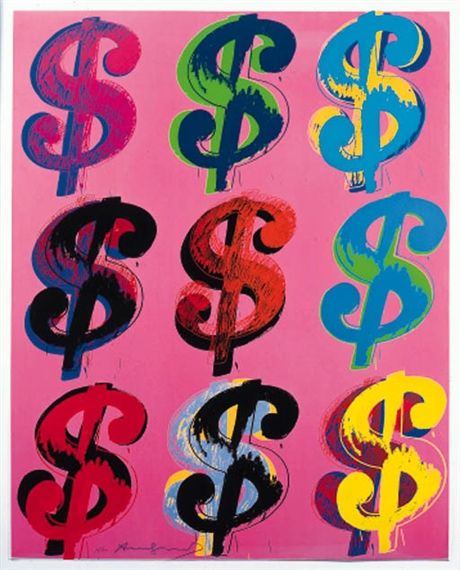
In 2019 there was $64,100,000,000 in total art sales globally. Most of this came from the Primary Market (galleries selling works for the first time), and from the Secondary Market (auction houses re-selling art).
Much of this 64 billion in sales was untaxed
and will lead to the purchasers making profits on it in the future.
This is how they did it and how you can too…
|
|
|
In the US
In State Purchases
: Art Price + Sales Tax = Purchase Price
Out-of-State Purchases
: Art Price + Use Tax = Purchase Price (you are supposed to disclose the use tax when filing your taxes)
|
|
There are a few different ways to profit from your art collection depending upon your circumstances. Keep reading to see what might work for you...
*
|
|
Russell Gordon
Indivisible
40x34
oil
|
|
Option 1
You are a collector and you enjoy art
You buy an artwork from a gallery in your home state, pay the sales tax, and hang it in your home to admire.
An example of your transaction being:
$100,000 (Art Price) + $9,000 (Sales Tax) = $109,000 (Purchase Price)
You enjoy the painting for many years as the price steadily increases – due to your good taste, and the support of the artist’s gallery which works hard to increase the value of the artist’s works through advertising, shows, sales, and strategic auctions.
After some time (at
least
one year), you decide to donate your painting to a museum. The museum is happy to accept your painting into their collection where it can reach a wider audience. Not only will the community now be able to view the work, but you can claim a Charitable Income Tax Deduction equal to the painting’s current fair market value. You hire a qualified independent appraiser and work with the gallery to determine the current value which is now $1,000,000! Congratulations!
You get advice from your accountants and they tell you if you donate the painting to a museum you can deduct its appraised value from your taxable income, as long as the deduction is less than 30% of your income. Let’s say your income is $4,000,000 a year. You could subtract the value of the painting ($1,000,000), making your taxable income $3,000,000. But, if you make $2,500,000 a year, then the maximum you could deduct would be 30% of that, or $750,000, making your taxable income $1,750,000.
At the end of it all you’ve saved, at the very least, $225,000 in taxes. A pretty good return on your $100,000 investment.
|
|
E.B. Lewis
Deep Within, Kiawah
20x28
watercolor
|
|
Option 2
You are a collector but don’t particularly enjoy art. You collect mainly for investment purposes.
You buy an artwork from a gallery or an auction house and ship it directly to a climate-controlled warehouse in a Freeport (
click here to read more about Freeports
). Many Freeports can be found in Europe, but there are
some in the US
. As long as it’s there, you don’t have to pay taxes on it. It remains stored there and continues to increase in value for the same reasons as before.
After, say, ten years you get it appraised and are made aware of its $1,000,000 value. You decide to sell it, so you speak with the gallery where you originally purchased the piece, or you go through an auction house. The piece could theoretically sell to another collector with works in that same Freeport. In that case, no one pays tax, you make a profit, and that profit is taxed as Capital Gains (which is lower than the tax on income).
If there is not a buyer in that Freeport then you might decide to sell that painting through a gallery or an auction house in which case you take the sales tax hit you avoided before (and pay fees to the auction house).
It goes up for sale. At this point it might not sell at all, or it will sell for anywhere between its reserve price and… well, the sky’s the limit. The profit you make from the sale is taxed at that lower-than-income Capital Gains rate.
|
|
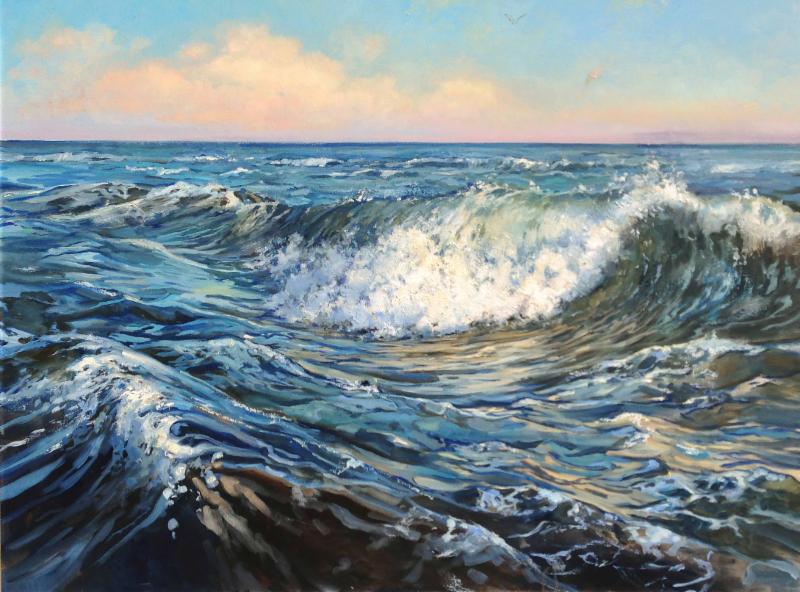
Karen Larson Turner
Tumbling to Shore
36x48
oil
|
|
Option 3
You are a business owner and/or are buying for a corporation.
There are a number of reasons a business or corporation would choose to buy art. They buy it to decorate with, they buy it because it has a positive impact on their employees, and art communicates a variety of messages to their clientele. A traditional or historic painting might project the message that the business is serious and will take its client’s needs seriously. A piece of modern or abstract art might convey that the business is ‘cool’ and ahead of the curve. Or, it could be more literal. The Campbells Soup Company has a collection of Warhol’s soup paintings, and Coca Cola owns paintings of their iconic bottles from our own Sally Tharp!
Not only does the art enhance the aesthetics and brand of the business, but it can be quite profitable. Art is often included in the building budget for new businesses much like architecture and interior design. But unlike furniture and wallpaper, the value of the art isn’t likely to deteriorate over time.
Depending upon the country, purchasing art can be a way of delaying or avoiding taxation because art is usually considered a business expense. Every dollar they spend on art is a dollar they don’t have to pay taxes on, and that untaxed art will keep increasing in value.
|
|
Sally Tharp
A Little Spice
48x36
oil
|
|
There is no guarantee that the art you buy will increase in value, or that you will find a buyer when you want to sell it; but the truth is, working with a reputable gallery and collecting art that you enjoy from a promising artist has the potential to give you large returns on investment.
At Wells Gallery we recommend buying art that brings you joy and enhances your daily life. If it increases in value and benefits you in the future that’s a wonderful bonus!
|
|
Right now happens to be a great time to purchase art!
|
|
To show our appreciation for all your support for the artists and the gallery, we would like to offer you 20% off your purchases for the month of April. This is the time to get that painting you've been thinking about, or to collect a painting from your favorite artist. The discount will not affect the artists and they will continue to receive 100% of their pay.
**
We are happy to ship, or deliver if you are local. If you would like to see a painting in your space before making a decision we offer
free digital design services
.
|
|
Wells Gallery
(843)576-1290
kiawah@wellsgallery.com
www.wellsgallery.com
|
|
|
* We are not tax specialists and recommend you consult your accountant before making any decisions regarding your taxes.
** 20% Discount does not apply to paintings in the Southern Traditions show or items purchased before April 3, 2020.
|
|
|
|
|
|
|