Getting everyone outside and involved in forestry education | | As spring weather makes its erratic way into our state, educators will be thinking about opportunities to take students outside for the unique learning experiences the outdoors provides. Others of you will be meeting with administration and boards to plan improvement projects to school grounds and school forests. Many of you will do both. | | |
The accessibility of outdoor spaces and learning activities is often high on educators’ minds. Educators involved in outdoor education value their experiences with the natural world and want to make those experiences available to all students, including students with disabilities. That means thinking about and acting on issues of accessibility.
We know people are unique and that not everyone will experience the outdoors in the same way. However, by exploring different aspects of disability and accessibility we can help ensure that the difference between a good and bad outdoor experience isn’t because of a weakness in our own understanding of student needs.
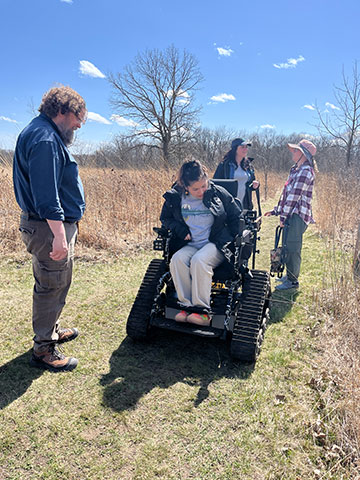
| | Educators learned about all-terrain wheelchairs at a training at the Wehr Nature Center last year. | | LEAF emphasizes getting students outside into schoolyards and forests as a gateway to forestry education. We work hard to minimize barriers to outdoor learning through resources and trainings that help educators think through common obstacles to getting outside. Our popular in-person and online Step Outside into Learning trainings are one way we do that. And while “Step” is meant to convey the power of taking an initial action, it is not lost on us that it also carries with it an assumption about students’ physical abilities. | | |
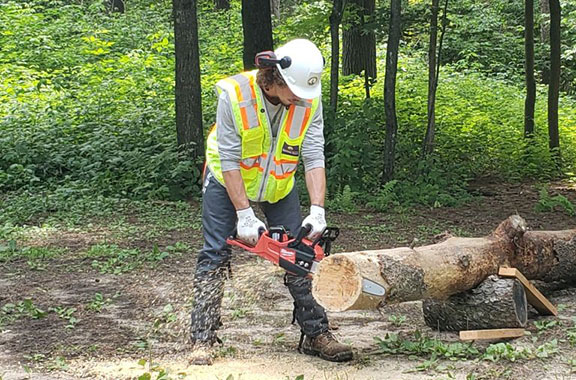
For example, if you were taking a student with a sensitivity to loud sudden noises to a tree harvesting event where chainsaws will be in use, what kinds of considerations might you have? What would you communicate about the event in advance? What protective equipment would you plan to bring? What instructions would you give students? What instructions would you give to presenters?
Making outdoor experiences more inclusive starts with understanding your students and their unique needs. Be creative in reducing barriers to access and ensuring outdoor learning is participatory and meaningful for all or your students.
| | Accessible Digital Documents | | |
Is your school or organization working to provide accessible online digital resources? We are, too.
Join Gina Smith, LEAF Resource Specialist, for either or both of two WAEE Lunch & Learn sessions April 14 and May 12. Gina will share key principles and practical tips for remediating digital documents and presentations for accessibility.
| | Participating in a BioBlitz? LEAF Kits can help | | |
A bioblitz provides a way to record biodiversity found in a given area.
The Great Lakes BioBlitz invites educators, students, and the general public to participate in this community science effort starting on Earth Day, Monday, April 22, 2026, and running though Saturday, May 24, 2026.
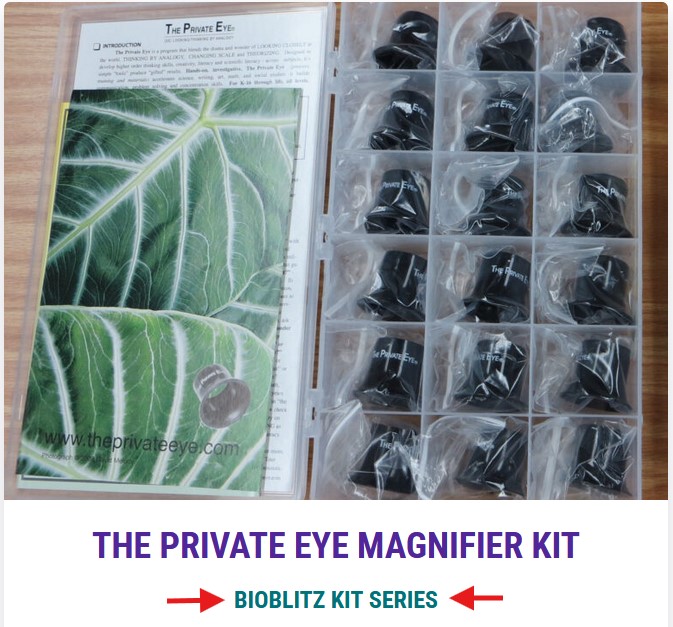
Several LEAF kits are part of our Bioblitz Kit Series, including the Field Guide Kit, Garmin Handheld GPS kit, Kestrel 5500 Pocket Weather Meter Kit, Private Eye Magnifier Kit, and Tree and Log Scale Sticks Kit.
Or look for the BioBlitz Kit Series label on our Kits page.
Kits are available to formal and non-formal educators in Wisconsin. Shipping is available within Wisconsin for addresses more than 30 miles from Stevens Point and shipping fees are waived for the 2025-2026 school year.
| | |
LEAF On-Demand, Online Offerings
Project Learning Tree On-Demand, Online Offerings
| |  | Project Learning Tree: Explore Your Environment | |
You don’t need a large school forest to give your students meaningful forest-based learning experiences!
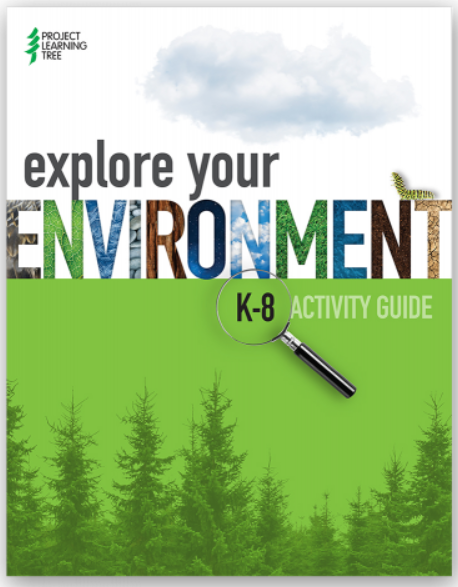
Join LEAF’s urban forestry expert to try out activities that are perfect to use with the trees right out your school door. Participants in this training will receive PLT’s award-winning Explore Your Environment K-8 activity guide with over 50 multidisciplinary activities that are connected to learning standards.
We will focus on K-5 activities and talk about how to safely integrate outdoor learning into your school day. Come dressed for the weather—we will be going outside!
| |
Cost: $20
Date & Time: 9 a.m. - noon, Saturday, April 11, 2026
Location: Northcentral Technical College, Wausau, WI
| | Explore the updated DNR Fire Management Dashboards! | | |
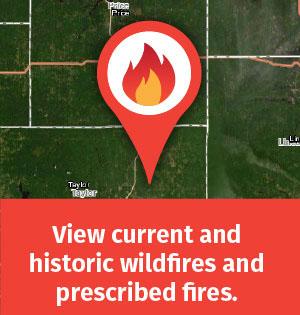
Spring is Wisconsin’s busiest wildfire season. Using real-time data from the Wildfire Dashboard, your students can investigate the causes, weather conditions, and acres burned throughout the season. Historical data from as far back as 2012 allows students to compare wildfire trends from season to season and year to year.
Curious about how fire is used as a management tool in Wisconsin? The Prescribed Burn Dashboard can help students learn about planned burns, their goals and the fire-dependent ecosystems being managed for wildlife habitat, forest health and recreation across the state.
| | Time is running out: WFC Forestry Skills Camp | |
Wisconsin Forestry Center's Forestry Skills Camp will be held June 14-19, 2026, at the Central Wisconsin Environmental Station in Amherst Junction. Applications will be accepted through March 27, 2026.
This camp is designed to build skills used in forest industries and provides one forestry credit at UWSP. The camp fee is $450. Reach out to wfc@uwsp.edu with any questions.
| | | Register for WAEE Celebration of Excellence | |
The Wisconsin Association for Environmental Education’s (WAEE) Annual Celebration of Excellence will be held at Escuela Verde in Milwaukee on April 11, 2026!
LEAF's Wisconsin School Forest Awards and KEEP’s Energy Educator of the Year will be recognized at the celebration, so we hope you will join us to recognize the impact all these awardees have made!
| | Have questions or need additional resources? Contact us at leaf@uwsp.edu. We are here to support educators and students with forestry opportunities. | | | | |