August 2026


Advanced Care, Personalized Approach


Dr. Plasilova is committed to delivering advanced, personalized care that meets each patient's unique needs. Holding a PhD in molecular and stem cell biology, she brings deep scientific expertise that allows her to connect the latest innovations and research directly to patient care. Beyond her clinical work, she is actively involved in cutting-edge research—spanning clinical trials, basic research, and translational research—helping to bridge scientific discovery with real-world patient outcomes.


In our July newsletter, we highlighted the groundbreaking mastectomy techniques that Dr. Plasilova pioneers. She proudly offers two of the most advanced minimally invasive approaches available today: robotic mastectomy and endoscopic mastectomy. These innovations are making a real difference in patients' lives—whether they are considering mastectomy for cancer treatment or as a prophylactic measure, such as those who carry a BRCA or similar gene mutation. Understanding these options is the first step toward making a confident, informed decision about one's care.


In our August newsletter, we will dive deeper into Dr. Plasilova's groundbreaking research and what it means for the future of patient care.


For more information on my services and team,

please call (646) 962-2888.


Making Invisible Tumors Visible

This August, we have exciting news to share about Dr. Plasilova. She has been awarded a prestigious grant that could change how one of the most difficult-to-treat breast cancers is approached, and we couldn't be more proud to tell you about it.

A Grant That Could Change the Future of Breast Cancer Treatment

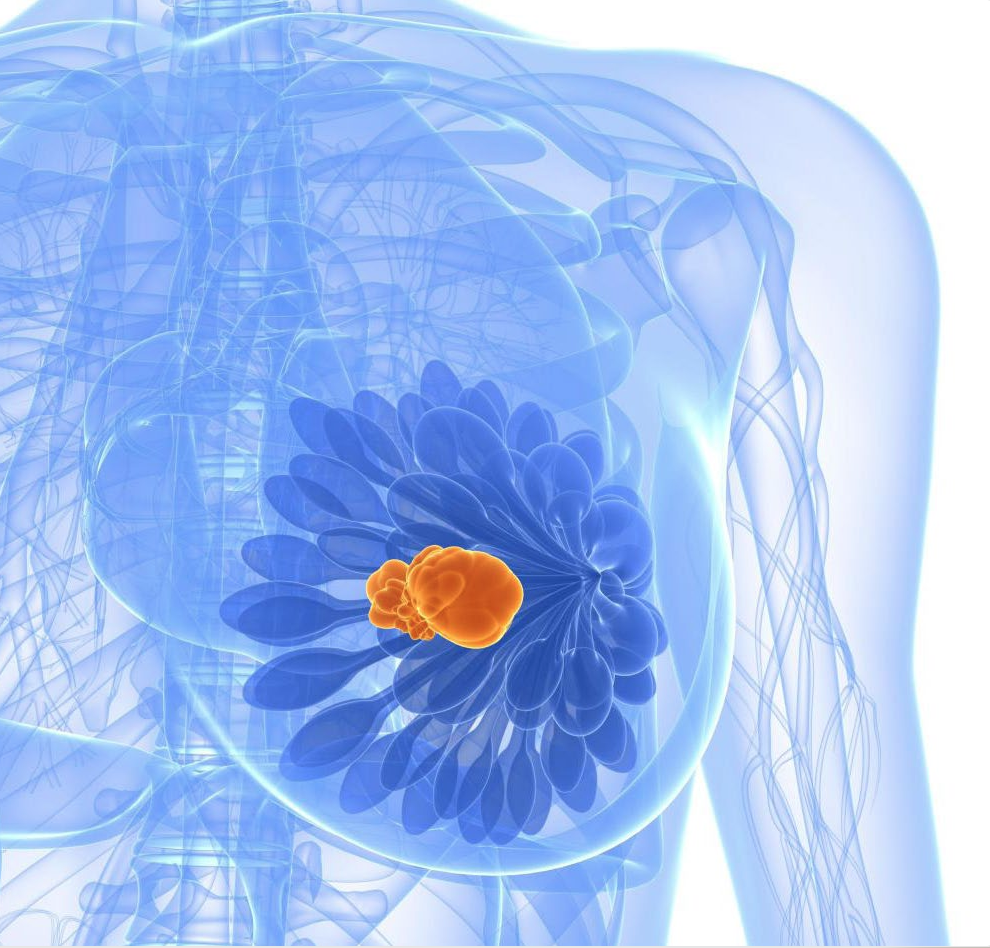
We are thrilled to announce that Dr. Plasilova, in partnership with Dr. Mittal's Lab, has been awarded a research grant from the Manhasset Women's Coalition Against Breast Cancer. Her project, titled "Making Invisible Tumors Visible: Targeting Fat Metabolism to Improve Immunotherapy in TNBC," addresses one of oncology's most pressing challenges: triple-negative breast cancer (TNBC).

Why TNBC Demands Urgent Attention

TNBC accounts for 15–20% of all breast cancer cases, yet it contributes disproportionately to breast cancer-related deaths. Unlike other breast cancer subtypes, TNBC lacks hormone receptors and HER2 targets, which means standard hormone therapies and HER2-targeted treatments simply don't work. The disease predominantly affects younger women, and treatment options remain critically limited.

This is exactly the gap that Dr. Plasilova is working to close.

The Science: How Tumors Hide - and How to Find Them

At the heart of this research is a newly identified immunometabolic pathway that helps TNBC tumors evade the body's immune system.


Here's how it works: an enzyme called fatty acid synthase (FASN) drives fat production within tumor cells. In doing so, it suppresses the expression of MHC-I molecules on the tumor cell surface — the molecular "flags" that normally signal to the immune system that a cell should be destroyed. Without these flags, TNBC tumors become effectively invisible to the immune system, allowing them to grow and spread unchecked.


Dr. Plasilova's research proposes that by inhibiting FASN, MHC-I expression can be restored — essentially making these hidden tumors visible again. This, in turn, activates CD8+ T-cells, the immune system's frontline cancer-killing cells, to recognize and attack the tumor.


The team will use TVB-2640 (denifanstat), a clinical-grade FASN inhibitor, in combination with PD-1 blockade (a widely used immunotherapy approach) to test whether this dual strategy can meaningfully improve treatment outcomes.

Two Aims, One Goal: Better Outcomes for Patients

The research is structured around two specific aims:


Aim 1 — Preclinical Validation

Determine whether FASN inhibition sensitizes TNBC to PD-1 blockade in metastatic preclinical models, establishing proof-of-concept for the combined therapeutic approach.


Aim 2 — Patient-Derived Evidence

Validate immune restoration driven by FASN inhibition using patient-derived TNBC organoids co-cultured with autologous immune cells — a highly translatable model that closely mirrors real patient biology.


Together, these aims are designed to build the scientific foundation needed to move this research toward clinical application.

What Success Could Mean

If this research delivers on its promise, the implications are significant:


  • Preclinical proof-of-concept for combining FASN inhibition with PD-1 blockade as a viable TNBC treatment strategy


  • Identification of biomarkers that predict which patients are most likely to respond to this approach


  • Development of a biomarker-informed Phase Ib clinical trial protocol, bringing this treatment one step closer to patients who need it most

A Thank You to the Manhasset Women's Coalition Against Breast Cancer

This work would not be possible without the generous support of the Manhasset Women's Coalition Against Breast Cancer. Their commitment to funding innovative, high-impact research continues to drive meaningful progress in the fight against breast cancer.


We are deeply grateful for their partnership and their belief in the potential of this science.

Stay Connected

If you would like to contribute to Dr. Plasilova's research or know anyone with TNBC who would like to participate in our research, please reach out to Dr. Plasilova directly.


Follow Our Research Updates


Have questions or want to learn more about our work? Don't hesitate to reach out — we'd love to hear from you.


Contact Us


Until next time, thank you for your continued support. Together, we are making a difference.


Have a friend or loved one interested in breast health?

Help us spread the word—forward this email to a friend to sign up for expert-backed guidance, monthly health insights, and lifestyle strategies to reduce breast cancer risk.


They can join below! Together, we can empower more people to take charge of their health—one small step at a time.

 
Facebook  X  Instagram  Linkedin