Do you love to draw?
This is for you!
Do you believe you "cannot draw a straight line?"
This is for you!
In this special edition of Art Talk, I'll give you seven lessons on how to create a journal in which you record new perceptions about the spaces of your confinement.
All around the world people are living in quarantine just as you are. In the future your journal can start conversations about shared experiences.
--------------------------------------------------------------------------------------------------
Introduction: French photographer and draftsman Henri Cartier-Bresson says: "drawing is a meditation."
Each Lesson contains preliminary exercises that can be done on pages that are separate from your journal or that are part of it. You might also include pages of writing about your quarantine experiences. Take as many days as you like on each lesson.
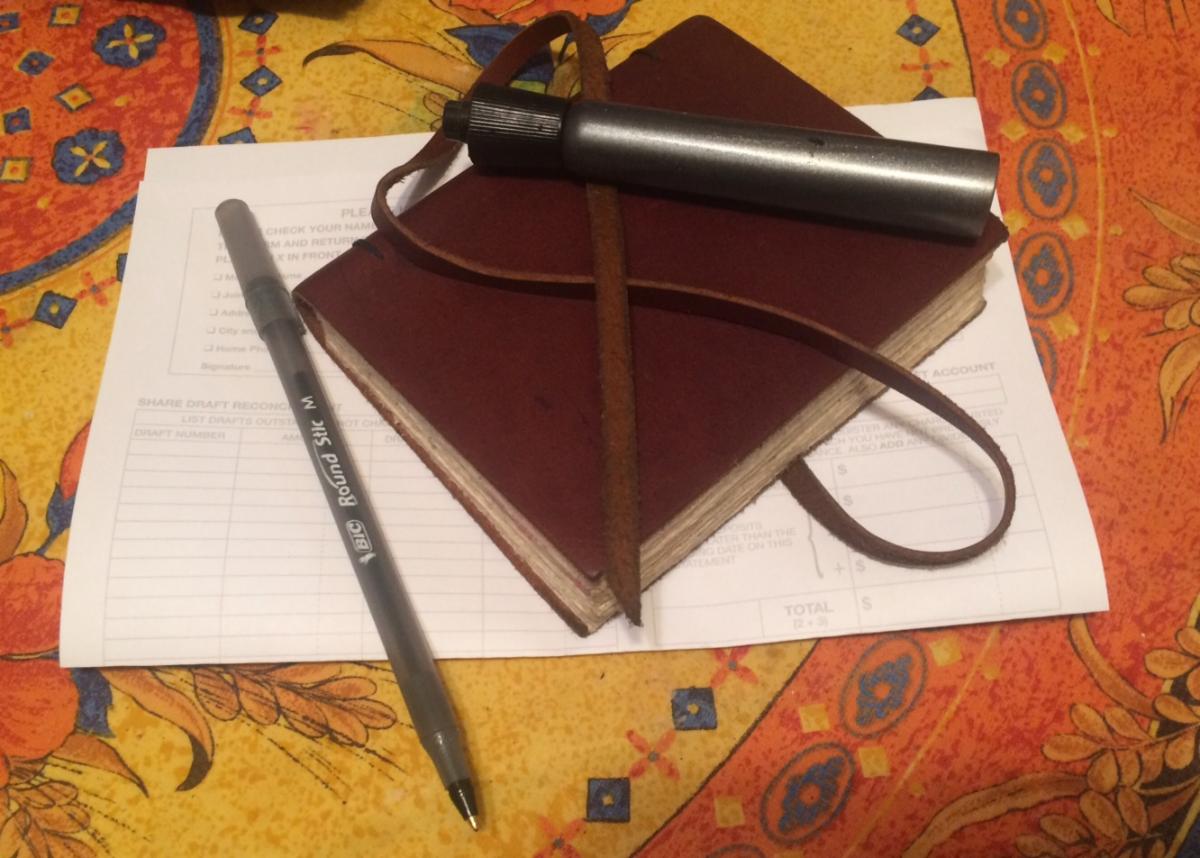
MATERIALS-make do with what you have. Don't have a sketchbook? Improvise--use printer paper folded in half; envelopes, index cards. Connect loose pages with staples, clips, or stitching. Drawing instruments in black can be ordinary pens or pencils plus a marking pen if you have one.
------------------------------------------------------------------------------------------------------------
LESSON ONE:
CELEBRATE YOUR HANDWRITING and START a TITLE PAGE
Since childhood, as you practiced forming the alphabet and signed and printed your name you gained command of drawing's geometric building blocks: circles, ovals, triangles, rectangles and squares.
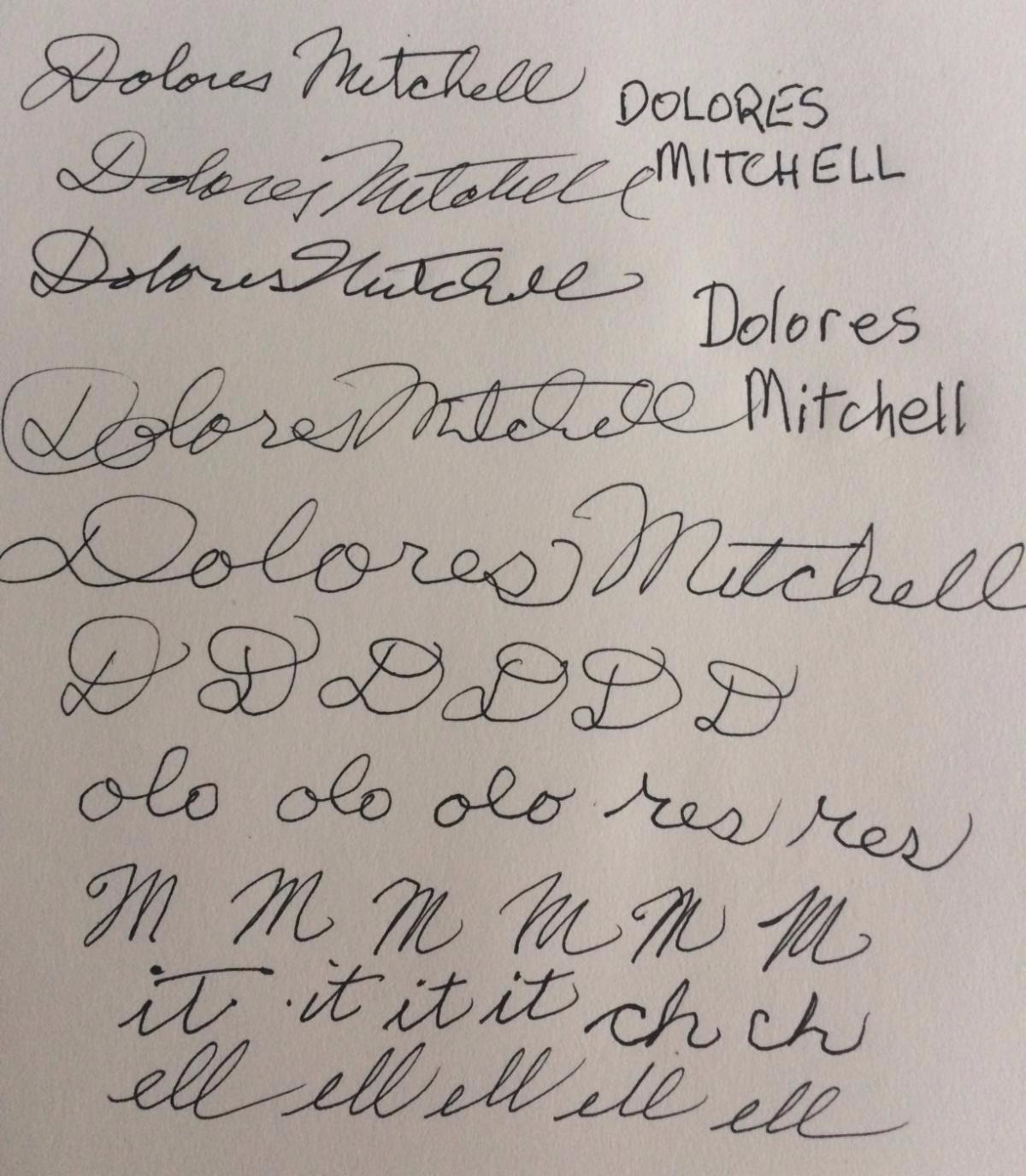
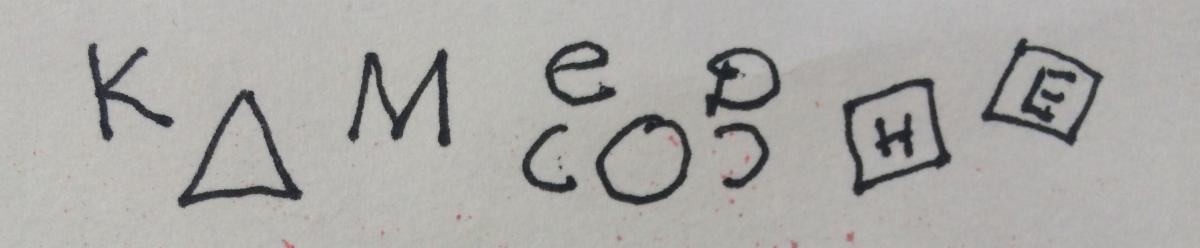
Preliminary Exercise One: identify the shapes that I've used to sign and print my name. Next. sign and print your name and note its geometric components. This exercise will increase your awareness of the powerful drawing tools you already possess.
|
|
| Dolores Mitchell, Signing and printing my name |
I've placed geometric shapes next to letters that use them. The "K" and the "M" are built from three triangles. Circles and half-circles make up "e" and "D," and "H" and "E" fit into squares. These shapes are foundations of both writing and of drawing.
Preliminary Exercise Two.
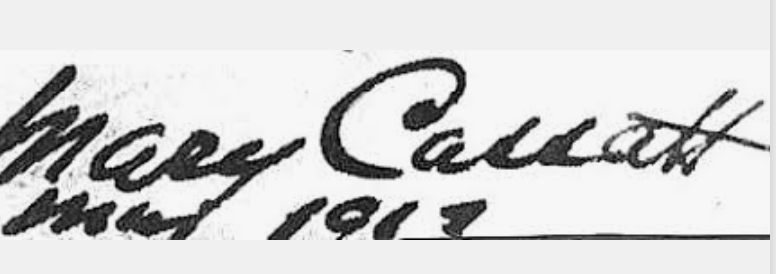
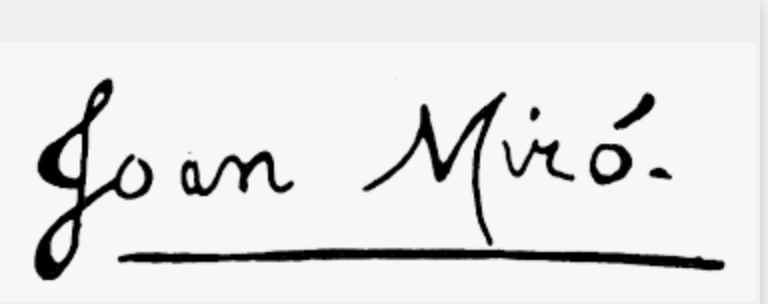
below are signatures by three artists. Copy them and note their geometric components.
JOURNAL ASSIGNMENT ONE:
CELEBRATE YOUR HANDWRITING and CREATE a TITLE PAGE
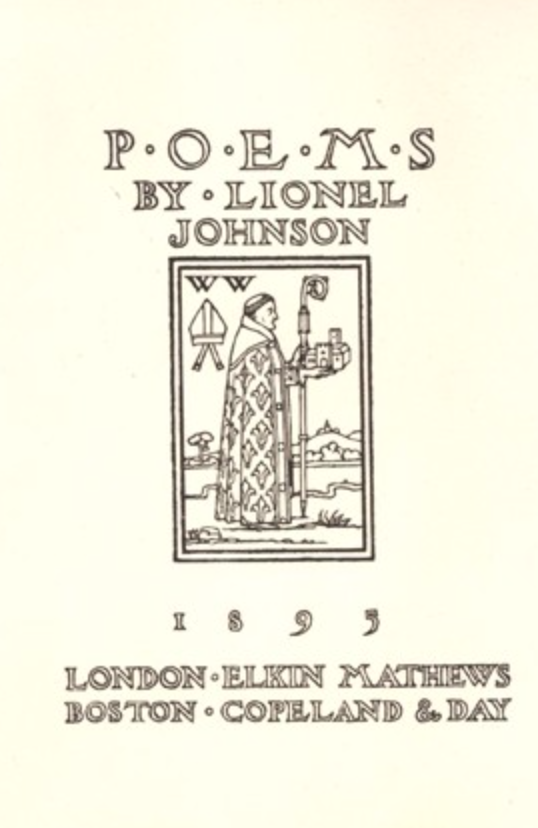
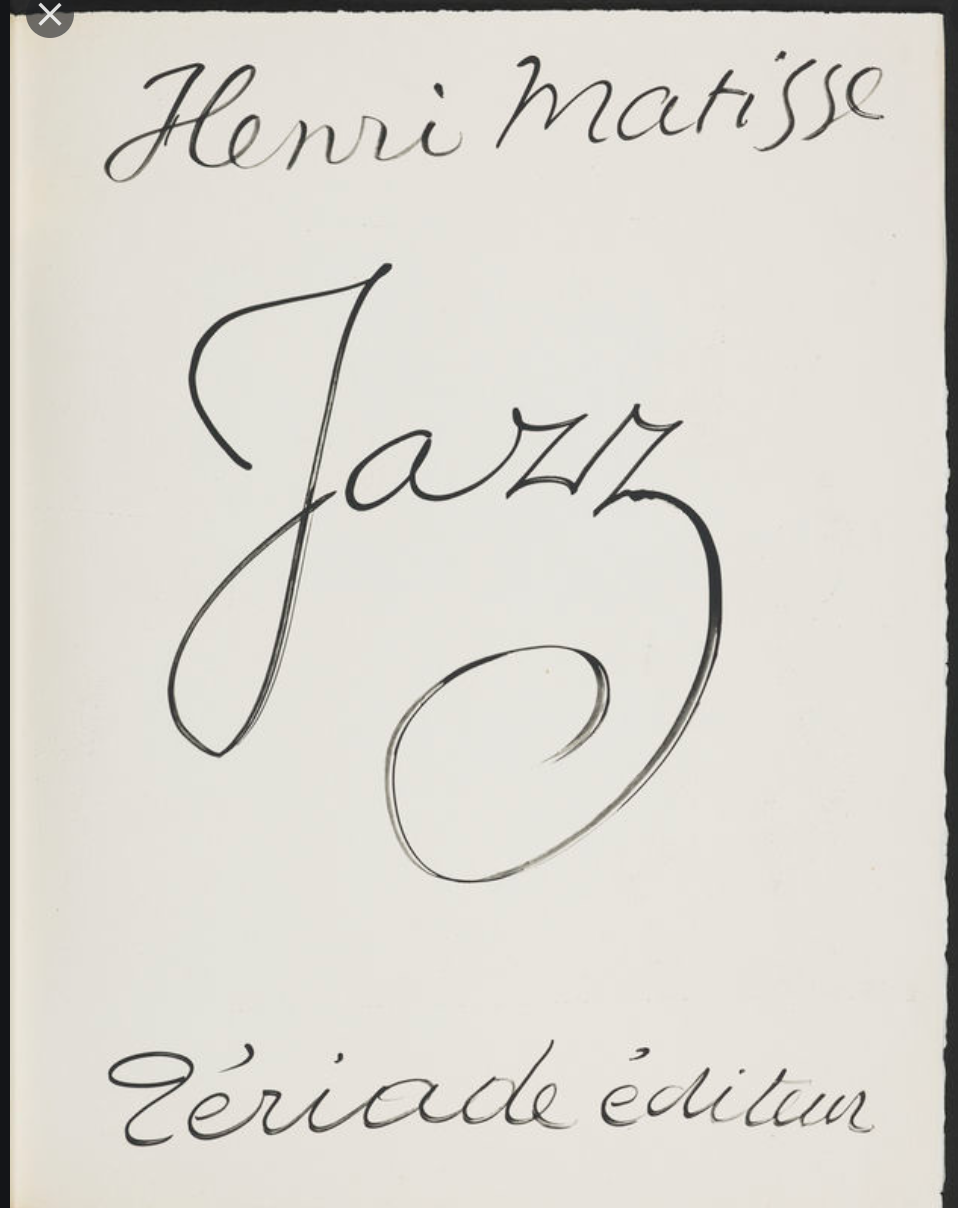
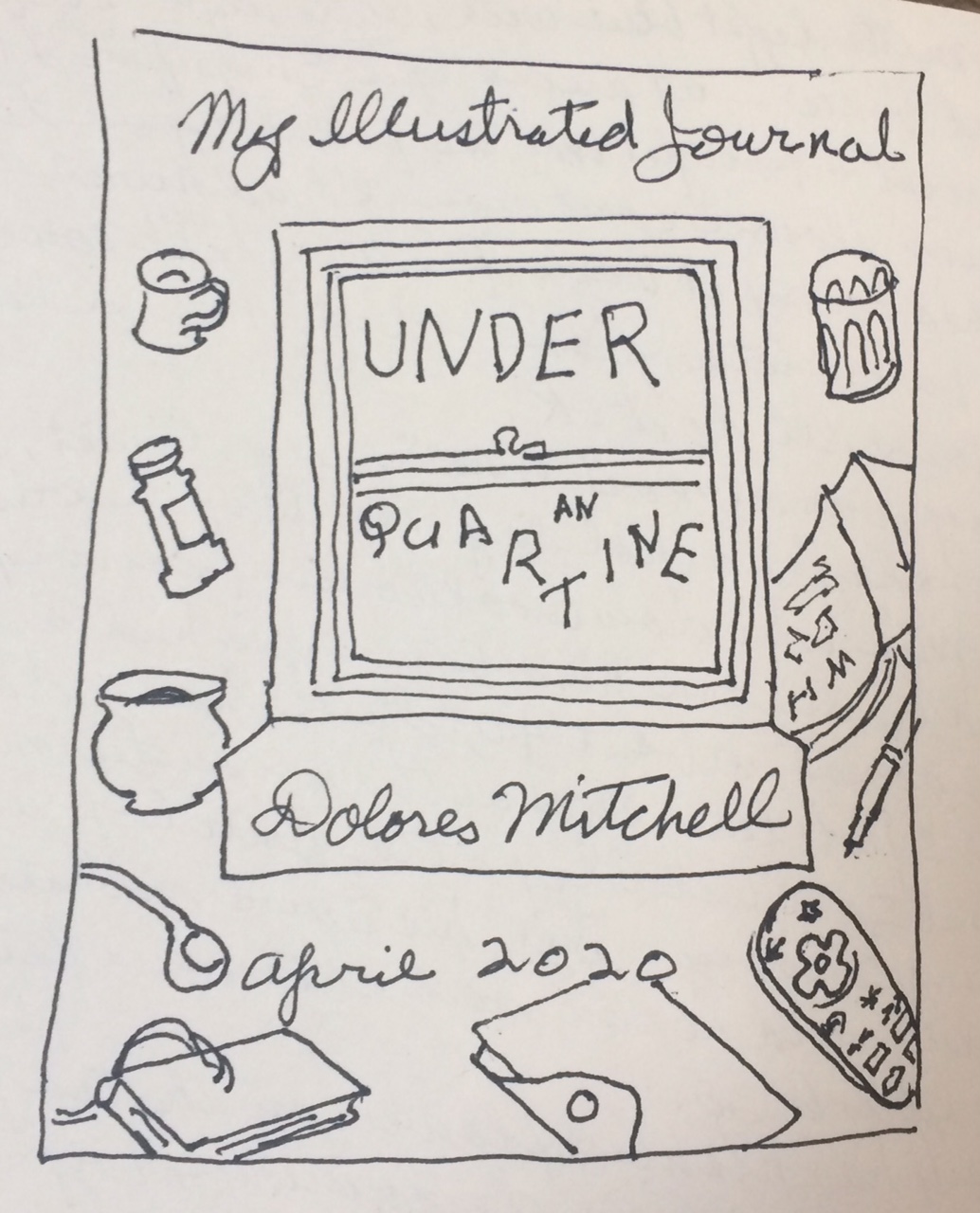
Below are three examples of illustrated title pages.from the past followed by one that I just made. There is no standard form: some have elaborate borders and some do not. You can see more by doing a web search for "Illustrated Title Pages."
I 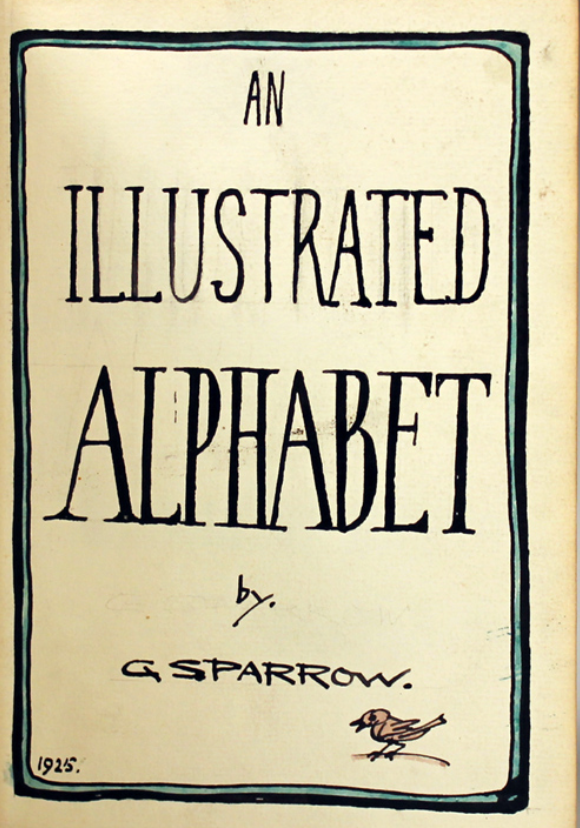
Below is my Journal Title Page bordered by objects of my daily life.
Be sure to incorporate your signed or printed name in your Title Page, but otherwise its design is up to you. If you are new to drawing, for now just sign your name in a prominent place on the page and after you've finished the lessons go back to your Title Page to develop it.
_______________________________________________________
LESSON TWO: CONTOUR DRAWINGS
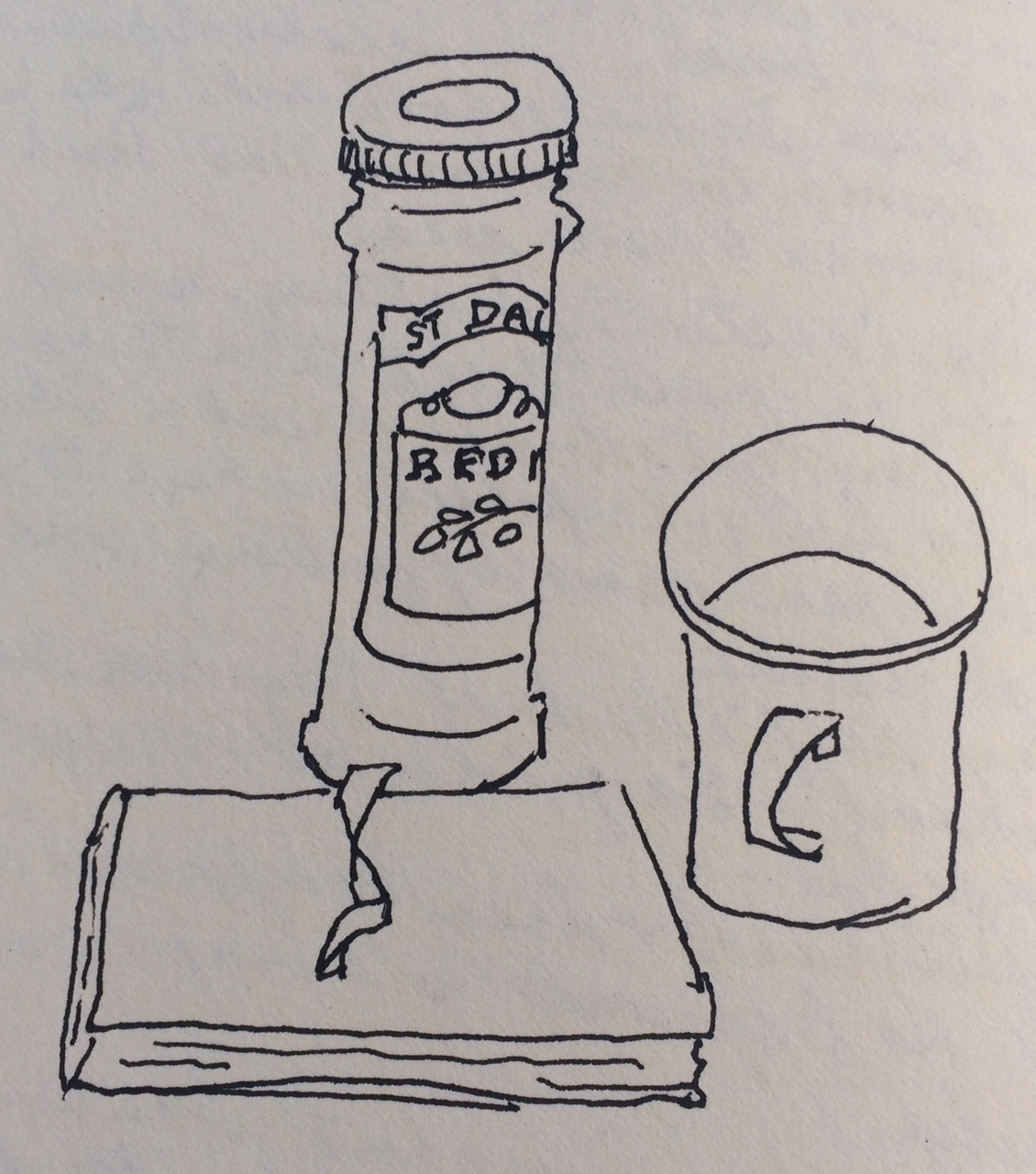
A contour drawing depicts the edges of objects in continuous lines without the use of shading. Below is one of my contour drawings.
|
|
| Mitchell, Contour Drawing "Objects on My Kitchen Table" |
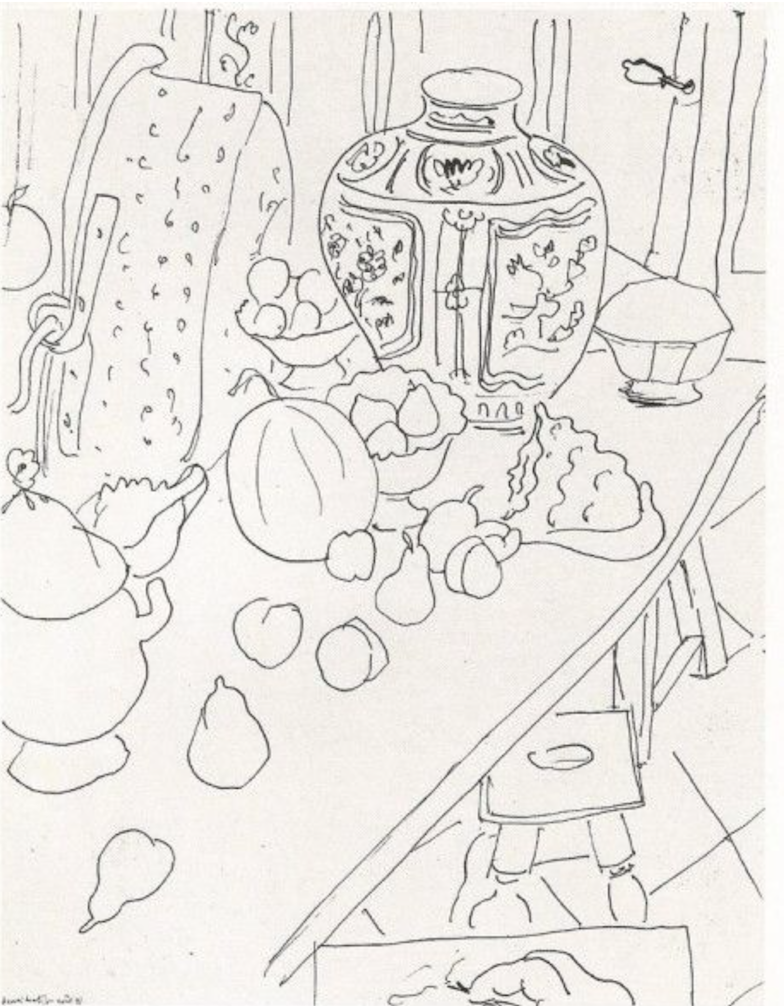
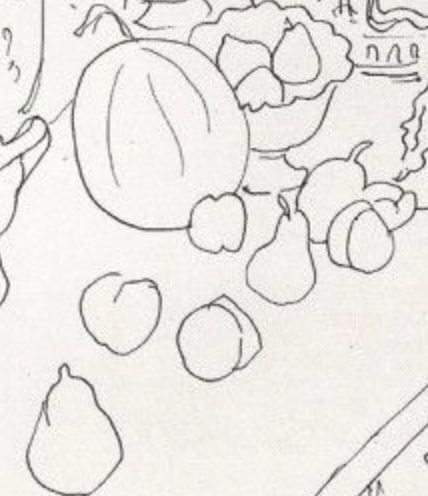
Preliminary Exercise: Copy the detail of Matisse's contour drawing (below right) with an awareness of its geometry. The pears have circular lower sections and triangular tops, for example. Because they are organic there are bulges in the geometry.
Henri Matisse, "Buffet," drawing
Detail of Henri Matisse, "Buffet," drawing
JOURNAL ASSIGNMENT TWO:
CONTOUR DRAWINGS
Either arrange three to five objects or use accidental combinations. Spend a few minutes looking at the object closest to you and identifying its geometry. Then let your eyes travel, slowly, along the object's edges.
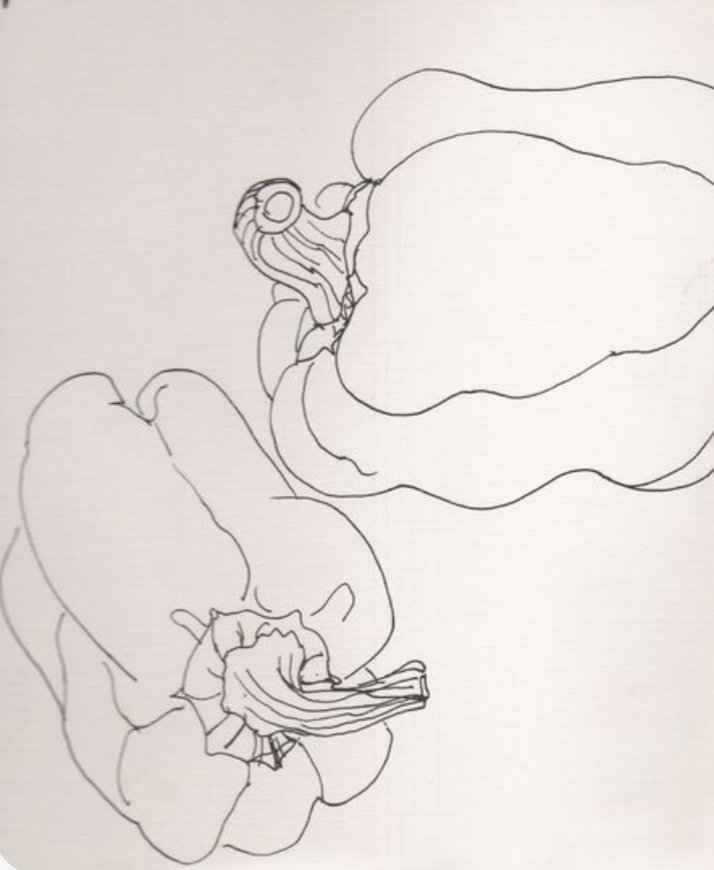
Now, at a meditative pace, draw the object with a continuous line trying not to stop and start and only occasionally glancing at your page. Your goal is exploration and not precision. Your pen is recording the journey of your inquisitive eye around a form. After you've drawn the overall shape of your object you might add inner shapes as in this contour drawing by Ling-un Shih Chan (below). Note that her drawing is composed mainly of circles and of bulging rectangles.
Go on to draw your other objects. Drawing will keep you focussed in the moment as you observe your surroundings intently. It is a great reliever of stress. So, your line wobbles? That proves that your hand and not a machine did the drawing. Include as much or as little detail as you like.
You can fill one or many of your journal pages with this assignment.
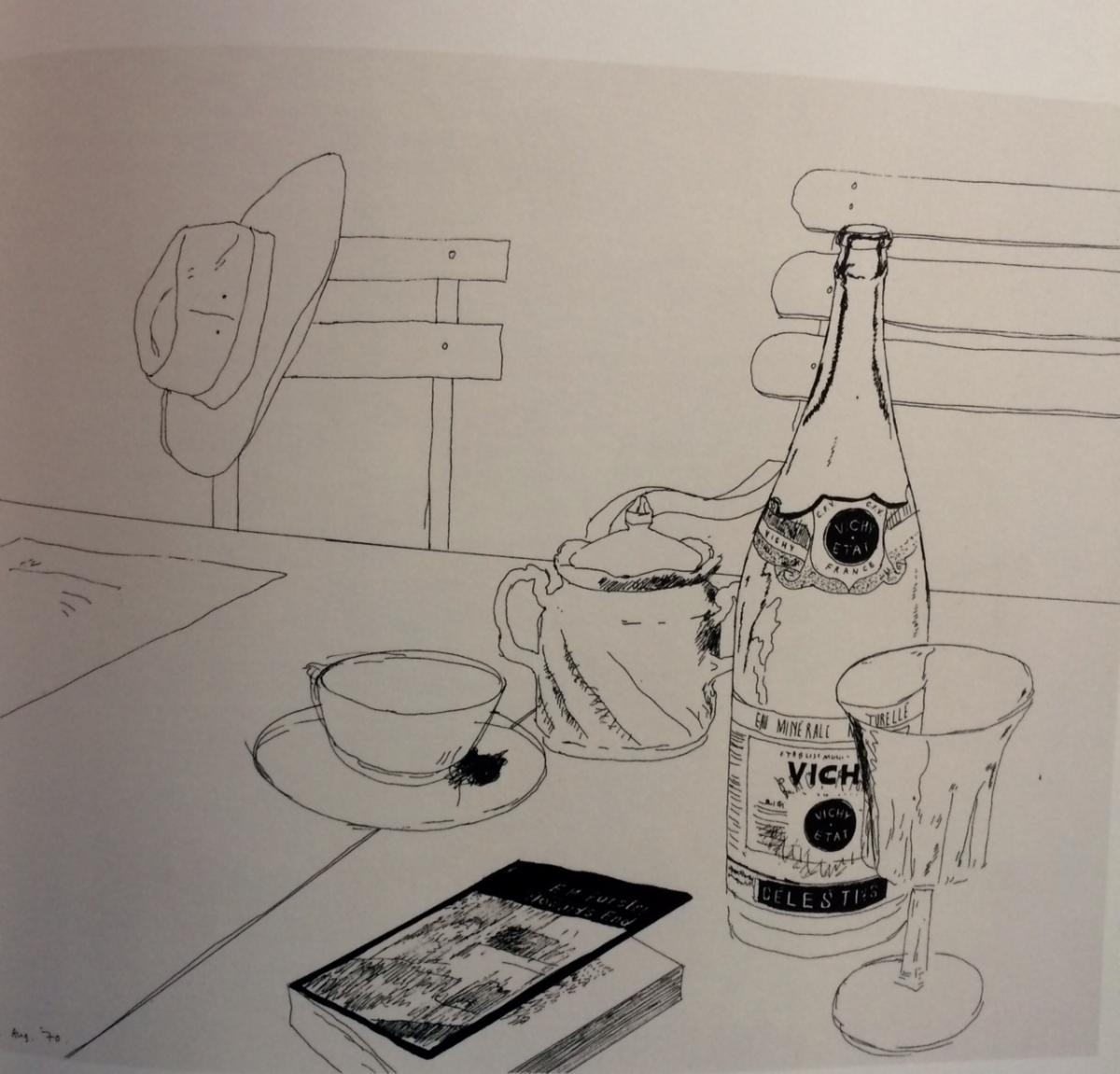
If you want some thicker lines or black shapes, a marking pen is a good tool, as in this David Hockney drawing below.
|
|
|
David Hockney, "Still Life"
|
-------------------------------------------------------------------------------------------
LESSON THREE: PATTERNS for TEXTURE and VOLUME
|
|
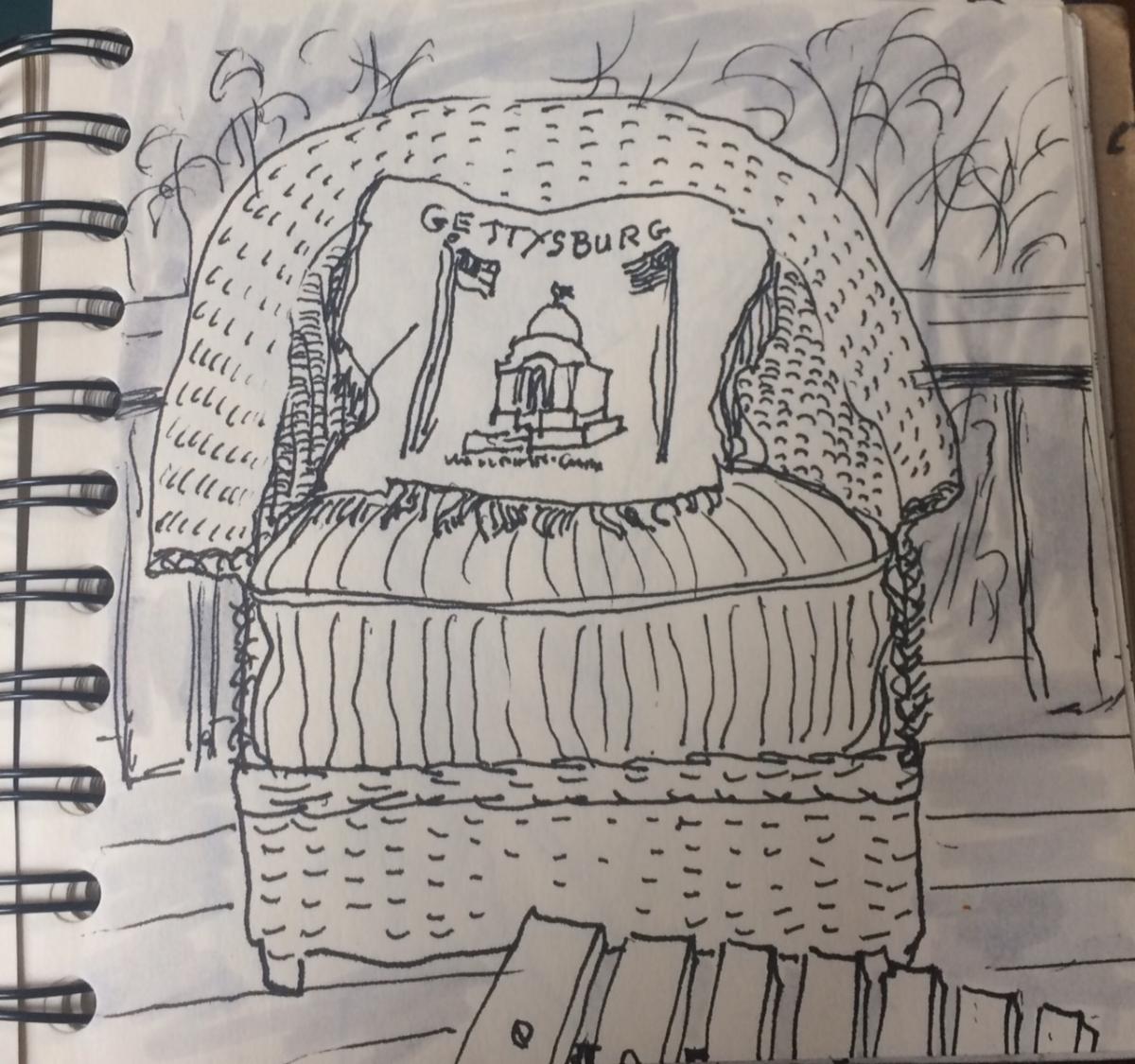
D. Mitchell, Wicker Chair drawing
Preliminary Exercise One:
analyze how I have used patterns in my Wicker Chair drawing to suggest the textures of woven wicker as well as the volumes of the chair and cushions. How do the wooden slats in the foreground affect the sense of space?
|
|
|
 |
|
David Hockney, sketch
|
|
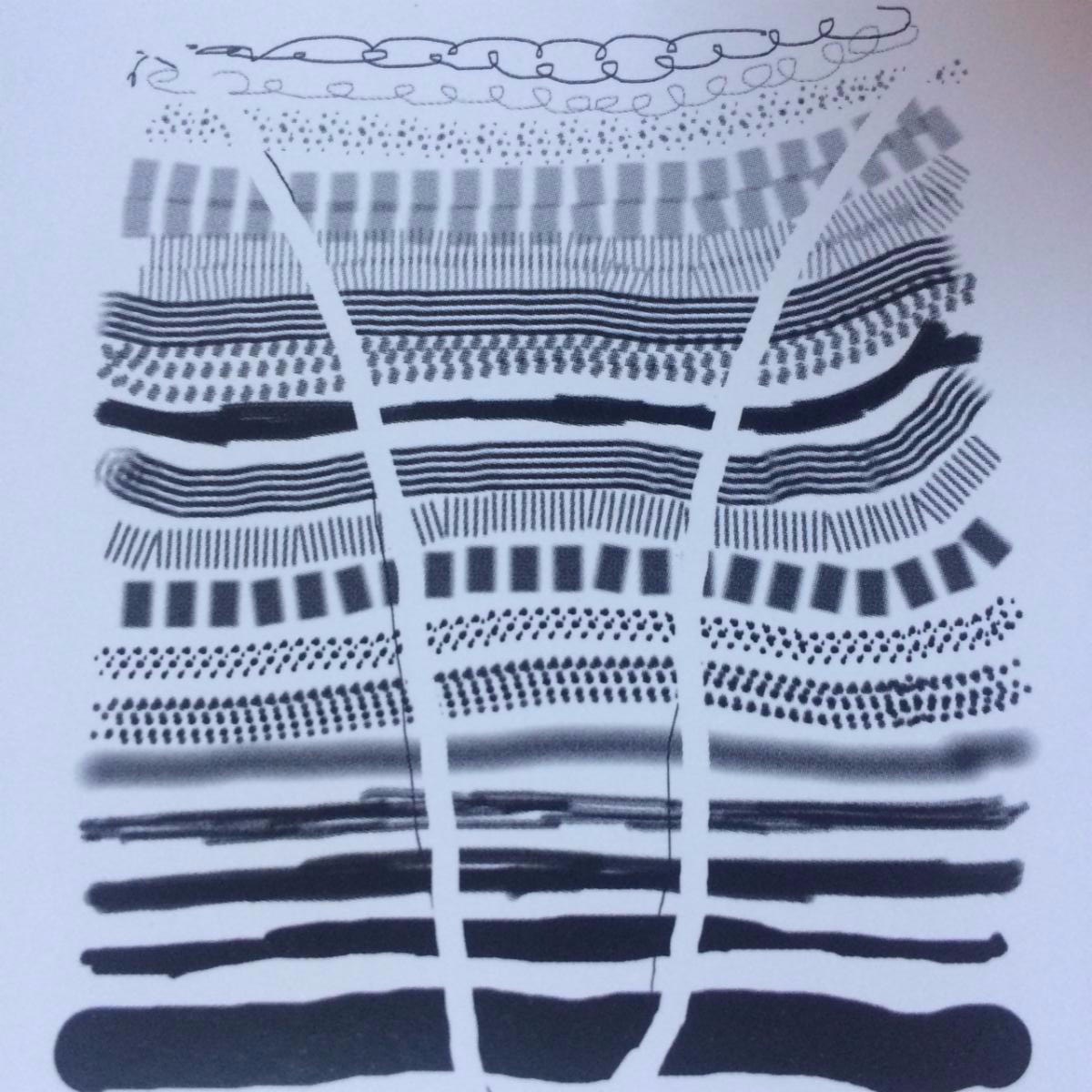
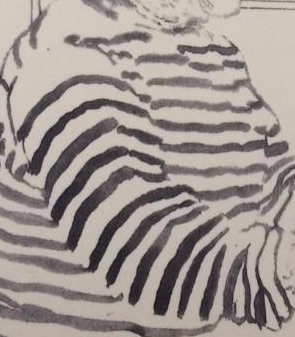
David Hockney (left) is a master of pattern. In his sketch, he has suggested the texture of the cloth and the pliability of the bag. Hockney uses no shading to suggest where the fabric rises, falls and turns--so, how does he convey these things entirely with lines?
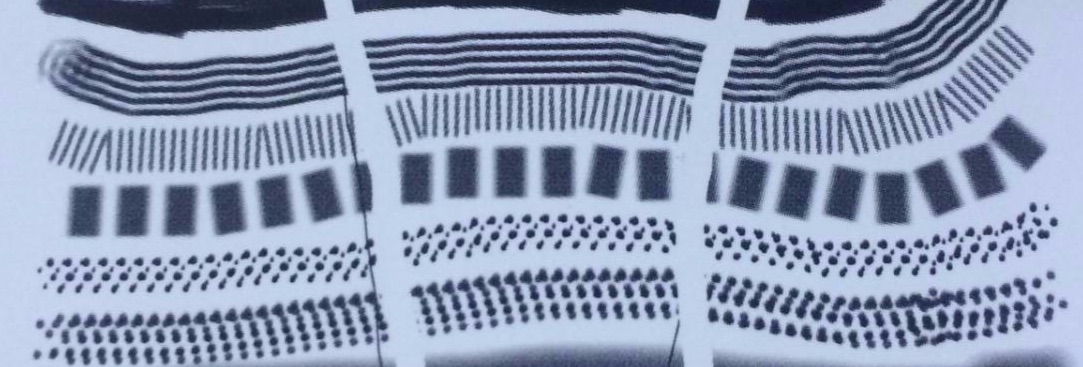
Preliminary Exercise Two: to increase your vocabulary of patterns. copy three or more bands from the detail below of the Hockney sketch.
JOURNAL ASSIGNMENT THREE: Do one or more Journal Drawings in which patterns suggest textures and depth.
-----------------------------------------------------------------------------------------
LESSON FOUR: NEGATIVE SPACE (what you don't bump into--usually)
Ours is a time when space seems less empty than it once did--think of electricity and sound waves. Lesson Four aims to increase your awareness of the dynamic interaction between objects and their surrounding spaces.
Preliminary Exercise One:
Walk through your house with an awareness of open paths as well as of obstacles to movement. Kick a chair and then slip your hand through one of its openings.
|
|
|
|
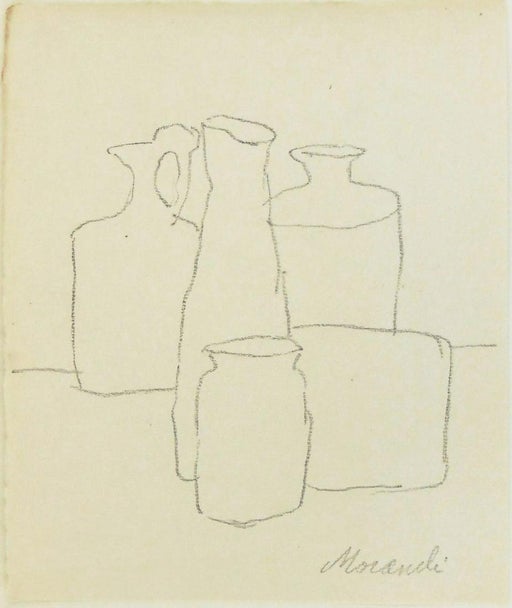
Morandi, "Still Life," Drawing"
|
|
Preliminary Exercise Two:
Italian artist Giorgio Morandi (d. l964) was keenly aware of negative space. In his "Still Life" note how much empty space there is
on the table and how carefully Morandi has shaped the negative spaces between objects.
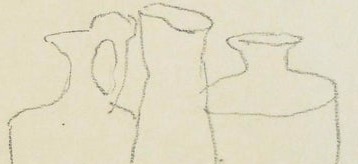
For this exercise, copy the detail below of Morandi's "Still Life" with particular attention to the open spaces between the flask and its flanking containers.
|
|
| Morandi, "Still Life Drawing" (detail) |
What did I mean by
(what you don't bump into--usually)?
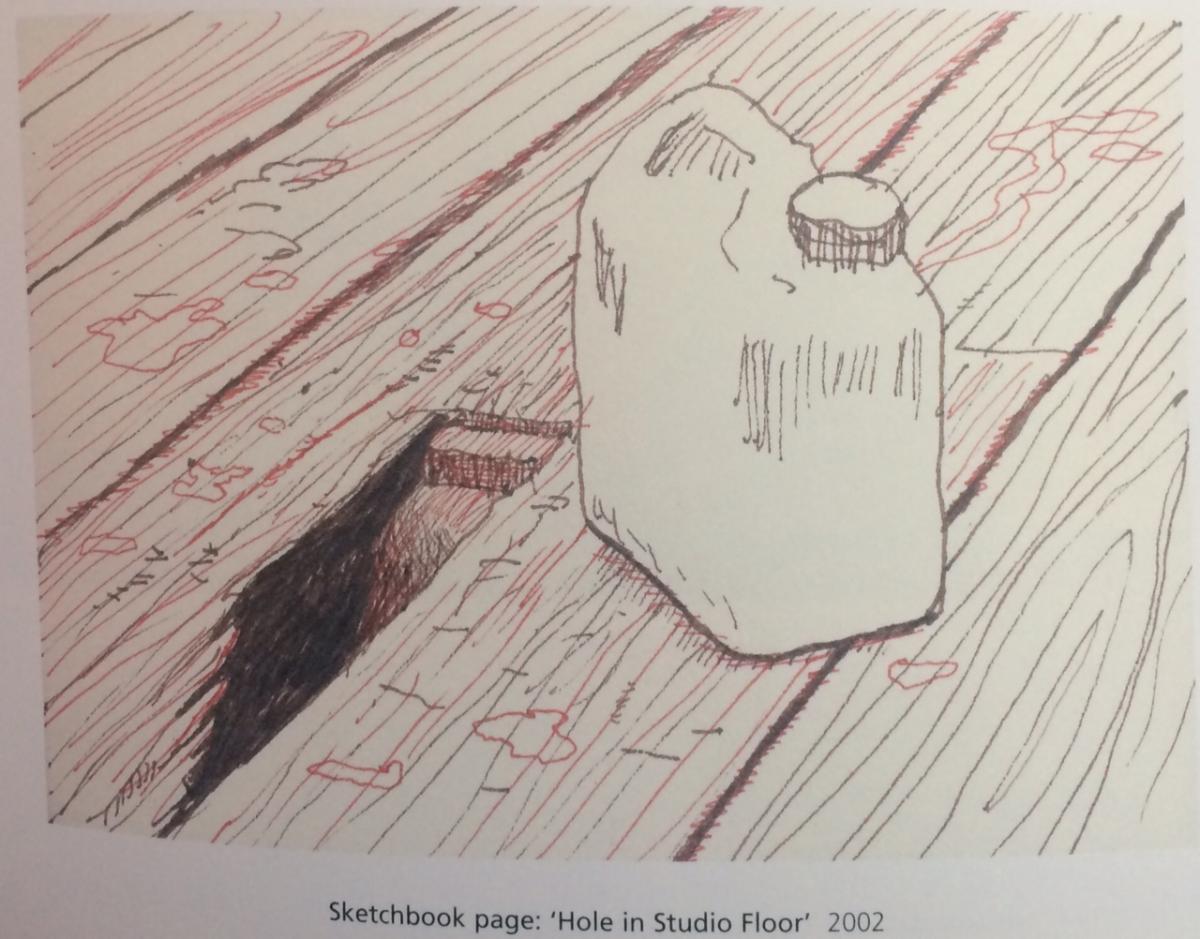
Transparent and semi-transparent glass and plastic objects can be bumped into without blocking views--some artists relish depicting them since they blend positive and negative space. Hockney has upped that game by using the white of his paper to form the bulk of a container that leaves much to your imagination. The container's ghostly shape contrasts with the gaping black hole that seems to sink into the page.
JOURNAL ASSIGNMENT FOUR:
Bring awareness of negative space into one or more journal drawings and include at least one transparent or semi-transparent object.
-------------------------------------------------------------------------------------------
JOURNAL LESSON FIVE: BREAKING THROUGH THE BOX
|
|
|
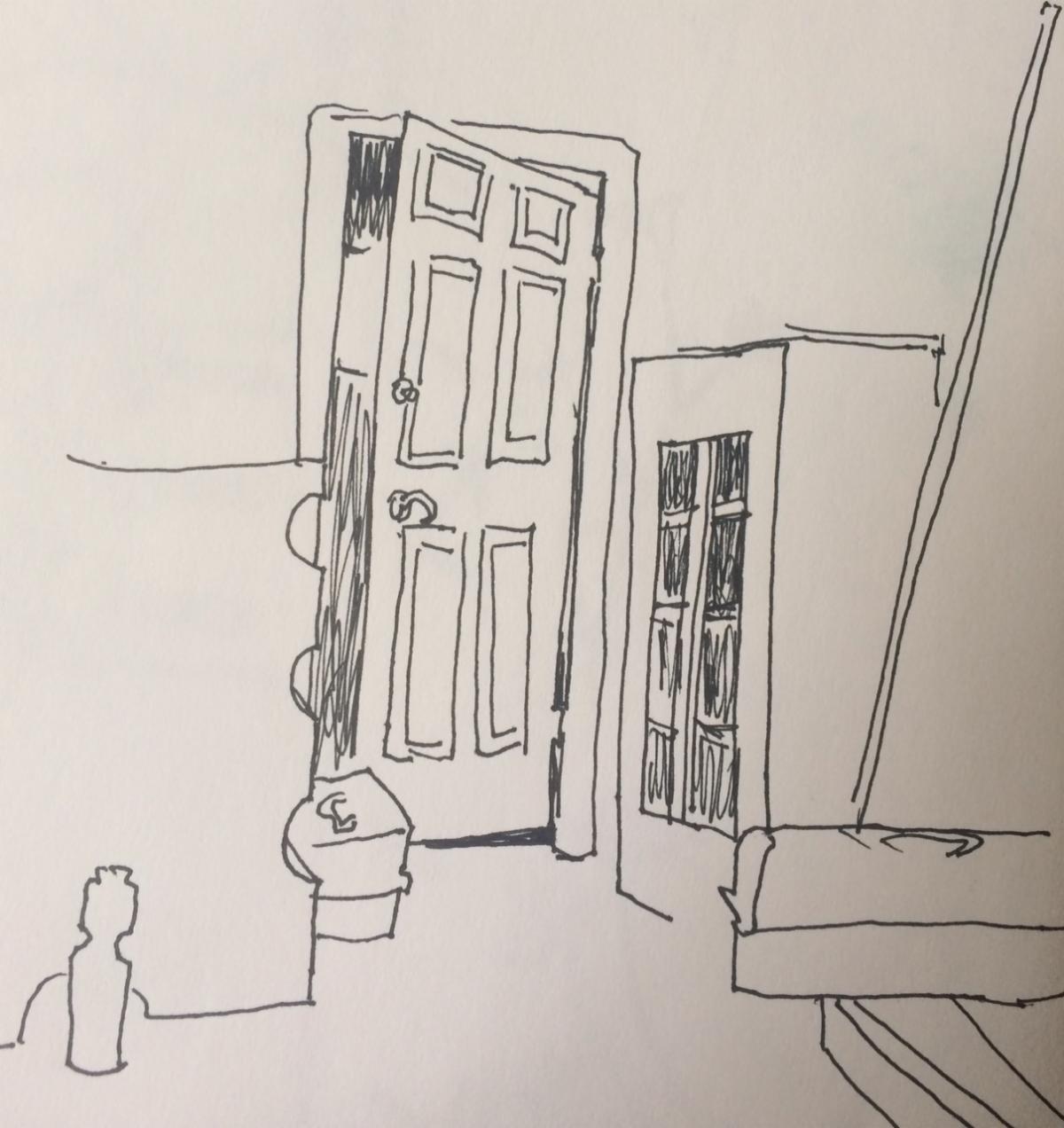
Mitchell, "The door stood open a crack," pen sketch
Preliminary Exercise One:
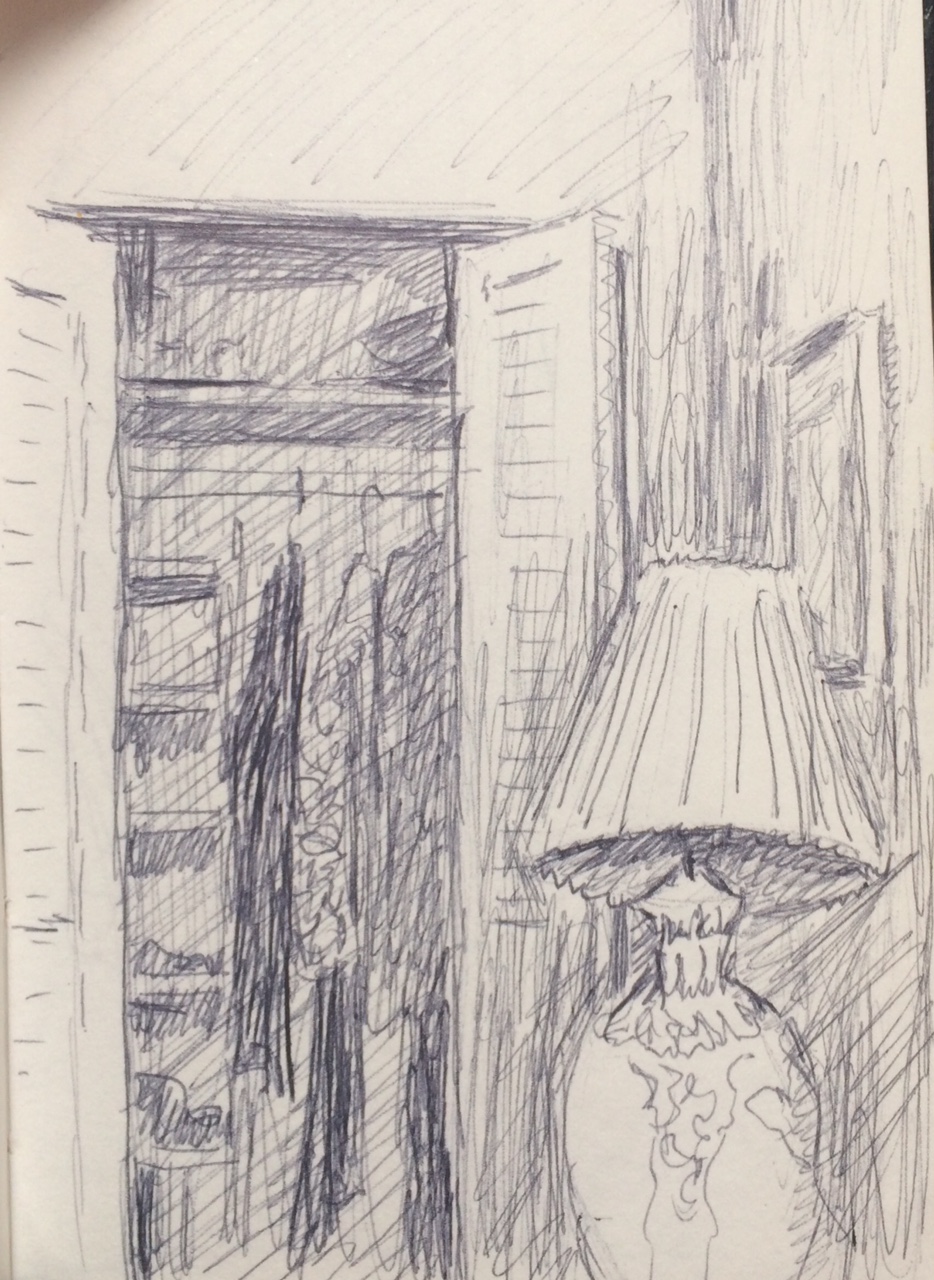
Compare the sense of space in my two sketches: one with a door slightly ajar and one with an open closet door (above and below). Also identify the geometric shapes within the sketches.
|
|
|
|
D. Mitchell, "View of a Closet's Interior," pen
|
'
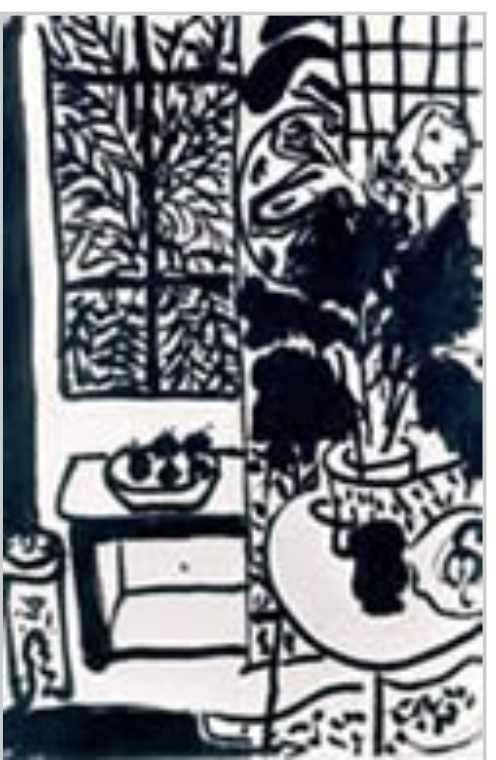
Consider the sense of space in Matisse's sketch of room with a view through a window (above). He used the same thick black lines for the outside vegetation as for the interior spaces even though softer lines for the garden would have suggested distance. In "Interior" Matisse created a unified surface pattern rather than a suggestion of depth.
Preliminary Exercise Two: Copy the Matisse with particular attention to its geometric shapes, but this time use delicate lines for the view through the window and note the effect.
JOURNAL ASSIGNMENT FIVE: BREAKING THROUGH THE BOX
Sketch one or more views within your interior that incorporate a glimpse of another space such as a glass enclosed bookcase, a mirror, a window, a doorway, etc.
-------------------------------------------------------------------------------------------------
JOURNAL LESSON SIX: SUGGESTING MOVEMENT
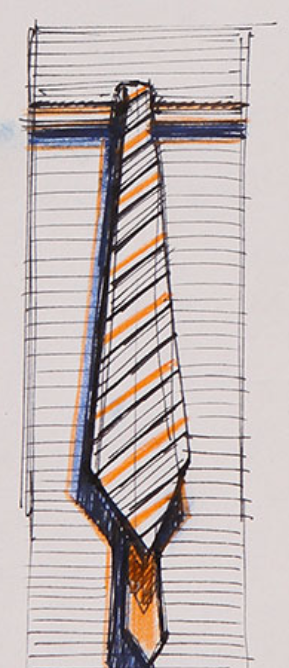
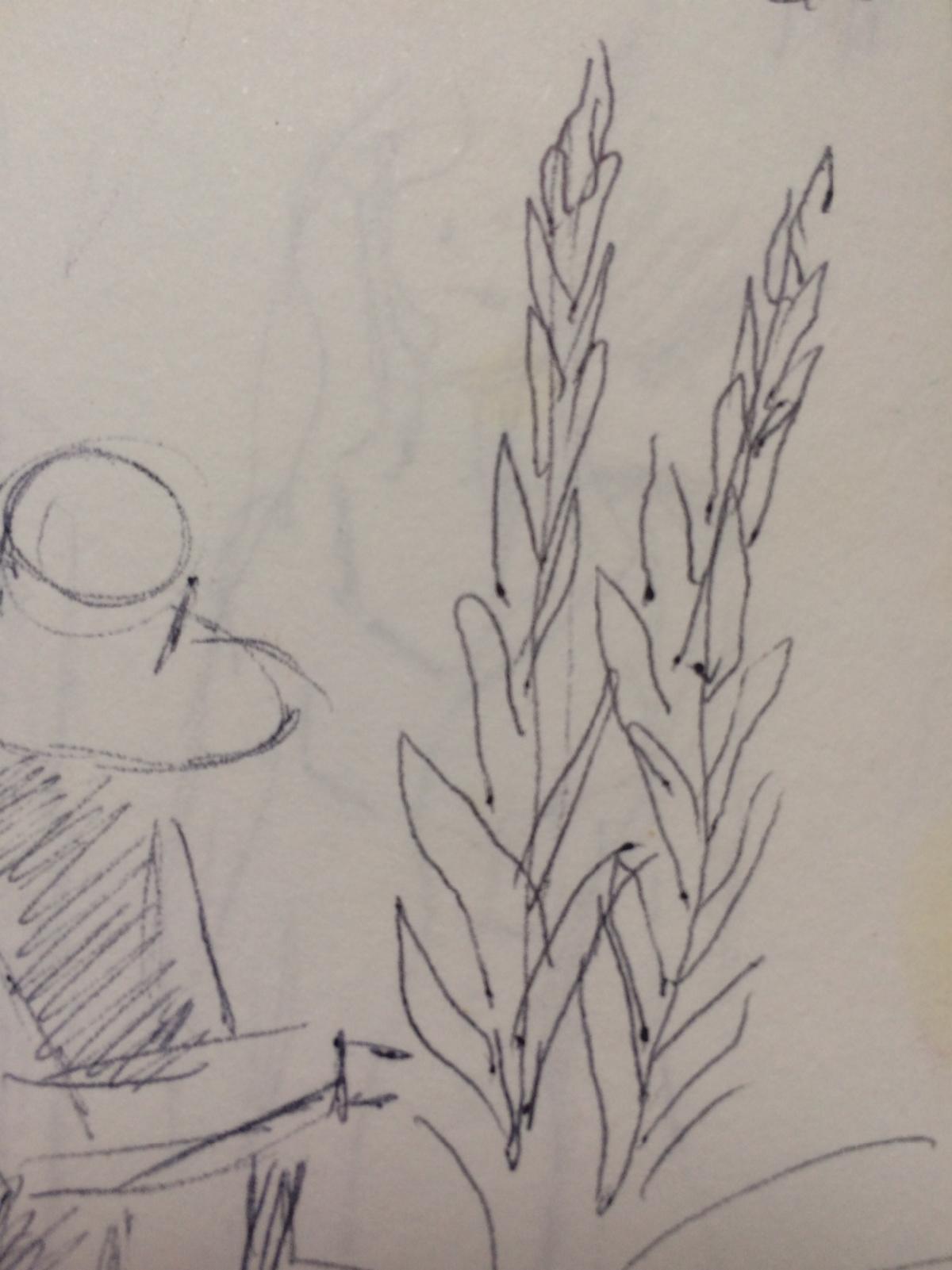
In Thiebaud's drawing of a tie, movement descends, and in my sketch of plants it rises.
Preliminary Assignment One:
Copy the two sketches and analyze the devices that create downward or upward movement. Be aware of geometry.
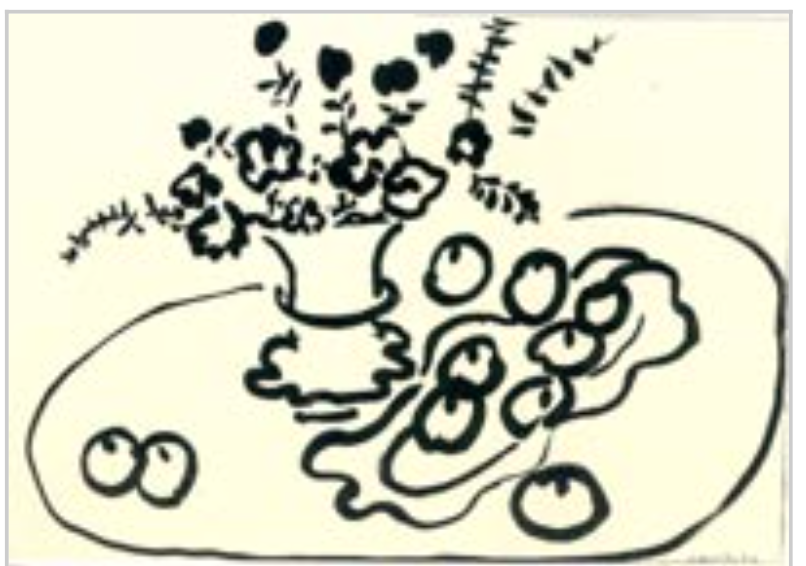
Matisse implies circular movement through the shape of the tablecloth and placement of the apples. His flower arrangement suggests explosive movement outward from a core.
Preliminary Assignment Two: Copy the Matisse drawing.
JOURNAL ASSIGNMENT SIX: SUGGESTING MOVEMENT
Create one or more journal drawings that use upward, downward or circular movement.
---------------------------------------------------------------------------------------------------
JOURNAL LESSON SEVEN: STEAL THAT STYLE
|
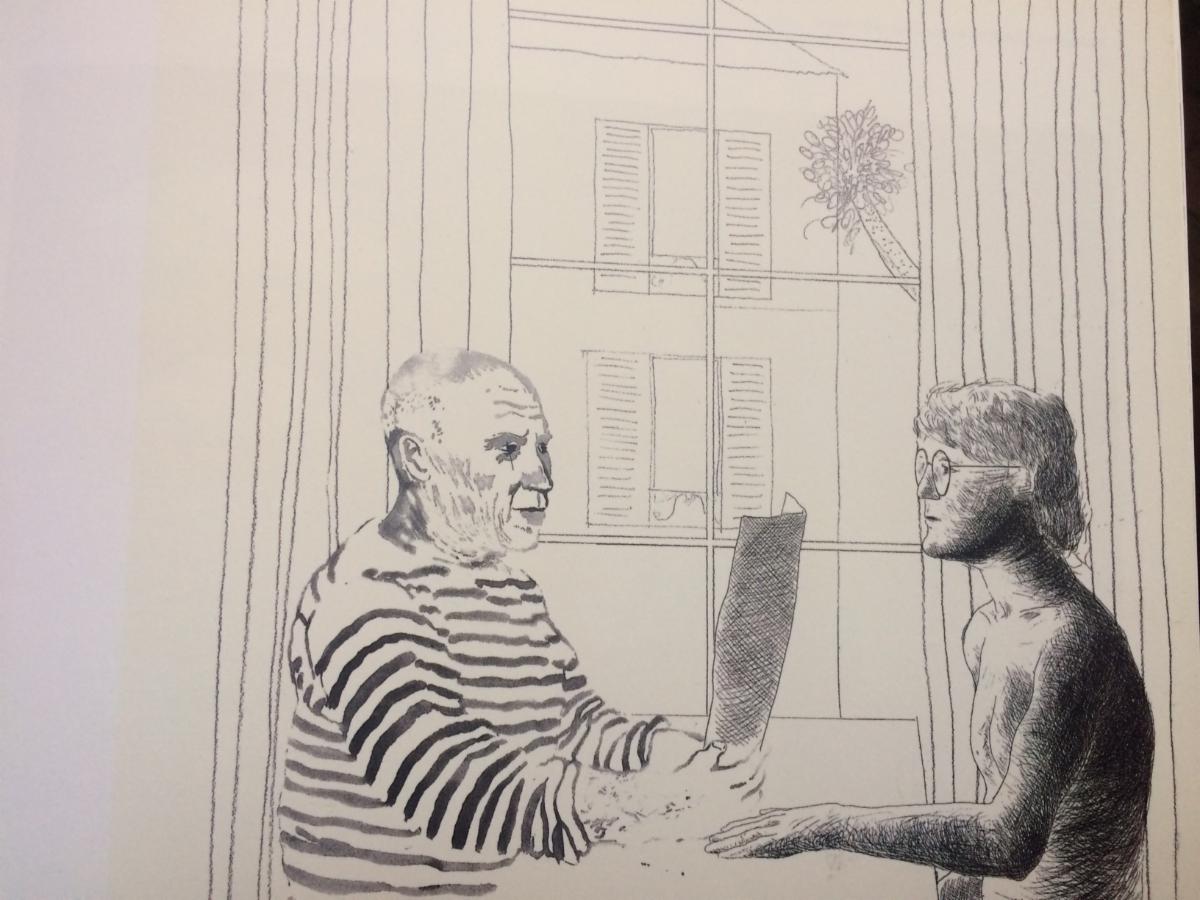
David Hockney meets Picasso (and borrows from his style)
|
|
|
|
|
(detail of the Hockney)
|
|
Preliminary Assignment One: Identify differences
in style within the Hockney.
Then do a drawing of this detail. Marking pen would work best.
|
|
|
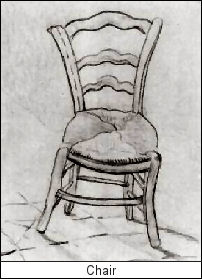
Vincent Van Gogh, "Chair," drawing
|
|
|
|
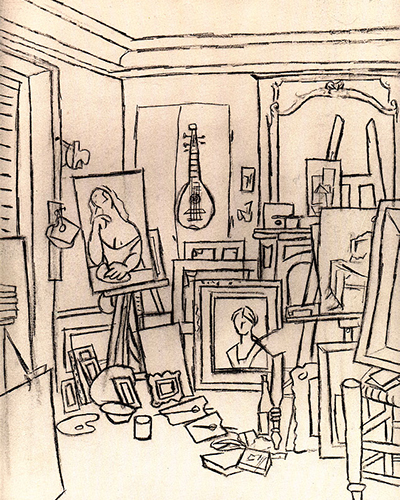
Pablo Picasso, sketch of his studio
|
JOURNAL ASSIGNMENT SEVEN: STEAL THAT STYLE
Artists are habitual borrowers, continually studying works by other artists to add to their repertoires. Give it a try. Draw a portion of your environment in the stylistic manner of either Van Gogh's chair or Picasso's studio (or both!)
You might end your journal by reflecting on your seven lesson journey while under quarantine. If you need to develop your Title Page, now's the time.
I'd welcome receiving journal pages for use in a future Art Talk. Since I won't have room for entire journals send me your favorite page.
-------------------------------------------------------------------------------------
EDIBLE: SHASTA-BUTTE
I've
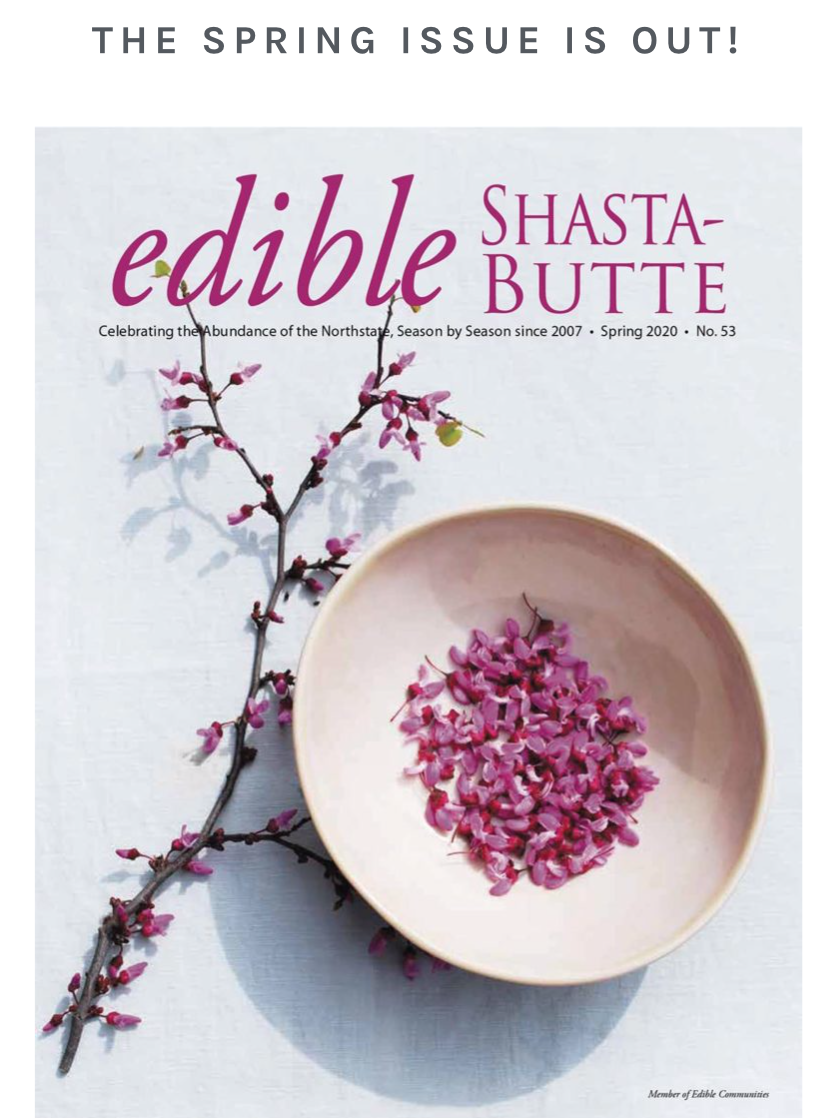
just used the Edible: Shasta-Butte website to send them my subscription for home delivery of four issues ($28). This publication supports Northstate organic farming and the stores and restaurants that use such produce. They feature local artists and photographers for their covers and interior articles. The magazine has suffered a major blow to their advertising base of restaurants and food distributors because of the quarantine. Now is the time when Edible: Shasta-Butte--an asset to our community--needs subscribers if they are to continue to publish.
Also consider supporting locally owned restaurants through using their curb-side services.
----------------------------------------------------------------------------------------
The next regular issue of Art Talk goes out the first week in May and continues to explore how artists are dealing with this health crisis.