Breaking News
UNLV Medicine's COVID-19 curbside testing to increase capacity - Nevada National Guard to assist.
After receiving a large shipment of tests, the curbside operation will soon increase testing capacity, from 140 tests per day, to 200 per day, and by next week, possibly 300 to 400 per day. Personnel from the Nevada National Guard will provide support at the expanded testing site. Since March 23rd, more than 3,000 people have been tested at UNLV Medicine's curbside operation.
Endocrinology Fellowship Receives Accreditation.
The two-year training program can begin accepting fellows in July. Fellows will learn through hands-on and didactic education provided by the UNLV and VA endocrinology faculty. There will be two fellows per year of training for a total of four positions in the program. Graduating fellows are more likely to practice where they train, supporting the much-needed expansion of specialty care in Southern Nevada and helping attract other specialties. Congratulations Dr.
Kenneth Izuora,
Chief, Division of Endocrinology.
UNLV School of Medicine students are preparing to help local hospitals
with non-COVID-19 patients, freeing up physicians and nurses during an anticipated surge of patients.
|
|
ICU Physician Discusses Daily Efforts
To Help Critical COVID-19 Patients
|
|
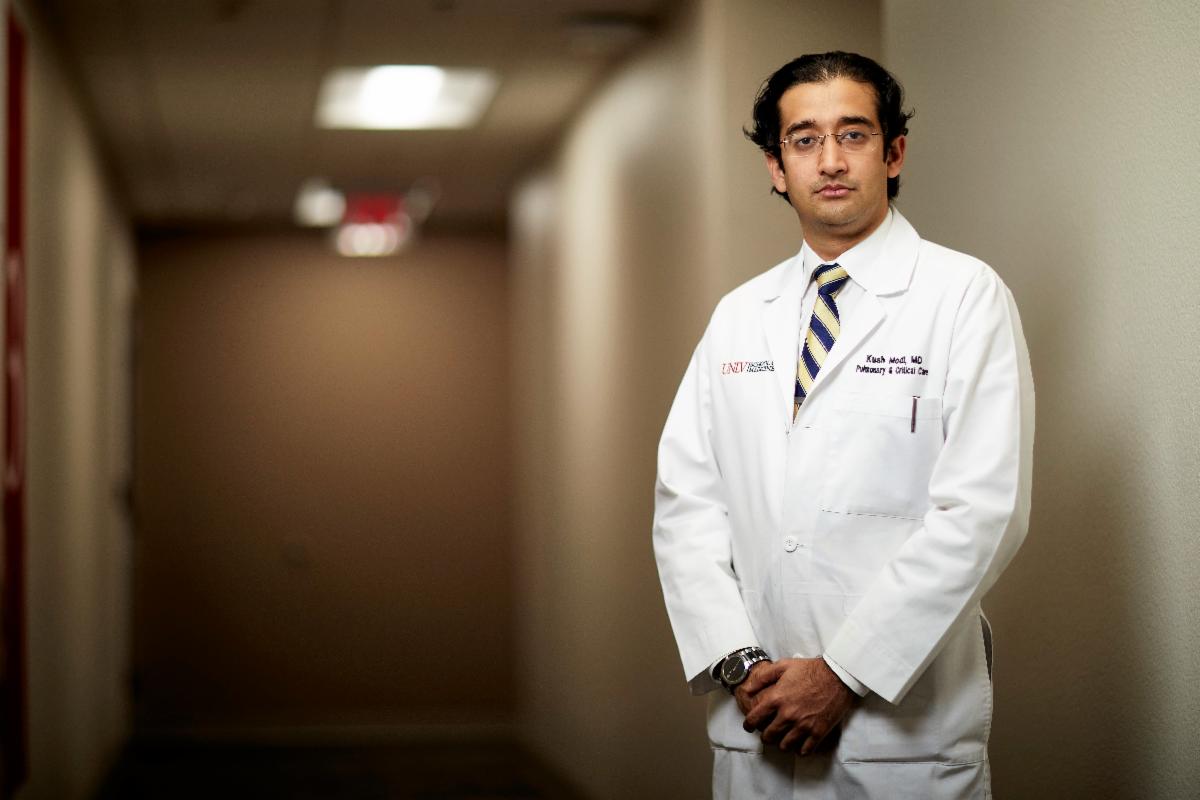
Like the rest of his team and the entire staff at the medical center, Dr. Kush Modi has been working long hours during the COVID-19 pandemic. His wife can relate, she is also a healthcare worker taking care of COVID-19 patients.
|
|
Well before the COVID-19 outbreak, you’d find Dr. Kush Modi taking care of critically ill patients with a variety of lung diseases in the University Medical Center (UMC) intensive care units. His experience as a resident in internal medicine, coupled with a long standing wonder at the complexity and perfection of the respiratory system, spurred him to specialize in pulmonary and critical care medicine. Today, of course, he is doing all he can at UMC to save the lives of people stricken with the novel coronavirus. His first COVID-19 patient did require ventilator support to sustain her breathing, but she is now slowly recovering and he is hopeful she will make a full recovery. After a 14-hour day recently, Dr. Modi agreed to an interview.
Describe the symptoms of COVID-19 patients, how caring for them is different from caring for other patients with lung problems, how long they’re hospitalized.
Most common symptoms for patients with COVID-19 infection are fever, fatigue and dry cough. Most individuals who contract COVID-19 are not ill enough to require hospitalization. However, a small proportion of patients are developing pneumonia with shortness of breath which, if progressive, leads to low oxygen levels in the blood and this potentially requires a patient to be placed on ventilator support. It appears that people with advanced age and other comorbidities (like diabetes and heart disease) are at higher risk for developing a more severe form of the disease. In our experience, we have observed that patients frequently progress rapidly to a severe form and it has been challenging to differentiate these patients from other patients who recover and do well. As we do not have a confirmed curative treatment, supportive care remains the mainstay of treatment -- that
essentially means controlling fever, providing supplemental oxygen, if needed, optimizing any other medical problems the patient may have, and monitoring for worsening which would prompt more aggressive care.
It is difficult to quote a specific range for the length of hospitalization of these patients as we are still in the middle of this pandemic and it is too soon to give a specific answer. I see mostly patients with severe disease who are in the ICU and requiring ventilatory support so they, of course, have a more prolonged stay in the hospital than someone who did not require such support.
Now that we’ve been in this outbreak for a couple months, with death statistics regularly flashed on TV screens, do patients express more and more fear about dying?
Most of the patients who are not on life support (ventilator) have some level of anxiety about dying. We explain to them that many patients with this infection do survive and recover. Of course, we attempt to individualize a patient’s risk of getting a more severe disease based on their age, comorbidities and other factors. For a younger patient with no medical issues, we are more confident that they will likely have a positive outcome. However, in older patients who have medical comorbidities, we aim for an honest discussion with the patient and their family members that if they were to get worse, they may require life support and we try to empower them to make informed decisions about end-of-life care, if such a situation does arise.
Because of the pandemic’s risk of infection, patients aren’t able to see their loved ones in the hospital. How is that dealt with?
We as a team in the ICU have made it a top priority to call the family members every day to give them an update about their loved ones.
Media reports often say that COVID-19 patients die alone without their loved ones. Please describe how such a situation is handled at UMC.
The hospital policy does allow for a limited number of family members to visit the patient in end-of-life situations. In unfortunate circumstances where the patient is declining, we have been able to make special arrangements for their family members to see their loved one. Of course, all the required measures of physical distancing and protective equipment are followed in such circumstances.
|
|
|
“ From our experience in the last few weeks, the short term mortality rate of these patients appears to be lower than the high estimates we have seen mentioned. Of course, it is too early to be definitive about this and it will need to be analyzed at a later date."--
Dr. Kush Modi
|
|
Please discuss ventilator support, steps taken prior to getting to that point.
Fortunately, many of the hospitalized patients are not requiring ventilator support. We have developed a treatment algorithm for COVID-19 patients in collaboration with our infectious disease experts and pharmacy colleagues which delineates treatment options based on severity of the disease with the goal of preventing worsening of the disease. In addition to that, we are also using “awake proning” for patients not on ventilators, where patients are turned over and they lie on their stomach. This positional change helps lungs open up in such patients and seems to improve oxygen levels in blood. Proning is a well established treatment in patients who are on ventilators and we have been using it for quite some time. However, in recent times proning awake non-intubated patients has generated a lot of interest, especially in COVID-19 patients. In our experience so far, this modality seems to have positive impact, but of course, it remains to be seen if robust trials confirm these initial impressions.
Media reports often say about 70-80 percent of COVID-19 patients put on ventilators die. Is that true?
The mortality of patients on ventilators is an area of intense debate amongst the experts. Looking at various reports, the mortality in COVID-19 patients who develop severe respiratory failure has been reported anywhere between about 16 percent to 70 percent. The wide variation seems to be stemming from the demographics of the population under study. For example, the older age distribution in Italy, compared to China, can at least partly explain the higher mortality rate in reported studies from Italy. From our experience in the last few weeks, the short term mortality rate of these patients appears to be lower than the high estimates we have seen mentioned. Of course, it is too early to be definitive about this and it will need to be analyzed at a later date.
Discuss how COVID-19 patients have changed patient care
.
Due to the increased number of patients who are requiring critical care medicine and pulmonary medicine expertise, we have increased the number of pulmonary and critical care physicians in the hospital to take care of these patients and we have specific plans in place for further reinforcement, if needed. The hours we work can range between 8 to 14 hours but are variable depending on the needs of the day. Though we have had a high census in our ICU before, currently the number of severely ill patients in the ICU is very high. As critical care physicians we are trained to work and make high stakes decisions in stressful situations - so though it is challenging and sometimes tiring to take care of so many sick patients, at the end of the day we tend to focus on the “wins” of the day, like a patient who we were able to take off the ventilator successfully or a patient who we were able to discharge from the ICU.
How worried are you about contracting the virus?
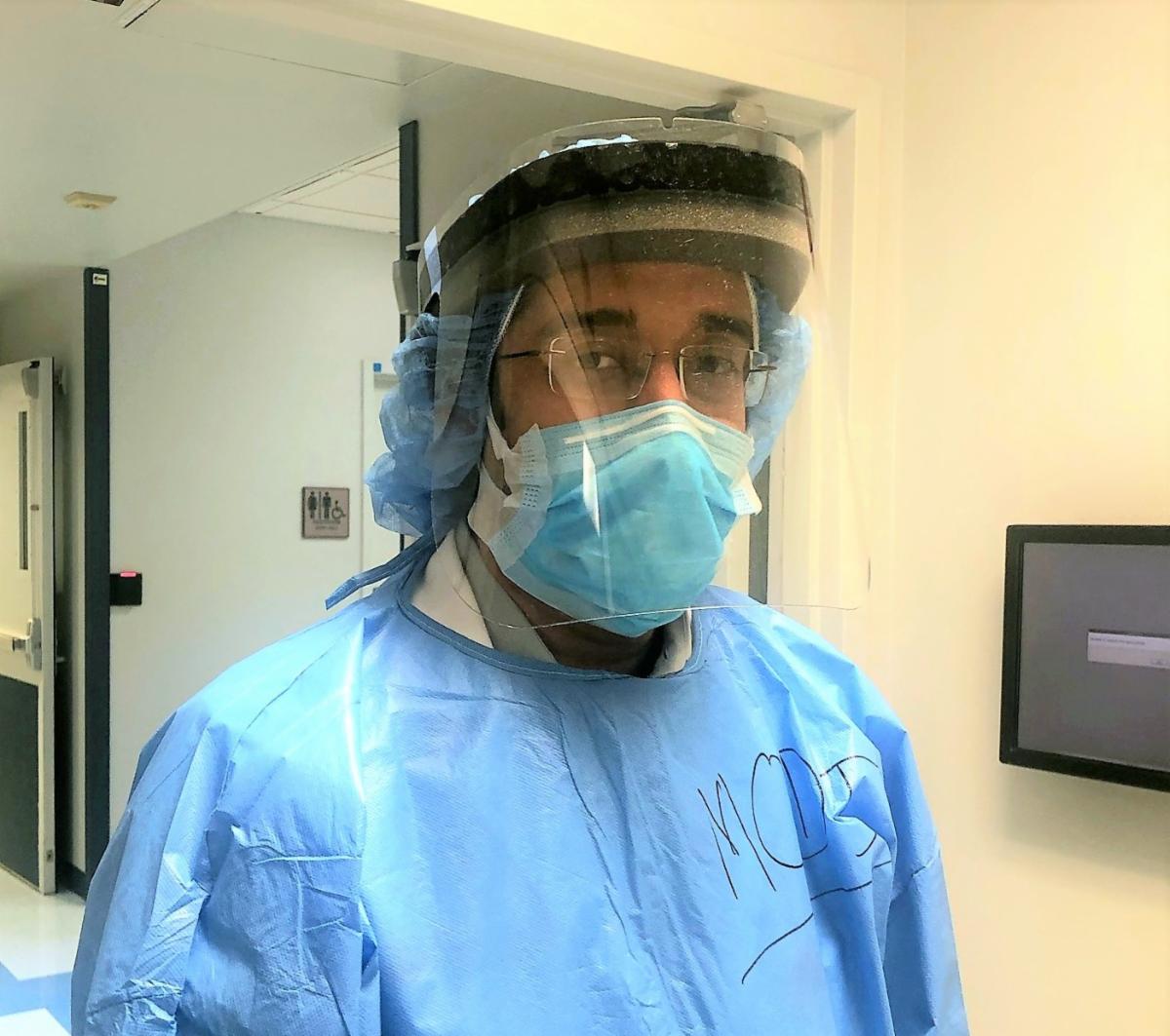
UMC has done tremendous work in making sure all healthcare workers receive appropriate personal protective equipment (PPE) to take care of COVID-19 patients. Due to their excellent work, I have been able to focus on taking care of these patients and have had minimal anxiety about obtaining proper PPE.
How do you handle your clothing after work?
After returning home, I immediately take a shower in a separate bathroom and bag my clothes to reduce dispersion. By the way, my wife is also a healthcare provider taking care of COVID-19 patients, so she follows the same practice.
|
|
|
Dr. Kush Modi in his personal protective equipment. He is confident that with proper usage, it is sufficient to protect him from becoming infected with COVID-19.
|
|
UNLV School of Medicine In The News
|
|
|
|
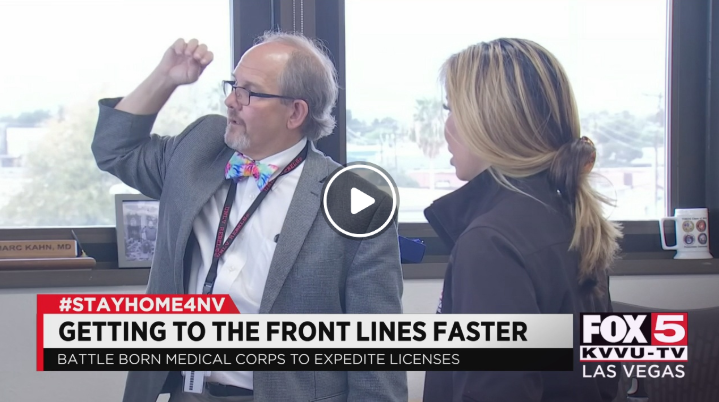
UNLV Leader: Battle Born Medical Corps Could Open Doors for Faster Licensures
FOX5 TV
Interviewed: Dean Marc J. Kahn
|
|
|
|
|
Las Vegas Hospital Blazes on Path With Malaria Drug to Treat COVID-19
Las Vegas Review Journal
Interviewed: Dr. David Weismiller
|
|
|
|
|
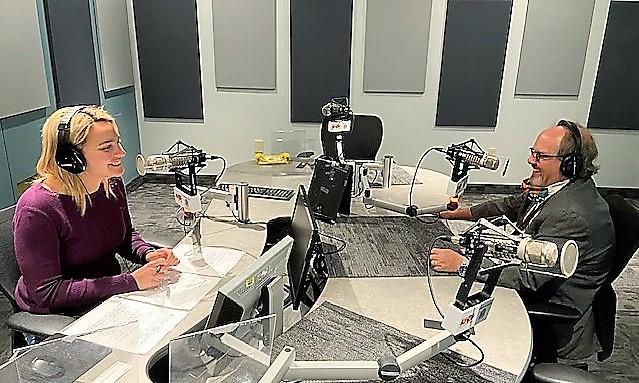
New UNLV Medical School Dean Takes Helm Amid Pandemic
KNPR Radio
Interviewed: Dean Marc J. Kahn
|
|
|
|
|
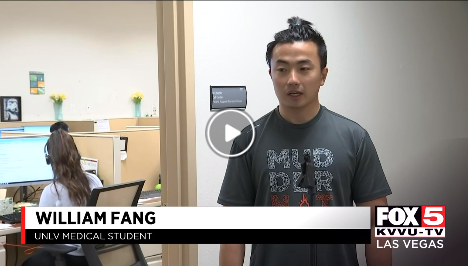
UNLV Medical Students Staffing COVID-19 Call Center
FOX5 TV
Interviewed: Student William Fang
|
|
|
|
|
A Patient's Guide to Autism
U.S. News & World Report
Interviewed: Dr. Mario Gaspar de Alba
|
|
|
Missed a newsletter? All previous issues of Making the Rounds, are available on our
website
.
|
|
|
|
|
|
|