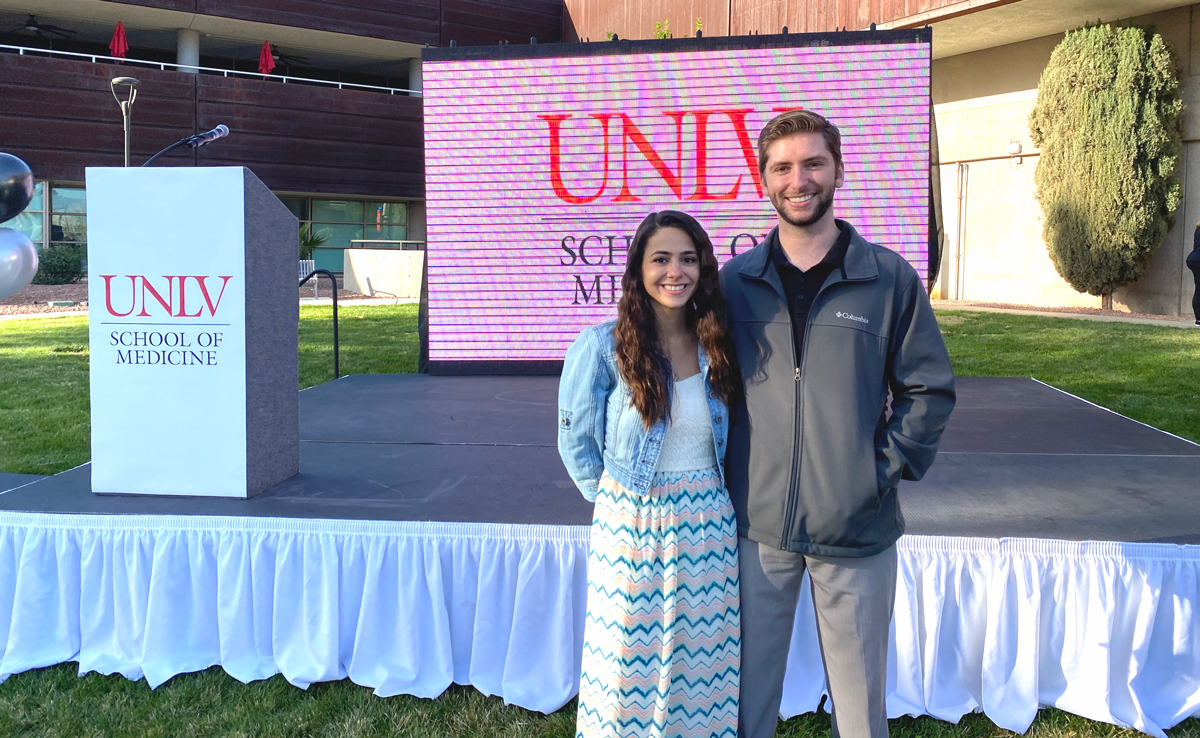
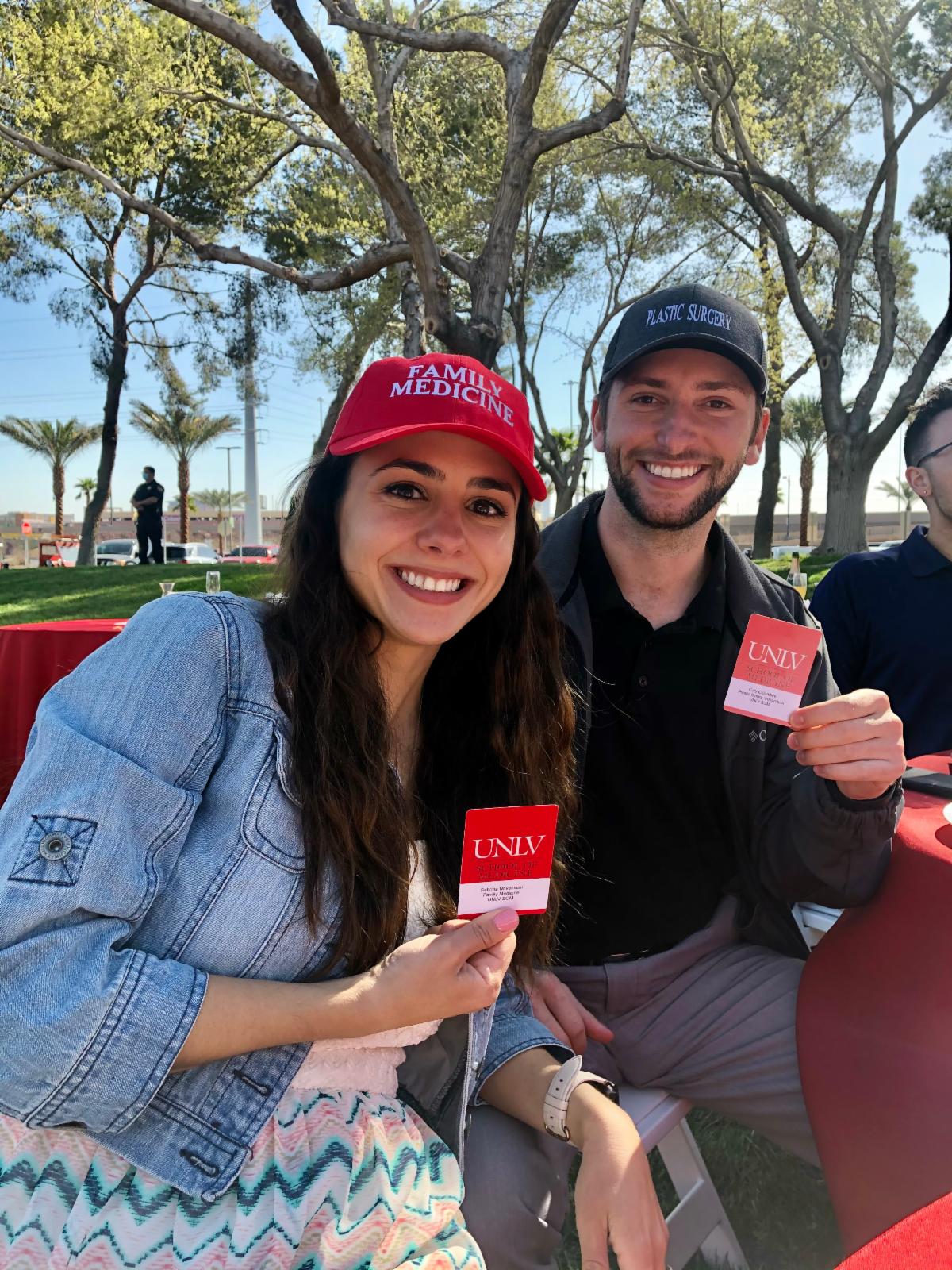
Cory Colombini plans on becoming a plastic surgeon. Sabrina Novenschi, a family practitioner. They’ll do their residency training through the UNLV School of Medicine, the same place they attended as proud members of the school’s Charter Class.
Why this soon-to-be married couple chose their medical specialties, why they’re so sure they’ll enjoy them, is at once logical and, well, a tad surprising.
When Colombini was in the process of learning about plastic surgery, it turned out that one of the cases UNLV Medicine plastic surgeons Dr. Joshua Goldman and Dr. Richard Baynosa handled involved a patient who had lost a hand in an accident. Along with a resident physician, Colombini cleaned the severed hand that was on ice, helping prepare it for replantation. He then witnessed his first microsurgical replant case.
“I was energized by the precision and skill it took to meticulously replant the hand,” he recalls. “Over the next two weeks, the patient became someone I got to develop a personal relationship with and watch make astonishing progress. We had managed to save the function of every finger besides the ring finger. I had never felt as much joy as I did when the patient continuously thanked us for saving his hand. His gratitude was enlightening. I was hooked. The high expectations, attention to detail and craftsmanship that it takes to be a plastic surgeon made me realize I had finally found my home in medicine.”
That Colombini would be tremendously impressed by the effects of a remarkable surgery, one that he saw with his own eyes, is perfectly logical. After all, the patient now has the opportunity to live a largely normal life. It makes sense that Colombini would want a career where he could transform lives in much the same way.
And yet even Novenschi -- she and Colombini became a couple while both were undergraduates at the University of Nevada, Reno -- admits her fiance’s decision to choose plastic surgery residency training came as a bit of surprise. “Most people thought it would have something to do with the heart,” she says.
At the age of three months, Colombini had life-saving surgery for a congenital heart defect. “From a young age, my surgery has shaped my life in the direction of yearning to impact people’s lives,” Colombini says. “My surgery and everything that has come from it has shaped me into the selfless person I consider myself to be.”
So, yes, it’s a bit of a surprise that Colombini is going into plastic surgery. Yet what he wants to do in plastic and reconstructive surgery can surely change lives for the better, just as cardiology or cardiac surgery can. What is truly surprising, however, is another reason Colombini gives for loving plastic surgery -- the creativity that he likens to cooking.
“One of my favorite hobbies is cooking. Before cooking, I read multiple recipes and watch countless videos on different techniques. Then, I get to be creative. I use components from the various recipes I learned about, pick which ingredients I want to use, combine the different methods of preparation and add a few of my own original ideas that allow me to turn it into my own creation. I believe this is what has really made me enjoy plastic surgery. Plastic surgery is unique because there are multiple ways to approach a problem, just like there are multiple ways to cooking a certain dish...It requires surgeons to use their creativity to fix a problem...Also, I love that not only are plastic surgeons treating physical problems of the patient, but they can also help them immensely with their self image...which I have not seen in other specialties.”
The more you study Novenschi’s life, the more her desire to go into family medicine seems pretty clear cut. What is surprising about her specialty selection is what she says helped reinforce her choice -- the making of YouTube videos, beginning with beauty tips for young girls.