October 2025

Library Science II, or How I Found A Few More Scores

by Wendy Powers

A week ago, I set out to organize a program of 16th-century fantasias to coach at an upcoming two-hour local ARS chapter meeting. However, the best time for me to attack this project was over a quiet weekend out of town, away from my library of printed music. This is a scenario when my large collection of digital scores is invaluable to me. But how to start?

Way back in 2018—pre-Covid, when life seemed so simple—ARS Nova published my short article on how I organize my extensive library of printed music. Since that time, my personal music library has continued to grow, both in purchased printed music (PLEASE continue to patronize our beloved music publishers!) and the library of digital scores that lives in my computer.

silver_laptop.jpg

What scores are in my computer?

The hundreds of pieces that live in my computer arrived there from a variety of sources. The websites CPDL (Choral Public Domain Library) and IMSLP (International Music Score Library Project/Petrucci Music Library) are free online collections of editions uploaded by anyone; many are terrific, such as Allen Garvin’s beautiful, clear editions for viols and recorders (see also his web site at dfwviols.com). Some are less useful; I don’t love editions that transpose works from original keys or add dynamic or articulation markings, and there may be mistakes. Let the buyer beware! CPDL only posts vocal music, but recorder players are magpies used to stealing music from singers. IMSLP hosts modern editions of both vocal and instrumental works, as well as facsimiles of original sources such as Franco-Flemish manuscripts, 16th- and early 17th-century madrigal collections, and much, much more. Out-of-print publications are also often available on IMSLP, the sort of older modern scores that Dover Books publishes. These websites are invaluable and I recommend becoming supporters of both.

I am also increasingly making my own Sibelius editions of pieces I like when I cannot find an edition of a work that fits my needs.


In recent years, I have taken to using my computer to organize topics for workshop teaching by scanning whatever music I decide to use into folders. This has allowed me to keep a record of what has worked and didn’t work, and to improve my ability to put together cogent topic classes. More on this below.

How do I organize all this music?

Four folders hold almost all my digital music. An “Editions” folder is organized mostly by composers’ names; within, say, “Josquin,” there are folders for individual genres, with each piece labelled by composer, title, number of voices, and, often, editor (e.g., “Josquin—Mille regretz a 4, ed. Haar” under “Josquin/Secular 3 & 4 parts”). Folders of individual pieces accrue translations, notes about pieces, sometimes articles about pieces, and other scores related to the work; so Morales’ Missa Mille regretz a 6 and Gombert’s Mille regres a 6 would also be in this folder. Special folders such as “Seven-Part Instrumental & Vocal” live under “Editions.” There are more organizing wrinkles in my “Editions” folder, but this is enough for now.


The “Music Topics” folder is comprised of folders for individual subjects. For example, the “Salve Regina” folder contains several settings by different composers of this Marian chant, along with my notes from classes I have taught. Folders for “Christmas Season” or “Weddings” make finding music for special occasions much easier.


“Facsimiles and Sources” is the folder I wish I had had when I was writing my dissertation many years ago. There is a tremendous trove of original manuscripts and prints now available online, much of which can be freely downloaded. As an early mensural notation enthusiast and teacher, having this to hand is a dream come true, so much easier than dealing with the microfilms of my student days.


Lastly, I keep a workshop folder, where I keep track of classes that I have taught over the years at multiple workshops. This folder keeps me from repeating topics for particular groups but is also a place to look for ideas for future workshops.

All four folders are subsumed in a master “Music Repertory” folder that lives on my desktop. A given piece, such as Josquin’s Mille regretz may live in a dozen or more folders, so that it can be found in a dozen or more different ways—by composer, by source, by a workshop where I used it, or by a particular topic. All I need is Copy and Paste to place the piece in the many places where it might be needed.

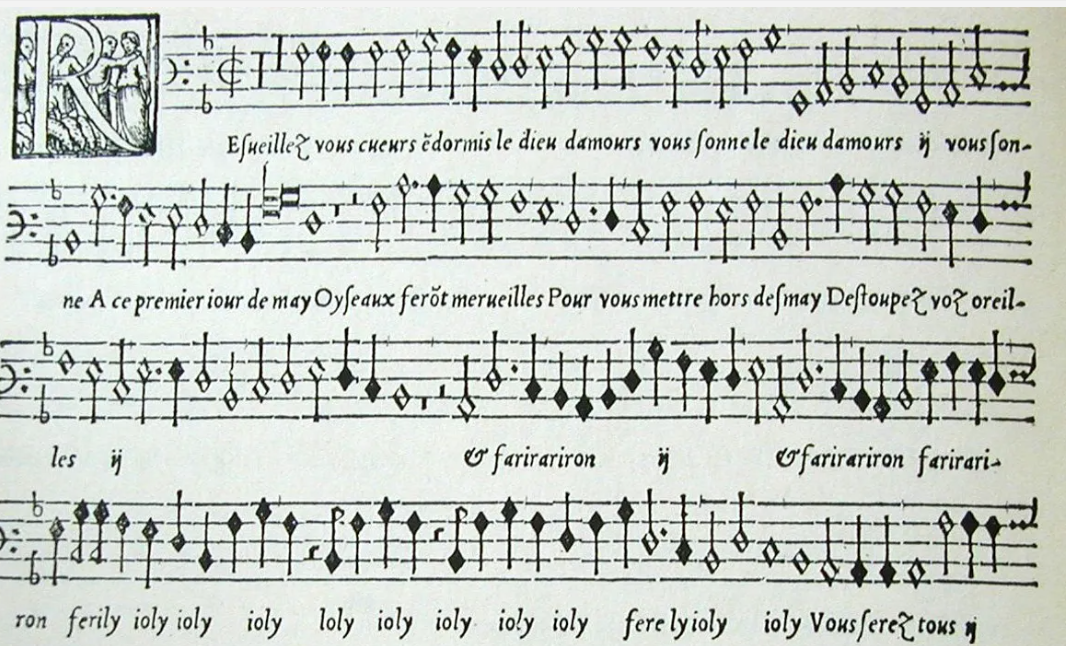
So how do I find 16th-century fantasias for my workshop program? Think, Wendy. Under “Music Topics,” I have a folder labelled “Fantasia, Ricercar, Tiento + co” that has several reminders such as “SEE ITALIAN FANTASIA,” “SEE WILLAERT,” “SEE MUSICQUE DE JOYE” and the like. A subheading titled “SHORTER FANTASIAS” has proven useful in the past. In the folder labelled “Editions” I explore composer folders. In the “Facsimiles & Sources folder” I check print sources such as 1540 Musica Nova, Moderne’s 1550 Musicque de Joye, and the fabulous Musica Britannica anthology Jacobean Consort Book, not a single source, but now available on IMSLP. In the “Workshops” folder, I poke around for old classes on related topics; I also come across reminders of old classes in all the previously mentioned folders, which is sometimes an easier way to find a class taught eight years ago.

An amateur music librarian is essentially a detective looking for clues in every corner. The secret is creating as many hiding places as possible. Happily, digital scores take up no physical room in my studio, and multiple copies can live in many folders, making them more likely to be found when needed.

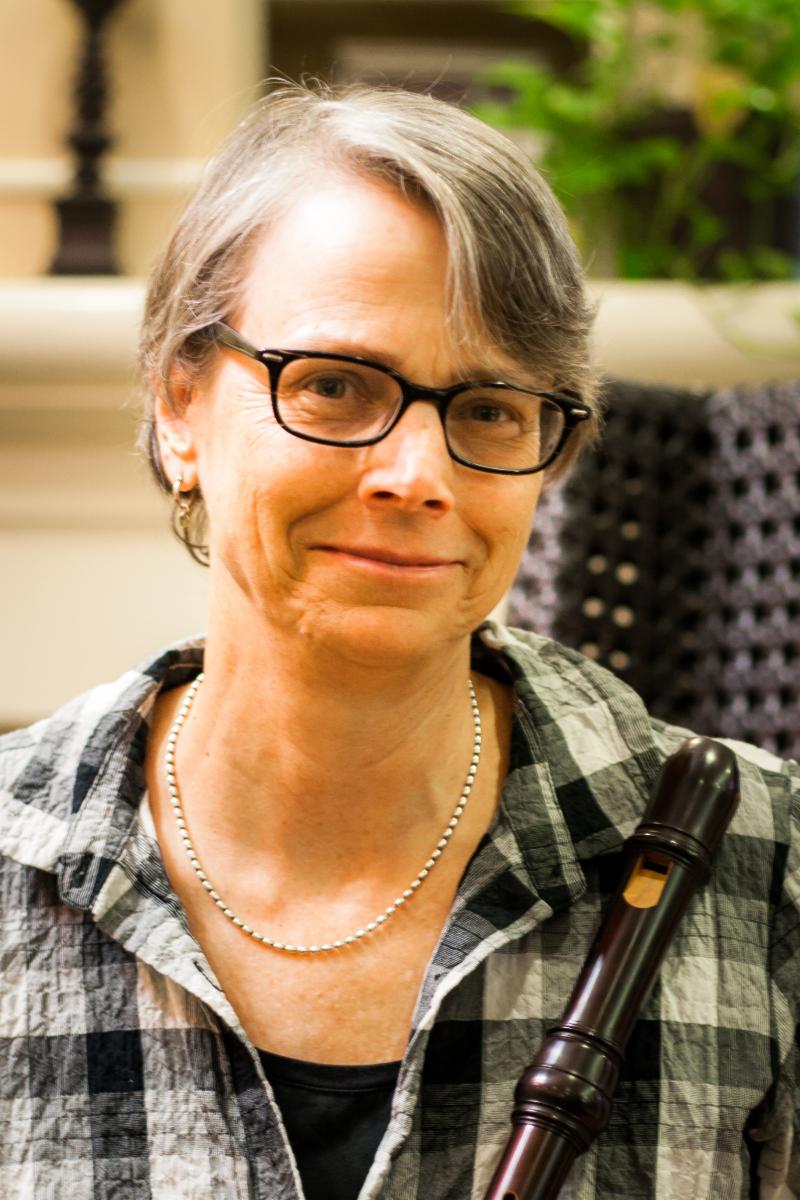
Wendy Powers is a former member of the ARS Board of Directors. She lives and teaches in New York City.

Do you enjoy our ARS NOVA emails?
Click here for our archives, with articles on many topics ranging from how to care for your recorders, to useful apps, to scholarship and grant opportunities though ARS. If you've received this from a friend, sign up for your own monthly subscription using this link.

How to Join the ARS

Take advantage of our 1/2 price rate for first-time members! Get immediate access to all the information available on our website, as well as other member benefits including the quarterly American Recorder magazine.

Click here for info 

P.O. Box 480054 Charlotte
NC 28269-5300
Phone: 1-704-509-1422
Toll Free: 1-844-509-1422
Fax: 1-866-773-1538
Facebook  Youtube