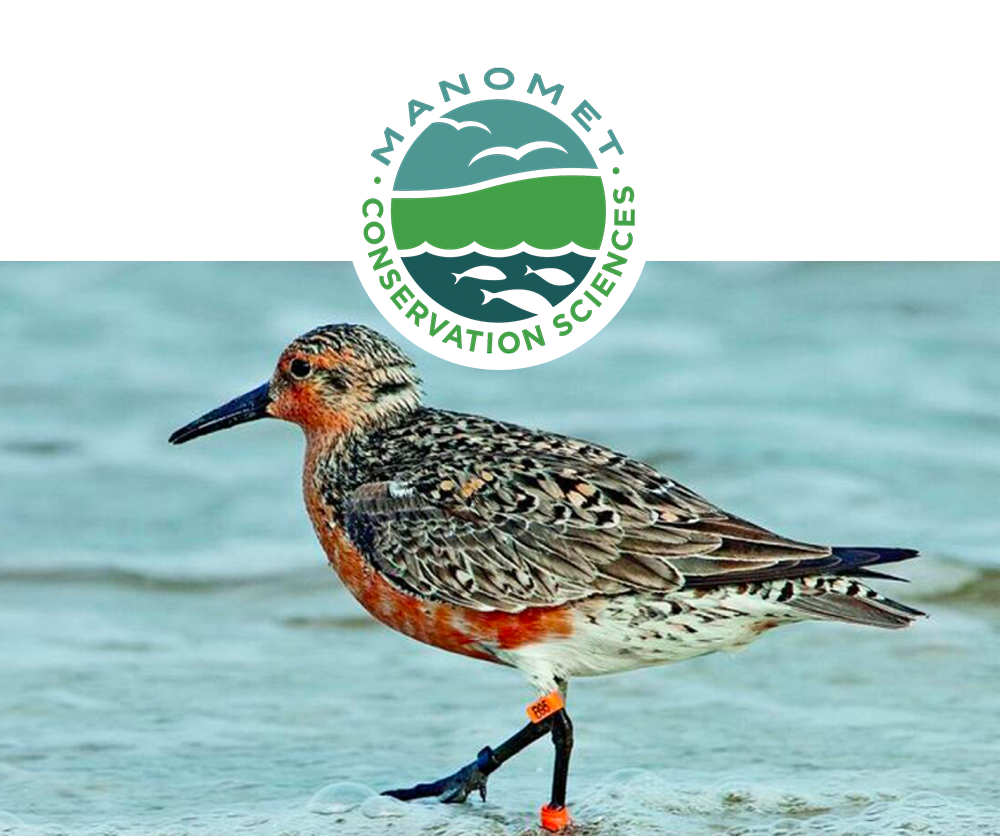
B95 "Moonbird" | Photo: Jan van de Kam | |
On April 1, 2026, humans launched Artemis II toward the Moon. But one small bird had already logged that journey on its wings. As Artemis II nears the end of its 10-day journey, it’s worth remembering that shorebirds continue to make one of the most extraordinary journeys on Earth.
A Red Knot—known as Moonbird—covered more than 400,000 miles across the Americas over its lifetime. No spacecraft. Just instinct, and a fragile network of places to rest and refuel. If those places disappear, so does the journey.
Through science and collaboration, Manomet Conservation Sciences is working to reverse shorebird declines by safeguarding the habitats that sustain migration across the Americas. Get inspired by the story of Moonbird and join our mission!
LEARN MORE HERE >>
| Drone view in the Caribbean | Photo: Manomet / Arne Lesterhuis | | |
For three consecutive years, Manomet Conservation Sciences has been conducting shorebird surveys on Bonaire and Curaçao to enhance our understanding of the habitats these tropical islands provide during southbound migration. Many species of shorebirds along the Atlantic Flyway move through the Caribbean on their way to northern South America, or even further, and often use these islands to refuel and rest. Even more so, tracking studies showed that these islands function as a safe haven when heavy tropical storms and tornadoes make it highly risky or even impossible to continue their journey.
Explore how Manomet Conservation Sciences and partners are combining science with cutting-edge drone technology to identify shorebird roosting sites within mangroves and other habitats where access or visibility is challenging.
LEARN MORE HERE >>
| Building Nest Boxes | Photo: Manomet | |
Teachers Build Nest Boxes to Support Birds in Brockton
Five teachers from Brockton Public Schools traded their usual classroom tools for drills and saws in February during a hands-on workshop focused on helping birds and bringing nature into their school communities.
Hosted through Manomet Conservation Sciences’ TREE Brockton program and held in partnership with Wildlands Trust, the four-hour workshop guided teachers through the process of turning a simple 2×4×6 pine board into a functional nest box for local bird species. By the end of the session, each participant had built a finished nest box ready to be installed on their school grounds.
Curious how a single workshop is sparking real change for birds and students alike? Click to read more and see the impact in action.
READ THE FULL STORY >>
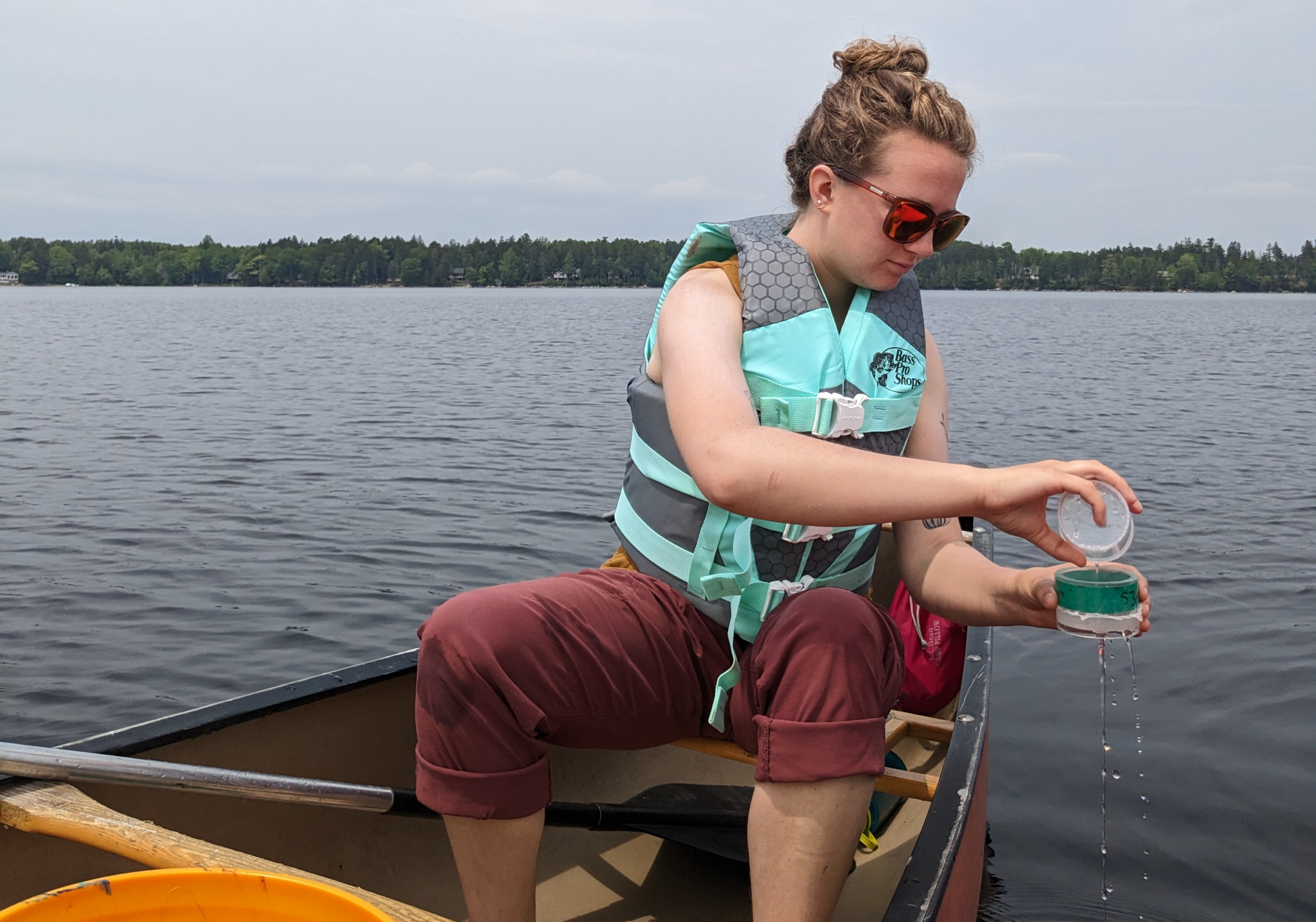
| Filtering zooplankton from Gardner Lake | Photo: Manomet / Emily Farr | |
New Tools Track the Return and Future of River Herring
Each spring, river herring begin a remarkable journey from the ocean back into freshwater rivers and streams to spawn. Tracking that movement and understanding what happens next are critical to rebuilding populations that have declined across much of their range.
To support that effort, Manomet Conservation Sciences and partners in the Gulf of Maine River Herring Network have developed two new data platforms that bring together monitoring efforts across the region, offering a clearer picture of both returning adults and the next generation of fish.
Dive into the data, follow the journey, and see what it means for the future of river herring.
READ MORE >>
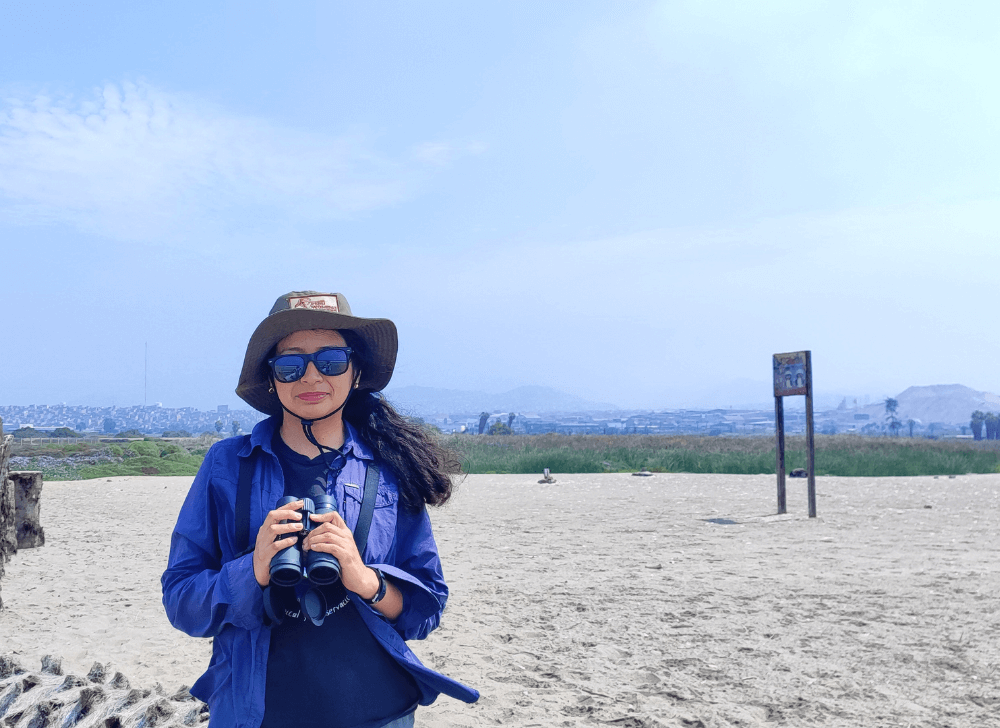
| Lisset Carito Gómez Martínez, a 2023 Small Grants Awardee | Photos: Courtesy | |
Where Cities Meet Shorebirds:
A Small Grants Story from Peru
Applications are now open for Manomet’s 2026 Small Grants Program, which supports early-career conservationists working to protect shorebirds across Latin America and the Caribbean. Since its launch in 2023, the program has funded projects that bring science, community engagement, and conservation action together—often in places where the challenges are most urgent.
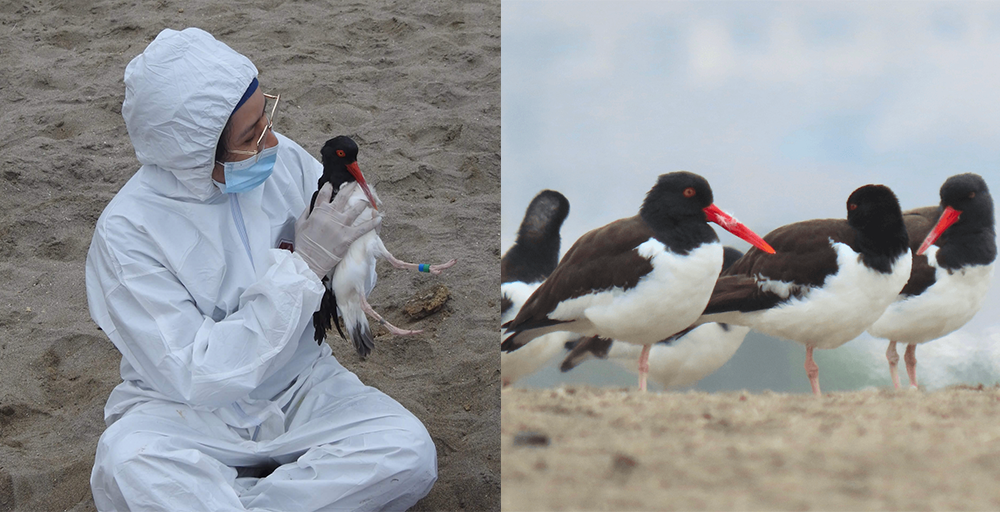
One of these projects is led by Lisset Carito Gómez Martínez, a 2023 awardee from Peru. Her work focuses on the American Oystercatcher (Haematopus palliatus) nesting along Lima’s urban beaches, where increasing human pressure is putting breeding success at risk.
We spoke with Lisset about her findings, the challenges of conserving shorebirds in urban environments, and how the Small Grants Program helped turn her ideas into action.
READ THE INTERVIEW HERE >>
|
|
Climate-Resilient Salt and Shorebird Conservation
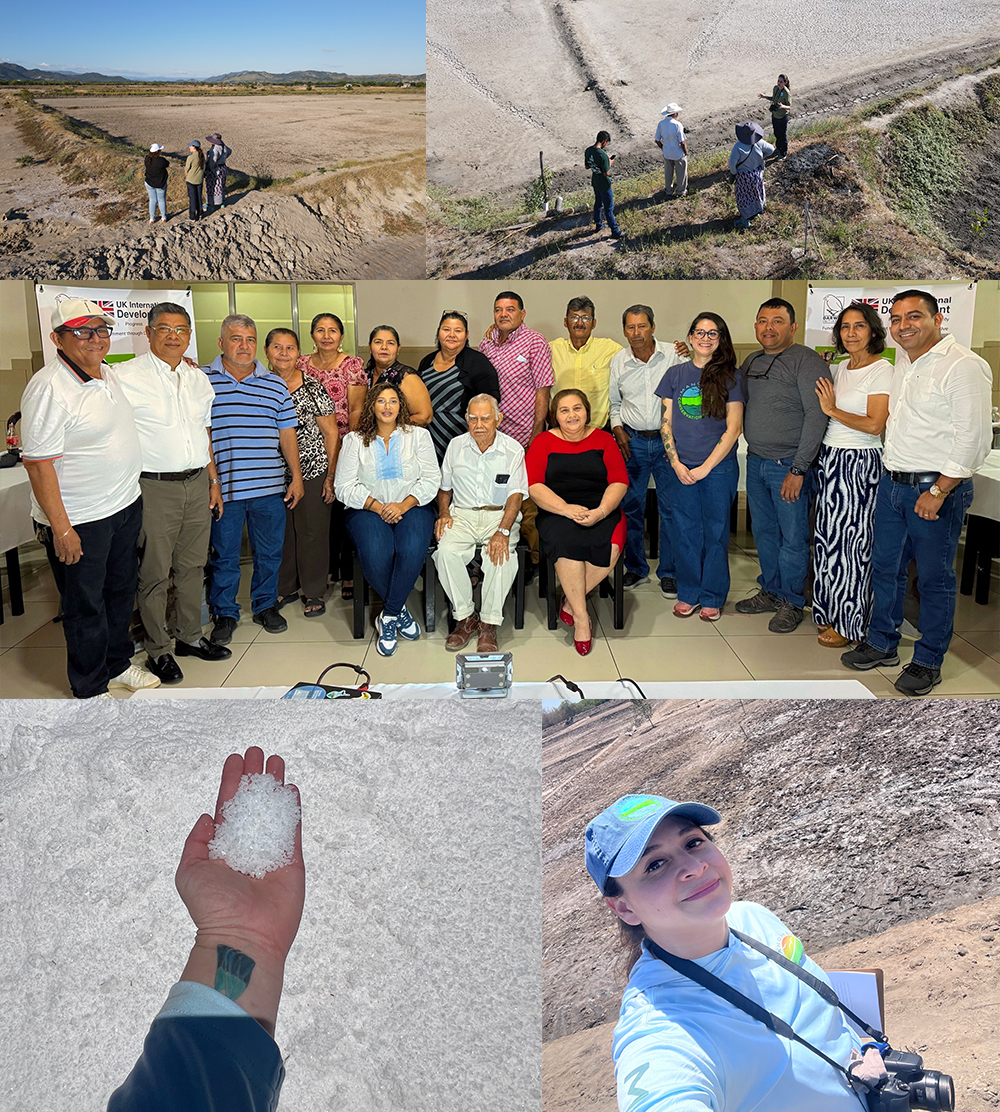
The primary economic activity in San Lorenzo Bay, Honduras is artisanal salt production. Increasingly, climate change effects are impacting salt production and the availability of habitats for shorebirds of conservation concern, resulting in increased poverty and emigration, and declining shorebird populations.
In San Lorenzo, Valle, Manomet Conservation Sciences continues to work hand in hand with artisanal salt producers to advance the Climate-Resilient Salt and Shorebird Conservation Project, funded by the Darwin Initiative. Through participatory workshops and regular field monitoring, we are strengthening local capacity while gathering critical data on shorebird use and habitat conditions across salt farms. These efforts are helping producers adapt to climate challenges, improve salt production, and enhance habitats for migratory shorebirds—demonstrating that livelihoods and conservation can thrive together along Honduras’ Pacific coast.
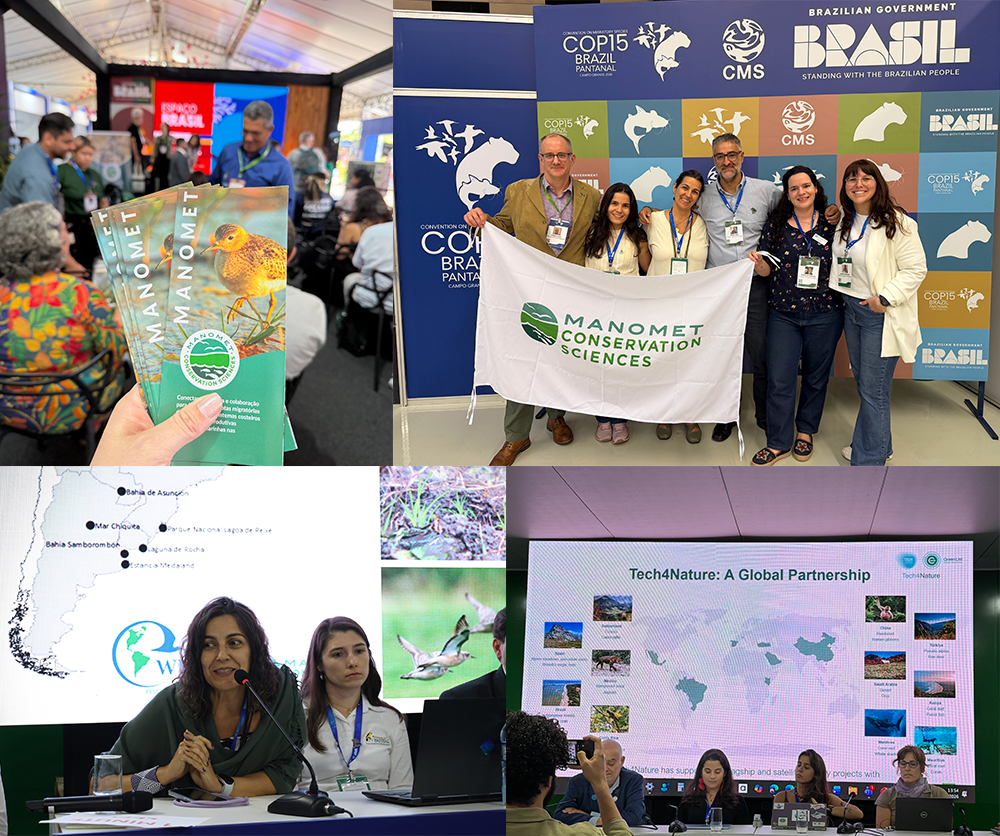
| | Manomet delegation at CMS COP15 (left to right): Rob Clay (Vice President, Flyways), Cindy Galeano (Communications Specialist, WHSRN Executive Office), Juliana Bosi de Almeida (Managing Director, Flyways), Diego Luna Quevedo (Senior Policy and Governance Specialist), Nathalia Aguilar (Flyways Conservation Officer), and Andrea Ferreira (Science Communications Manager). |
15th Conference of the Parties (COP15) to the Convention on the Conservation of Migratory Species of Wild Animals (CMS)
Governments, scientists, and conservation leaders gathered in Campo Grande, Brazil for the 15th Conference of the Parties (COP15) to the Convention on the Conservation of Migratory Species (CMS), a global forum where countries agree on coordinated actions to protect migratory wildlife across borders. For the Americas, the meeting marked an important step forward for shorebird conservation, with progress on proposals to strengthen protections for species such as the Hudsonian Whimbrel, Hudsonian Godwit, and Lesser Yellowlegs, alongside new commitments to coordinated action, including the development of an Initiative for the Americas Flyways under CMS—a formal instrument to drive coordinated, cross-border conservation action. Together, these outcomes reinforce a central idea: conserving migratory shorebirds requires coordinated international action, sustained partnerships, and a strong foundation of science. The next step will be to continue this work alongside our partners to turn commitments into action to safeguard migratory birds and their habitats.
| | Thank you to our recent corporate partners for helping Manomet deliver its mission of improving the health of flyways, coastal ecosystems, and working lands and seas. | | | | |