Weekly highlights for the Manufacturing community.
Subscribe to get this newsletter in your inbox each Tuesday.
| | |
|
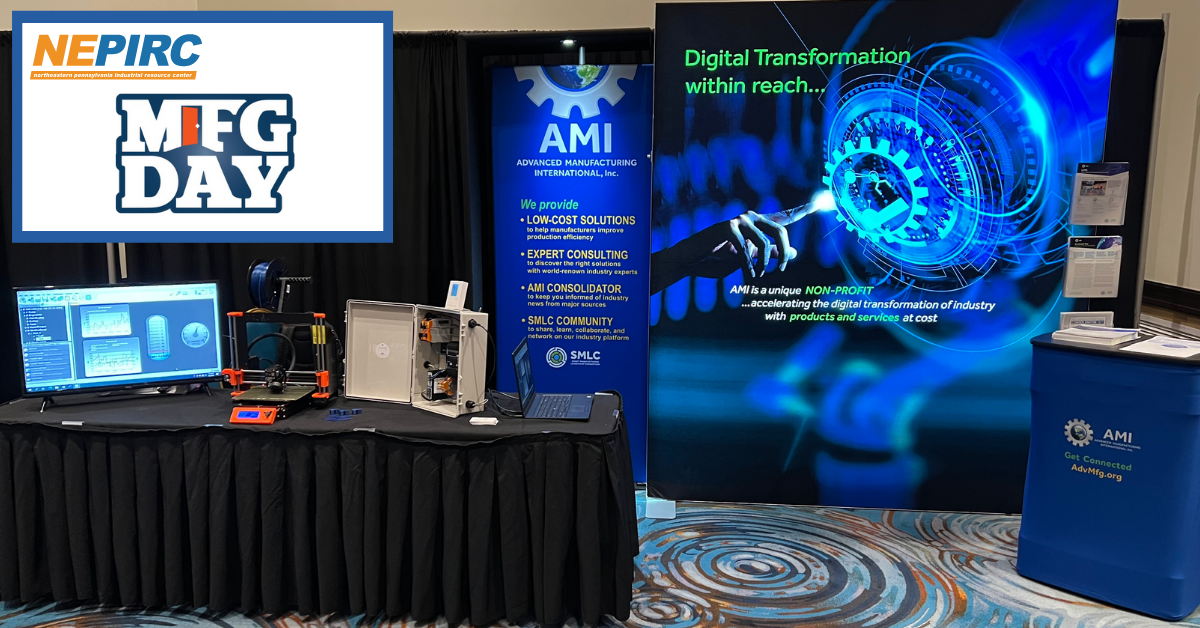
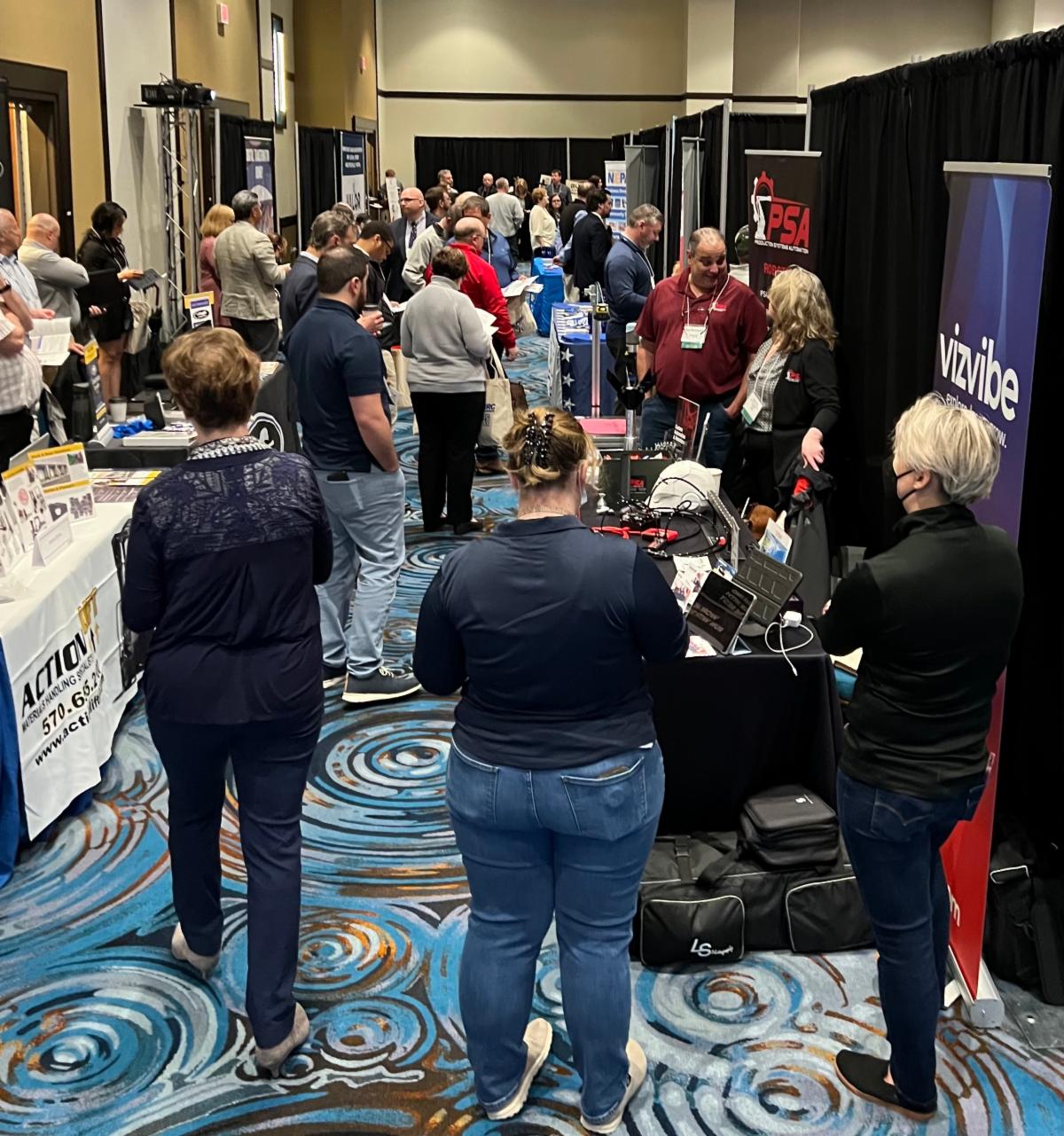
Last week AMI had the opportunity to join Manufacturing Day 2021 in-person event in Wilkes-Barre, PA. Due to the pandemic Manufacturing Day in-person meeting was postponed. 380 attendees came together to celebrate Manufacturing Day hosted by NEPIRC - Northeastern Pennsylvania Industrial Resource Center. | |
|
2022 Call for Conference Proposals
The Association of Technology, Management, and Applied Engineering would like to invite members, professionals, and others to submit conference proposals for the 2022 ATMAE Annual Conference, located in Louisville, Kentucky on November 9-11, 2022.
ATMAE Proposal Guidelines
ATMAE encourages the submission of conference oral presentations, posters presentation, or workshop session proposals aimed at providing content or training on topics of interest to our members and industry. The proposals will be reviewed by the Annual Conference Committee for acceptance in the conference.
All abstract proposals must be submitted using ATMAE's online abstract submission system. There is a three-presentation limit for those listed as the primary presenter. A full paper is not required at the time the abstract proposal is submitted.
Authors of abstracts accepted for oral presentation will receive an invitation to submit a full conference paper for publishing in ATMAE's Annual Conference proceedings. Authors of posters accepted for presentation are not eligible to submit a full conference paper.
ATMAE Proposal Guidelines
Conference proposal submission open: April 18, 2022
Conference proposal submission closed: May 27, 2022
Presenters informed of proposal decision: July 1, 2022
Author accepts or rejects the decision to present: September 1, 2022
Conference paper submission open: July 1, 2022
Conference paper submission closed: September 2, 2022
Authors informed of conference paper decision: October 7, 2022
View call for proposals at: https://www.atmae.org/page/22call
| |
 | |
Berkshire Grey and Logistex partner on robotic automation solutions in U.K.
Berkshire Grey, a leader in AI-enabled robotic solutions that automate supply chain processes, is partnering with Logistex, a leading system integrator and warehouse management system provider, to help companies grow despite the labor shortages and logistics challenges straining global supply chains, the partners announced today. This partnership combines AI-enabled robotic automation from Berkshire Grey with system design and integration services from Logistex to deliver warehouse robotics to Europe’s premier pure-play ecommerce companies, retailers, and third-party logistics (3PL) providers. “Berkshire Grey’s robotic solution portfolio is incredibly robust. By addressing some of the most labor-intensive warehouse processes and handling the broadest range of SKUs, their systems can solve operational challenges across our customer base,” said Andy Branch, COO at Logistex. “Logistex has a long history of delivering transformative solutions, and across industries we are seeing more customers ready to leverage intelligent robotic automation. That’s why we’re partnering with Berkshire Grey — to solve real challenges with robotic solutions that deliver value at our customers’ warehouses and facilities today.” As more companies feel the pressures of eCommerce growth, enhanced consumer expectations, and the evolving labour shortage, Berkshire Grey’s AI-powered robotic solutions fill the gap. The company offers a wide range of robotic automation solutions that can increase fulfilment throughput by up to 3X and improve labor efficiency by up to 70%. Logistex, an established leader in traditional material handling and warehouse management systems, is evolving their innovation portfolio through this partnership to help companies streamline processes, improve employee productivity, and deliver flexible solutions that scale. Read more at MMH
| |
AI on the Front Lines
It’s 10 a.m. on a Monday, and Aman, one of the developers of a new artificial intelligence tool, is excited about the technology launching that day. Leaders of Duke University Hospital’s intensive care unit had asked Aman and his colleagues to develop an AI tool to help prevent overcrowding in their unit. Research had shown that patients coming to the hospital with a particular type of heart attack did not require hospitalization in the ICU, and its leaders hoped that an AI tool would help emergency room clinicians identify these patients and refer them to noncritical care. This would both improve quality of care for patients and reduce unnecessary costs. Aman and his team of cardiologists, data scientists, computer scientists, and project managers had developed an AI tool that made it easy for clinicians to identify these patients. It also inserted language into the patients’ electronic medical records to explain why they did not need to be transferred to the ICU. Finally, after a year of work, the tool was ready for action. Fast-forward three weeks. The launch of the tool had failed. One ER doctor’s comment that “we don’t need a tool to tell us how to do our job” is typical of front-line employees’ reactions to the introduction of AI decision support tools. Busy clinicians in the fast-paced ER environment objected to the extra work of inputting data into a system outside of their regular workflow — and they resented the intrusion on their domain of expertise by outsiders who they felt had little understanding of ER operations. Similar failed AI implementations are playing out in other sectors, despite the fact that these new ways of working can help organizations improve product and service quality, reduce costs, and increase revenues. Read more at Sloan Review
| |  |
Register today for membership and receive a complimentary membership until end of May 2022.
| |
|
New Google Cloud Manufacturing Solutions for Smart Factories, Smarter Workers
Manufacturers today are betting on innovative technologies like cloud and AI to strengthen competitiveness and deliver sustainable growth. The actual work of scaling digital transformation projects from proof of concept to production, however, remains a challenge. Google Cloud believes the scalability challenges revolve around two factors: the lack of access in contextualizing operational data and the skills gap when using complex data science and AI tools on the factory floor. To ensure manufacturers can scale their digital transformation efforts into production, Google Cloud is announcing new manufacturing solutions, specifically designed for manufacturers’ needs. The new manufacturing solutions from Google Cloud give manufacturing engineers and plant managers access to unified and contextualized data from across their disparate assets and processes. Read more at ARC Advisory Group
| |
|
Making Robots More Multifunctional
Among robotics system developers and programmers, a new trend is emerging: High-volume finishing of engineered parts, including castings, with installations conceived for grinding or deburring, and lately for more value-added machining processes, such as milling, drilling, or thread-cutting. Robots are no longer systems for simple grinding or deburring tools. A German developer, Kadia Produktion GmbH + Co., is a long-time designer of workcells for high-volume part deburring based on six-axis industrial robots. The company’s Deburr robot cells adopt two program concepts: Either the robot grips the workpiece and moves it to fixed tools — often brushes — or it guides the tools itself, such as milling tools. The latter case presents a greater challenge, for example in deburring of large gears. Calling this process deburring is no longer quite accurate, according to Kadia developers: It is clearer to characterize it as “edge shaping”. With the robot fixed to hold a solid-carbide end mill, the gears are given chamfers of up to 5 mm. More complex programming is needed for this operation because the cutters follow the involute contour of the tooth flanks. Read more at American Machinist
| |
The 5 Coolest, Most Innovative Things Ever 3D Printed
Much more than just a hobby, additive manufacturing is being put to life-changing use, not only in tech, but in the medical and food and beverage industries too. From 3D printed steaks to coral reefs for preservation, 3D printing is taking over the world, and the market is set to reach a massive $50 billion by 2030. There’s no end to the weird and wonderful things that can be done with this amazing technology. Below are five of the coolest and craziest things to ever be 3D printed. 1. Mouse Ovaries Made from 3D printed layers of gelatin, three out of seven infertile mice who received 3D printed ovary implants at a trial in Northwestern University in Chicago, successfully got pregnant and gave birth. Just imagine what this could mean for humans. R ead more at Thomas
| |
|
Enzyme Breaks Down Waste Plastic in Days, or Even Hours
Why bury plastic in a landfill and wait years for it to degrade when it can break down in days — or even hours? That’s what researchers at the University of Texas at Austin propose in their study of a plastics-eating enzyme. The paper was published on April 27 in the journal Nature. Their variant of an enzyme called PETase can degrade PET even at low temperatures, making the process even greener by reducing energy usage. By creating a machine learning algorithm, the team was able to engineer its mutated version of PETase, called FAST, which stands for functional, active, stable, and tolerant. Read more at Plastics Today
| |
|
The Unbelievable Story of How the Brooklyn Bridge Was Built
There are many ways we define ourselves — from our cultural heritage to our hobbies and, New Yorkers’ favorite, what we do for a living. One of the ways I identified myself when I was growing up was my proximity to a bridge. For years, when asked where I lived, I would say “ten minutes from the GWB” — the George Washington Bridge. Most New Jerseyans hadn’t heard of the small borough in which I’d grown up so it was easier to just provide the biggest landmark. But it was more than that. Referencing the very structure that connected me back to the city of my birth, the city where so many people move to follow their dreams, was a sense of pride. But the George Washington Bridge isn’t the bridge most people think of when they think of New York City. The bridge filmed in countless Hollywood productions is the Brooklyn Bridge — and it has a blockbuster history of its own. Read more at Thomas
| |
|
Three reasons to monitor automation, analytics, AI and AR trends
As consumers and businesses prepare to spend on next-gen or smart-gen factory solutions, the Industry 4.0 market will skyrocket. According to a recent Transparency Market Research report, the global Industry 4.0 market is estimated to register growth at a CAGR of 26.7% and eventually be valued at US $1 Trn by 2031. IoT, similarly, is growing via increases in smart devices, and IIoT figures to increase significantly with the greater rollout of 5G networks. Quicker speeds courtesy of 5G will enable industrial facilities to become even more interconnected and unified in the future. A race is on in the background in the manufacturing space to ensure companies develop digital-transformation strategies to enhance their connections in the right way. From a plant floor, specifically, new algorithms and artificial intelligence are needed to better enable businesses to run more efficiently, understand their consumers, and deliver production for greater profitability. Read more at Smart Industry
| |
|
Key Trends That Will Change Robotic Automation in 2022
With demand for robots growing as companies in multiple sectors look for new ways to enhance their productivity and competitiveness post-pandemic,ABB has compiled a set of growth predictions, looking at key trends driving demand for robots in the coming year. "The pandemic accelerated far-reaching global megatrends—from labor shortages and supply chain uncertainty to the individualized consumer and growing pressure to operate sustainably and resiliently—leading new businesses to look to robotic automation,” says Marc Segura, ABB’s newly appointed Robotics Division President. Based on customer conversations, market research, and a global survey of 250 companies across multiple industries, ABB has identified three key trends that will shape the demand for robots in 2022. Read more at New Equipment
| |
|
New Oracle Industry Lab spotlights worker upskilling
Oracle and Festo are joining forces to help educators create new opportunities and solve tough challenges at the Oracle Industry Lab. Opened in early May, the facility provides hands-on, simulated industry settings for customers to experiment, learn, and bring transformative technologies to life. At the lab, visitors interact with a Festo “Learning Factory” used in training and workforce-development programs worldwide. The Learning Factory models the next generation of Industry 4.0 production facilities and provides students with a holistic platform to understand smart manufacturing. The automated machinery uses advanced sensors, controllers and software to produce “lot size one” simulated cell phones. Students learn and follow the process from order entry through production to final distribution. “We are thrilled to be working together with the Oracle Industry Lab where we partner with the leading information company to harness the power of data for the education and training sector. The demand for skilled workforce in manufacturing is skyrocketing, and innovations such as this will prepare the next generation of workers,” said Ted Rozier, director of engineering with Festo Didactic Inc. Read more at Smart Industry
| |
|
8 Questions to Ask Yourself Before Starting Your Own Business
If you’ve been overcome with the urge to start your own business recently, you’re not the only one. The Great Resignation saw 4.3 million Americans quit their jobs in August 2021 alongside a boom in small business filings — suggesting people quit to start their own ventures. Approximately 5 million new businesses were launched from January to November of last year; a massive 55% more than the same period two years earlier. With it being National Small Business Week, we thought it a good time as ever to encourage anyone with a dream of starting their own business to go for it. But before you do, there are a few all-important questions you need to ask yourself. 1. Am I Sure I Want To Do This? Owning and running a business isn’t for everyone. Sure, you get to be the boss, but you’re often also every other employee too — including the accountant, maybe even the cleaner, and definitely the person everyone complains to. However, if you love your idea, have the passion and drive, and are happy to put in the work to make your company succeed, then starting a business might just be for you. Read more at Thomas
| |
|
The Loneliness of the Hybrid Worker
Unprecedented levels of hybrid work seem likely to persist beyond the pandemic conditions that revolutionized employers’ attitudes toward flexible working arrangements. Even as offices have reopened, many employees are loath to give up the benefits of working from home at least some of the time. But some two years into what has been an unplanned global experiment in remote work, the costs of that approach are coming into sharper focus. While employees appreciate saving time, shedding the stress of commuting, and having more flexibility to balance work and personal demands, remote work has downsides that go beyond domestic distractions and blurred work-life boundaries. In particular, the quality, frequency, and nature of interactions change when colleagues are physically remote and there is less dynamic, spontaneous communication. Neuroscience research has found that only in-person interactions trigger the full suite of physiological responses and neural synchronization required for optimal human communication and trust-building, and that digital channels such as videoconferencing disrupt our processing of communicative information. Such impoverished virtual interactions can lead to static and siloed collaboration networks, workers with a diminished sense of belonging to their organization, and social and professional isolation. Long before COVID-19, these issues led some to question whether the large-scale practice of remote work would create a society devoid of social connection, lacking communication skills, and less able to develop meaningful relationships. Read More at Sloan Review
| |
|
SAP trials meeting-free Fridays
Monday, Tuesday, Wednesday, Thursday, Focus: That will be the new work week for SAP in Germany beginning May 20, 2022. Many companies encourage employees to set aside blocks of time each day for “deep work,” and some even automate that process using tools such as Microsoft Outlook’s focus time feature, part of Viva Insights. SAP, though, is taking that one step further by inviting employees to avoid scheduling meetings on Fridays and to use the time instead to clear their to-do lists. “The intention behind Focus Friday is to guarantee undisturbed and focused working time, based on business requirements, so our colleagues can complete their tasks and start the weekend without action items,” wrote Cawa Younosi, SAP’s global head of people experience, in a posting on LinkedIn. There will be no automated enforcement of the policy, and SAP is not banning meetings on Fridays—customer appointments and other unavoidable commitments can still take place—but, said Younosi, “We know from pilot projects and feedback from our colleagues that they will take advantage without any nudges from outside.” Read more at CIO
| |
|
Manufacturer of Ultra Short Pulse Laser Systems, Photon Energy, Acquired by Hitachi Industrial Equipment Systems
Hitachi Industrial Equipment Systems Co., Ltd. announced that it has acquired 100% stock of Photon Energy GmbH. Founded in Germany in 2001, Photon Energy has a reputation as technology leader in the development, research, and sales of Ultra Short Pulse (USP) laser, sources and marking systems. Their strengths are in the field of medical devices, electronics, and semiconductor industries, primarily in Europe but with plans to further expand its sales in Asia and North America. For more than 40 years Hitachi Industrial Equipment Systems has developed its coding and marking business with continuous inkjet printing technology, to serve a variety of product identification needs in food & beverage, cosmetics, pharmaceutical, electronic and automotive parts industries in well over 110 countries worldwide. Increasing demand for precise, indelible coding and more environmentally friendly products expand the business opportunities for a wider range of coding technology in particular laser markers. Read more at ARC Advisory Group
| |
|
The Smart Manufacturing Experience (SMX) 2022 - June 7 - 9, 2022 - Pittsburgh, PA
The Smart Manufacturing Experience (SMX) enables manufacturers to get inspired and educated about emerging technologies that upskill the workforce, improve quality and advance the future of manufacturing.
IME South June 14-16, 2022 - Charlotte Convention Center. Come explore this six-in-one advanced design and manufacturing expo, designed to give you a comprehensive view of the product lifecycle—from prototype to production. Your FREE expo pass gives you access to top manufacturing exhibitors, 20+ free education sessions, and discounted admission to the Welcome Reception at the NASCAR Hall of Fame. Register here to get a free expo pass.
18th Aerospace and Defense Manufacturing and R&D Summit - June 23-24, 2022 | Caesar’s Palace | Las Vegas, NV - Dr. Stephan Biller to Deliver Keynote Address. Digital Transformation of Small- and Medium-Size Manufacturers (SMM) and their Impact on Supply Chain Resiliency.
A resilient supply chain must have the capability to avoid, resist and adapt to the impact of disruptions and have the ability to quickly recover. Visibility into the supply chain is a critical requirement to manage disruptions, but often Small- and Medium-sized Manufacturers (SMM) do not have to enable technologies in place. Since most supply chains are comprised of SMMs that cannot integrate advanced technologies on their own, OEMs ought to consider a larger role in the suppliers’ digital transformation. This session will discuss these challenges and reveal an easy-to-integrate, low-cost, fully integrated, and secure solution for OEMs and supply chain partners.
Rethink Summit - June 27-29, 2022 - Marco Island, FL -The Council’s premier event for manufacturing executives offers a unique blend of senior-level content, interactive discussions, and networking with industry peers.
With a focus on real-world concepts and best practices necessary for manufacturers to succeed in their journey to M4.0, Rethink brings together technology, organization, and leadership so manufacturers can create winning strategies to succeed. Learn more here
International Manufacturing Technology Show -| September 12 - 17, 2022 | McCormick Place, Chicago IL. _ IMTS – The International Manufacturing Technology Show is the leading global marketplace to connect buyers and sellers of manufacturing equipment, products, and software through exhibitions, events and partnerships to advance the industry and its businesses. More information here.
| |
Share The Manufacturing News Consolidator with your network | |
|
Kautex Blow Molds 320-Liter PA Liner for Hydrogen Containers
German firm Kautex Maschinenbau's blow-molding experts have successfully produced a large-volume polyamide liner for hydrogen pressure vessels by means of extrusion blow molding. The liner is more than two meters long (6.5 ft), with a diameter of approximately 500 mm (1.6 ft) and a volume of 320 liters (84.5 gal). This is reportedly the first time a liner for a hydrogen container has been produced in this size via blow molding. Hydrogen presents considerable challenges in relation to the liner material’s permeability. Being the smallest molecule in the periodic table, hydrogen can diffuse through virtually every plastic. Special polyamides (PAs) have the best barrier properties. However, due to their low melt rigidity and complexity, these PA variants have been difficult to process on this scale by blow molding. Newly developed PAs and a special extrusion technique have now made this possible. Read more at Plastics Today
| |
|
United transforms travel experience with Agent on Demand
Sometimes technology can feel like the enemy — a new way for vendors to pass the buck when their products or services malfunction. It’s the chatbot that pops up when you think your identity was stolen, the digitized voice at the other end of an emergency call, that text message informing you that your flight has been cancelled with a link to, ugh, another electronic assist link. For that reason, United Airlines developed “Agent on Demand,” an initiative that harnesses technology to deliver a live human being over United’s AWS cloud in times of trouble, earning the airlines a CIO 100 Award for innovation and leadership. Jason Birnbaum, senior vice president of digital technology at United, launched the customer service on United’s e-Cloud with a technology partner amid the pandemic, both to accommodate social distancing and to provide an improved experience for distraught travelers. Work began in late 2020 on the service, which enables customers to connect through a live video/audio session to a United agent who can, in times of traveler uncertainty and stress, make new reservations on-the-fly, assuage worries about gate changes, and even upgrade the passenger’s seating on their next flight. Read more at CIO
| |
|
US Passes Law Requiring Better Cybercrime Data Collection
U.S. President Joe Biden on Thursday signed into law the Better Cybercrime Metrics Act, which was proposed by a bipartisan group of lawmakers to improve data collection on cybercrimes. The law requires the Department of Justice and the FBI to compile detailed cybercrime statistics and develop a taxonomy to help contextualize and sort this data. The bipartisan law is also expected to give law enforcement officials and policymakers more tools to combat cybercrime in the country. The bill was passed by the U.S. Senate in December 2021 and by the U.S. House of Representatives in March 2022. "By collecting data on how often, when and where cyberattacks are happening, our bipartisan bill will better protect people in Hawaii from online crimes like those against our transit and water systems in Honolulu, help us support victims of online crimes, and give us more tools to go after the criminals who perpetrate them," says Sen. Brian Schatz, D-HI, who authored the legislation. Read more at Gov Info Security
| |
|
Honeywell Expands Its Forge Software Capabilities
The trend toward cloud-based industrial software-as-a-service (SaaS) continues with Honeywell’s enhancements of its Honeywell Forge software, including the release of the Honeywell Forge Connected Warehouse. David Trice, chief product officer at Honeywell Connected Enterprise, says Honeywell started focusing on true SaaS, not containerized legacy solutions, in 2018. He explains Honeywell’s shift toward SaaS as a response to every manufacturing, processing, and warehouse facility being built “as a snowflake” to address specific needs and demands. The unique requirements of these facilities create complexity for running operations at the executive level and with the operations technology (OT) systems used to run the plant—which are largely still deployed as on-premises implementations. Honeywell Forge virtualizes OT systems in the cloud to lower the cost of ownership and increase speed of operations [through a focus] on personas and industry use cases. There’s a huge need to solve specific operations issues today, and that’s what we’re focusing on first.” Read more at Automation World
| |
|
Infineon Moves Austin Production Site to Renewable Power
Infineon Technologies AG (FSE: IFX / OTCQX: IFNNY), today announced that it has switched the operation of its Austin, Texas semiconductor factory, also known as “Fab25,” to 100 percent renewable power. This represents a major milestone in the company’s goal to use green power for all of its U.S. sites by the end of the 2022 calendar year. Infineon will use certified renewable power from Austin Energy that is sourced from local wind farms in Texas. Infineon was one of the first semiconductor companies to set a carbon neutrality goal for its global operations at the beginning of 2020. In 2021, the company turned its entire electricity consumption to green energy in Europe. “We are very pleased to announce the next step of converting our largest North American fab to green energy as part of our global effort to achieve carbon-neutrality by 2030,” said Steve James, Vice President of Fab Operations, Infineon Americas. “By the end of this year, the entire power consumption of our U.S. production will originate from renewable energy. Infineon is strongly committed to climate protection by reducing its own footprint, and driving energy efficient technologies. As the market leader for power semiconductors, Infineon makes a significant contribution to energy efficiency across the entire energy chain.” Read more at SemiConductor Digest
| |
|
Rail Decline May Turn Into National Security Issue
The service deterioration on the nation’s Class 1 railroads is approaching the point of becoming a national security issue, shippers informed the Surface Transportation Board (STB) at hearings held April 26-27, where they described how it already has added to the supply chain crisis, inflation and damaged the nation’s ability to recover economically from COVID-19. In March, rail shippers also presented similar information at an STB hearing on reciprocal switching, and now the crisis has even seized the attention of the highest levels of the federal government. On April 26 White House press secretary Jen Psaki mentioned the STB hearing at her daily press briefing and on that day Pete Buttigieg became the first secretary of transportation to testify in person before the STB. Read more at MHL News
| |
Google Cloud launches Media CDN based on YouTube’s network
Google Cloud has launched a new media and content delivery network (CDN) platform called Media CDN that allows large media and streaming customers to tap into Google’s global YouTube network. The new platform blends the same infrastructure as the Google-owned video streaming service, with Google Cloud’s existing Cloud CDN portfolio. Customers will have access to a range of APIs and automation tools, while pre-aggregated metrics and playback tracing will allow users to monitor performance across the entire infrastructure stack. The platform also offers integrations with Google Cloud’s operations suite and other observability tools such as Grafana and ElasticSearch. Media CDN also supports the creation of more interactive experiences, such as custom ad insertions, ecosystem integrations, and platform extensibility. For example, streaming providers can use the Video Stitcher API to improve monetization through integrated ad serving. Read more at Network World
| |
|
Where Is the Longest Bridge in the World?
With the Guinness World Record to prove it, the Danyang-Kunshan Grand Bridge in the Jiangsu province of China is officially the world’s longest bridge with a breathtaking length of over 102 miles — or about twenty times as long as The Las Vegas Strip. Holding the record since June 2011, this viaduct-type bridge makes up part of the Beijing-Shanghai high-speed railway and took 10,000 workers just four years to make — from 2006 to 2010. The bridge required 450,000 tons of steel and cost around $8.5 billion to build. Two Record-breaking Bridges In One The Danyang-Kunshan Grand Bridge is so long that it even houses the world’s second-largest bridge within it. A subsection of the bridge, which is also its railway section, the Langfang–Qingxian viaduct or the Tianjin Grand Bridge, is 70.8 miles long and its train line goes between Shanghai and Nanjing in Jiangsu. Designed and built by the China Road and Bridge Corporation (CRBC) to solve the problem of the area’s railway traffic by allowing trains to travel at a great distance, this bridge has successfully provided travelers with the ability to chop 2.5 hours off the time it used to take to travel from Ningbo to Jiaxing. Though most of the bridge follows the Yangtze River, a 5.6-mile section of it stretches across Yangcheng Lake’s open waters, remaining sturdy with the help of steel cables and 2,000 support pillars. Designed by engineers to be able to withstand a host of natural disasters like typhoons and a magnitude 8 earthquake, the bridge has also survived a 300,000-ton naval vessel crashing directly into it. Read More at Thomas
| |
|
Extended Supply Chains Are Going Away: What Comes Next?
During America’s Bretton Woods era, from 1944 to 1971, the International Monetary Fund was established and dollars were convertible to a fixed price of gold. One of the most important economic results of that time was the expansion of global supply chains to more and more nations. Southeast Asia, first, then defeated Japan, and later South Korea, Singapore, Taiwan, Philippines, Malaysia, Thailand, Indonesia, and even Vietnam and China—countries that had each fought bloody wars against the Americans—took full advantage of the security and market guarantees of Bretton Woods to make their peoples’ lives better. By integrating with the American-led global capitalist system, these nations all built societies that would have been unimaginable just a few decades prior. The former Soviet republics of Central and Eastern Europe sprinted ahead with much of the same vigor as their Asian counterparts. The quality of life has dramatically improved in these nations as well since they joined in the 1990s. Read more at Industry Week
| |
|
The Average Worker Holds 12 Jobs in Their Lifetime: Now Is the Time to Switch to Industry
The rate of manufacturing workers who voluntarily resigned from their jobs rose by 7% in February 2022 — which is significantly higher than the 2.2% in other fields for the same period. However, many workers are quitting to pursue other positions. It’s making headlines because issues pertaining to COVID-19 have made a record number of people take action after evaluating what they truly want to be doing professionally as well as how to balance that with their personal priorities. In fact, even before the pandemic, a 2019 survey by the Bureau of Labor Statistics (BLS) found that workers hold about 12 different jobs throughout the course of their career. This could actually be good news for the manufacturing industry. Read more at Thomas
| |
|
Dell bolsters storage lineup with 500 software upgrades
Dell will implement an array of new features for its storage platforms aimed at “cloud-ifying” its systems and improving support for hybrid environments, the company announced this week at its annual Dell Technologies World event in Las Vegas. Dell touted more than 500 software advancements in three key platforms: PowerStore storage appliances, PowerMax mission-critical storage and PowerFlex software-defined storage framework. The main updates for PowerStore are improved support for native file replication and third-party file monitoring and ransomware protection, along with improved networking speeds, NVMe support, and deeper integration for VMware vSphere Virtual Volumes (vVols) virtualized SAN/NAS arrays and disaster recovery. Read more at Network World
| |
|
5 Steps to First-Time Right Machining
Customer demands for unique parts and products, as well as requests for greater customization, are driving industry toward more high-mix, low-volume (HMLV) manufacturing operations. Though much of the design and configuration of HMLV operations can be managed with operations software, there are significant hardware requirements associated with HMLV manufacturing as well. One area in which this is particularly true is in metal manufacturing, where adoption of first-time right (FTR) production methods are key to making HMLV manufacturing viable. Gisbert Ledvon, director of machine tool business development at Heidenhain Corp. (a supplier of encoders, machine controls, and metrology equipment), says, “The change to FTR parts production is a current trend because the market is changing frequently and, in many cases, parts are needed quickly and those ordered from overseas won’t make it in time due to shipping delays. So, the supply chain must act quickly in order to serve internal or external customers providing small volume and high mix.” Read more at Automation World
| |
|
ACM Research Receives Purchase Contract for Ultra ECP ap High-Speed Plating Systems
ACM Research, Inc. (ACM) (NASDAQ: ACMR), a supplier of wafer processing solutions for semiconductor and advanced wafer-level packaging (WLP) applications, today announced that a volume purchase contract has been received from a leading Chinese OSAT for 10 Ultra ECP ap high-speed plating tools, which are scheduled to be delivered later in 2022 and 2023. The Ultra ECP ap system with new high-speed plating technology has been previously qualified by multiple OSAT customers for advanced WLP applications. The new purchase orders, which build on orders announced in February 2022 for 21 ECP tools from a top-tier Chinese foundry and multiple advanced packaging houses, demonstrate the increased market traction for ACM’s ECP technologies for both advanced packaging and front-end customers. “A wide range of applications, such as 5G cellular phones and autonomous vehicles, are increasingly demanding high-performance microprocessors to meet emerging demands for novel WLP structures,” said Dr. David Wang, ACM’s President and Chief Executive Officer. “This is driving strong demand for our ECP ap high-speed plating systems, with proven performance that has resulted in multiple orders this calendar year. This new contract for 10 tools from a leading Chinese OSAT demonstrates customer confidence and satisfaction in our high-speed plating technology and further increases our share in this rapidly growing advanced packaging market.” Read more at SemiConductor Digest
| |
|
The Key Tips You Need to Go from Months of Prototyping to a Single Week
A design sprint is a way to compress the time it takes to design, prototype, and test new ideas from months to a single week. Done properly, a design sprint gives organizations the ability to bypass the lengthy and expensive build and launch stages and gain customer feedback on a prototype before making any costly commitments. Here’s how to get the most out of a design sprint. Pick Your Team with Care The make up of your design sprint team will depend on the product or idea being developed, but as a general rule it’s best to build a multidisciplinary team rather than a team of people with similar skill sets. For example, a manufacturer may be tempted to fill the team with engineers. While they should certainly be in the mix, a better approach would be to have the engineer(s) joined by experts from design, marketing, sales, and other functions. A sprint team should have around seven people in total. Ensure that you include someone with deep business knowledge. This doesn’t mean a birds-eye view of enterprise-level goals and targets; it should be someone who really understands the crucial details of the business and can spot challenges and hurdles that the others may not see. Key tip: Hire a facilitator. There are countless design-sprint professionals with experience in every sector and industry. The added cost of hiring a facilitator will provide an ROI in terms of the efficiency, structure, and sprint process template they bring to the table. It can also help to have an outside voice in the team to help settle any time-consuming debates. Read more at Thomas
| |
|
The Strategic Impact of Choosing the Right Tooling
It’s no secret that tooling is important, but can the right tooling really have a profound effect on a shop’s competitiveness and future growth? Absolutely, say the veteran machinists and manufacturing professionals at CMG Precision Machining Co. Inc. in Romeoville, Ill. For CMG Precision Machining, discovering the particulars of this case was a sort-of detective story that centered on a vital oil field flow part and involved calling in a skilled “investigator.” Read more at SME
| |
|
Weekly internet health check, US and worldwide
The reliability of services delivered by ISPs, cloud providers and conferencing services (a.k.a. unified communications-as-a-service (UCaaS)) is an indication of how well served businesses are via the internet. ThousandEyes is monitoring how these providers are handling the performance challenges they face. It will provide Network World a roundup of interesting events of the week in the delivery of these services, and Network World will provide a summary here. Stop back next week for another update, and see more details here. Read more at Network World
| |
|
NIST Updates Guidance for Supply Chain Risk Management
The U.S. National Institute of Standards and Technology, on the back of U.S. President Joe Biden's executive orders regarding cybersecurity, on Thursday revised its guidance for countering supply chain risks. The revised publication, titled "Cybersecurity Supply Chain Risk Management Practices for Systems and Organizations," provides guidance on identifying, assessing and responding to cybersecurity risks throughout the supply chain at all levels of an organization. It is part of NIST's response to Executive Order 14028: Improving the Nation’s Cybersecurity - specifically, Sections 4(c) and (d), which focus on enhancing the security of the software supply chain. The revised document is the result of several years of development, which entailed two draft versions. Read more at Gov Info Security
| |
This newsletter is brought to you by Advanced Manufacturing International, Inc.
Please contact us if you would like to add your news to "The Consolidator."
| |
Advanced Manufacturing International is an SMM-first non-profit organization striving to accelerate the digital transformation of small to medium-sized manufacturers with simple, secure, and ultra-low-cost solutions. If you are interested in accelerating the digital transformation of small-to-medium-sized manufacturers please contact us and subscribe to our newsletter. Learn more about AMI.
| | | | | |