 |
IDEAS, NEWS AND RESOURCES | March 2016
We hope you enjoy receiving our newsletter which includes constructionist ideas and practices as well as news and resources from the Taos Institute.
|
|
Brief Encounters
with The Taos Institute
This month we welcome Gerda van Dijk as she shares reflections on Organizational Ecology...
Organizational Ecology: Simplicity in Complexity
Society and organizations are faced with growing complexity. Organizational Ecology, an ecological perspective on organizations,
starts from ecology and considers complexity as a point of departure. What has an "ecological perspective" to offer in understanding the functioning of organizations?
I will limit myself to just one example from my practice:
A research department that had found itself 'lost in complexity'.
Following a reorganization, a research department in a national research institute had been performing exceptionally well. The department had had great success using a systematically powerful strategy. It had acquired a number of major high-value projects and had initiated a variety of strategic alliances. In only three years, the department had grown from 15 employees to 35, and the prospects for further growth were very positive. And yet the department director was concerned that success might exceed the department's capacities. He knew that the backup was insufficient and that his assistant director was overburdened. Also, the constant need to train new temporary specialists was taking a toll on the permanent employees. The increasing pressure on the organisation made the director aware of how vulnerable the department actually was. The department only had a single expert for every field of expertise, and it seemed as if the department relied increasingly on the director for all of its organisational issues. Was it now time to add account management to the department organisation? Or was the solution to add an extra layer of management, reinforce project- and program management, bill more hours, knowledge management, quality systems, etc.? As he formulated it: he found his department 'lost in complexity' and he felt a
strong need for doing better as director.
During a two-day work conference with the entire department, they realized that the present entrepreneurial climate would be the best situation for the department. The department operated in a niche market and a variety of current European developments created uncertainty as to the future of the market. One thing was clear, however: it would always remain a niche market in which only the most entrepreneurial department with the best proposition would survive. This meant that the entire department would have to focus on future business and approach the market with an intelligent strategy. Simply acquiring new assignments would not be sufficient: the department would have to focus on those assignments that would help secure the department in the future. With this new external focus, the department realized that the internal organisation's existing instruments were sufficient, with the idea that 'good is good enough'. The only internal intervention that was necessary was the reinforcement of the department's account management in the form of a person respected by all of the staff as an expert and experienced account manager. This person also supported the department head directly in the development and reinforcement of the strategic mission. This action provided just the extra bit of assistance necessary by stimulating, monitoring and fostering entrepreneurship without burdening the administrative organisation. They found simplicity in complexity.
How did an ecological perspective help this department? An ecological perspective approaches organizations as 'ecosystems'; as living configurations with emergent characteristics such as underlying dynamics through time. From an ecological perspective, it is inevitable that organizations change. The past has been integrated into the present and l
ike living systems, organizations can be thought of as having a 'life cycle'. This life cycle is a natural process. We can recognize four successive phases in an organization's life cycle:
- Pioneer phase: lots of energy and wild growth, a strong external orientation and a dynamic, chaotic organisational form,
- Growth phase: externally focused, continued development, it reacts to changes flexibly with a conscious strategy,
- Consolidation phase: focused increasingly on the internal organisation and improving and controlling the current situation, a standardized, planned form,
- Relapse phase: 'keeping up appearances', the often overly structured formal organisation begins to take a more ritualized form. From there the organisation either dies or finds a way to begin anew.
The research department recognized that the feeling of 'lost in complexity' was related to the dynamics of the organizational life-cycle. They figured out, they found themselves in a shift from phase 2 to phase 3: namely becoming more internally focused and getting organized and administrative dominated. That seems so logic but felt also so uncomfortable. They became aware of the 'working of' these underlying dynamics of the life-cycle during the two-day work conference. Then they found language and words to formulate why they experienced complexity and how they could find simplicity in it. They were able to cope with the underlying dynamics instead of just being part or even being victim of it.
Gerda van Dijk
Professor in Organizational Ecology
***************************************
|
|

Taos Institute Events and Gatherings - The Many Ways to Get Involved.....
The overall purpose of this movement:
*To increase the motivation - and indeed the joy - of learning and teaching.
*To bring education into synchrony with emerging world conditions.
*To ensure education for all, regardless of ability or need.
*To increase the opportunities for everyone to make use of their full potential.
The Taos
The Taos Institute and Taos Institute Europe join several European organizations in setting the context for creating forms of education that move beyond the mechanistic, top-down orientation of the past and foster the kinds of collaborative practices of tomorrow that can increase the motivation - and indeed the joy - of learning and teaching. The aim of these organizers is to encourage an inclusive education enabling everyone to make use of their full potential. Such innovation, adaptation, and global cooperation are increasingly required in today's world.
For details>
**************************************************************************
Mark your Calendars to Save the Date! We hope you will join us!
November 10-12, 2016
Pre-conference workshops - Nov. 9-10, 2016
Cleveland, Ohio
At The Global Center for Health Innovation (
www.theglobalcenter.com)
A Taos Institute Conference in collaboration with the
International Institute for Qualitative Methodology (
www.iiqm.ualberta.ca)
This conference will bring together scholars and practitioners to explore, share and develop ideas and practices around health and effective healthcare through relational, appreciative, and collaborative initiatives. We will explore how this fundamentally depends on a vast matrix of relationships. Relationships between and among patients, families, physicians, nurses, administrators, educators, insurance adjustors, attorneys, social workers, mental health practitioners, and clergy, are all included.
Conference themes will include Innovations in Relational, Collaborative, and Appreciative Practices in:
- Patient, Family, and Caregiver Connections
- Healthcare Organizations
- Healthcare Education
- Connecting Community and Healthcare
Call for workshops, papers, posters and dialogue sessions will begin April 1st.
For details>
***********************************************************************
June 29 - July 1, 2016 in Copenhagen, Denmark
Once again Taos Institute will partner AttractorCourses in creating a very special atmosphere were dialogue, learning, relationships and new knowledge are the main purposes of the conference.
We invite you into the dialogues about both well-known and emerging ideas, facilitated by renowned international practitioners and researchers through an open and participative atmosphere. Join us for three days filled with stimulation and inspirational ideas originating from all over the world.
http://www.attractor.dk/english/summer-institute
***********************************************************************
Workshops
Taos Institute Seminars and Workshops
**************************************************************************
- Getting Comfortable with Conversations about Aging and Dying: Healing Conversations to Enhance Relationships with Elders and Dying Loved Ones (An Online/Virtual workshop with a live conference call each week) | April 28 - June 9, with Tony Silbert and Mary Vargas
- Discover Development: Study and Train at the Eastside Institute | May 20 - 22, with Lois Holzman and staff
- Dialogue and the Arts of Transformative Change Work | June 14 - 17, England, UK, with Dian Marie Hosking and Maggie Shelton
- Performing the World | Sept. 23 - 25, NY, with the Eastside Institute
- International Class: Study and Train at Eastside Institute | 10-month class begins Sept 23
- Discover Development NYC | Sept 26-27, with the Eastside Instiutte
-
|
 |
|
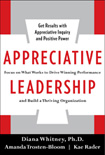
Reflections on Appreciative Leadership
April 4 - 8, 2016
We invite you to join with Diana and Amanda for an online exploration of this book and the ideas, theories and practices of Appreciative Leadership. The Taos Institute's online community dialogue website is the perfect place to gather virtually to explore and share the ideas of Appreciative Leadership. We will culminate the week in dialogue with a live webinar with Diana and Amanda on Friday, April 8, at 11:00 AM US eastern daylight time. This is a free offering, you just need to sign up for and participate in the online dialogue.
Appreciative Inquiry has become one of the most popular new management tools in business today. Its premise is simple yet profound: Instead of focusing on what's wrong in the workplace, learn about and build upon what works. Dr. Diana Whitney--a leader in the field of Appreciative Inquiry--and colleagues Amanda Trosten-Bloom and Kae Rader, in their book, bring the next generation of these ideas forward, with practical and proven tools for leadership. A refreshingly different approach to managing organizations, Appreciative Leadership turns conventional management thinking on its head, demonstrating how to get results with "positive power." All you need are the five "I's":
- INQUIRY: Leading with positively powerful questions.
- ILLUMINATION: Bringing out the best in people and situations.
- INCLUSION: Engaging with others to co-create the future.
- INSPIRATION: Awakening the creative spirit.
- INTEGRITY: Making choices for the good of the whole.
This revolutionary approach brings people together, drives companies forward--and takes your leadership skills to a whole new level.
More Information.
|
|
We are thrilled to bring you all the WorldShare Books and we hope you will take a few minutes to download your free copies today.
New books in Spanish:
DIÁLOGOS PARA LA TRANSFORMACIÓN: experiencias en terapia y otras intervenciones psicosociales en Iberoamérica - Volumen 1Dora Fried Schnitman, editora
DIÁLOGOS PARA LA TRANSFORMACIÓN: experiencias en terapia y otras intervenciones psicosociales en Iberoamérica - Volumen 2, Dora Fried Schnitman, editora
RECURSOS PSICO-SOCIALES PARA EL, POST-CONFLICTO, Ángela María Estrada, Mesa y Catalina, Buitrago Murcia, Editoras
CONSTRUCCIONISMO SOCIAL Y DISCUSION DE PARADIGMAS EN PSICOLOGIA: Indeterminacion, Holismo y Juegos de Lenguaje vs. La Teoria Pictorica del Lenguaje by Roberto Aristegui
See all the WorldShare Books >
|
|
NEW Positive Aging Website
|
|
|
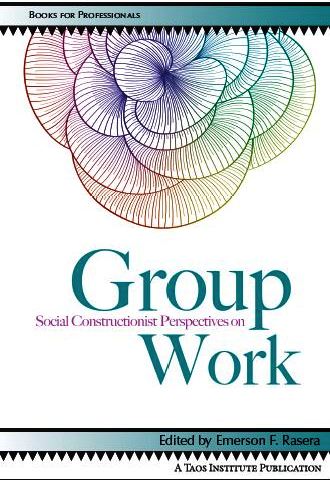
SOCIAL CONSTRUCTIONIST PERSPECTIVES ON GROUP WORK
|
by Emerson F. Rasera
Taos Institute Publications, 2015
|
|
|
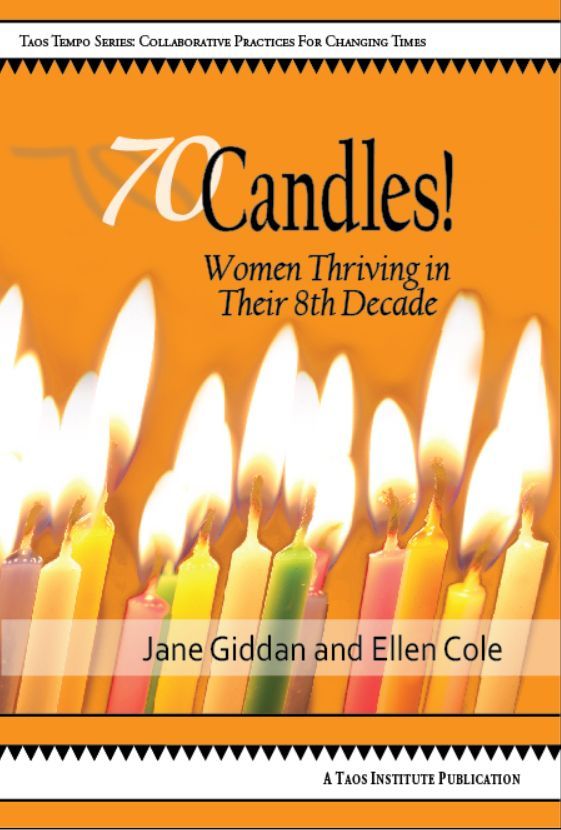
70Candles! Women Thriving in their 8th Decade
|
by Jane Giddan and Ellen Cole
Taos Institute Publications, 2015
ISBN: 978-1-938552-35-9
|
|
|
|
|
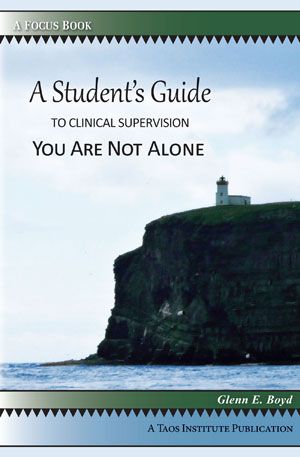
A STUDENT'S GUIDE TO CLINICAL SUPERVISION: You Are Not Alone
|
|
|
|
POSITIVE AGING NEWSLETTER
|
Sign up for this free newsletter in the following languages:
- English
- Spanish
- Danish
- German
- French
- Chinese
- Portuguese
By focusing on the positive aspects of aging, and the availability of resources, skills, and resiliencies, research not only brings useful insights into the realm of practice but creates hope and empowers action among older people. By moving beyond practices of repair and prevention, to emphasize growth-enhancing activities, practitioners also contribute more effectively to the societal reconstruction of aging.
|
|
|
Online Dialogues
at the
Taos Institute Online Community Space
|
Join the Taos Institute NING Online Community website
Participate in online conversations, share resources, ask questions, connect with others doing similar work. Also, we feature special events on this community website.
Join in many different forums, groups and conversations:
1. Taos Institute Europe
2. Collaborative Governance
3. Relational Learning
4. Relational Research
5. Taos Latin America
6. Intergenerativity and Innovation
and many more at:
http://taoslearning.ning.com/
|
|
|
|
|
INTERNATIONAL JOURNAL OF COLLABORATIVE PRACTICES
|
Welcome (Bienvenidos) to the International Journal of Collaborative Practices. The Journal brings together members of a growing international community of practitioners, scholars, educators, researchers, and consultants interested in postmodern collaborative practices.
Sponsored by Taos Institute and Houston Galveston Institute
Issue 5 - Available Now in English and Spanish -
|
|
|
|
The Taos Institute's mission is to bring together scholars and practitioners concerned with the social processes essential for the construction of reason, knowledge, and human value.
We are committed to exploring, developing and disseminating ideas and practices that promote creative, appreciative and collaborative processes in families, communities and organizations around the world through a social constructionist lens.
We look forward to your participation in the dialogue.
Keep up with our updates!
Dawn Dole, Executive Director
The Taos Institute
|
|
|
|
|
|