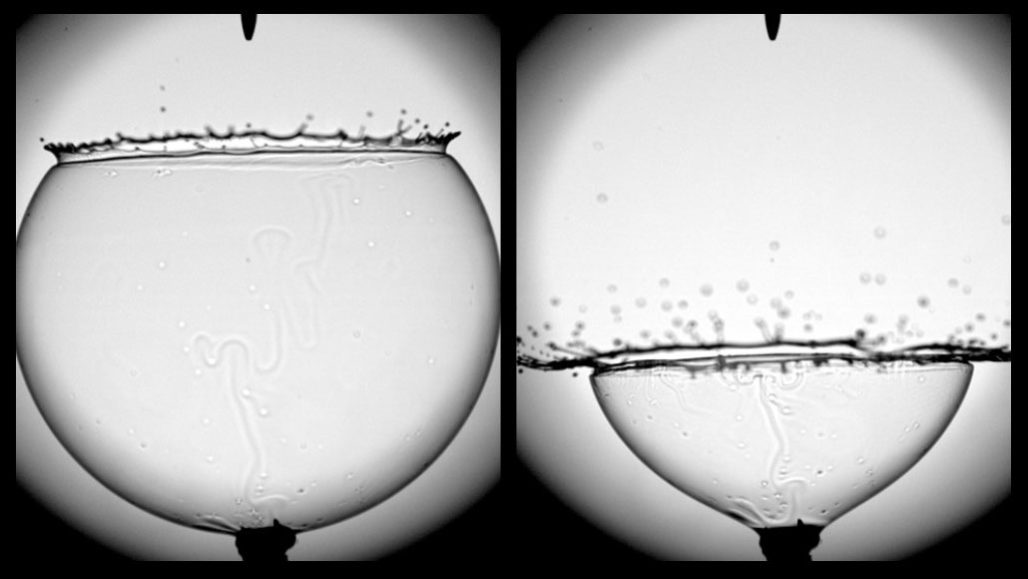
Have you ever listened to a soap bubble pop? It may be very quiet, but the sound of a bubble’s pop can tell scientists a lot about its physics.
Using high-tech microphones to listen closely, scientists have analyzed and identified the characteristics of the bubble’s bursting sound to discover the physics of the legendary pop!
In the
Physical Review Letters
report on Feb. 28, scientists reported that a bubble’s pop begins with a breach in its “soapy film.” As the hole in the bubble expands, the forces that are moving the air around inside of the bubble change drastically. French physicist, Adrien Bussonnière and his associates report that the unstable forces at play affect the pressure levels.
These changes in pressure are responsible for the amusing sounds recorded by the microphones. Additionally, the soap molecules from the film cluster together, which shifts the surface tension and affects the sound.
Typically scientists rely on high-speed camera technology to interpret events of such small scale, like the physics of a bubble’s pop! However, this new approach of studying acoustic data can help scientist understand these phenomena to the fullest extent. Bussonnière demonstrated this point perfectly, “Images cannot tell the whole story.”
Learn more about this experimen
t
here
!