March 2021 | Volume 13 Issue 3 |
|
Hello Grassland Enthusiasts!
I'm glad everyone survived the cold snap last month. It seems as though spring is right around the corner and hopefully everyone is finding time to be away from their screens! Can you believe it's almost been a year since the pandemic changed everything!
SK PCAP and the NPRRW planning committee could not be happier with how the 8th Native Prairie Restoration/ Reclamation Workshop turned out. More details are below.
Our February Native Prairie Speaker Series presentation was Lorelle Berkeley, Research Wildlife Biologist, Montana Fish, Wildlife and Parks talking about grazing and sage grouse.The presentation recording is available on our YouTube Channel!
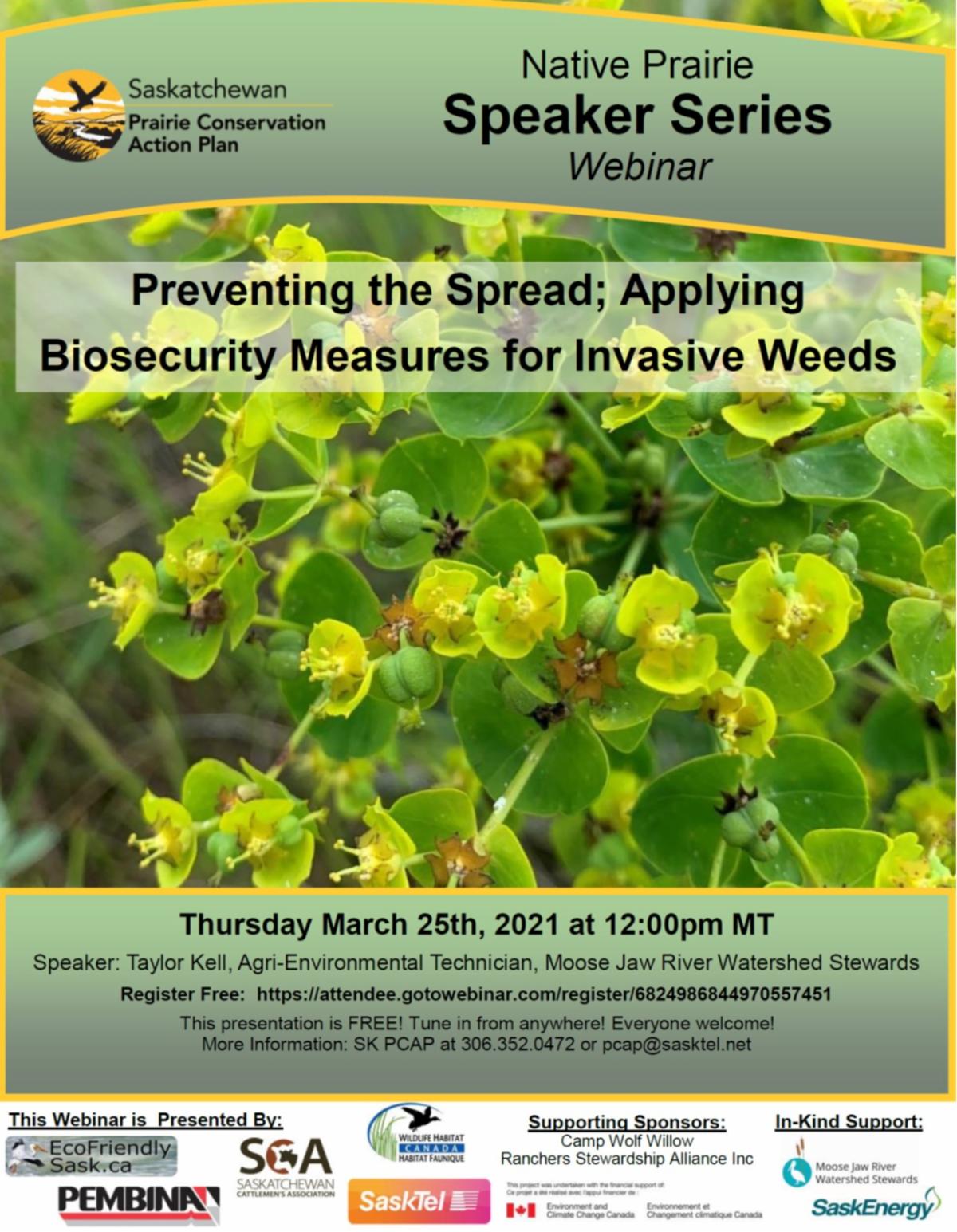
The March webinar presentation will be Taylor Kell from Moose Jaw River Watershed Stewards, who will be discussing applying Biosecurity Measures for Invasive Weeds. You can register here!
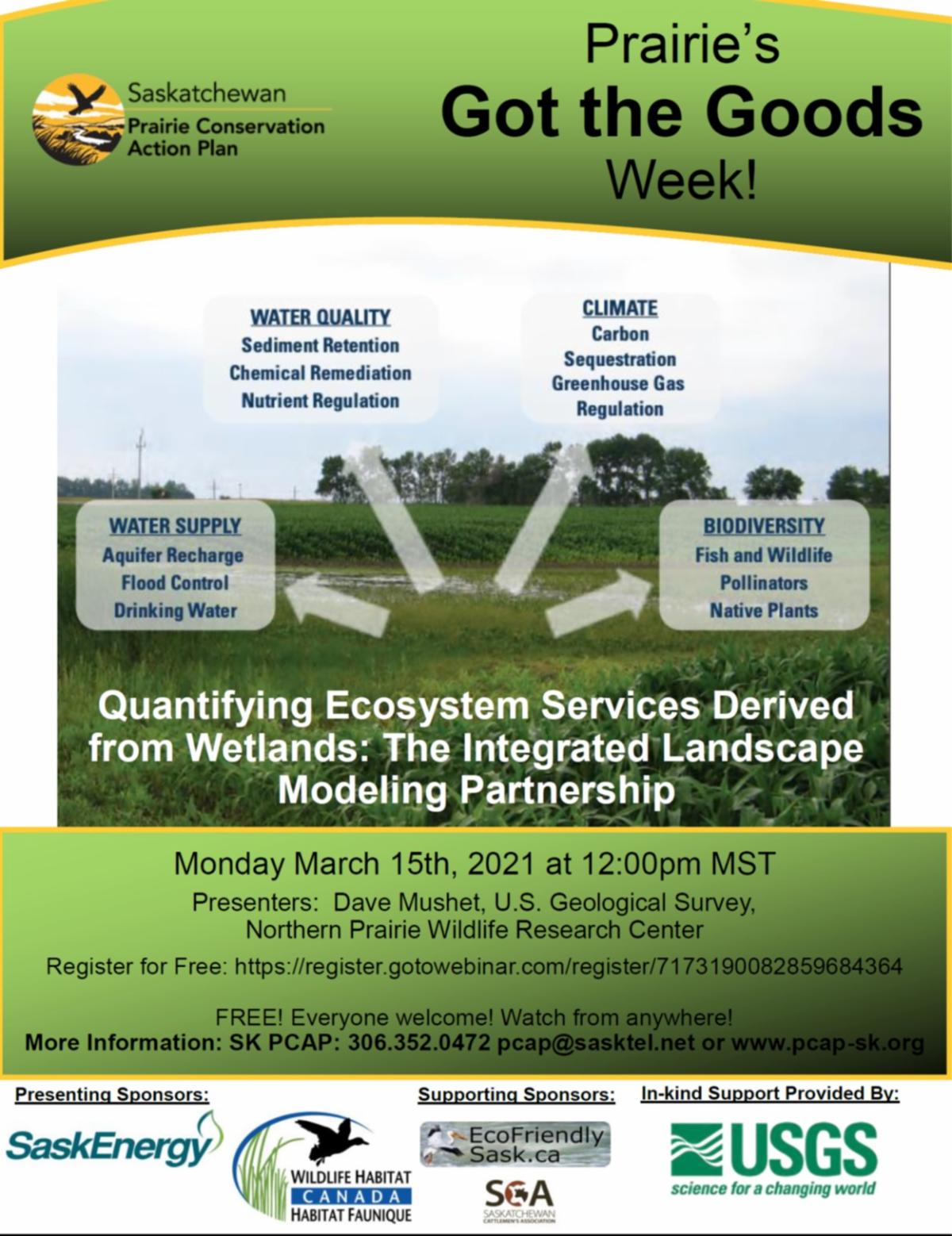
Caitlin has lined up a great set of webinars for our annual Prairie's Got the Goods Week! You can find more information below and register for the webinars here!
And finally, we would like to thank our sponsors for their generous support : Camp Wolf Willow, EcoFriendly Sask, K+S Potash, Pembina Pipelines, Ranchers Stewardship Alliance Inc, Saskatchewan Cattlemen's Association, SaskPower, SaskTel, Wildlife Habitat Canada and Environment and Climate Change Canada, as well as the continuous support of all the PCAP Partners.
Stay safe and take care!
Carolyn Gaudet, SK PCAP Manager
Ph. 306 352 0472
|
Prairie's Got the Goods Week!
March 15th - 19th, 2021
Join us for a series of webinars about the ecological goods and services provided to us by the native prairie ecosystem. The ranching industry isn't just about cattle, but prairie rangelands are also for prairie wildlife!
March 15 @ 12 PM MT Quantifying Ecosystem Services Derived from Wetlands: The Integrated Landscape Modeling Partnership by: Dave Mushet, U.S. Geological Survey. More info. Register here!
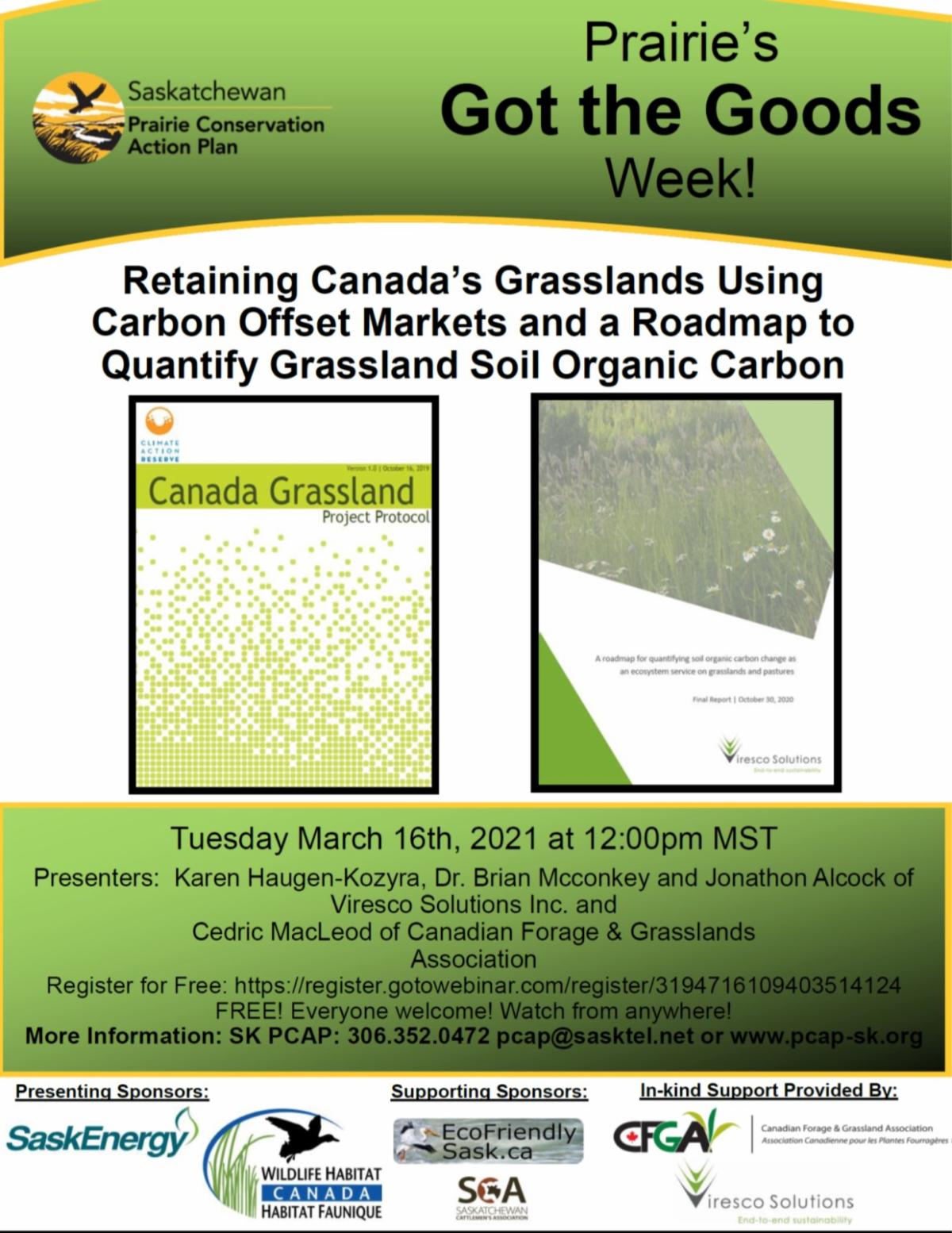
March 16 @ 12 PM MT Retaining Canada’s Grasslands Using Carbon Offset Markets and a Roadmap to Quantify Grassland Soil Organic Carbon by Karen Haugen-Kozyra, Dr. Brian Mcconkey, and Jonathan Alcock of Viresco Solutions Inc. as well as Cedric MacLeod of Canadian Forage & Grasslands Association. Register here!
March 16 @ 3 PM MT The goods and services provided by the native prairie ecosystem and prairie wetlands, from an indigenous perspective by Vice Chief Heather Bear, Federation of Sovereign Indigenous Nations. Register here!
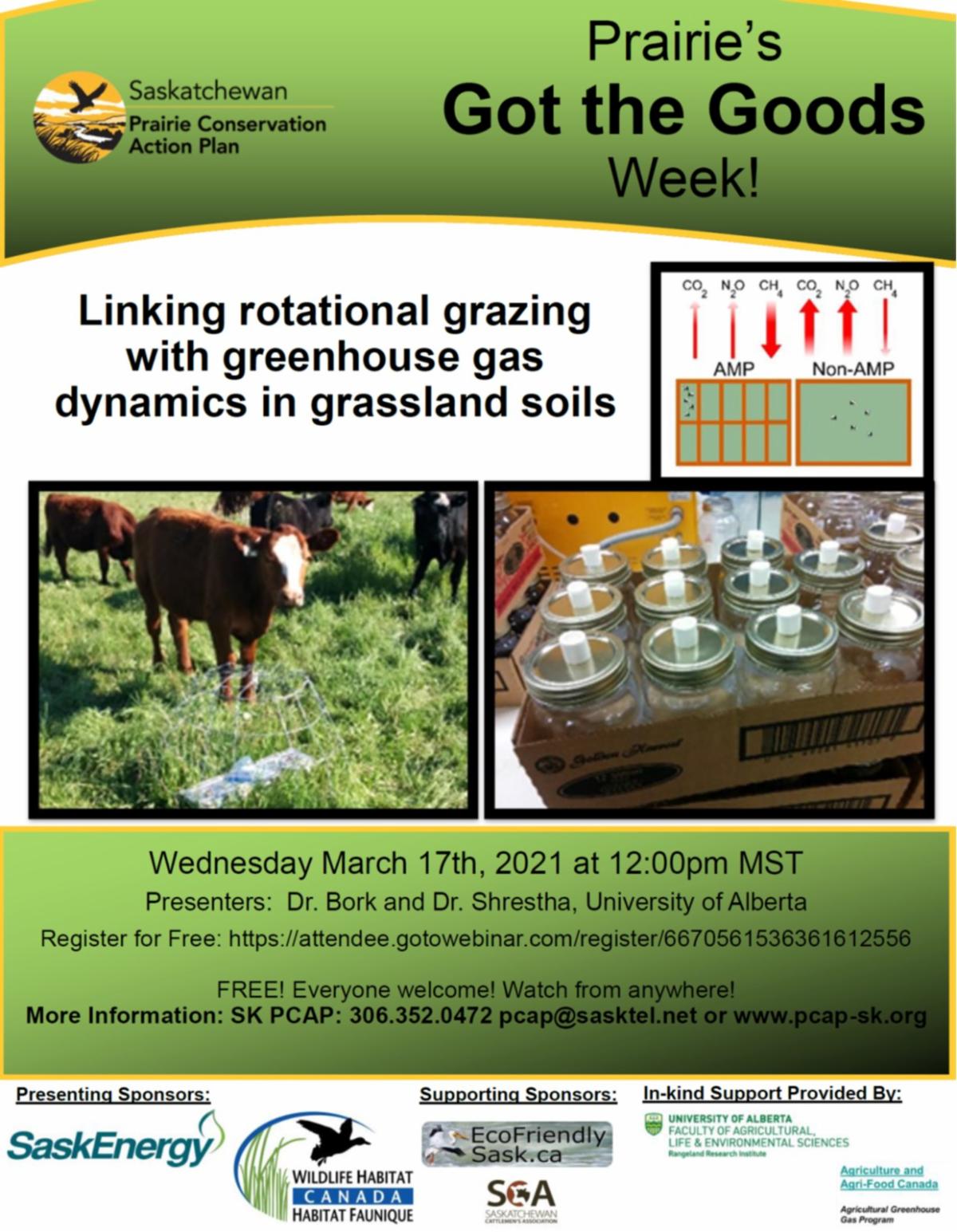
March 17 @ 12 PM MT Linking rotational grazing with greenhouse gas dynamics in grassland soils by Dr. Edward Bork and Dr. Bharat Shrestha, University of Alberta. More info. Register here!
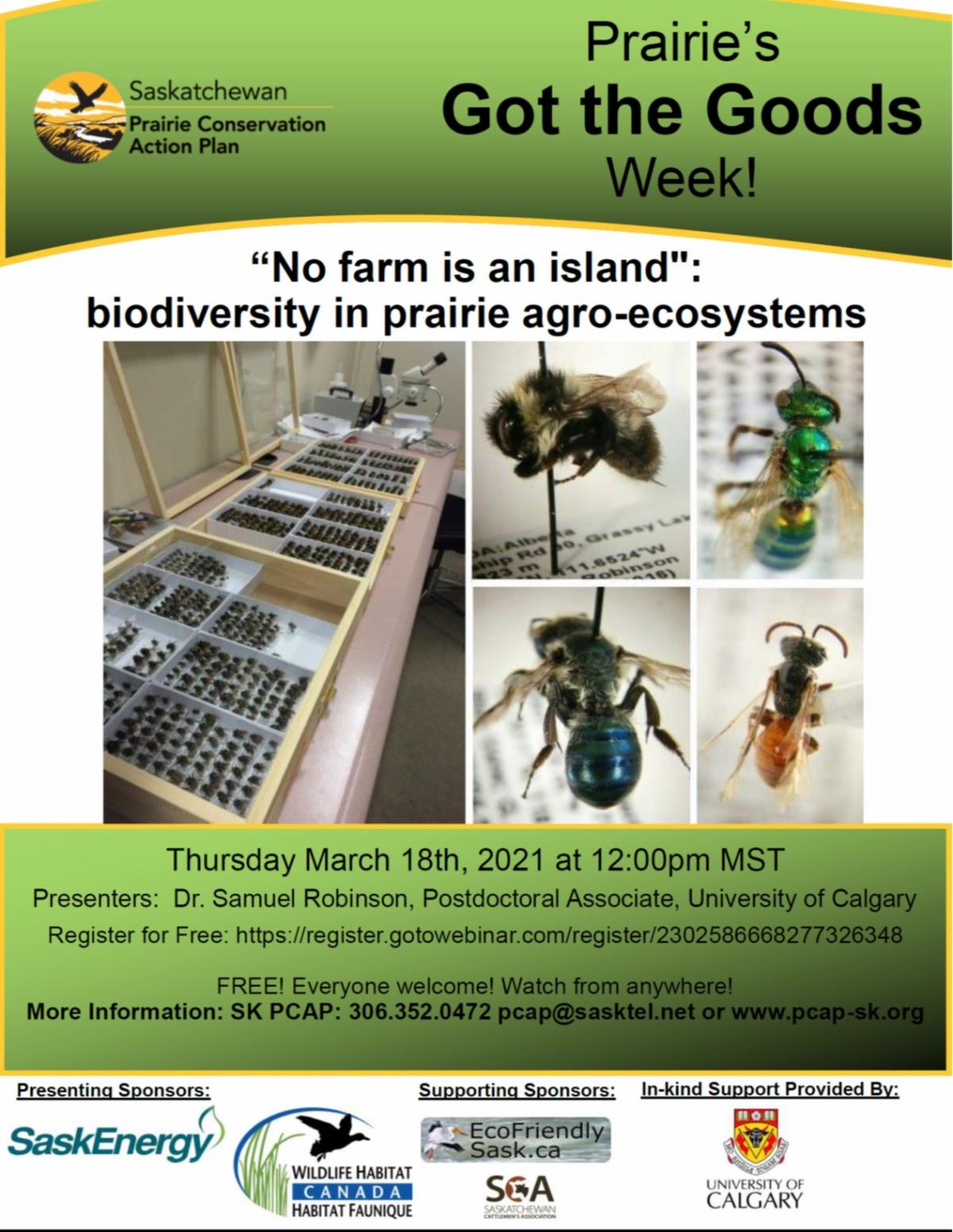
March 18 @ 12 PM MT "No farm is an island": biodiversity in prairie agro-ecosystems by Dr. Samuel Robinson, University of Calgary. More info. Register here!
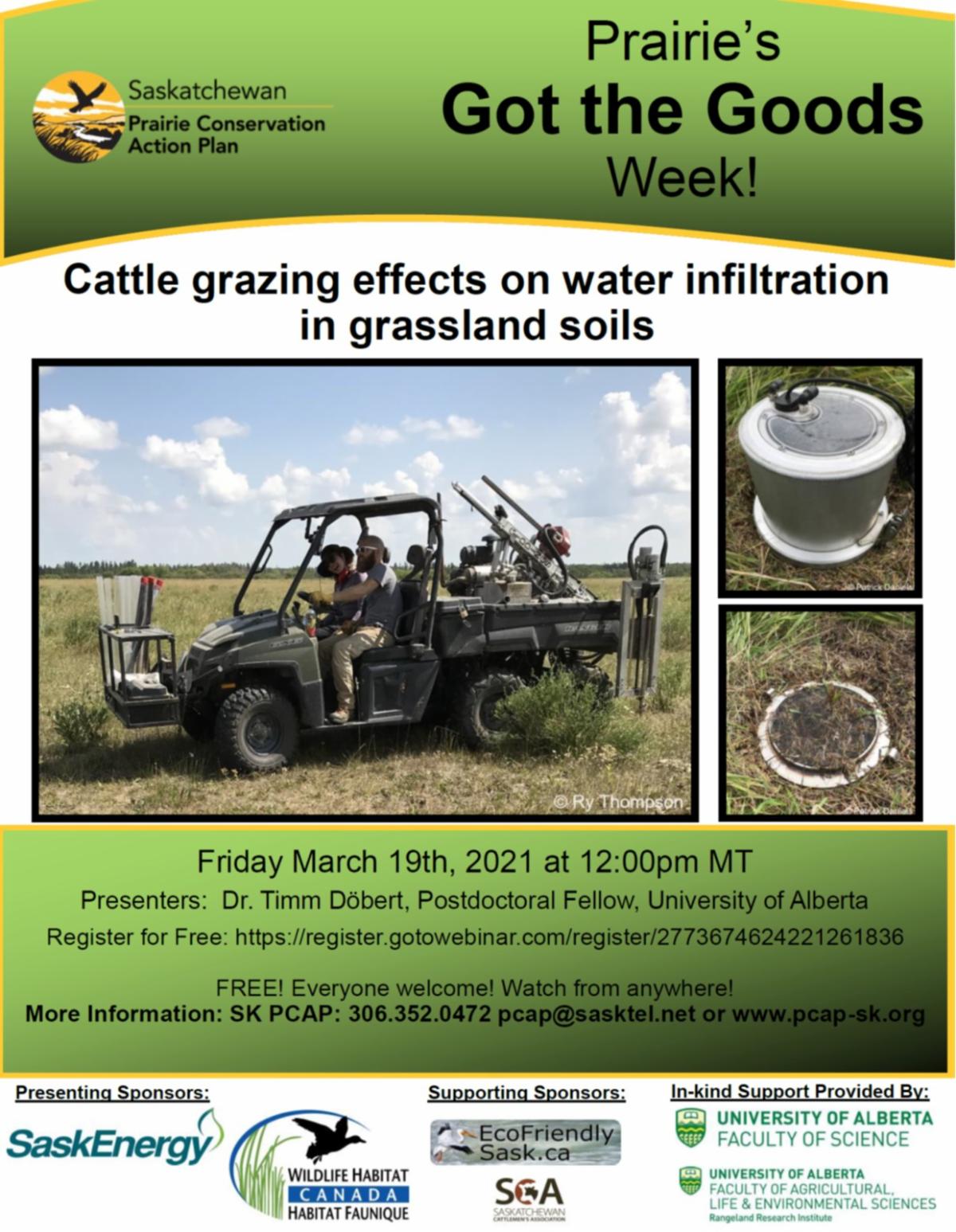
March 19 @ 12 PM MT Cattle grazing effects on water infiltration in grassland soils by Timm Dobert, University of Alberta. More info. Register here!
|
PCAP Partner Spotlight...
Saskatchewan Ministry of Parks, Culture and Sport
Submitted by Dale Gross, Grassland Ecologist
Native grasslands are under threat globally and locally, considered to be the most endangered ecosystem on Earth, and face numerous ecological and management challenges, including in our provincial parks. It’s critical to recognize that native prairie continues to be lost in the province, with roughly 20% of the original extent remaining in 2000, with some estimates indicating less than 14% only 15 years later. In addition, landscape fragmentation, exotic invasive species, inappropriate fire and grazing regimes, development, and climate change continue to have a negative effect on our remaining prairie, with important implications for wildlife, species at risk, and their habitats. The roughly 36,000 ha of grasslands in the provincial park system is extremely significant from an ecological perspective but also as an economic and social benefit that remains readily accessible to the public. While the bulk of these grasslands are located in large, southern provincial parks (e.g. Cypress Hills, Saskatchewan Landing, Douglas, Danielson, Buffalo Pound), many smaller parcels are found in parks (e.g. Meadow Lake, Greenwater Lake, Goodspirit Lake, Porcupine Hills) and recreational sites across the province.
A recently developed “Strategic Framework for Native Grassland Conservation in Provincial Parks” provides a summary of threats and priority actions to address these challenges within and adjacent to parks, and as part of a larger network of native prairie in the province and across the continent. Our actions include a database with extent, status, and connectivity of all park grasslands, identifying information gaps and collecting, analyzing, and incorporating new data into our multiscale, collaborative and integrated management and evaluation program, working with researchers and students, and communicating our results to stakeholders and the public.
Managing park native prairie involves livestock and targeted grazing programs, currently in 10 parks and recreational sites spanning 35,000 ha, using periodic range health assessments and working with livestock producers and shepherds to adjust grazing as needed. Under specific environmental conditions, we reintroduce prescribed fire, a natural ecosystem process and Indigenous cultural practice, for many reasons such as reducing risk of wildfire and enhancing habitat for wildlife, and are a founding member of the newly established Canadian Prairie Prescribed Fire Exchange. We are developing an ambitious grassland restoration and invasive species management program, integrating grazing, fire, and selective herbicides to address an ever increasing threat to our parks and surrounding prairie.
All aspects of our strategic management for park native prairie are captured in our collaborative, ecosystem-based planning where we reach out to our neighbours to find ways to work together to conserve our precious, remaining native prairie. As our vegetation plans require renewal and revision, we are drafting comprehensive grassland management plans, completed for Saskatchewan Landing in 2020, with Douglas and Danielson Provincial Parks slated for 2022, along with range health reassessments for Moose Mountain (2021) and Cypress Hills (2022) ongoing as well. At the Ministry of PCS, we see great value in contributing to and communicating with PCAP and its many partners to share our work and experience and to continue to learn from theirs.
|
SaskPower Partners with Grasslands National Park to Enhance Greater-Sage Grouse Critical Habitat
Submitted by Jaret McDonald, SaskPower
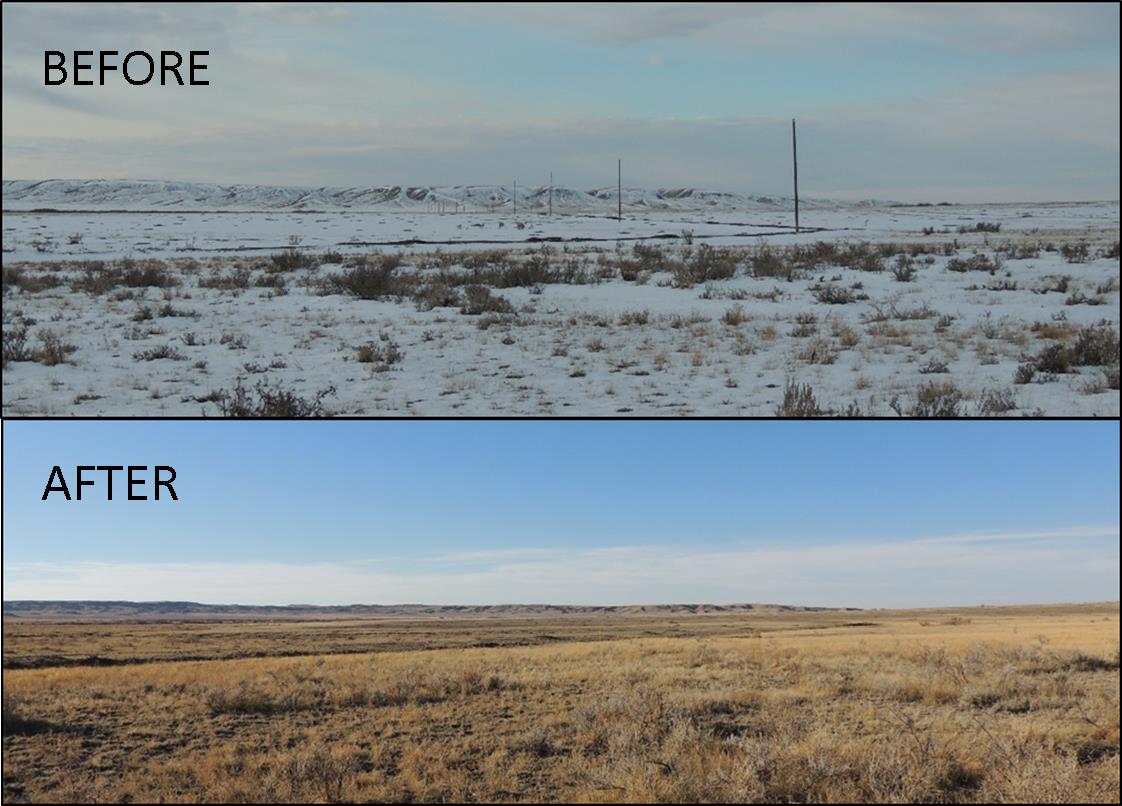
This fall, SaskPower partnered with Grasslands National Park (GNP) to relocate an existing overhead distribution line. The power line, installed in the 1950s, served original ranch infrastructure still operational within GNP to this day. Over the years, Greater sage-grouse populations dwindled in Canada to the point that they became endangered and currently face an imminent risk of extirpation. GNP has taken steps over the years to improve habitat conditions for Greater sage-grouse including captive breeding, marking fences to reduce collision potential, restoring habitat and removing anthropogenic structures. Powerlines provide perching opportunity for hawks or other raptors to scout prey, like Greater sage-grouse. Research has shown grouse avoid these areas even though habitat quality may be highly suitable.
SaskPower’s original 11 km line traversed upland native grassland and descended down steep coulee slopes to the bottom lands of the Frenchman River Valley. The valley bottom, flush with sage brush, has been designated as critical habitat for sage-grouse. When approached by GNP, SaskPower Operations, Engineering, Construction Management, Land and Environment departments worked together with GNP to develop a relocation and line salvage plan that reduced impact to native grassland, sage brush and a host of other species at risk found within the region.
This work required extensive planning and coordination with GNP, lessees, the rural municipality, Ministry of Environment, contractor crews and consultants. The new line was routed to follow the existing road through the area and involved undergrounding approximately 8 km of line in the area of critical habitat. Compounding the challenge was a Black-tailed prairie dog colony, archaeological sites, yard sites with unmarked utilities, fall cattle round-up, extremely hard ground and the fire hazard from the dry fall conditions.
Prairie dogs are a threatened species in Canada and construction had the potential to impact burrows located close to the road and in the path of the underground line. Careful routing and monitoring and research by GNP staff and the SaskPower team ensured impacts were minimal. The work was also carefully timed to occur after the migratory bird nesting season and prior to prairie dogs entering into torpor for the winter. This was a narrow window between September and the end of October. The team worked well to manage the challenges, even calling in a local neighbour with a 4x4 tractor to provide extra horsepower to pull the plough cat in the extremely hard ground. Three new archaeological sites were discovered by SaskPower archaeologists during pre-construction assessments that needed to be avoided. This required archaeological monitors to be onsite to ensure the line salvage and any required excavations did not impact sites.
By the end of the project, an estimated 400 ha of Greater sage-grouse habitat had been restored and effects to other wildlife and habitat were minimized. Overall, it was a success!
Photos provided by Grasslands National Park.
|
Over 300 individuals participated in the 8th Native Prairie Restoration/Reclamation Workshop in one way or another! We had 27 presentations, 15 planned topic-focused discussion groups, 2 case studies, 10 posters, 9 tradeshow booths and one panel discussion. Despite the challenges of putting our first virtual workshop together, the positive feedback from our attendees has been overwhelming! Networking was much harder in a virtual setting, but many participants did make connections and found valuable sources of information and seed providers!
Based on evaluations, there were many take home messages, here is a sample:
"Some things that I predict will stick with me from this year: the concept of "cultural chaos" and alterations to natural world relationships (Kensi Fox), looking at ecosystem functions and trait profiles in assessing grassland conditions (Colleen Robertson, Monika Pokorny), importance of soil root traits and nematode abundance in restoration projects (Rafael Otfinowski / Victory Coffey, Rachel Becknell)"
"Collaboration is key."
"Kelly Cooley's message - manage for what you want, not what you don't want - certainly reinforced the appropriateness of the way I try to do things."
"Importance of utilizing an ecosystem based approach to planning/doing a project and all the pieces - vegetation diversity, wildlife, insects, land characteristics - need to be considered. What really stood out was the bare soil in the reclamation project that the engineers want to fix right away but the consultant noted was habitat for wild bees and were able to add soil boxes to still accommodate them!"
"For me, the biggest take home was the continued improvement of involving First Nations people in future projects - TEK is continuously becoming a much more important aspect of many projects, and we need to always keep this in mind."
"We need to have more demand for native seeds and the producers to grow them. It has been an ongoing challenge. Planning from start to finish is really important- able to react quickly when notice problems are beginning to occur. I know this, but it is always good to reiterate- establishing relationships, keeping in contact with them and following up on what you said you were going to do. "
Most presentations were recorded and will be available to the public in August, when they are added to our YouTube Channel.
A big thank you to our sponsors, trade show participants, speakers and everyone who participated in the workshop. We appreciate your support and contributions!
|
Thank you to our NPRRW Sponsors! |
Bronze Sponsors:
BrettYoung
CN
Earthmaster Environmental Strategies Inc.
Advertising Sponsor:
Alberta Society of Professional Biologists
Participant Sponsor:
Society for Range Management - Prairie Parkland Chapter
|
Thank you to all of our speakers, discussion group leaders and experts who contributed their time and knowledge to this workshop!
Steven Handel (Rutgers University), Stephanie Frischie (Xerces Society), Carissa Wonkka (USDA), Julie MacKenzie (M-over-C Land & Cattle Co. Ltd.), Kansie Fox (Blood Tribe Land Management), Colleen Robertson, Victory Coffey and Rafael Otfinowski (University of Winnipeg), Jeri Geiger and Clark Brenzil (SK Ministry of Agriculture), Lee Sexton (Sexton Grazing and Consulting), Monica Pokorny, (USDA), Morgan Webb (Seed Check), Jonas Fenn and Shaun Zunti (SK Ministry of Energy and Resources), Lars de Pauw (Orphan Well Association), Lois Miller, Steven Svrcek, Corey Shilliday and Chris Tenszen (Trace Associates), Rachel Becknell (Washington University), Elizabeth Murray and Kent Cryer (Earthmaster Environmental Strategies, Inc.), Sarah Thacker (InnoTechAlberta), Renny Grilz (Meewasin Valley Authority), Kayla Burak, Michael Burak, Nathan Cardinal, Morgan Kanak, Kristen Martin (Nature Conservancy of Canada), Carol Crowe (Indigenous Visions), Gail Fennell (Nature Regina), Keziah Lesko-Gosselin (City of Medicine Hat), Liz Deleeuw and Manna Parseyan (Edmonton Native Plant Society), Tara Sample (SaskEnergy), Steven Tannas (Tannas Conservation Services Ltd), Shirley Bartz (Balanced Environmental Consulting), Sheila Taillon (Buffalo Head Environmental), Rebecca Magnus (Nature Saskatchewan), Kerry Hecker and Joseph Kotlar (ECCC – Canadian Wildlife Service), Eric Lamb (University of Saskatchewan), Michael Skinner (Grasslands National Park), John Skinner (Skinner Native Seeds), Mel Toppi (SODCAP Inc./FWRWMA) and Leanne Chai.
|
|
SK PCAP Native Prairie Speaker Series
Plan to attend our March Native Prairie Speaker Series webinars!
|
Save the date!
Wild Pollinators in the Prairies
Speaker: Sarah Semmler, Curator, Living Prairie Museum
April 20th @ 12 PM MT
|
Prairie's Got the Goods Week
Click on the image to learn more
|
Thank you to our Prairie's Got the Goods Week Sponsors!
Presenting Sponsors:
|
Supporting Sponsors:
EcoFriendly Sask
Saskatchewan Cattlemen’s Association
|
March 1-31, 2021
PHJV Policy Webinar
March 10 @ 11 CST
March 11, 2021 @ 7 PM CST
March 15-19, 2021
March 18, 2021 @ 7 PM CST
April 16-18, 2021
White Butte, SK
Wild Pollinators in the Prairies
April 20, 2021 @ 12 PM MT
June 5-6, 2021
Eagle Creek Regional Park, SK
|
Summer Student Employment Opportunities
|
Native Prairie in the News...
|
2020/21 Speaker Series Supporting Sponsors
Camp Wolf Willow
Ranchers Stewardship Alliance Inc.
|
2020/21 Education Programs:
Presenting Sponsors:
|
2020/21 Education Programs
Supporting Sponsors:
|
|
Carolyn Gaudet, Editor, Saskatchewan Prairie Conservation Action Plan Newsletter |
|
SK PCAP gratefully acknowledges financial support in 2020-2021 from:
Camp Wolf Willow, Ducks Unlimited Canada, EcoFriendlySask.ca, K+S Potash, Parks Canada - Grasslands National Park of Canada, Pembina Pipelines, Ranchers Stewardship Alliance Inc., Saskatchewan Cattlemen's Association, Saskatchewan Ministry of Agriculture, Saskatchewan Ministry of Environment - Fish and Wildlife Development Fund, SaskEnergy, SaskPower, SaskTel, University of Regina, University of Saskatchewan - College of Agriculture and Bioresources, Water Security Agency and Wildlife Habitat Canada.
SK PCAP gratefully acknowledges in-kind support for 2020-21 from:
Agriculture and Agri-Food Canada - Science and Technology Branch, Canadian Parks and Wilderness Association, Environment Canada - Canadian Wildlife Service, Friends of the Royal Saskatchewan Museum, Friends of Wascana Marsh, Meewasin Valley Authority, Native Plant Society of Saskatchewan, Nature Conservancy Canada, Nature Saskatchewan, Parks Canada - Grasslands National Park, Prairie Wind & Silver Sage, Ranchers Stewardship Alliance Inc., Redberry Lake Biosphere Reserve, Saskatchewan Association of Rural Municipalities, Saskatchewan Association of Watersheds, Saskatchewan Bison Association, Saskatchewan Burrowing Owl Interpretive Centre, Saskatchewan Cattlemen's Association, Saskatchewan Environmental Society, Saskatchewan Forage Council, Saskatchewan Forage Industry Network, Saskatchewan Ministry of Agriculture, Saskatchewan Ministry of Environment, Saskatchewan Ministry of Energy and Resources, Saskatchewan Ministry of Parks, Culture and Sport, Saskatchewan Science Centre, Saskatchewan Stock Growers Association, Saskatchewan Wildlife Federation, Saskatoon Nature Society, SaskEnergy, SaskOutdoors, SaskPower, Society for Range Management - Prairie Parkland Chapter, South of the Divide Conservation Action Program Inc., University of Regina, University of Saskatchewan - College of Agriculture and Bioresources.
|
|
|
|
|
|
|