LEGAL AND POLICY CONFERENCE FOCUSED ON AGRICULTURAL ISSUES TO BE HELD IN RENO, NEVADA |
|
Water rights. Foreign land ownership. Pesticides. The Farm Bill. Each of these issues and more will be on the agenda for the National Agricultural Law Center’s inaugural Western Agricultural & Environmental Law Conference set for May 4-5 in Reno, Nevada. CAFB Legal Staff plans to participate virtually or in person for this timely conference.
The conference, which will be held at the Peppermill Resort Spa Casino, will also be livestreamed. A complete conference agenda, as well as conference registration, is available online.
Net proceeds from the Western conference will be devoted to supporting student-focused scholarship germane to the agricultural sector in the western U.S. The NALC is seeking conference sponsors as well, and those interested can contact Pittman directly at hmpittm@uark.edu.
Topics at the conference will include:
- Update from the Potomac: 2023 Farm Bill & Related Federal Issues
- I’m Walking on Sunshine: Key Contract Terms and Other Pitfalls & Pointers in Solar Leasing
- Let’s Be Blunt: Legal Ethics in the Cannabis Industry
- Cooperative Conservation Under the Endangered Species Act: What Lenders, Landowners, & Lawyers Need to Know
- Veggie Wars: Legal Update on the Perishable Agricultural Commodities Act & Related Produce Laws
- Running on Empty & Into the Sun: Legal & Political Update on the Colorado River Basin
- Navigating Foreign Ownership Laws in the Wild, Wild West: Latest Trends and Developments
- Acquisition, Disposition, Financing, Leasing, and Development of Agricultural Properties: Top Ten’ish Things You Need to Know
- Moving Targets in Muddied Waters: Advising Farmers, Landowners, and Lenders Regarding Waters of the United States
- Dividing the Waters: Focus on States’ Approaches to Groundwater and Recent Developments
- The Intersection of Estate Planning & Water Law
|
|
FINAL REVISED DEFINITION OF “WATERS OF THE UNITED STATES” RULE NOW EFFECTIVE |
|
The EPA and the Army Corps of Engineers’ Revised Definition of Waters of the United States (“WOTUS”) rule (“2023 WOTUS Rule”) became effective on March 20, 2023 for the majority of states, including California. The final rule expands federal jurisdiction over those waters deemed “waters of the U.S.” through application of both the “relatively permanent” and “significant nexus” standards.
Additionally, litigation on the final WOTUS Rule has begun. In one suit, a federal judge in Texas declined to grant a nationwide injunction but blocked the implementation of the final rule in Texas and Idaho on March 19, 2023. Meanwhile, we are still waiting for the U.S. Supreme Court to issue its WOTUS decision in Sackett case.
|
|
COURT OF APPEAL REJECTS ENVIRONMENTAL GROUPS’ CHALLENGES ON THE EAST SAN JOAQUIN WDRs |
|
On March 17, 2023, the Third District Court of Appeal issued an important decision regarding water quality regulations for irrigated lands in the Central Valley. The decision rejected all claims brought in the three cases: Protectores Del Agua Subterranea v. State Water Board, Environmental Law Foundation v. State Water Board, and Monterey Coastkeeper, California Sportfishing Protection Alliance, et al., v. Central Valley Regional Board and State Water Board. The environmental groups originally filed three separate lawsuits in 2018 challenging the State Water Board’s adoption of the revised East San Joaquin Waste Discharge Requirements (WDRs). The revised East San Joaquin Waste Discharge Requirements contain precedential requirements impacting all irrigated lands programs in the state. CAFB and other agricultural groups intervened in the three cases to oppose the challenges raised by the various environmental and environmental justice groups.
Specifically, the Court of Appeal found that the WDRs’ provisions allowing for certain data to be anonymized, such as nitrogen application data, does not violate the Nonpoint Source Policy, the WDRs contain sufficient feedback mechanisms for determining if the program is achieving its purpose, all monitoring data does not need to be made public, the use of township-level nitrate data to determine if irrigated agriculture is impacting groundwater and exceeding standards is appropriate, the surface water representative monitoring program is sufficient, the program adequately describes management practices and program elements that must be implemented by growers, and the WDRs comply with the State’s Antidegradation Policy.
The Court of Appeal’s decision supports reasonableness and balancing in protecting water quality while also maintaining our food supply and the economic viability of agriculture. The Court’s decision has been Certified for Publication, which means it has precedential value for other irrigated lands regulatory programs throughout the State.
|
|
CAFB INTERVENES IN AERIAL FIRE RETARDANT CASE |
|
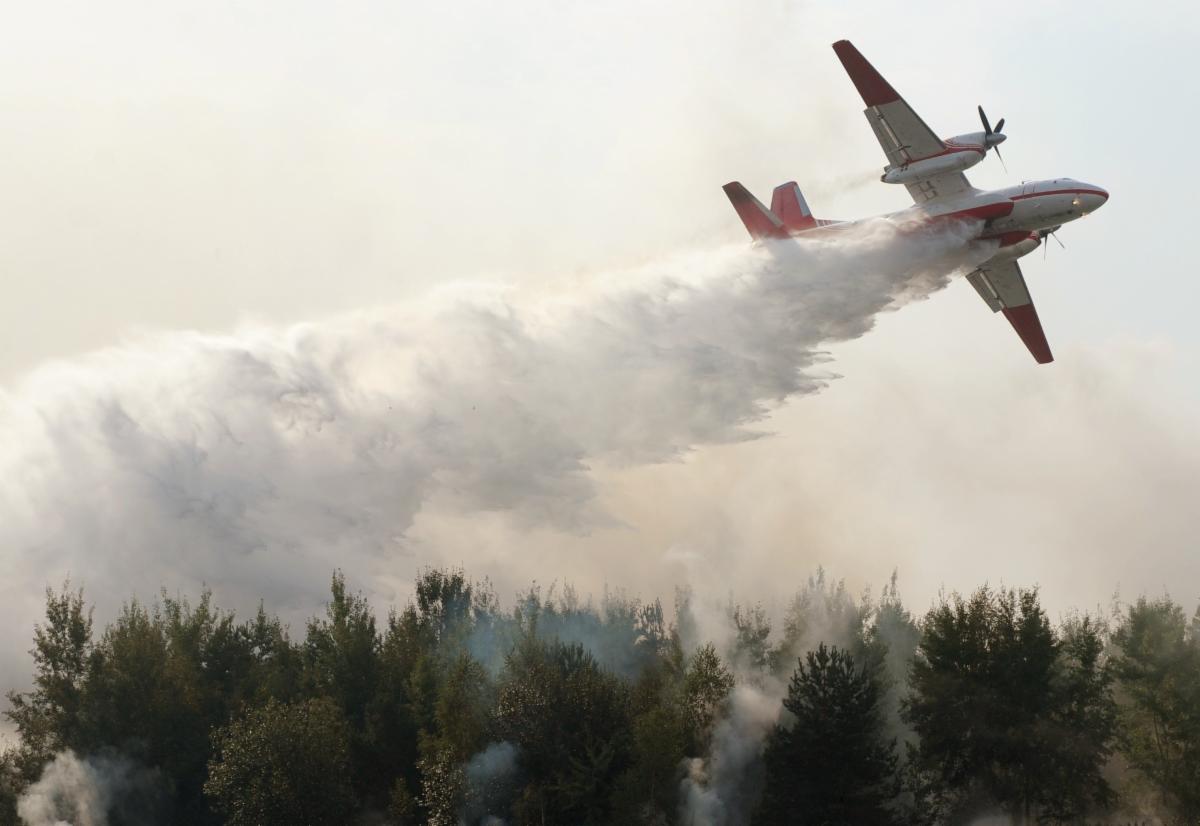
On March 9, 2023, CAFB, along with various northern California counties and forestry and wood products organizations, intervened in defense of the U.S. Forest Service’s use of applications of aerial fire retardant used in wildfire suppression.
The U.S. Forest Service is currently being sued by the Forest Service Employees for Environmental Ethics (“FSEEE”) who argue that the use of aerial fire retardant requires a Clean Water Act water pollution permit from EPA. FSEEE is seeking a nationwide injunction on the use of aerial fire retardant.
Besides Farm Bureau, the groups joining in the motion to intervene in defense of the Forest Service include: The Town of Paradise; Butte County; Plumas County; Rural County Representatives of California; American Forest Resource Council; National Alliance of Forest Owners; Federal Forest Resource Coalition; California Forestry Association; Montana Wood Products Association; Oregon Forest Industry Council; Washington Forest Protection Association; California Women for Agriculture; and National Wildfire Suppression Association.
|
|
EPA RELEASES PROPOSED PFAS NATIONAL PRIMARY DRINKING WATER REGULATION |
|
On March 14, 2023, EPA released a proposed National Primary Drinking Water Regulation for six PFAS including perfluorooctanoic acid (PFOA), perfluorooctane sulfonic acid (PFOS), perfluorononanoic acid (PFNA), hexafluoropropylene oxide dimer acid (HFPO-DA, commonly known as GenX Chemicals), perfluorohexane sulfonic acid (PFHxS), and perfluorobutane sulfonic acid (PFBS). The proposed rule will establish legally enforceable maximum contaminant levels of 4 parts per trillion for PFOA and PFOS, and 1 hazard index for PFHxS, PFNA, PFBS, and HFPO-DA.
The proposed rule would also require public water systems to:
- Monitor for these PFAS
- Notify the public of the levels of these PFAS
- Reduce the levels of these PFAS in drinking water if they exceed the proposed standards.
The public comment period will open following the proposed rule’s publication in the Federal Register.
|
|
On March 7th CAFB legal counsel provided comment to the State Water Resource Control Board during a board informational meeting on the Clear Lake Hitch. The Board heard presentations and comments from a variety of stakeholders, including wildlife experts, tribal entities, and agricultural community representatives. Lake County Executive Director, Rebecca Harper, gave a presentation informing the Board of the local voluntary efforts planned and already under way, concerning frost protection and stream flow monitoring. CAFB staff urged the Board to be measured in any regulatory action they may take, and fully calculate the effect of all environmental stressors on the Hitch, including stream barriers, invasive species predation, and water quality concerns from algae blooms. Further, CAFB stressed that the historically wet winter we are currently experiencing should be factored into any regulatory action the Board may take. As of now, all local actions are voluntary, and indeed, our desired outcome is to take effective preemptive steps to ensure long-term species success without mandatory SWB directive.
|
|
On March 2nd, the Department of Water Resources announced its determinations on groundwater sustainability plans resubmitted after initial “incomplete” determinations for 12 critical overdraft basins. The Department approved six of the plans (Cuyama, Paso Robles, Eastern San Joaquin, Merced, Westside, and Kings) and deemed another six “inadequate” (Chowchilla, Delta-Mendota, Kaweah, Tule, Tulare, and Kern). In addition to complexities in several basins with multiple groundwater sustainability agencies, land subsidence and well impacts (related to groundwater levels) were common themes. For the six “inadequate” plans, this triggers reference of the plans to the State Water Board. The next steps include hearings for the State Water Board to determine whether basins enter probationary status, which could trigger fees and direct reporting to the State Water Board. Basins that do not take corrective actions to get out of “probation” could see state interim plans imposed by the State Water Board, including possible pumping limits and other requirements. CAFB had a call with several of the affected County Farm Bureaus shortly after the Department’s announcement. Going forward, CAFB Legal will support affected County Farm Bureaus as they work through the various steps before the State Water Board, as these areas work to regain local control of their basins as SGMA intended.
|
|
NEWSOM EXECUTIVE ORDER AUTHORIZING GROUNDWATER RECHARGE WITH FLOODWATERS |
|
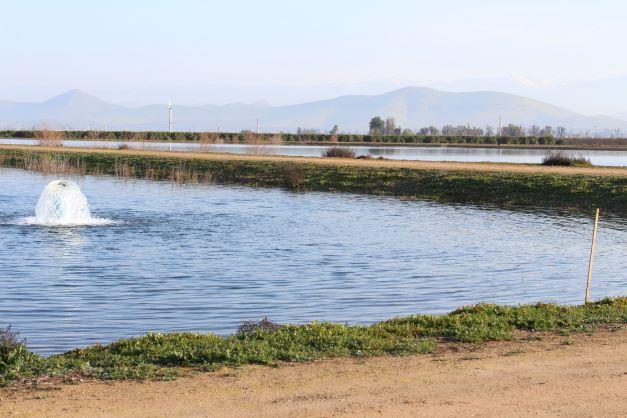
On March 10th, Governor Newsom issued Executive Order N-4-23 (EO), a new executive order supplementing a series of prior drought emergency orders still in effect. The new EO is significant in that it grants landowners and water users temporary conditional permission to divert floodwaters, for groundwater recharge, at times through June 1st when floodwaters from rains and melting snowpack are locally declared to pose an imminent flood risk to downstream land, roads, and structures. The ability to divert is conditioned on several additional requirements, including locations and reporting of volumes water diverted, “simple fish screens” on diversion pumps and, importantly, not applying diverted water to either “dairy land application areas” or any agricultural fields that have had any pesticides or fertilizers applied within the past 30 days. These conditions address concerns about downward migration of possible contaminants into groundwater used as drinking water for many communities in the San Joaquin Valley. Diversions must be reported and are potentially subject to enforcement. This makes the opportunity to divert a great opportunity and potential model for future floods, but also a potential liability unless all conditions detailed in the EO are carefully observed and met. CAFB, along with others, has long advocated for streamlined requirements to allow groundwater recharge using floodwaters without a need for complicated, expensive, hard-to-obtain, and inflexible temporary permits.
|
|
FAILURE TO FILE IRS RETURNS LEADS TO AUTOMATIC REVOCATION OF TAX-EXEMPT STATUS |
|
Farm Bureaus and most other organizations exempt from federal income tax must nonetheless file with the Internal Revenue Service an annual information return or notice, such as IRS Form 990, 990-EZ, or 990-N (Postcard).
Organizations that do not file for three consecutive years automatically lose their tax-exempt status. An automatic revocation is effective on the original filing due date of the third annual return or notice.
An organization whose tax-exempt status is automatically revoked is no longer exempt from federal income tax. Consequently, it might have to file an IRS Form 1120, U.S. Corporation Income Tax Return, and pay federal income tax.
The IRS may not undo a proper automatic revocation, and no appeal process is available. An organization whose tax-exempt status is automatically revoked must apply to have its status reinstated.
Don’t let that happen to your county Farm Bureau. Ensure it timely files all required federal returns.
|
|
Legal Services Division | (916) 561-5665 | Contact us
|
|
Karen Norene Mills
Director
Kari Fisher
Senior Counsel
Collin Chandler
Associate Counsel
|
|
Carl Borden
Senior Counsel
Kevin Johnston
Associate Counsel
Jules Tran
Paralegal/Secretary
|
|
Christian Scheuring
Senior Counsel
Justin Fredrickson
Environmental &
Water Policy Analyst
|
|
|
|
|
|
|