MHAT Funding Under Review in Congress: Urge Your Rep to Sign On! | | |
This is the one we’ve been waiting for!
Many of you were trained at no-cost because of a SAMHSA grant called, “Mental Health Awareness Training” (MHAT). This funding is currently being reviewed in Congress and we’re excited that a “Dear Colleague” letter supporting MHAT is currently circulating in the House, with lawmakers able to sign on through March 25th.
Do you have two minutes to write your Representative and urge them to sign their name to Rep. Matsui’s letter in support of MHAT? The more signatures, the better chance there is that this program gets at least level funding over FY 2026.
The National Council for Mental Wellbeing has made this super simple
so please click here to voice your support.
Thank you for your advocacy efforts, they are making a difference!
| |
|
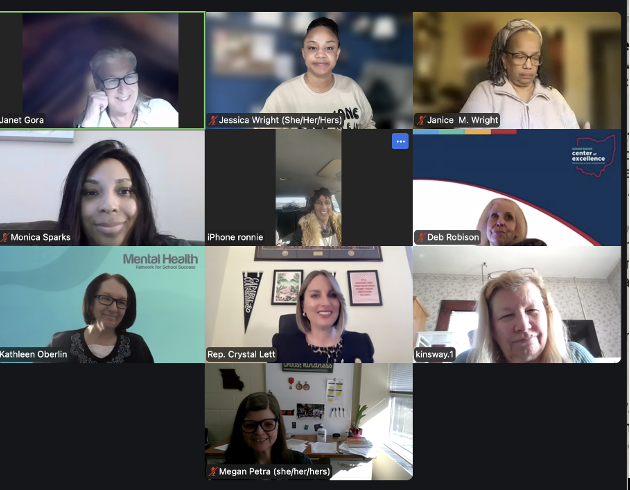
MHFA Advocacy Team Meets with Representative Crystal Lett
State Representative Crystal Lett recently met with our MHFA
Advocacy Team and shared her experience as the parent of a child
with special needs speaking openly about the challenges her family has faced navigating complex systems meant to support children with disabilities.
| | |
Rep. Lett represents Ohio House District 11, which includes Franklin County’s Dublin and Hilliard. Her work at the Statehouse is shaped by her background as a former case manager for children with mental illnesses.
During our meeting, she expressed strong interest in mental health training and emphasized the importance of early recognition and support. The highlight of the meeting was when she offered to introduce a bill in early 2027 to fund Mental Health First Aid!
We are grateful to Rep. Lett for her support for MHFA and for being the first legislator to agree to stand up a bill so that more Ohioans know how to spot signs of crisis and connect others to help.
| | | | Celebrating Monica Sparks as She Completes Her Americorps Term | | |
Monica’s term ends March 17th so we wanted to celebrate her accomplishments from the last 10 months as our MHFA Collaborative AmeriCorps member.
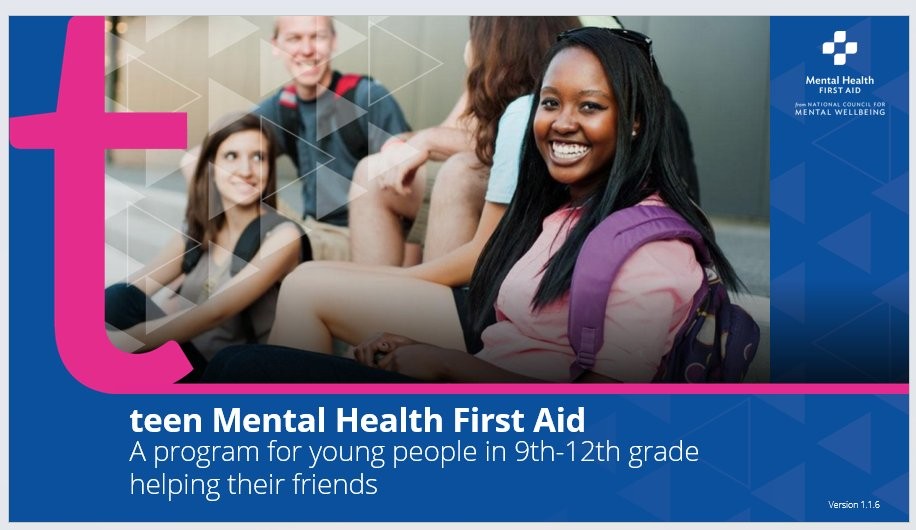
Monica has managed our social media with creativity and purpose. She had one post that was shared 314 times! She oversaw uploading our Teen MHFA data to National Council’s portal, making sure our teen schools received the supplies they needed and was certified as a teen MHFA instructor. One of the schools she taught was Franklinton High School in Columbus who shared, “Our class participated a lot and was engaged with the lesson. We had a great experience and Monica was amazing!”
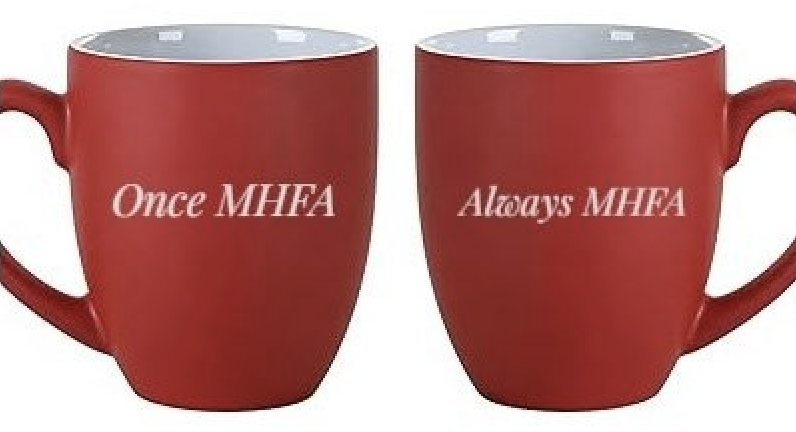
During our team celebration last week, each person offered one word to describe Monica. Fearless. Gentle. Considerate. Positive. Easygoing. Impactful, Bubbly, and Inquisitive. We also surprised her with a coffee mug that says, “Once MHFA, Always MHFA” because she will continue to be part of our MHFA family.
Monica also shared her own reflection on her service, saying, “This is one of the best experiences I've ever had.” Thank you, Monica, and may our paths cross again soon!
| | Mapping Ohio's MHFA Impact Since 2020 | |
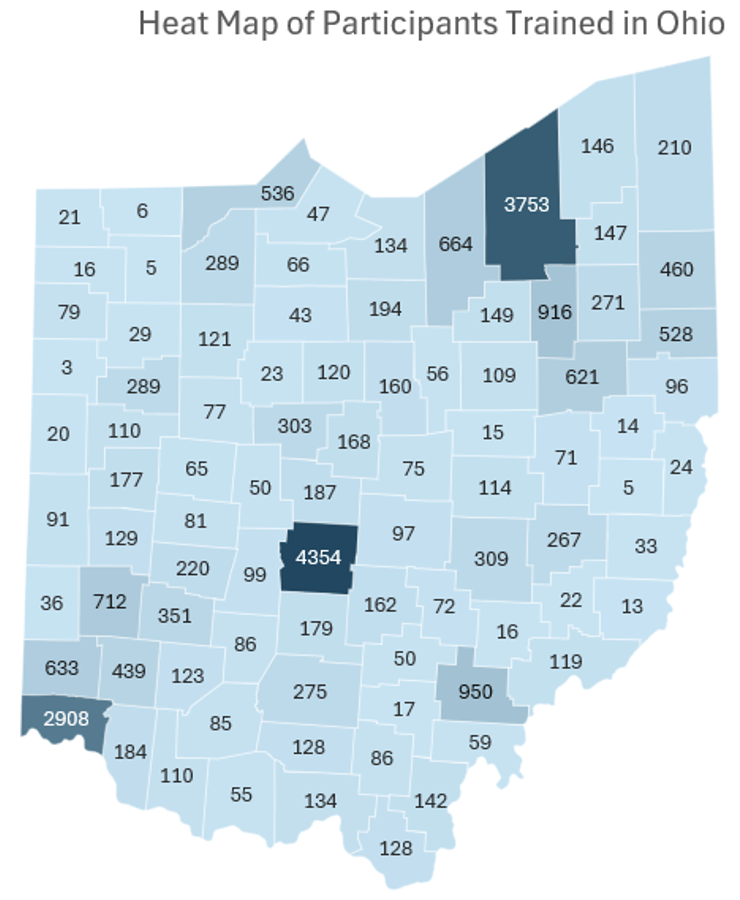
Our latest Ohio Participation Heat Map highlights Adult and Youth MHFA trainings since 2020, combining data from our four Department of Behavioral Health and one SAMHSA‑funded projects. This does not include data from our Teen MHFA, Northern Kentucky, or paid classes.
1. Franklin wins the most trained with Cuyahoga and Hamilton second and third.
2. The top ten counties account for about 62% of everyone trained. But, separating the big eleven urban cores from the rest, about 37% come from outside the urban centers, showing that 1/3 of our impact is happening beyond the big metros.
3. Representation is across all 88 counties.
4. Eight counties have trained over 1,000 people.
5. Top 10 counties by per‑10,000 rate: Athens 151.50; Guernsey 70.03; Gallia 49.03; Pike 47.44; Morrow 47.21; Marion 46.74; Paulding 42.18; Muskingum 37.77; Shelby 37.04; Ross 36.02.
6. Bottom 10 by per‑10,000 rate: Carroll 5.23; Belmont 5.08; Mercer 4.71; Defiance 4.16; Jefferson 3.74; Harrison 3.53; Holmes 3.38; Henry 1.82; Fulton 1.43; Van Wert 1.04.
This heat map shows how far our efforts have reached and highlights the statewide momentum you are part of. Most importantly, it illustrates that every class contributes to a stronger, healthier Ohio.
| |
Funding Your MHFA Class
When State Support Falls Short
| |
Ohio communities are requesting MHFA at record levels, even as state funding has been cut. The MHFA Collaborative waiting list now includes 80 organizations across 30 counties hoping to host Adult, Youth, or Teen MHFA classes. Franklin County and Cuyahoga County show the highest demand, and interest is especially strong among higher education institutions and school districts. We are also seeing increasing requests from private employers who recognize MHFA as an important workplace mental health strategy. With current resources, we can fund training in only 15 of Ohio’s 88 counties. Because of this, many organizations will need to secure their own funding if they want to move forward without delay.
Here are some ideas that Host Organizations have used to cover training costs that might work for your organization:
- Internal training budgets may be able to help cover some, or all the costs.
-
Apply for grants from local, regional, state, federal, or philanthropic organizations. We can help supply you with boilerplate language and a template budget upon request.
- Seek partnerships with local businesses or community groups for sponsorships.
- Host fundraising events.
- Explore cost-sharing with other organizations to pool resources.
- Private donors are potential sources of funding.
- Consider charging attendees to help cover costs.
If your organization is interested in scheduling a paid class or can contribute funding or connect us with potential supporters, we’d love to meet with you.
You can also help restore statewide MHFA funding. Visit our Advocacy Webpage for simple steps you can take to contact decision‑makers and share the value of MHFA in your community.
| | | | ODH Shares Promising Trends and Emerging Substance Concerns | |
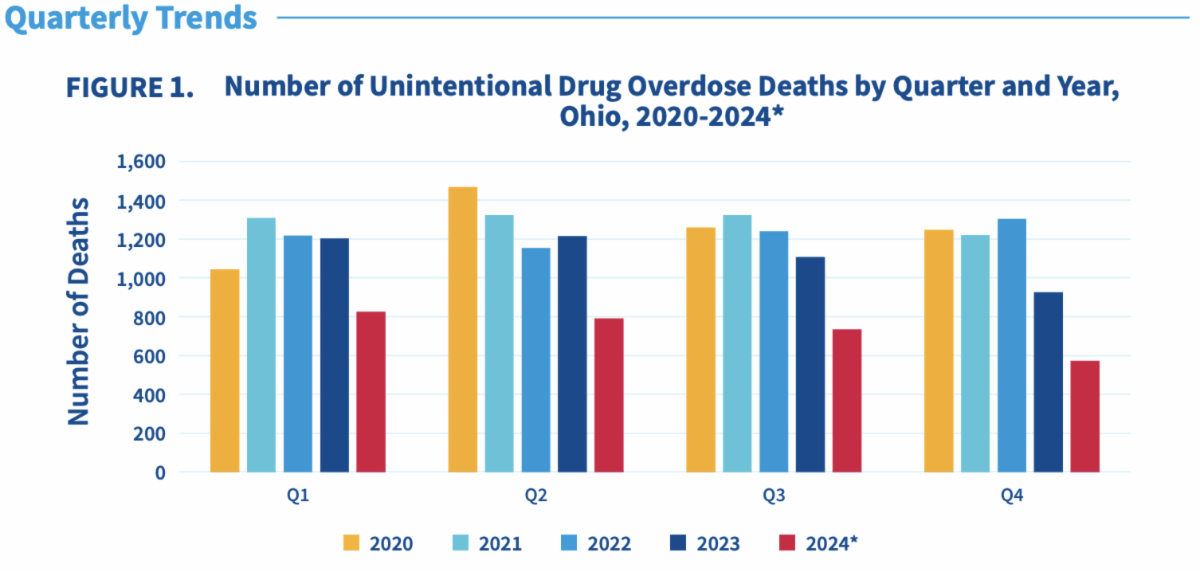
The Ohio Department of Health recently shared their preliminary 2024 data report showing a promising 32% decrease in unintentional overdose deaths compared to 2023, and a 42% decrease from the 2021 peak. While fentanyl remains involved in most deaths, its share is declining. Cocaine and amphetamine involvement is rising, and emerging substances like xylazine and nitazenes continue to be monitored.
The report shared that most individuals who died also had a mental health diagnosis, many had a prior non‑fatal overdose, and most deaths happen in a home without a bystander present.
These overdose trends are important because MHFAiders are often the first to notice when someone may be struggling with substance use. Since many individuals who died had a mental health diagnosis, this reinforces the core MHFA message that by following our ALGEE Action Plan, we truly can make a difference to the people who need it most.
| |
Students Value Mental Health but
Still Avoid Campus Counseling
A recent 2025 Thriving College Student
Survey shows that while 73% trust their
school’s counseling services, only 18% have used
them due to stigma, fear of judgment and time pressures. 93% say mental health matters, and most know how to find professional help. Half of the students report that they have received mental health care at some point, but often it’s off‑campus or online.
This article highlights the exact barriers MHFA aims to address. If students hesitate to use campus counseling, MHFAiders can use the skills we learned in class especially when students feel unsure, overwhelmed, or reluctant to seek help. Like many communities, college students who need help may never reach counseling centers, so trained community members become even more important as the front line for early recognition and connection to care.
If you know of a college or university who needs MHFA for their students to start the conversation, we’d be happy to talk with them.
| | | | |
This National Social Work Month, we proudly recognize and thank the many dedicated social workers who make a difference every day!
Social workers help ensure that no one must face mental health challenges alone and we are deeply grateful for their professionalism, empathy, and tireless work to strengthen our communities and promote healing and hope.
| | Resource of the Month: OhioGuidestone | |
This month, we proudly celebrate reaching 9,000 downloads of the “Resources for Mental Health First Aiders” App. We are continually expanding our resources and categories to better support you.
This month, we would like to highlight OhioGuidestone, an organization dedicated to helping individuals of all ages navigate life's toughest challenges. Located in more than 10 locations across Ohio, their ReadyCare clinics offer walk-in services to screen and treat anxiety, depression, substance use, and other needs. They also offer adult mental health counseling programs, substance abuse services, depression and anxiety services to age six, and even job training programs for young adults.
OhioGuidestone delivers care to approximately 26,000 people each year through both telehealth and various locations throughout the state.
| | |
| |
Help Move MHFA Forward in Ohio and Northern Kentucky:
1. Urge your rep to sign the Dear Colleague letter.
2. Contact us if you’re interested in hosting a no cost MHFA training course in:
Ohio counties: Athens, Adams, Brown, Butler, Champaign, Clark, Clermont, Clinton, Greene, Hamilton, Highland, Logan, Montgomery, Preble, and Warren or
Kentucky counties: Boone, Campbell, Carroll, Gallatin, Grant, Kenton, Owen, Pendleton, Mason, Lewis, Fleming, Rowan, Robertson, Carter, and Greenup.
3. Join our private Facebook group for certified Mental Health First Aiders.
4. Check out our updated website.
5. Use the QR code to download the updated “Resource Guide for Mental Health First Aiders” App to your phone or desktop.
| | | | |